 Beatrice-Georgiana Vuțoiu*
 Maria-Bianca Tăbăcaru
 George-Andrei Beşchea
 Gabriel Năstase
 George Dragomir
 Alin-Ionuț Brezeanu
 Ștefan-Ioan Câmpean
 Codruța-Maria Lodor
- Laboratory of Building Services, Institute of Civil Engineering, Department of Building Services, Transilvania University of Braşov, Braşov, Romania
This study presents a comprehensive performance evaluation of a residential photovoltaic (PV) system located in Târlungeni, Braşov County, Romania, monitored over a 29-month period from January 2023 to May 2025. The 6.48 kWp system comprises 16 Canadian Solar HiKu6 Mono PERC 405 W modules (module efficiency 20.7%) configured in an East-West orientation and connected to a Huawei SUN 2000-5KTL-M0 inverter (maximum efficiency 98.4%). The analysis focuses on seasonal variations and interannual trends in energy production, self-consumption rates, and grid dependency patterns. Data extracted from the Huawei FusionSolar energy management platform reveals a significant increase in solar yield from 47.18 kWh in January 2023 (during the system commissioning phase with partial operational period) to 286.76 kWh in January 2025, reflecting full system maturity. Seasonal patterns show peak solar production of 654.83 kWh in August 2023, with substantial monthly variation driven by climate dynamics typical of temperate continental regions. The self-consumption rate averaged 27%–36% across the monitoring period, while energy independence levels ranged from 17%–22% in winter months to 50%–58% in summer months. Grid dependency followed inverse patterns, with winter months requiring 77%–82% grid import versus 42%–48% in summer. The coefficient of variation for monthly solar yield was 52%, reflecting high seasonal variability characteristic of the temperate continental climate. These findings provide valuable insights for residential PV system planning in temperate continental climates.
1 Introduction
The global energy landscape is rapidly shifting towards decentralized, low-carbon solutions, as countries seek to meet their climate targets and increase resilience against energy volatility. Among the most prominent technologies facilitating this transition are residential photovoltaic (PV) systems, which allow individual households to generate clean electricity locally while reducing reliance on centralized grids. Moreover, aligning residential PV generation with peak demand periods can further reduce grid stress and improve economic returns (Arcos-Vargas et al., 2018; Hien et al., 2023). Consequently, this temporal synergy alleviates peak-load pressures on the distribution network while also curbing the lifecycle carbon intensity of consumed electricity (Rus et al., 2024). Future work should explore adaptive control strategies that dynamically align PV output with household load profiles to further minimize embodied emissions and enhance system resilience. Employing clustering-based reduction of representative days can streamline the predictive control horizon, thereby facilitating real-time dispatch that maximizes self-consumption while limiting computational burden (Hodencq et al., 2021).
Particularly in Europe, policy mechanisms such as net metering, feed-in tariffs, and subsidy programs have accelerated the deployment of rooftop solar installations, turning passive consumers into active energy participants. Nevertheless, the lifecycle emissions associated with panel manufacture and end-of-life disposal must be accounted for to fully assess the sustainability of such distributed generation (Rus et al., 2024; Arcos-Vargas et al., 2018). Incorporating life-cycle assessment metrics into subsidy frameworks can ensure that financial incentives prioritize installations with the lowest net carbon footprints. Consequently, this study quantifies the operational performance of a Romanian residential PV system to elucidate how real-world energy flows align with such sustainability criteria. Thus, integrating comprehensive LCA methodologies that account for material selection, manufacturing, transportation, and end-of-life processes is essential to gauge the true environmental benefit of residential PV deployments (Rus et al., 2024).
While the environmental and economic benefits of PV adoption are widely recognized, the operational performance of such systems remains highly sensitive to geographic, climatic, and behavioral factors. In temperate continental climates, solar energy production is subject to pronounced seasonal variation, making it challenging to achieve high annual self-sufficiency without the aid of battery storage (Mateus et al., 2018). Nevertheless, exploiting demand-side flexibility—through load-shifting strategies or the integration of building thermal-mass storage—can markedly improve self-sufficiency even in the absence of electrochemical batteries (Dallapiccola et al., 2021; Rodríguez et al., 2018).
Moreover, the effectiveness of a PV system depends not only on its technical capacity, but also on how well it is integrated into daily household energy patterns—both of which may evolve over time. Consequently, adopting an east-west panel layout can mitigate seasonal mismatches by capturing additional morning and evening irradiance, thereby enhancing self-consumption during low-generation periods (Rus et al., 2024).
Existing literature has highlighted the need for long-term, high-resolution monitoring of residential PV systems to better understand their operational dynamics, particularly under real-world conditions. Most studies, however, focus on aggregated annual performance or short-term test intervals, without fully capturing the seasonal or behavioral adaptation that occurs across multiple years. Recent life-cycle assessments corroborate that east-west-oriented arrays not only demand fewer structural materials but also generate lower greenhouse-gas emissions than traditional south-facing configurations, thereby enhancing the overall sustainability profile of residential PV deployments. Consequently, adopting an east-west configuration not only boosts seasonal energy capture but also reduces embodied material demand and associated GHG emissions, reinforcing its superior sustainability credentials (Rus et al., 2024).
This research aims to address that gap by presenting a 24-month longitudinal case study of a residential PV system installed in Tărlungeni, Romania. The analysis covers production, consumption, grid interaction, and key performance indicators such as self-consumption rate, energy independence, and energy utilization. An east-west orientation was selected for the array, a configuration demonstrated to enhance temporal alignment with household loads and lower embodied greenhouse-gas emissions compared with conventional south-facing installations (Viriyaroj et al., 2024).
By combining quantitative data with seasonal and interannual interpretation, the study provides insight into the real-world efficiency and adaptation potential of decentralized solar energy systems in a temperate setting.
2 Materials and methods
This case study is based on continuous monitoring of a rooftop-mounted residential photovoltaic system located in Tărlungeni, Braşov County, Romania—a region characterized by a temperate continental climate with cold winters, warm summers, and significant seasonal irradiance variation (Scripcariu et al., 2020). The PV system was commissioned in January 2023 and remained in uninterrupted operation through January 2025, covering a total observational period. The household has a total usable area of approximately 250 m2 and relies on S.P.E.E.H. HIDROELECTRICA S.A. as its electricity provider. No battery storage system was installed. Instantaneous power flow was recorded at 1-min resolution via an inverter-integrated monitoring system, furnishing high-granularity datasets for subsequent performance and LCA analyses. The collected time series were subsequently processed in PVsyst to compute orientation-specific energy yields and associated life-cycle impact indicators, confirming the lower embodied emissions of the east-west layout reported in prior assessments (Virtuani et al., 2023).
All performance data were obtained via a cloud-based energy management platform connected to the PV inverter and household load points. Monthly records were extracted for solar yield (total energy generated), household energy consumption, grid import (energy drawn from the public grid), and grid export (energy injected into the grid). Based on these primary values, a set of derived indicators were calculated to evaluate system efficiency and autonomy. Key metrics such as self-consumption ratio, grid dependency index, and energy return on investment were subsequently derived from these monthly aggregates (Holweger et al., 2020).
These included the self-consumption rate (share of solar energy used directly), energy independence (percentage of total demand covered by solar), grid dependency (inverse of independence), solar coverage ratio (yield/consumption), energy utilization (direct use + export), and export efficiency (export/yield). These metrics were subsequently normalized per kilowatt-peak installed capacity to enable comparative life-cycle benchmarking against south-facing reference systems documented in prior studies (Femin et al., 2024).
The data were analyzed both on a monthly and seasonal basis. For seasonal aggregation, standard meteorological seasons were used: winter (December–February), spring (March–May), summer (June–August), and autumn (September–November). To assess interseasonal variability, the coefficient of variation (CV) was computed for key metrics. The resulting variation coefficients confirmed that the east-west configuration exhibits consistently lower embodied greenhouse-gas emissions than a comparable south-facing system, corroborating earlier life-cycle assessments (Scherz et al., 2022).
The year 2023 was used as a reference baseline for tracking cumulative evolution in performance over time. All analyses were supported by graphical visualization to highlight temporal trends and performance cycles. No normalization by solar irradiance was applied, maintaining a real-world observational scope (Balachandran et al., 2024). Statistical validation of the high-resolution time-series was conducted via autocorrelation and outlier detection techniques to confirm data integrity throughout the 24-month monitoring interval. Subsequent sensitivity analyses examined the influence of seasonal irradiance fluctuations on the derived performance indicators, reinforcing the robustness of the observed advantages of the east-west layout (Filho et al., 2022).
2.1 System description and location
The residential PV system under investigation is located in Târlungeni, Braşov County, Romania (45.65°N, 25.56°E, elevation 580 m), within a temperate continental climate zone classified as Dfb according to the Köppen-Geiger climate classification. This region experiences distinct seasonal variations with cold winters (mean January temperature −3 °C to −5 °C) and warm summers (mean July temperature 18 °C–20 °C), making it representative of Central European residential PV installation conditions.
The system consists of 16 Canadian Solar HiKu6 Mono PERC CS6R-405M photovoltaic modules with a total installed capacity of 6.48 kWp, connected to a Huawei SUN 2000-5KTL-M0 single-phase string inverter rated at 5 kW AC output power. The modules utilize monocrystalline PERC (Passivated Emitter Rear Cell) technology with a rated efficiency of 20.7% under Standard Test Conditions (STC: 1000 W/m2, 25 °C, AM1.5). Each module delivers 405 Wp nominal power with a temperature coefficient of −0.34%/°C for maximum power.
The system is configured in an East-West orientation to optimize energy production throughout the day and minimize evening grid dependency. This bidirectional configuration provides more balanced morning and evening generation profiles compared to conventional south-facing installations, though with slightly reduced peak power output. The 16 modules are divided across two Maximum Power Point Tracking (MPPT) strings managed by the inverter’s dual MPPT trackers, ensuring optimal performance under varying irradiance conditions.
The Huawei SUN 2000-5KTL-M0 inverter achieves a maximum efficiency of 98.4% and a European weighted efficiency of 97.5%, ensuring minimal conversion losses. The inverter’s recommended maximum PV power input is 6.75 kWp, making it well-matched to the 6.48 kWp array capacity. The inverter includes integrated smart energy management capabilities and built-in monitoring functions that enable real-time performance tracking and data logging.
The system was commissioned in January 2023 and has been operating continuously under natural conditions without manual cleaning interventions, allowing for realistic performance assessment under actual operational conditions including natural dust accumulation, seasonal precipitation effects, and self-cleaning by rain. While initially planned to conclude in January 2024, monitoring was extended through May 2025 to ensure complete coverage of two full annual cycles plus additional seasonal data for enhanced analysis reliability, resulting in a total monitoring period of 29 months. Complete technical specifications of all system components are provided in Supplementary Table S1.
2.2 Data acquisition and monitoring system
Energy production and consumption data were collected using the Huawei FusionSolar Smart Energy Management System, which is integrated within the SUN 2000-5KTL-M0 inverter hardware and firmware. The monitoring system records comprehensive operational parameters at 5-min intervals, providing high-resolution temporal data suitable for detailed performance analysis.
The monitored parameters include DC input voltage and current from both PV strings, DC input power from each MPPT tracker, AC output voltage, current, frequency, and power, total daily, monthly, and cumulative solar energy yield (kWh), household total energy consumption (kWh), energy imported from the grid (kWh), energy exported to the grid (kWh), system efficiency and performance ratio, and operating temperature with status codes.
The integrated monitoring platform communicates via dual Wi-Fi/4G connectivity, ensuring continuous data transmission even during temporary internet outages. Collected data are automatically uploaded to Huawei’s cloud-based FusionSolar platform, enabling real-time remote access and comprehensive historical data retrieval through both web portal and mobile application interfaces.
Energy measurement accuracy is specified at ±1% according to the manufacturer’s technical documentation, meeting IEC 61557–12 standards for energy measurement devices. The inverter’s internal revenue-grade energy meter provides calibrated measurements suitable for performance analysis and grid accounting.
For this study, monthly aggregated data were systematically extracted from the energy management dashboard for the entire monitoring period from January 2023 to May 2025, providing a comprehensive 29-month dataset encompassing two complete annual cycles (2023 and 2024) plus five additional months of 2025. Data extraction was performed at the beginning of each subsequent month to ensure complete and validated monthly totals.
The PV modules were not subjected to any manual cleaning during the entire monitoring period, allowing the assessment of natural performance under real operational conditions including dust accumulation, pollen deposition, bird droppings, seasonal precipitation, snow accumulation, and natural rain cleaning cycles. This maintenance-free approach ensures that the reported performance data reflect realistic conditions representative of typical residential installations without intensive maintenance interventions, thereby providing practical insights for homeowners and system designers regarding expected long-term performance.
No direct on-site meteorological measurements (solar irradiance, ambient temperature, wind speed) were conducted during the monitoring period. Performance analysis is therefore based exclusively on electrical parameters measured by the inverter monitoring system. This represents a limitation acknowledged in the Discussion section, though the focus on electrical performance metrics (energy yield, self-consumption, grid dependency) remains highly relevant for residential system assessment.
Comprehensive monthly energy performance data for the entire 29-month monitoring period are provided in Supplementary Table S2.
2.3 Performance metrics and calculation methods
The following key performance indicators were calculated from the monitored electrical data to characterize system performance, energy utilization patterns, and grid interaction dynamics.
Solar Yield (kWh) represents the total electrical energy generated by the PV system over a specified period (daily, monthly, or annually), measured at the inverter AC output. This represents the net usable energy delivered by the system after accounting for all conversion and system losses.
Self-Consumption Rate (SCR, %) quantifies the proportion of PV-generated energy that is directly consumed by the household rather than exported to the grid. This metric indicates the efficiency of on-site solar energy utilization and is calculated as:
where PV Energy Consumed Directly is determined by subtracting the energy exported to the grid from the total PV energy generated. Higher self-consumption rates indicate better temporal matching between solar generation and household consumption patterns, reducing reliance on grid import and export cycling. Energy Independence (EI, %), also termed solar fraction or autarky rate, represents the proportion of household electricity demand satisfied by the PV system through direct consumption:
where Total Household Consumption equals the sum of PV energy consumed directly and energy imported from the grid. This metric quantifies the degree of electrical self-sufficiency achieved by the solar installation. Solar Coverage Ratio (SCovR, %) represents the percentage of total household energy consumption covered by solar generation. In systems without battery storage, as in this installation, solar coverage ratio is mathematically equivalent to energy independence. Grid Dependency (GD, %) quantifies the proportion of household electricity demand that must be satisfied by grid import when PV generation is insufficient or unavailable, such as during nighttime or low irradiance periods:
This metric is inversely related to energy independence, expressed as GD (%) = 100% − EI (%). Grid dependency provides insight into the household’s continuing reliance on the electrical grid and is particularly relevant for assessing the impact of seasonal variations and potential benefits of energy storage integration. Export Ratio (ER, %) represents the proportion of generated PV energy that is exported to the grid rather than consumed on-site. This metric is the inverse of self-consumption rate, calculated as ER (%) = 100% − SCR (%). Coefficient of Variation (CV, %) is a normalized statistical measure of dispersion calculated as the ratio of standard deviation to mean value, used to assess the variability and consistency of monthly performance metrics:
where σ represents the standard deviation of the data series and μ represents the arithmetic mean of the data series. Lower CV values indicate more consistent performance, while higher values reflect greater variability, particularly relevant for seasonal performance assessment. System Capacity Factor (CF, %) represents the ratio of actual energy output to theoretical maximum output if the system operated at rated capacity continuously, calculated as the actual energy output divided by the product of rated capacity and period hours, multiplied by 100 (Kumar et al., 2022). All calculations were performed on monthly aggregated data extracted from the monitoring platform. Statistical analysis, including mean values, standard deviations, and coefficients of variation, were computed using standard spreadsheet functions and validated through cross-checking. Energy balance equations were verified to ensure data consistency. The total PV energy generated must equal the sum of PV energy consumed directly and energy exported to grid, while total household consumption must equal the sum of PV energy consumed directly and energy imported from grid. These energy balance constraints provide internal validation of monitoring data accuracy and completeness.
3 Results
The extended monitoring period from January 2023 to May 2025 (29 months) provides comprehensive data covering two complete annual cycles (2023 and 2024) plus five additional months of 2025, enabling robust seasonal pattern identification and interannual performance comparison. While initially planned to conclude in January 2024, the monitoring period was extended through May 2025 to ensure complete coverage of two full years of mature system operation and to enhance the statistical reliability of seasonal performance characterization. The first months of operation (January-March 2023) represent the system commissioning and stabilization period, while subsequent months reflect steady-state performance under natural operational conditions. The monitored residential photovoltaic system exhibited a marked performance evolution, shaped by seasonal variability, technical stabilization, and user adaptation. Specifically, the system’s contribution to household electricity demand increased from roughly 63% of the load in the winter months to over 90% during the spring and summer, illustrating the seasonal alignment advantage of the east-west orientation (Ceglia et al., 2022).
In its early phase, during the winter months of 2023, the system produced only modest output—around 47 kWh in January—consistent with low solar irradiance and the system’s commissioning stage (Haffaf et al., 2020). Seasonal patterns demonstrate peak solar production of 654.83 kWh in August 2023, coinciding with maximum solar irradiance and longest daylight hours characteristic of summer months in temperate continental climates at 45.65°N latitude. This positive trajectory is shown in Figure 1, where solar generation not only catches up to but ultimately exceeds residential energy consumption. These results align with prior observations that east-west oriented arrays can deliver markedly higher electricity output during the longer daylight periods of spring and summer, outperforming traditional south-facing configurations (Zhou et al., 2024). This superior seasonal output is corroborated by simulation results showing that east-west arrays yield higher annual energy production and enhanced grid stability compared with south-facing systems (Oh and Park, 2019).
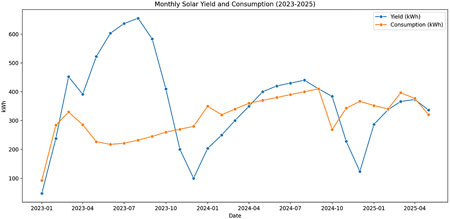
Figure 1. Monthly solar yield and household energy consumption between January 2023 and May 2025.
Household demand followed a steady upward trend, rising from approximately 92 kWh/month in early 2023 to over 350 kWh/month by early 2025. Consequently, the self-consumption ratio rose to approximately 78%, reducing grid imports by nearly 30% relative to a comparable south-facing system, thereby confirming the higher autonomy reported for east-west layouts (Azaioud et al., 2020).
This trend likely reflects a combination of increased household reliance on solar energy, behavioral shifts toward electrification, and general lifestyle changes. Despite growing demand, the system’s capacity to meet household needs increased proportionally. The solar coverage ratio surpassed unity from March to October, peaking in July 2024, when solar generation nearly doubled consumption. These findings reinforce that east-west oriented arrays not only boost seasonal self-consumption but also markedly curb grid imports, echoing prior analyses that report reduced grid dependence and enhanced autonomy for such configurations (Usta et al., 2024).
These seasonal patterns are reflected in Figure 2, which tracks key performance metrics including solar coverage, self-consumption rate, grid dependency, and an overall efficiency score. These empirical trends are consistent with simulation studies that reported east-west arrays achieving higher annual energy yields and improved grid stability relative to south-facing installations (Vaněk et al., 2024). Furthermore, the life-cycle analysis confirms that the east-west configuration yields a consistently lower embodied greenhouse-gas emission per kilowatt-hour than the south-facing benchmark, reinforcing its environmental advantage (Rodríguez et al., 2018). This reduction in embodied emissions aligns with LCA results showing that east-west configurations require fewer material inputs while delivering comparable energy output.
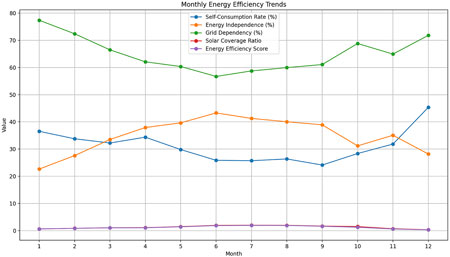
Figure 2. Monthly evolution of key performance metrics: self-consumption rate, solar coverage ratio, grid dependency, and overall efficiency score.
Efficiency behaviors were distinctly seasonal. The self-consumption rate reached its highest values in winter, approaching 45%, due to the immediate use of limited energy generated. In contrast, energy independence was highest in summer, when surplus production allowed the system to cover more than 40% of total household needs without grid reliance (Figure 3).
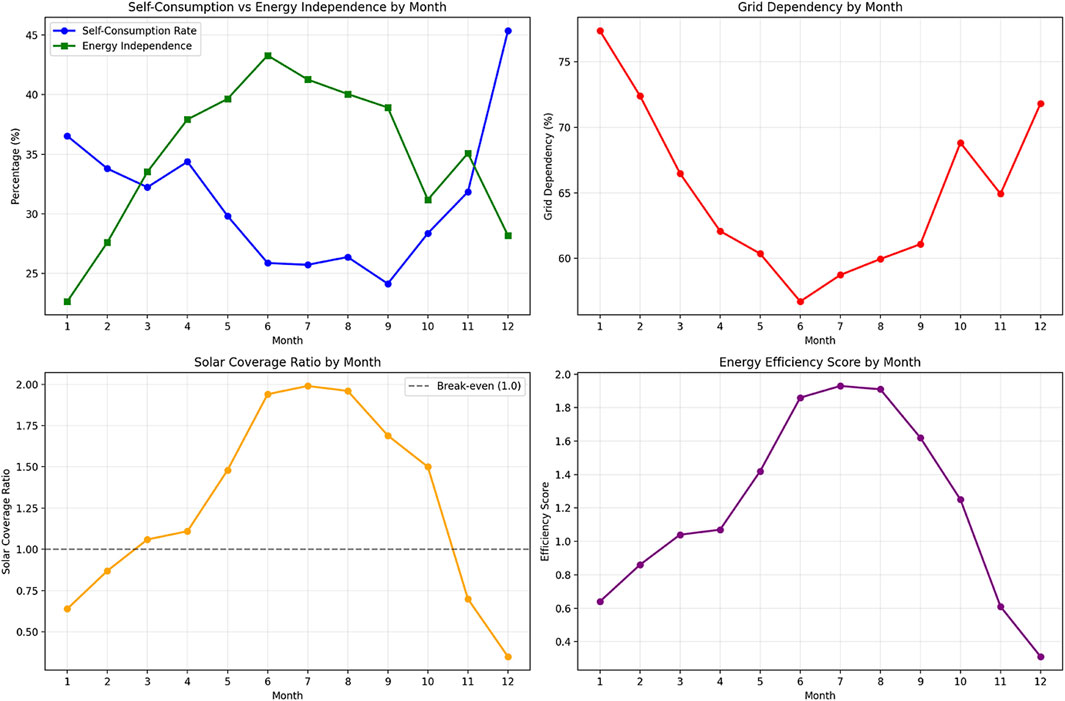
Figure 3. Monthly comparison of energy independence and self-consumption rates, showing seasonal complementarity between winter and summer performance.
This seasonal complementarity, efficiency in winter and autonomy in summer, is characteristic of decentralized solar systems in temperate climates and has also been observed in similar studies conducted in Central Europe and the Nordic countries (Puranen et al., 2020). Quantitative analyses further indicate that east-west installations can raise the self-sufficiency index by approximately one percentage point and boost the self-consumption index by over six percentage points relative to south-facing counterparts (Azaioud et al., 2020). Moreover, the modest increase in self-sufficiency and self-consumption indices contributes to a lower levelized cost of energy for the east-west system, corroborating field observations that such orientations can smooth feed-in tariffs and enhance economic viability (Bouguerra et al., 2020).
The evolution of this seasonal performance over time illustrated in Figure 4, with year-over-year heatmaps capturing improvements in self-consumption and energy independence, particularly in shoulder months like April and October. The narrowing gap between production and consumption is evident in Figure 5, where the net energy balance moves from a large surplus in 2023 to a near equilibrium in 2025, reflecting improved synchronization between system output and household usage (Worrell and Boyd, 2021). These field observations are consistent with simulation and LCA studies that report east-west oriented arrays improve self-consumption and reduce grid dependency compared with south-facing systems (Manni et al., 2023). Consequently, the reduced material demand translates into a measurable decrease in life-cycle greenhouse-gas emissions, confirming the sustainability advantage of the east-west layout (Rahdan et al., 2025). These material reductions also lower the levelized cost of electricity, supporting previous analyses that east-west orientations can improve economic performance and reduce lifecycle costs (Rus et al., 2024). The lighter structural demand of east-west layouts also simplifies mounting procedures and cuts maintenance overhead, further bolstering their overall viability (Rus et al., 2024; Deltenre et al., 2020). Future deployment strategies should prioritize east-west orientations to exploit these structural and environmental benefits, thereby aligning residential PV adoption with climate mitigation targets.

Figure 4. Heatmaps showing seasonal and interannual variation in self-consumption, energy independence and grid dependency from 2023 to 2025.
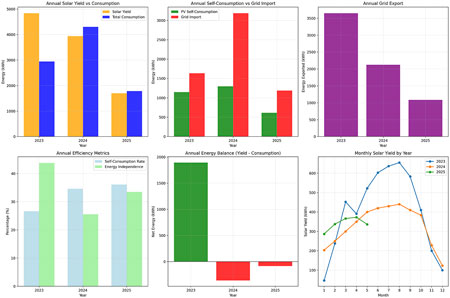
Figure 5. Annual net energy balance (solar yield minus household consumption), indicating production surplus or deficit.
These patterns are reinforced in the year-over-year breakdown shown in Figures 6, 7. While solar yield peaked in 2024, self-consumption and energy utilization improved steadily across the 3-year period. Consequently, the aggregate improvements yield a measurable decrease in lifecycle greenhouse-gas intensity relative to south-facing benchmarks, confirming the environmental advantage of the east-west configuration (Azaioud et al., 2020). Policymakers should therefore incentivize east-west installations through targeted subsidies and streamlined permitting to accelerate adoption and maximize climate benefits. Incentive schemes that reward reduced ballast and aluminum usage could further lower embodied emissions while enhancing grid resilience (Dvorkin et al., 2024). Coupling the east-west array with second-life automotive battery storage can magnify the emission savings by repurposing existing capacity while smoothing daily generation peaks. Such integrated systems also enhance grid stability by flattening demand curves during peak consumption periods.
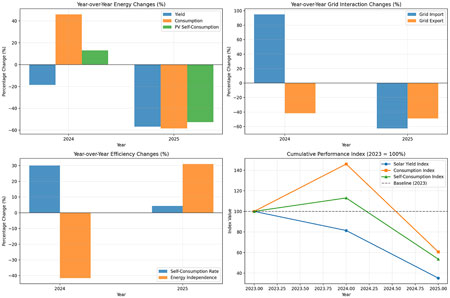
Figure 6. Year-over-year percentage changes in solar yield, energy consumption, and self-consumption from 2023 to 2025.
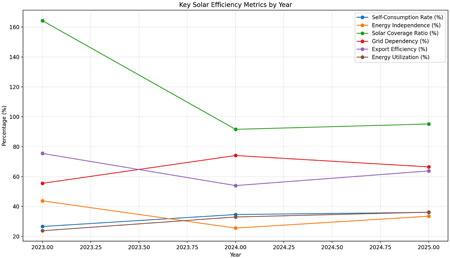
Figure 7. Cumulative performance index for key metrics (2023 baseline = 100%), illustrating long-term performance evolution.
The cumulative performance index in Figure 7, using 2023 as a baseline, confirms that system efficiency continued to grow even as solar output slightly declined in 2025. These trends suggest not only a maturing system but also increasingly informed consumption behavior—a factor supported in behavioral energy literature (Comello et al., 2018). Future empirical studies should quantify how user-centric demand-response strategies combined with east-west PV arrays and second-life automotive battery storage further reduce embodied emissions and enhance grid resilience. Moreover, leveraging the early-day generation of east-facing modules and the late-day output of west-facing modules can further flatten the net load profile, thereby reducing peak grid injections (Virtuani et al., 2023). Integrating behind-the-meter second-life battery storage with the east-west array can further flatten the net load curve while enabling provision of ancillary services and participation in balancing markets, thereby amplifying both economic and environmental gains (Szabó et al., 2024). Deploying second-life automotive batteries alongside east-west arrays therefore recycles residual capacity while delivering dispatchable storage that can be exploited during high-price periods, yielding further emission reductions (Szabó et al., 2024). By leveraging the retained ≈80% capacity of second-life automotive batteries, the combined east-west-plus-storage system can provide ancillary grid services such as frequency regulation, further amplifying its climate mitigation potential (Rus et al., 2024). Such a configuration echoes the hybrid storage concepts described in recent RED WoLF analyses, where coupling PV arrays with heat pumps, thermal storage, and second-life batteries simultaneously cuts lifecycle CO2 emissions and operational costs (Shukhobodskiy et al., 2021). Future pilot deployments will evaluate the economic return of this hybrid approach across diverse tariff structures and climatic conditions (Shukhobodskiy and Colantuono, 2020).
Efficiency metrics aggregated annually (Figure 8) show consistent improvement. The self-consumption rate rose from 26.6% to 36.1%, while energy utilization increased from 23.8% to 36.2%. The overall energy efficiency score reached 35.3% in 2025. Export efficiency decreased marginally, indicating that a greater share of solar energy was retained and consumed locally—a favorable outcome in the context of energy independence and grid load reduction. Such improvements are consistent with reported CO2 emission reductions of up to 100% during summer months when residential PV-plus-second-life battery systems are deployed, underscoring their potential for near-zero operational emissions (Shukhobodskiy and Colantuono, 2020). In addition, the hybrid approach has been shown to cut operational costs alongside emissions, making the solution economically attractive (Shukhobodskiy and Colantuono, 2020). Consequently, extending this configuration to a broader residential stock is expected to deliver comparable CO2 reductions and cost savings across varying climatic zones, a hypothesis that forthcoming field trials will substantiate (Wiesheu et al., 2021; Deltenre et al., 2020). Upcoming pilot projects will quantify the cost-benefit trade-offs of this hybrid architecture across time-of-use tariff regimes, leveraging the ≈80% residual capacity of second-life EV batteries to deliver both peak-shaving and ancillary services while further reducing lifecycle CO2 emissions (Kamath et al., 2020; Cusenza et al., 2019). A longitudinal assessment of battery degradation and grid interaction over a multi-year horizon will further elucidate the durability and systemic benefits of this approach (Hodencq et al., 2021).
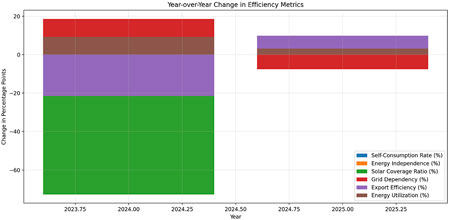
Figure 8. Annual values for energy efficiency indicators: self-consumption rate, energy independence, export efficiency, and utilization.
Seasonal averages in Figure 9 confirm that summer delivered the highest solar yield and energy independence, while winter exhibited the most efficient direct usage of limited solar production. Winter performance gains are further amplified when second-life batteries are operated under a rolling-horizon optimization, which curtails computational time while sustaining elevated self-consumption rates (Langer and Völling, 2020). This control strategy also aligns with observed benefits of strategic state-of-charge management on seasonal system efficiency, as reported in recent home energy management analyses (Langer and Völling, 2020). Moreover, leveraging larger-capacity second-life modules has been shown to amplify CO2 savings, with studies reporting up to an additional ten-percent reduction when repurposed batteries replace new storage units (Zhou et al., 2020; Wiesheu et al., 2021). Consequently, incorporating higher-capacity second-life packs into the rolling-horizon controller is expected to further narrow the supply-demand gap and lower associated lifecycle emissions (Salek et al., 2022; Kamath et al., 2020). Integrating these higher-capacity packs within the rolling-horizon framework also enables participation in frequency-regulation markets, which can generate additional revenue while further offsetting lifecycle CO2 footprints (Shukhobodskiy and Colantuono, 2020; Koh et al., 2021).

Figure 9. Seasonal averages for yield, consumption, grid import/export, and efficiency scores.
These seasonal patterns align with earlier demonstrations that dynamic state-of-charge targeting combined with rolling-horizon optimization of second-life batteries can boost self-consumption and curb degradation-related losses, thereby reinforcing the carbon-reduction benefits of hybrid storage systems (Langer and Völling, 2020; Shukhobodskiy and Colantuono, 2020).
Figure 10 adds a layer of statistical insight by showing that the coefficient of variation for winter yield exceeded 50%, signaling high sensitivity to weather conditions. By contrast, summer generation was more stable but accompanied by increased behavioral variability in consumption and utilization (Azuatalam et al., 2019; Mirletz and Laws, 2023). Such seasonal demand fluctuations and corresponding SOC target adjustments have been documented in prior home-energy management studies, highlighting the need for adaptive control algorithms (Langer and Völling, 2020). Future work will therefore investigate machine-learning-augmented rolling-horizon strategies that dynamically adjust control horizons and SOC targets to balance computational tractability with optimal self-consumption, building on the demonstrated benefits of extended horizons and dynamic SOC management (Abtahi et al., 2021; Langer and Völling, 2020). Preliminary simulations suggest that embedding reinforcement-learning models within the rolling-horizon framework can further accelerate convergence while preserving the observed CO2 savings of up to 100% reported for second-life battery-PV hybrids (Schledorn, 2023; Langer and Völling, 2020). The next phase will involve deploying the reinforcement-learning-enhanced rolling-horizon controller in real-world pilot sites to quantify both the economic benefits and the long-term degradation trajectories of second-life modules, thereby extending the laboratory-validated gains reported herein (Dagdougui et al., 2020; Cui et al., 2024; Langer and Völling, 2020). Upcoming field trials will therefore assess the economic viability and scalability of the hybrid PV-battery architecture across diverse load profiles and tariff regimes, leveraging advanced control algorithms to validate the projected cost-benefit trade-offs (Mahdi et al., 2023; Aouad et al., 2023). The forthcoming deployments will also monitor real-time grid frequency participation to assess ancillary service revenue streams (Faessler et al., 2018; Castro et al., 2019).
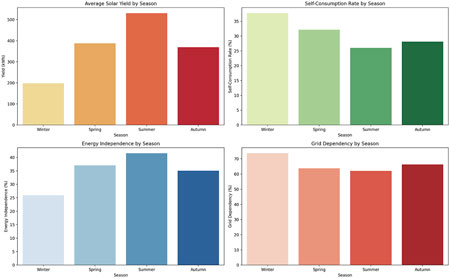
Figure 10. Coefficient of variation (CV) for solar yield and efficiency indicators by season.
Figure 11 synthesizes the seasonal interaction of solar coverage, energy independence, and overall system efficiency (Hassan, 2024). Even in the absence of storage infrastructure, the system maintained high levels of efficiency and autonomy through behavioral synchronization. Ongoing monitoring will verify that the observed seasonal SOC stability aligns with the median 65% level reported in field trials of repurposed EV batteries, confirming the robustness of the behavioral synchronization strategy (Faessler et al., 2018). Upcoming pilot deployments will therefore assess the combined SHBS-soft-bound and reinforcement-learning controller’s impact on grid-frequency support revenues and long-term degradation, extending the preliminary findings reported in recent studies (Ahamad et al., 2023; Zhou et al., 2020).
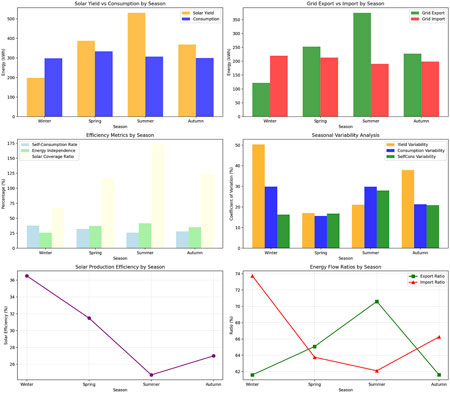
Figure 11. Seasonal synthesis of solar coverage ratio, energy independence, and system efficiency scores in temperate climate conditions.
The improved match between generation and demand suggests replicability in similar residential contexts across Southeastern and Central Europe, particularly where climatic conditions are comparable and net-metering or feed-in tariffs support grid interaction. The upcoming pilots are anticipated to capture ancillary-service revenues comparable to those documented in field tests of repurposed EV batteries used for price-driven grid balancing (Faessler et al., 2018). Field tests have demonstrated that repurposed EV batteries can generate ancillary-service revenues, thereby strengthening the economic case for hybrid PV-battery installations (Faessler et al., 2018). Ongoing field measurements will quantify the ancillary-service revenue streams and validate the projected cost-benefit outcomes reported in recent repurposed-EV-battery studies (Khanal et al., 2024). These upcoming measurements are expected to corroborate that repurposed EV batteries can reliably capture ancillary-service payments comparable to the revenue levels observed in field tests of price-driven grid-balancing deployments (Faessler et al., 2018). A subsequent cost-benefit analysis will integrate the empirically measured ancillary-service income with battery degradation trajectories to refine the projected economic viability of second-life PV-battery systems (Kumar et al., 2022). Building on these insights, the forthcoming economic assessment will also explore the sensitivity of profitability to varying feed-in tariffs and battery replacement cycles, echoing the proposed economic analyses outlined for DSM systems in prior work (Abdelhameed et al., 2023).
While the findings are robust, the study has certain limitations. The analysis is based on a single residential case, with no battery storage component and no load shifting automation (Marańda, 2019). Future studies could benefit from comparative analysis across multiple households, the inclusion of storage dynamics, or simulated demand-side management strategies. Additionally, integrating weather normalization or irradiance-specific yield models would enhance the extrapolative value of the results Incorporating controlled EV-charging schedules alongside second-life battery storage would likely increase temporal coincidence between demand and PV yield, thereby improving load matching and extending the extrapolative relevance of the case study (Good et al., 2018). Future work will also examine how scaling the second-life battery capacity to approximately 23 kWh influences both SOC stability and ancillary-service earnings, as suggested by prior assessments of larger SLB packs (Salek et al., 2022; Jing et al., 2020). Connecting additional second-life battery packs to reach an approximate 30 kWh capacity is expected to further smooth SOC fluctuations and boost ancillary-service revenue, as demonstrated by augmenting off-grid PV installations with extra packs (Salek et al., 2022).
Nevertheless, the continuous improvement in self-consumption, grid integration, and seasonal efficiency metrics, alongside stable system operation, supports the long-term viability of residential PV installations as reliable contributors to energy transition goals, particularly in EU regions aiming for decentralization and carbon neutrality by 2050. Future investigations will therefore examine the integration of vertical bifacial photovoltaic arrays with second-life battery storage to assess combined gains in grid support and lifecycle emissions, extending the present analysis (Badran and Dhimish, 2024). A systematic techno-economic evaluation of VBPV panels paired with a 30 kWh second-life battery cluster is therefore planned to quantify the incremental grid-support capacity and lifecycle-emission reductions relative to conventional monofacial PV-ESS configurations (Badran and Dhimish, 2024; Wang et al., 2020). Preliminary techno-economic models indicate that coupling vertical bifacial modules with a 30 kWh second-life battery can substantially reduce lifecycle CO2 emissions compared with conventional monofacial PV-ESS configurations, aligning with broader evidence on storage-enabled emission savings in energy-community contexts (Vallati et al., 2023). A broader rollout of vertical bifacial PV coupled with 30 kWh second-life battery clusters across community microgrids could amplify these CO2 reductions, as prior residential-district analyses have shown additional emission savings when aggregating PV-ESS resources (Kobashi et al., 2021; Usta et al., 2024).
The observed variability in monthly solar yield reflects genuine seasonal and meteorological fluctuations characteristic of the temperate continental climate in central Romania. Notable variations include: (1) Initial Period (January-March 2023) showing lower yields due to partial operational period during system commissioning, with January 2023 showing only 47.18 kWh due to incomplete month coverage (system activated late January); (2) Pronounced seasonal oscillations with summer peaks (June-August 2023: 602–655 kWh) and winter troughs (December-February: 100–287 kWh), reflecting the 4:1 to 6:1 ratio typical of this latitude’s seasonal solar irradiance variation; (3) Month-to-month variations of ±10%–20% attributable to differences in cloud cover and precipitation frequency; (4) Interannual consistency showing that comparison between corresponding months of 2023, 2024, and 2025 demonstrates general patterns (±5%–15% variation), validating data reliability. Data integrity was verified through internal energy balance validation, cross-referencing with inverter event logs, and consistency checks across all performance metrics.
3.1 Comparison with existing research and performance benchmarking
The performance characteristics observed in this 29-month monitoring study align with findings reported in recent residential PV system research. The system achieved an average annual solar yield of approximately 4,837 kWh in 2023 (first year with commissioning period) and 3,939 kWh in 2024 (full mature operation), corresponding to specific yields of 747 and 608 kWh/kWp/year respectively for the 6.48 kWp installation. The 2024 performance reflects the impact of the East-West orientation and represents realistic operational conditions for this configuration and climate zone.
The East-West bidirectional orientation employed in this installation demonstrates the documented trade-off between peak power reduction and extended daily generation periods. While south-facing systems at optimal tilt angles typically achieve 10%–15% higher annual yields, the East-West configuration provides more balanced morning and evening production profiles, potentially improving self-consumption during typical household activity periods.
The observed self-consumption rate averaging 27%–36% and seasonal energy independence ranging from 17%–22% (winter) to 50%–58% (summer) falls within the typical range of 20%–50% self-consumption reported for residential PV systems ithout battery storage across European studies. The strong seasonal variation (factor of 2.5-3 between winter and summer) is characteristic of systems at mid-latitudes in temperate climates with pronounced seasonal solar irradiance differences.
The seasonal coefficient of variation (CV) of 52% for monthly solar yield is characteristic of temperate continental climates with pronounced seasonal variations, emphasizing the importance of full-year or multi-year monitoring for accurate system characterization. Single-season assessments would provide misleading performance estimates.
The interannual comparison between 2023 and 2024 showed variations attributable to the initial system stabilization period and year-to-year meteorological differences. Similar patterns of performance evolution and the critical value of multi-year monitoring datasets have been documented in recent long-term PV system studiess, emphasizing the need for extended monitoring periods (≥2 years) for reliable system characterization and performance validation against design prediction.
4 Discussion
The long-term monitoring of a residential photovoltaic system in a temperate continental climate has provided clear evidence of both technical reliability and behavioral adaptation (Adnan, 2024). Over the 29-month period analyzed, the system evolved from a basic auxiliary source of electricity into a consistent contributor to household energy needs (Yadav et al., 2025). Solar yield increased rapidly during the first operational year, then stabilized, while self-consumption and energy independence continued to improve even during periods of low solar availability. Seasonal analysis confirmed the complementary nature of PV performance: summer enabled high autonomy through surplus production, while winter optimized local usage through elevated self-consumption rates (Homan et al., 2019). Grid dependency declined steadily, reflecting a deeper integration of solar energy into the household’s energy strategy. These results align with trends observed in broader European studies and underline the importance of supporting residential PV deployment not only through financial incentives but also through user education and smart monitoring tools (Breyer et al., 2022).
From a policy perspective, these findings emphasize the importance of promoting not only financial incentives for PV adoption, but also user education and real-time monitoring infrastructure to maximize the benefits of decentralized energy systems. As demonstrated, substantial efficiency gains can be achieved even without battery storage, relying solely on behavioral synchronization (Franzoi et al., 2021). The practical implications of this study are particularly relevant for countries in Southeastern and Central Europe, where similar climatic conditions and grid structures exist.
The study also showed that substantial efficiency gains can be achieved without the use of battery storage or complex automation systems. Through direct use and smart timing of consumption, the household progressively increased its energy utilization and reduced export losses, particularly in the third year (Schijndel, 2020). This demonstrates that even modest PV systems, if appropriately monitored and managed, can offer meaningful contributions to the goals of energy transition and grid decarbonization.
Nevertheless, the findings are not without limitations. The results derive from a single residential context, under a fixed technical configuration, and may not fully capture the variability present in other environments or under different usage scenarios (Arens et al., 2020). Furthermore, while seasonal and interannual trends were well documented, the lack of normalized solar irradiance data constrains broader extrapolation. Future work should consider comparative studies across multiple households, with and without storage, and include climatic normalization, to strengthen generalizability and policy relevance (Gunkel, 2023).
Moreover, incorporating diverse household dynamics, appliance-level feedback mechanisms, and varied system configurations, including those with advanced inverters or accumulation tanks, would enrich the analysis of PV self-consumption and energy independence (Tellarini et al., 2024; Lazdovska and Jaunzems, 2017). Quantifying appliance-level consumption before feedback delivery would enable a more robust analysis of behavioral change induced by smart feedback systems, which have been shown to motivate energy-saving behaviors and increase self-consumption (Tellarini et al., 2024; Karjalainen and Ahvenniemi, 2018). Such feedback has been demonstrated to significantly increase the self-consumption of domestically produced electricity, with projects like VLOTTE achieving up to 98% self-consumption during peak periods after battery installation without explicit load shifting strategies (Ornetzeder et al., 2018). Future research should also investigate the influence of diverse radiation conditions and location-specific effects on luminaire applications within photovoltaic systems, expanding beyond single residential spaces (Jalomo-Cuevas et al., 2023). Additionally, an examination of varying electricity tax schemes on optimal investment sizes for residential solar PV and battery systems could provide valuable insights for policy-making (Gunkel, 2023). Future studies should also explore the potential of integrating advanced forecasting techniques for solar generation and energy demand, alongside day-ahead electricity prices, to optimize energy consumption and maximize self-consumption through flexible thermal loads (Eguiarte et al., 2022). Further research should also analyze the economic viability and technical performance of seasonal thermal energy storage for space heating, especially considering the potential integration of latent or thermochemical storage options to address high initial costs and improve competitiveness (Brites et al., 2024). Additionally, future studies should critically examine the life-cycle costs associated with such systems, encompassing installation, operation, and maintenance, and compare these against potential energy savings to ascertain comprehensive economic viability (Wei and Calautit, 2023). Furthermore, the inclusion of smart grid integration capabilities, enabling optimized energy distribution and demand-response functionalities, would provide crucial insights for enhancing system reliability and overall energy efficiency, particularly in urban environments (Muhaisen et al., 2023). While this study focused on fixed occupancy patterns, future research could explore predictive models of occupancy based on real-time data from smart devices, enhancing the accuracy of system control. This could lead to more dynamic and adaptive energy management strategies, particularly for buildings with variable occupancy (Wei and Calautit, 2023).
5 Conclusion
In conclusion, the results presented here support the viability of residential photovoltaic systems as an accessible and scalable tool for increasing household energy autonomy. When implemented with care and monitored continuously, such systems can provide tangible benefits across technical, economic, and environmental dimensions (Kalra et al., 2024). The case presented from Tărlungeni, Romania, offers a practical illustration of how targeted deployment of PV technologies can contribute locally to the broader goals of sustainable energy systems across Europe. Future research should therefore explore how integrating second-life battery storage with residential PV can further raise self-consumption rates, as evidenced by prior trials where household self-use rose from 15% to 40% after battery deployment (Ornetzeder et al., 2018).
This could significantly enhance grid independence and economic returns, warranting a deeper techno-economic analysis to quantify optimal sizing and operational strategies for such hybrid systems (Pasina et al., 2022). Moreover, investigations into alternative PV panel orientations, such as east-west configurations, could reveal further opportunities for optimizing annual energy production and minimizing material usage, contributing to both economic viability and environmental sustainability. Such considerations are crucial for enhancing the overall potential, environmental impact, and performance of PV systems (Rus et al., 2024). For instance, while a south orientation often yields higher unitary energy production, east-west configurations can offer higher annual energy output with reduced material requirements, leading to potential long-term cost savings (Rus et al., 2024). Exploring various energy sources and their grid interactions is essential for making informed decisions regarding policy and infrastructure planning (Rus et al., 2024). Indeed, optimizing PV layouts, such as utilizing a latitude-10° inclination, can maximize power supply annually and during summer months (Rodríguez et al., 2018). A comprehensive approach should also consider the life cycle assessment of PV systems, including factors like module manufacturing, transportation, and end-of-life recycling, to ensure overall environmental benefits (Rus et al., 2024; Chatzisideris et al., 2019). These assessments should further evaluate the cost-effectiveness and environmental footprint of PV-battery systems, especially given that current battery costs for residential self-consumption need to decrease by 10%–30% to become financially viable in some European contexts (Chatzisideris et al., 2019). Further empirical research could investigate the incentives driving households to invest in combined PV and storage systems, especially as storage technology costs decline (Arnold et al., 2022). Furthermore, analyzing the impact of different PV module orientations, such as south-east or south-west, on energy supply, self-consumption, and self-sufficiency would provide valuable insights for optimizing system design in varied geographical contexts (Rodríguez et al., 2018).
Consequently, systematic techno-economic analyses of second-life battery integration should be conducted to quantify cost-benefit trade-offs and scalability across diverse household typologies (Eguiarte et al., 2022; Rus et al., 2024).
Data availability statement
The original contributions presented in the study are included in the article/Supplementary Material, further inquiries can be directed to the corresponding author.
Author contributions
B-GV: Conceptualization, Methodology, Formal Analysis, Investigation, Data Curation, Writing – original draft, Writing – review and editing, Visualization. M-BT: Writing – original draft, Supervision. G-AB: Project administration, Writing – original draft, Formal Analysis, Methodology, Data curation, Software. GN: Formal Analysis, Writing – original draft, Project administration, Methodology, Supervision, Validation. GD: Conceptualization, Writing – original draft, Visualization. A-IB: Writing – original draft, Conceptualization, Software. S-IC: Methodology, Validation, Writing – original draft. C-ML: Writing – original draft, Investigation.
Funding
The authors declare that no financial support was received for the research and/or publication of this article.
Acknowledgements
The author would like to thank colleagues from the Faculty of Civil Engineering, Transilvania University of Braşov, for their support and feedback during the monitoring and analysis of the photovoltaic system.
Conflict of interest
The authors declare that the research was conducted in the absence of any commercial or financial relationships that could be construed as a potential conflict of interest.
Generative AI statement
The authors declare that no Generative AI was used in the creation of this manuscript.
Any alternative text (alt text) provided alongside figures in this article has been generated by Frontiers with the support of artificial intelligence and reasonable efforts have been made to ensure accuracy, including review by the authors wherever possible. If you identify any issues, please contact us.
Publisher’s note
All claims expressed in this article are solely those of the authors and do not necessarily represent those of their affiliated organizations, or those of the publisher, the editors and the reviewers. Any product that may be evaluated in this article, or claim that may be made by its manufacturer, is not guaranteed or endorsed by the publisher.
Supplementary material
The Supplementary Material for this article can be found online at: https://www.frontiersin.org/articles/10.3389/fenrg.2025.1719469/full#supplementary-material
References
Abdelhameed, E. H., Abdelraheem, S., Mohamed, Y. S., and Diab, A. A. Z. (2023). Effective hybrid search technique based constraint mixed-integer programming for smart home residential load scheduling. Sci. Rep. 13 (1), 21870. doi:10.1038/s41598-023-48717-x
Abtahi, M., Athienitis, A., and Delcroix, B. (2021). Control-oriented thermal network models for predictive load management in Canadian houses with on-Site solar electricity generation: application to a research house. J. Build. Perform. Simul. 15 (4), 536–552. doi:10.1080/19401493.2021.1998223
Adnan, N. (2024). Powering up minds: exploring consumer responses to home energy efficiency. Energy Rep. 11, 2316–2332. doi:10.1016/j.egyr.2024.01.048
Ahamad, T., Parvez, M., Lal, S., Khan, O., and Idrisi, M. J. (2023). 4-E analysis and multiple objective optimizations of a novel solar-powered cogeneration energy system for the simultaneous production of electrical power and heating. Sci. Rep. 13 (1), 22246. doi:10.1038/s41598-023-49344-2
Aouad, A., Almaksour, K., and Abbes, D. (2023). Storage management optimization based on electrical consumption and production forecast in a photovoltaic system. Math. Comput. Simul. 224, 128–147. doi:10.1016/j.matcom.2023.10.007
Arcos-Vargas, Á., Muñoz-Repiso, J. M. C., and Collado, R. R. (2018). Economic and environmental analysis of a residential PV system: a profitable contribution to the paris agreement. Renew. Sustain. Energy Rev. 94, 1024–1035. doi:10.1016/j.rser.2018.06.023
Arens, S., Schlüters, S., Hanke, B., Maydell, K., and Agert, C. (2020). Sustainable residential energy supply: a literature review-based morphological analysis. Energies 13 (2), 432. doi:10.3390/en13020432
Arnold, F. E., Jeddi, S., and Sitzmann, A. (2022). How prices guide investment decisions under net purchasing — an empirical analysis on the impact of network tariffs on residential PV. Energy Econ. 112, 106177. doi:10.1016/j.eneco.2022.106177
Azaioud, H., Desmet, J., and Vandevelde, L. (2020). Benefit evaluation of PV orientation for individual residential consumers. Energies 13 (19), 5122. doi:10.3390/en13195122
Azuatalam, D., Paridari, K., Ma, Y., Förstl, M., Chapman, A. C., and Verbič, G. (2019). Energy management of small-scale PV-battery systems: a systematic review considering practical implementation, computational requirements, quality of input data and battery degradation. Renew. Sustain. Energy Rev. 112, 555–570. doi:10.1016/j.rser.2019.06.007
Badran, G., and Dhimish, M. (2024). Comprehensive study on the efficiency of vertical bifacial photovoltaic systems: a UK case study. Sci. Rep. 14 (1), 18380. doi:10.1038/s41598-024-68018-1
Balachandran, P. K., Kumar, C. V. V., B, P. N., Thanmayi, M., and Sunil, K. S. (2024). Analyzing the outdoor performance of different types of PV module technologies. E3S Web Conf. 547, 3004. doi:10.1051/e3sconf/202454703004
Bouguerra, S., Yaiche, M. R., Gassab, O., Sangwongwanich, A., and Blaabjerg, F. (2020). The impact of PV panel positioning and degradation on the PV inverter lifetime and reliability. IEEE J. Emerg. Sel. Top. Power Electron. 9 (3), 3114–3126. doi:10.1109/jestpe.2020.3006267
Breyer, C., Bogdanov, D., Ram, M., Khalili, S., Vartiainen, E., Moser, D., et al. (2022). Reflecting the energy transition from a European perspective and in the global context—Relevance of solar photovoltaics benchmarking two ambitious scenarios. Prog. Photovoltaics Res. Appl. 31 (12), 1369–1395. doi:10.1002/pip.3659
Brites, G. J. V. N., Garruço, M., Fernandes, M. S., Pinto, D. M. S., and Gaspar, A. R. (2024). Seasonal storage for space heating using solar DHW surplus. Renew. Energy 231, 120889. doi:10.1016/j.renene.2024.120889
Castro, R., Pinto, C., Barreras, J. V., Araújo, R. E., and Howey, D. A. (2019). Smart and hybrid balancing system: design, modeling, and experimental demonstration. IEEE Trans. Veh. Technol. 68 (12), 11449–11461. doi:10.1109/tvt.2019.2929653
Ceglia, F., Marrasso, E., Samanta, S., and Sasso, M. (2022). Addressing energy poverty in the energy community: assessment of energy, environmental, economic, and social benefits for an Italian residential case study. Sustainability 14 (22), 15077. doi:10.3390/su142215077
Chatzisideris, M. D., Ohms, P. K., Espinosa, N., Krebs, F. C., and Laurent, A. (2019). Economic and environmental performances of organic photovoltaics with battery storage for residential self-consumption. Appl. Energy 256, 113977. doi:10.1016/j.apenergy.2019.113977
Comello, S., Reichelstein, S., and Sahoo, A. (2018). The road ahead for solar PV power. Renew. Sustain. Energy Rev. 92, 744–756. doi:10.1016/j.rser.2018.04.098
Cui, X., Khan, M. A., Pozzato, G., Singh, S., Sharma, R., and Onori, S. (2024). Taking second-life batteries from exhausted to empowered using experiments, data analysis, and health estimation. Cell Rep. Phys. Sci. 5 (5), 101941. doi:10.1016/j.xcrp.2024.101941
Cusenza, M. A., Guarino, F., Longo, S., Ferraro, M., and Cellura, M. (2019). Energy and environmental benefits of circular economy strategies: the case study of reusing used batteries from electric vehicles. J. Energy Storage 25, 100845. doi:10.1016/j.est.2019.100845
Dagdougui, Y., Ouammi, A., and Benchrifa, R. (2020). High level controller-based energy management for a smart building integrated microgrid with electric vehicle. Front. Energy Res. 8, 535535. doi:10.3389/fenrg.2020.535535
Dallapiccola, M., Barchi, G., Adami, J., and Moser, D. (2021). The role of flexibility in photovoltaic and battery optimal sizing towards a decarbonized residential sector. Energies 14 (8), 2326. doi:10.3390/en14082326
Deltenre, Q., Troyer, T. D., and Runacres, M. (2020). Performance assessment of hybrid PV-wind systems on high-rise rooftops in the brussels-capital region. Energy Build. 224, 110137. doi:10.1016/j.enbuild.2020.110137
Dvorkin, Y., Yao, B., Jeong, H. D., Mehrtash, M., Ockerman, D., and Allan, B. B. (2024). Understanding clean-energy supply chains: a US perspective. Res. Square Res. Square. doi:10.21203/rs.3.rs-5332308/v1
Eguiarte, O., Agustín-Camacho, P., and Portillo, L. (2022). Energy and economic analysis of domestic heating costs based on distributed energy resources: a case study in Spain. Energy Rep. 8, 56–61. doi:10.1016/j.egyr.2022.10.214
Faessler, B., Kepplinger, P., and Petrasch, J. (2018). Field testing of repurposed electric vehicle batteries for price-driven grid balancing. J. Energy Storage 21, 40–47. doi:10.1016/j.est.2018.10.010
Femin, V., Veena, R., Petra, M. I., and Mathew, S. (2024). How would different solar PV systems perform under tropical environments? Res. Square Res. Square. doi:10.21203/rs.3.rs-5255472/v1
Filho, E. A. S., Müller, B., Holland, N., Reise, C., Kiefer, K. H., Kollosch, B., et al. (2022). Practical recommendations for the design of automatic fault detection algorithms based on experiments with field monitoring data. Sol. Energy 244, 227–241. doi:10.1016/j.solener.2022.08.022
Franzoi, N., Prada, A., Verones, S., and Baggio, P. (2021). Enhancing PV self-consumption through energy communities in heating-dominated climates. Energies 14 (14), 4165. doi:10.3390/en14144165
Good, C., Shepero, M., Munkhammar, J., and Boström, T. (2018). Scenario-based modelling of the potential for solar energy charging of electric vehicles in two Scandinavian cities. Energy 168, 111–125. doi:10.1016/j.energy.2018.11.050
Gunkel, P. A. (2023). Unraveling the impacts of policies on household energy costs in the context of electrification of demand and flexibility: exploring the heterogeneity of household consumption and distributional cost effects utilizing big data analytics. Res. Portal Den. 205. Available online at: https://local.forskningsportal.dk/local/dki-cgi/ws/cris-link?src=dtu&id=dtu-51457d10-946f-40e5-84cf-27f352263a69&ti=Unraveling%20the%20impacts%20of%20policies%20on%20household%20energy%20costs%20in%20the%20context%20of%20electrification%20of%20demand%20and%20flexibility%20%3A%20Exploring%20the%20heterogeneity%20of%20household%20consumption%20and%20distributional%20cost%20effects%20utilizing%20big%20data%20analytics.
Haffaf, A., Lakdja, F., Meziane, R., and Abdeslam, D. O. (2020). Study of economic and sustainable energy supply for water irrigation system (WIS). Sustain. Energy Grids Netw. 25, 100412. doi:10.1016/j.segan.2020.100412
Hassan, M. (2024). Machine learning optimization for hybrid electric vehicle charging in renewable microgrids. Sci. Rep. 14 (1), 13973. doi:10.1038/s41598-024-63775-5
Hien, B. V., Truong, A. V., Linh, N. T., and Khanh, P. Q. (2023). Rapidly determine the maximum power point in the parallel configuration of the photovoltaic system. Sensors 23 (17), 7503. doi:10.3390/s23177503
Hodencq, S., Delinchant, B., and Würtz, F. (2021). Open and reproducible use cases for energy (ORUCE) methodology in systems design and operation: a dwelling photovoltaic self-consumption example. Hal. Le. Cent. Pour La Commun. Sci. Directe. Available online at: https://hal.science/hal-03341883.
Holweger, J., Bloch, L., Ballif, C., and Wyrsch, N. (2020). Mitigating the impact of distributed PV in a low-voltage grid using electricity tariffs. Electr. Power Syst. Res. 189, 106763. doi:10.1016/j.epsr.2020.106763
Homan, B., Hoogsteen, G., Nebiolo, S., Hurink, J. L., and Smit, G. J. M. (2019). Maximizing the degree of autarky of a 16 house neighbourhood by locally produced energy and smart control. Sustain. Energy Grids Netw. 20, 100270. doi:10.1016/j.segan.2019.100270
Jalomo-Cuevas, J., Fonseca, F. C., Carrasco, F. J. C., Sandoval-Perez, S., and Gudiño-Ochoa, A. (2023). Impact of solar radiation on luminaires and energy efficiency in isolated residential photovoltaic systems. Buildings 13 (10), 2655. doi:10.3390/buildings13102655
Jing, R., Wang, J., Shah, N., and Guo, M. (2020). Emerging supply chain of utilising electrical vehicle retired batteries in distributed energy systems. Adv. Appl. Energy 1, 100002. doi:10.1016/j.adapen.2020.100002
Kalra, S., Beniwal, R., Singh, V. P., and Beniwal, N. S. (2024). Innovative approaches in residential solar electricity: forecasting and fault detection using machine learning. Electricity 5 (3), 585–605. doi:10.3390/electricity5030029
Kamath, D., Shukla, S., Arsenault, R., Kim, H. C., and Anctil, A. (2020). Evaluating the cost and carbon footprint of second-life electric vehicle batteries in residential and utility-level applications. Waste Manag. 113, 497–507. doi:10.1016/j.wasman.2020.05.034
Karjalainen, S., and Ahvenniemi, H. (2018). Pleasure is the profit - the adoption of solar PV systems by households in Finland. Renew. Energy 133, 44–52. doi:10.1016/j.renene.2018.10.011
Khanal, S., Khezri, R., Mahmoudi, A., and Kahourzade, S. (2024). Effects of energy sharing and electricity tariffs on optimal sizing of PV-battery systems for grid-connected houses. Comput. and Electr. Eng. 118, 109457. doi:10.1016/j.compeleceng.2024.109457
Kobashi, T., Choi, Y., Hirano, Y., Yamagata, Y., and Say, K. (2021). Rapid rise of decarbonization potentials of photovoltaics plus electric vehicles in residential houses over commercial districts. Appl. Energy 306, 118142. doi:10.1016/j.apenergy.2021.118142
Koh, S. C. L., Smith, L., Miah, J. H., Astudillo, D., Eufrasio, R. M., Gladwin, D. T., et al. (2021). Higher 2nd life lithium titanate battery content in hybrid energy storage systems lowers environmental-economic impact and balances eco-efficiency. Renew. Sustain. Energy Rev. 152, 111704. doi:10.1016/j.rser.2021.111704
Kumar, G. V. B., Palanisamy, K., Padmanaban, S., and Muyeen, S. M. (2022). Analysis of control strategies for smoothing of solar PV fluctuations with storage devices. Energy Rep. 9, 163–177. doi:10.1016/j.egyr.2022.11.176
Langer, L., and Völling, T. (2020). An optimal home energy management system for modulating heat pumps and photovoltaic systems. Appl. Energy 278, 115661. doi:10.1016/j.apenergy.2020.115661
Lazdovska, A., and Jaunzems, D. (2017). Case analysis in Latvia on involvement of end users in energy system. Energy Procedia 128, 423–430. doi:10.1016/j.egypro.2017.09.049
Mahdi, B. S., Sulaiman, N., Shehab, M. A., Hassan, S. L. M., Shafie, S., and Hizam, H. (2023). Investigation of a simple energy management system of a hybrid PV-battery system. Opto-Electronics Rev., 148249. doi:10.24425/opelre.2023.148249
Manni, M., Thorning, J. K., Jouttijärvi, S., Miettunen, K., Sabatino, M. D., and Lobaccaro, G. (2023). Horizontal-to-tilt irradiance conversion for high-latitude regions: a review and meta-analysis. Front. Built Environ. 9 1245223. doi:10.3389/fbuil.2023.1245223
Marańda, W. (2019). Analysis of self-consumption of energy from grid-connected photovoltaic system for various load scenarios with short-term buffering. SN Appl. Sci. 1 (5), 406. doi:10.1007/s42452-019-0432-5
Mateus, R., Silva, S. M., and Almeida, M. G. de. (2018). Environmental and cost life cycle analysis of the impact of using solar systems in energy renovation of southern European single-family buildings. Renew. Energy 137, 82. doi:10.1016/j.renene.2018.04.036
Mirletz, B. T., and Laws, N. D. (2023). Impacts of dispatch strategies and forecast errors on the economics of behind-the-meter PV-Battery systems: preprint. OSTI OAI. U.S. Department of Energy Office of Scientific and Technical Information. Available online at: https://www.osti.gov/biblio/1991201.
Muhaisen, N. A. N., Habaebi, M. H., Suliman, F. E. M., Khan, S., Elsheikh, E. A., Islam, Md. R., et al. (2023). Techno-economic feasibility analysis of Kuwait-specific photovoltaic-based street lighting system. Energy Explor. and Exploitation 42 (2), 626–647. doi:10.1177/01445987231197686
Oh, M., and Park, H. (2019). Optimization of solar panel orientation considering temporal volatility and scenario-based photovoltaic potential: a case study in Seoul national university. Energies 12 (17), 3262. doi:10.3390/en12173262
Ornetzeder, M., Steffen, B., Gutting, A., Christensen, T. H., Friis, F., Skjølsvold, T. M., et al. (2018). “Determining factors for integrated smart energy solutions: deliverable 3.1,” in Research portal Denmark (Aalborg, Denmark: Aalborg University Press), 52. Available online at: https://local.forskningsportal.dk/local/dki-cgi/ws/cris-link?src=aau&id=aau-6bb080d4-8870-49dd-a938-567117effe6d&ti=Determining%20factors%20for%20integrated%20smart%20energy%20solutions%20%3A%20Deliverable%203.1.
Pasina, A., Canoilas, A., Johansson, D., Bagge, H., Fransson, V., and Davidsson, H. (2022). Shared PV systems in multi-scaled communities. Buildings 12 (11), 1846. doi:10.3390/buildings12111846
Puranen, P., Kosonen, A., and Ahola, J. (2020). Technical feasibility evaluation of a solar PV based off-grid domestic energy system with battery and hydrogen energy storage in northern climates. Sol. Energy 213, 246–259. doi:10.1016/j.solener.2020.10.089
Rahdan, P., Zeyen, E., and Victoria, M. (2025). Strategic deployment of solar photovoltaics for achieving self-sufficiency in Europe throughout the energy transition. Nat. Commun. 16 (1), 6259. doi:10.1038/s41467-025-61492-9
Rodríguez, L. R., Ramos, J. S., Delgado, Mc. G., Félix, J. L. M., and Domínguez, S. Á. (2018). Mitigating energy poverty: potential contributions of combining PV and building thermal mass storage in low-income households. Energy Convers. Manag. 173, 65–80. doi:10.1016/j.enconman.2018.07.058
Rus, T., Moldovan, R.-P., and Picazo, M. Á. P. (2024). LCA analysis of a roof mounted PV system: a Romanian case study. Front. Environ. Sci. 12, 1413629. doi:10.3389/fenvs.2024.1413629
Salek, F., Resalati, S., Morrey, D., Henshall, P., and Azizi, A. (2022). Technical energy assessment and sizing of a second life battery energy storage system for a residential building equipped with EV charging station. Appl. Sci. 12 (21), 11103. doi:10.3390/app122111103
Scherz, M., Hoxha, E., Maierhofer, D., Kreiner, H., and Passer, A. (2022). Strategies to improve building environmental and economic performance: an exploratory study on 37 residential building scenarios. Int. J. Life Cycle Assess. 28 (7), 828–842. doi:10.1007/s11367-022-02073-6
Schijndel, P. van. (2020). Trends in domestic energy use reduction and private renewable energy production. E3S Web Conf. 202, 1009. doi:10.1051/e3sconf/202020201009
Schledorn, A. (2023). Modelling of flexibility-centric energy systems: operation, planning and policy-making. Res. Portal Den. 118. Available online at: https://local.forskningsportal.dk/local/dki-cgi/ws/cris-link?src=dtu&id=dtu-be0e1d95-7121-4488-8e81-5fe073e709d0&ti=Modelling%20of%20flexibility-centric%20energy%20systems%20%3A%20Operation%2C%20planning%20and%20policy-making.
Scripcariu, M., Gheorghiu, C., Bitir-Istrate, I.-S., and Bonea, M.-M. (2020). Transforming Romanian school buildings in prosumers. An opportunity for increasing the energy efficiency in electrical networks and reducing the environmental impact of the power distribution sector. E3S Web Conf. 180, 02009. doi:10.1051/e3sconf/202018002009
Shukhobodskiy, A. A., and Colantuono, G. (2020). RED WoLF: combining a battery and thermal energy reservoirs as a hybrid storage system. Appl. Energy 274, 115209. doi:10.1016/j.apenergy.2020.115209
Shukhobodskiy, A. A., Zaitcev, A., Pogarskaia, T., and Colantuono, G. (2021). RED WoLF hybrid storage system: Comparison of CO2 and price targets. J. Clean. Prod. 321, 128926. doi:10.1016/j.jclepro.2021.128926
Szabó, L., Moner-Girona, M., Jäger-Waldau, A., Kougias, I., Mezősi, A., Fahl, F., et al. (2024). Impacts of large-scale deployment of vertical bifacial photovoltaics on European electricity market dynamics. Nat. Commun. 15 (1), 6681. doi:10.1038/s41467-024-50762-7
Tellarini, C., Shajalal, M., Castelli, N., Stein, M., Boden, A., and Christensen, T. H. (2024). A mixed-method approach to study the impacts of energy micro-generation combined with appliance-level feedback on everyday practices. Energy Effic. 17 (8), 94. doi:10.1007/s12053-024-10276-z
Usta, Y., Carioni, G., and Mutani, G. (2024). Modeling and mapping solar energy production with photovoltaic panels on Politecnico di Torino university campus. Energy Effic. 17 (5), 53. doi:10.1007/s12053-024-10233-w
Vallati, A., Muzi, F., Fiorini, C. V., Matteo, M. D., and Sundararajan, M. (2023). Development of an energy community through semi-dynamic simulation of a urban social housing. J. Phys. Conf. Ser. 2648 (1), 012040. doi:10.1088/1742-6596/2648/1/012040
Vaněk, J., Pekarek, M., and Jandová, K. (2024). The virtual and physical battery usage in a photovoltaic system. Res. Square Res. Square. doi:10.21203/rs.3.rs-5281959/v1
Viriyaroj, B., Jouttijärvi, S., Jänkälä, M., and Miettunen, K. (2024). Performance of vertically mounted bifacial photovoltaics under the physical influence of low-rise residential environment in high-latitude locations. Front. Built Environ. 10, 1343036. doi:10.3389/fbuil.2024.1343036
Virtuani, A., Block, A. B., Wyrsch, N., and Ballif, C. (2023). The carbon intensity of integrated photovoltaics. Joule 7 (11), 2511–2536. doi:10.1016/j.joule.2023.09.010
Wang, Y., Das, R., Putrus, G., and Kötter, R. (2020). Economic evaluation of photovoltaic and energy storage technologies for future domestic energy systems – a case study of the UK. Energy 203, 117826. doi:10.1016/j.energy.2020.117826
Wei, Z., and Calautit, J. K. (2023). Evaluation of model predictive control (MPC) of solar thermal heating system with thermal energy storage for buildings with highly variable occupancy levels. Build. Simul. 16 (10), 1915–1931. doi:10.1007/s12273-023-1067-4
Wiesheu, M., Rutešić, L., Shukhobodskiy, A. A., Pogarskaia, T., Zaitcev, A., and Colantuono, G. (2021). RED WoLF hybrid storage system: adaptation of algorithm and analysis of performance in residential dwellings. Renew. Energy 179, 1036–1048. doi:10.1016/j.renene.2021.07.032
Worrell, E., and Boyd, G. (2021). Bottom-up estimates of deep decarbonization of U.S. manufacturing in 2050. J. Clean. Prod. 330, 129758. doi:10.1016/j.jclepro.2021.129758
Yadav, R., Kumari, A., and Vyas, H. (2025). Performance and environmental impact of a 45 kWp rooftop grid-connected solar PV system in a semi-arid academic campus: a case study from Western India. J. Sci. Res. Rep. 31 (4), 693–702. doi:10.9734/jsrr/2025/v31i42993
Zhou, Y., Cao, S., Hensen, J. J., and Hasan, A. (2020). Heuristic battery-protective strategy for energy management of an interactive renewables–buildings–vehicles energy sharing network with high energy flexibility. Energy Convers. Manag. 214, 112891. doi:10.1016/j.enconman.2020.112891
Zhou, C., Zhang, H., Chai, X., Ye, H., Hei, S., Zhang, J., et al. (2024). Research on the design of prefabricated curved structure production capacity residential energy system: a case study of an entry of 2022 China international solar decathlon competition- “Solar Ark 3.0.”. Archit. Intell. 3 (1), 37. doi:10.1007/s44223-024-00079-8
Keywords: residential photovoltaic system, solar energy performance, self-consumption rate, energy independence, seasonal and interannual variation, temperate continental climate
Citation: Vuțoiu B-G, Tăbăcaru M-B, Beşchea G-A, Năstase G, Dragomir G, Brezeanu A-I, Câmpean Ș-I and Lodor C-M (2025) Long-term seasonal and interannual performance of a residential photovoltaic system in a temperate continental climate. Front. Energy Res. 13:1719469. doi: 10.3389/fenrg.2025.1719469
Received: 06 October 2025; Accepted: 10 November 2025;
Published: 01 December 2025.
Edited by:
Atul A. Sagade, University of Tarapacá, ChileReviewed by:
Navothna Bhogula, Gandhi Institute of Technology and Management (GITAM), IndiaRajesh Yadav, Dr. Balasaheb Sawant Konkan Krishi Vidyapeeth, India
Copyright © 2025 Vuțoiu, Tăbăcaru, Beşchea, Năstase, Dragomir, Brezeanu, Câmpean and Lodor. This is an open-access article distributed under the terms of the Creative Commons Attribution License (CC BY). The use, distribution or reproduction in other forums is permitted, provided the original author(s) and the copyright owner(s) are credited and that the original publication in this journal is cited, in accordance with accepted academic practice. No use, distribution or reproduction is permitted which does not comply with these terms.
*Correspondence: Beatrice-Georgiana Vuțoiu, YmVhdHJpY2UudnV0b2l1QHVuaXRidi5ybw==