- Science news
- Psychology
- Children more engaged and attentive following outdoor lesson in nature
Children more engaged and attentive following outdoor lesson in nature

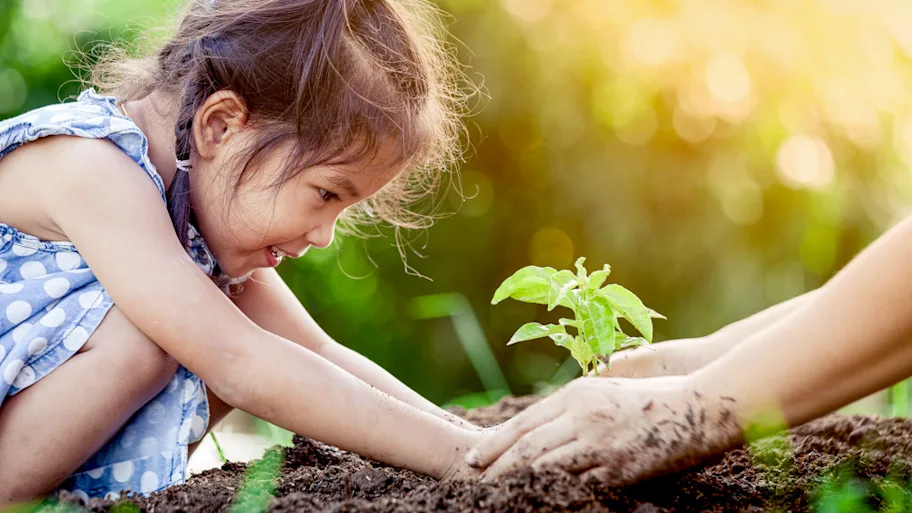
Outdoor lessons may be an inexpensive and convenient way to improve children’s engagement in education. Image: Shutterstock
Following an outdoor lesson in nature, children were more engaged with their schoolwork, and their teachers could teach uninterrupted for almost twice as long.
— By Conn Hastings
A study recently published in open-access journal Frontiers in Psychology finds that 9-10 year-old children are significantly more attentive and engaged with their schoolwork following an outdoor lesson in nature. This “nature effect” allowed teachers to teach uninterrupted for almost twice as long during a subsequent indoor lesson. The results suggest that outdoor lessons may be an inexpensive and convenient way to improve student engagement in education — a major factor in academic achievement.
Scientists have known for a while that natural outdoor environments can have a variety of beneficial effects on people. People exposed to parks, trees or wildlife can experience benefits such as physical activity, stress reduction, rejuvenated attention and increased motivation. In children, studies have shown that even a view of greenery through a classroom window could have positive effects on students’ attention.
However, many teachers may be reluctant to hold a lesson outdoors, as they might worry that it could overexcite the children, making it difficult for them to concentrate on their schoolwork back in the classroom. Ming Kuo, a scientist at the University of Illinois at Urbana-Champaign, and her colleagues set out to investigate this, and hypothesized that an outdoor lesson in nature would result in increased classroom engagement in indoor lessons held immediately afterwards.
“We wanted to see if we could put the nature effect to work in a school setting,” says Kuo. “If you took a bunch of squirmy third-graders outdoors for lessons, would they show a benefit of having a lesson in nature, or would they just be bouncing off the walls afterward?”
The researchers tested their hypothesis in third graders (9-10 years old) in a school in the Midwestern United States. Over a 10-week period, an experienced teacher held one lesson a week outdoors and a similar lesson in her regular classroom, and another, more skeptical teacher did the same. Their outdoor “classroom” was a grassy spot just outside the school, in view of a wooded area.
After each outdoor or indoor lesson, the researchers measured how engaged the students were. They counted the number of times the teacher needed to redirect the attention of distracted students back to their schoolwork during the observation, using phrases such as “sit down” and “you need to be working”. The research team also asked an outside observer to look at photos taken of the class during the observation period and score the level of class engagement, without knowing whether the photos were taken after an indoor or outdoor lesson. The teachers also scored class engagement.
The team’s results show that children were more engaged after the outdoor lessons in nature. Far from being overexcited and inattentive immediately after an outdoor lesson, students were significantly more attentive and engaged with their schoolwork. The number of times the teacher had to redirect a student’s attention to their work was roughly halved immediately after an outdoor lesson.
“Our teachers were able to teach uninterrupted for almost twice as long at a time after the outdoor lesson,” says Kuo, “and we saw the nature effect with our skeptical teacher as well.”
The researchers plan to do further work to see if the technique can work in other schools and for less experienced teachers. If so, regular outdoor lessons could be an inexpensive and convenient way for schools to enhance student engagement and performance. “We’re excited to discover a way to teach students and refresh their minds for the next lesson at the same time,” says Kuo. “Teachers can have their cake and eat it too.”
Original research article: Do Lessons in Nature Boost Subsequent Classroom Engagement? Refueling Students in Flight
This article is part of the Research Topic The Natural World as a Resource for Learning and Development: From Schoolyards to Wilderness
Corresponding author: Ming Kuo
REPUBLISHING GUIDELINES: Open access and sharing research is part of Frontier’s mission. Unless otherwise noted, you can republish articles posted in the Frontiers news blog — as long as you include a link back to the original research. Selling the articles is not allowed.