- Science news
- Featured news
- Modern forensic methods reveal human sacrifice in ancient Egypt
Modern forensic methods reveal human sacrifice in ancient Egypt

Over 500 years before the building of the Great Pyramid in Egypt, First Dynasty kings were buried in a tomb surrounded by many burials of household officials and artisans — many of which seem to have taken place at the same time, a suspiciously high number of simultaneous deaths. The original excavators thought that these individuals were the victims of retainer sacrifice, where people are killed after the death of a ruler to act as their attendants in the afterlife. But they didn’t find evidence of any wounds on the bones, leaving the cause of death in doubt. Now a major re-examination of a sample of the remains, using modern forensic knowledge, has identified numerous instances of cranial trauma that were likely fatal.
Scientists have confirmed that numerous burials clustered around First Dynasty tombs in Abydos, Egypt, reveal the sacrifice of royal household members after the death of kings. These graves were excavated in the 1920s by Flinders Petrie, who suspected that so many people couldn’t have died of natural causes simultaneously — but found no corroborating evidence of fatal wounds. Now reassessment of a sample of skulls from the site, using modern forensic methods, indicates that at least 39% of these individuals may have been deliberately killed by blows to the head.
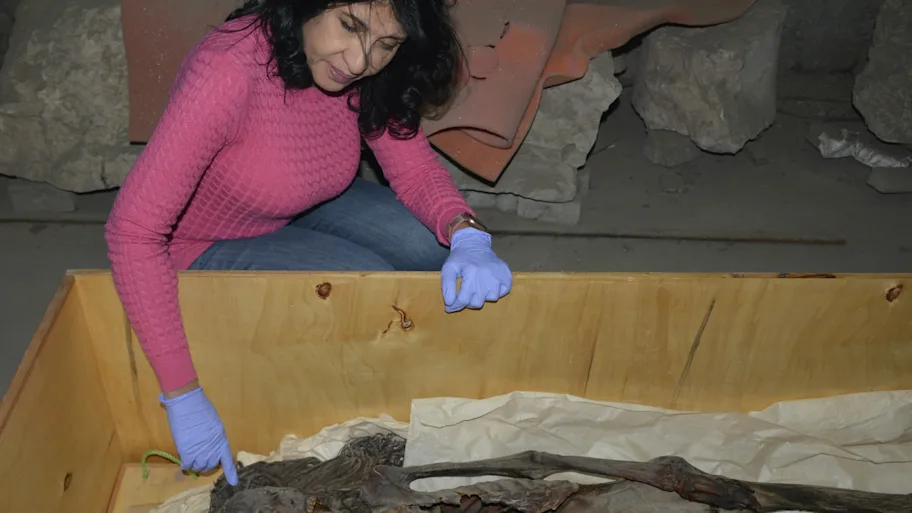
“I was drawn to these retainers partly because, even though they were buried around royalty, they are mostly relegated to footnotes in the grander narrative,” said Dr Roselyn Campbell of Purdue University, author of the article in Frontiers in Environmental Archaeology and of a forthcoming book, State-sanctioned Violence and Human Sacrifice in Early Dynastic Egypt (Routledge Press). “Who were these people and how did they view the ruler and their own role in his or her life and death?”
A cold case
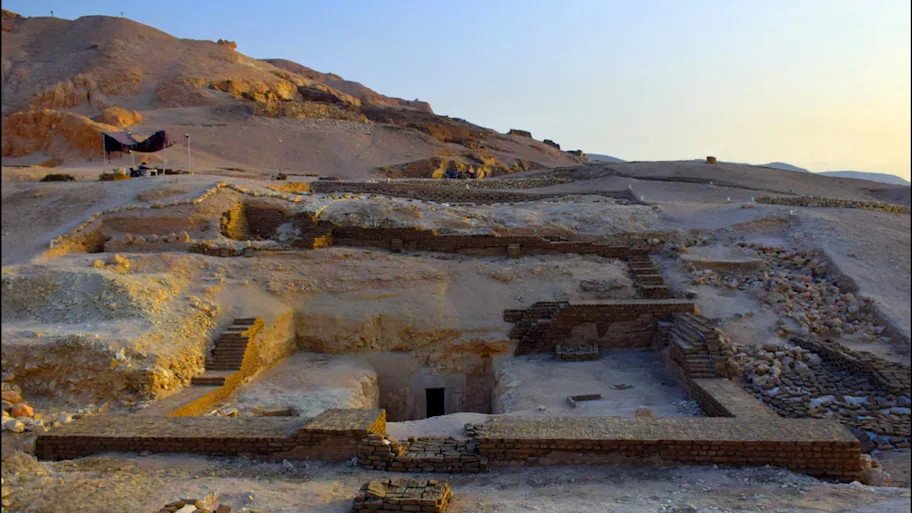
The funerary complexes at Abydos were built around 3000 BCE by the first kings of a unified Egypt. In addition to the royal tombs themselves, the complexes consisted of chamber tombs and enclosures probably used for funerary rituals, as well as subsidiary burials surrounding the tombs and enclosures.
“Each subsidiary burial was a simple chamber in a row of dozens of others,” said Campbell. “Some people had a simple coffin. Most people had a few grave goods, like ceramic vessels, and many graves also included small objects like copper tools, projectile points, or small ivory figurines. Petrie found a few grave markers that had names and sometimes official titles on them. The titles seem to mostly refer to lower- or mid-level officials as well as artisans.”
The sheer number of these subsidiary graves — some burials are surrounded by hundreds — made Petrie suspect that the burials reflected retainer sacrifice.
“Retainer sacrifice is a type of human sacrifice where those close to a ruler are killed when the ruler dies,” explained Campbell. “In many cultures, retainer sacrifice is practiced because of beliefs that the sacrificed individuals will continue to serve the ruler in some kind of afterlife, but retainer sacrifice can also be a visceral display of the ruler’s power. Some retainers might have volunteered to die to achieve eternal life or honor, others may have been chosen or even forced.”
But Petrie found no evidence of lethal trauma, which cast doubt on his hypothesis. To try and solve this mystery, Campbell set out to find the remaining evidence from Petrie’s excavations and assess it using modern forensic knowledge.
Read and download the original article
Fresh evidence
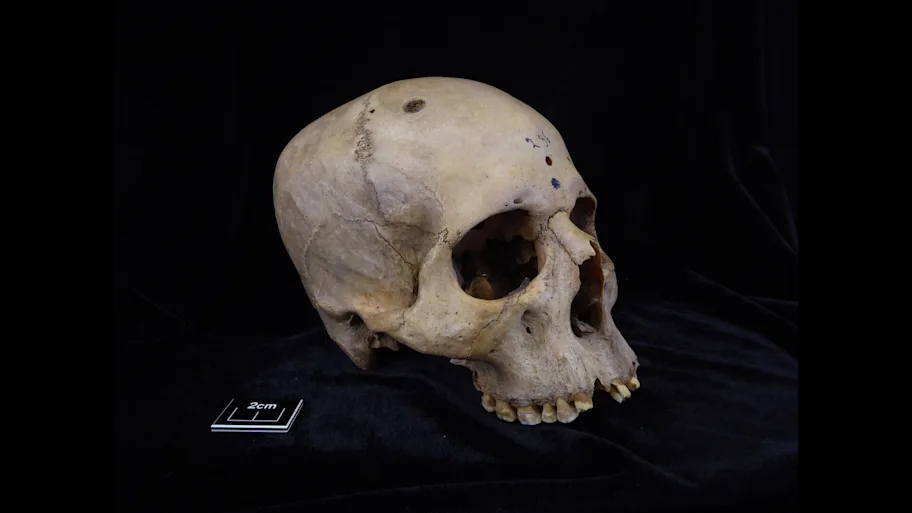
Petrie kept meticulous records, but he reburied most of the remains he excavated, retaining the skulls, some of which he sent to the UK. Campbell found 46 of these in the Duckworth Collection at Cambridge University and re-examined them, identifying crucial new evidence of violence. 18 of the 46 crania showed evidence of significant cranial trauma — linear fractures which Petrie seems to have mistaken for naturally-caused damage. Advances in forensic science allow us to recognize them as perimortem injuries.
“The injuries on the preserved crania are generally linear fractures, which would likely cause rapid unconsciousness, internal bleeding, and death,” said Campbell, who also reported evidence of sharp-force trauma on some of the 18 skulls, including a chopping injury to one individual’s eye.
We don’t know how these deaths happened. Egyptian kings are often depicted smiting their enemies with a mace, but these retainers weren’t their enemies, and a mace would have caused depressed fractures. Linear fractures are generally caused by a flat, wide weapon, or a fall — but falling hard enough to create a cranial fracture would probably have broken other bones, which should have been visible in Petrie’s photographs or recorded in his notes.
We also don’t know what happened to the other retainers. Some could have died naturally. Alternatively, they may have been killed in a way that isn’t visible skeletally — like asphyxiation — or in a way that we would be able to detect if we could examine the rest of their skeleton.
“If I had unlimited resources, I would love to figure out where the bodies of these individuals might be and analyze them!” said Campbell. “Still, this study shows how much new information about the past can be revealed when we revisit previous data armed with updated methods and knowledge, even for datasets that are incomplete and imperfect like this one.”
REPUBLISHING GUIDELINES: Open access and sharing research is part of Frontiers’ mission. Unless otherwise noted, you can republish articles posted in the Frontiers news site — as long as you include a link back to the original research. Selling the articles is not allowed.