Epilepsy – Case Report Collection 2022

72kviews
CASE REPORT
18 May 2023
Case report: Young-onset large vessel ischemic stroke due to hyperhomocysteinemia associated with the C677T polymorphism on 5,10-methylenetetrahydrofolate reductase and multi-vitamin deficiency
Jiro Fukae, 7 more and Yasushi Shimo

4,432 views

2 citations

CASE REPORT
9 March 2023
Case report: Functional analysis of the p.Arg507Trp variant of the PIGT gene supporting the moderate epilepsy phenotype of mutations in the C-terminal region
Ikhlas Ben Ayed, 12 more and Saber Masmoudi

3,498 views

4 citations

CASE REPORT
9 March 2023
Case report: Successful anterior temporal lobectomy in drug-resistant temporal lobe epilepsy associated with Sotos syndrome
Leonardo Favi Bocca, 5 more and Ricardo Silva Centeno

2,661 views

2 citations

CASE REPORT
13 September 2022
Case report: Dravet syndrome, feeding difficulties and gastrostomy
Lisa M. Clayton, 2 more and Sanjay M. Sisodiya
Case report: Dravet syndrome, feeding difficulties and gastrostomy
Dravet syndrome (DS) is a developmental and epileptic encephalopathy associated with variants in the voltage-gated sodium channel alpha 1 subunit (SCN1A) gene in around 90% of individuals. The core phenotype is well recognized, and is characterized by seizure onset in infancy, typically with prolonged febrile seizures, followed by the emergence of multiple seizure types that are frequently drug-resistant, developmental delay, and intellectual disability. Comorbidities are common and include autism spectrum disorder, gait impairment, scoliosis, and sleep disorder. Feeding difficulties and weight loss are frequently reported by DS caregivers, and negatively impact quality of life, yet have received little attention. Here we report an adult with DS who developed reduced food and fluid intake in adolescence, resulting in weight loss and malnutrition. No underlying cause for her feeding difficulties was identified, and she subsequently required insertion of a percutaneous endoscopic gastrostomy. We review the occurrence of feeding difficulties in people with DS and discuss potential mechanisms.

5,009 views

6 citations

CASE REPORT
16 September 2022
Case report: A novel de novo variant of SCN8A in a child with benign convulsions with mild gastroenteritis
Hui Chen, 8 more and Jianmin Zhong

2,964 views

2 citations

New-onset refractory status epilepticus due to autoimmune encephalitis after vaccination against SARS-CoV-2: First case report
Background: Vaccination against SARS-CoV-2 has been used frequently to limit the pandemic, but may rarely be associated with postvaccinal autoimmune reactions or disorders. Case presentation: We present a 35-year-old woman who developed fever, skin rash, and headache 2 days after the second SARS-CoV-2 vaccination with BNT162b2 (Pfizer/Biontech). Eight days later, she developed behavioral changes and severe recurrent seizures that led to sedation and intubation. Cerebral magnetic resonance imaging showed swelling in the (para-) hippocampal region predominantly on the left hemisphere and bilateral subcortical subinsular FLAIR hyperintensities. Cerebrospinal fluid analysis revealed lymphocytic pleocytosis (7cells/µl), normal protein, and immunoglobulin parameters. Common causes of encephalitis or encephalopathy such as viral infections, autoimmune encephalitis with well-characterized autoantibodies, paraneoplastic diseases or intoxications were ruled out. We made the diagnosis of new onset refractory status epilepticus (NORSE) due to seronegative autoimmune encephalitis. The neurological deficits improved after combined antiepileptic therapy and immunomodulatory treatment including high-dose methylprednisolone and plasma exchange. Conclusions: Although a causal relationship cannot be established, the onset of symptoms shortly after receiving a SARS-CoV-2 vaccine suggests a potential association between the vaccination and NORSE due to antibody-negative autoimmune encephalitis. After ruling out other etiologies early immunomodulatory treatment may be considered in such cases.

8,036 views

16 citations

CASE REPORT
11 August 2022
Case report: An EEG captured case of migralepsy/migraine aura-triggered seizures
Anam Hareem, 3 more and Chinekwu Anyanwu

6,322 views

3 citations

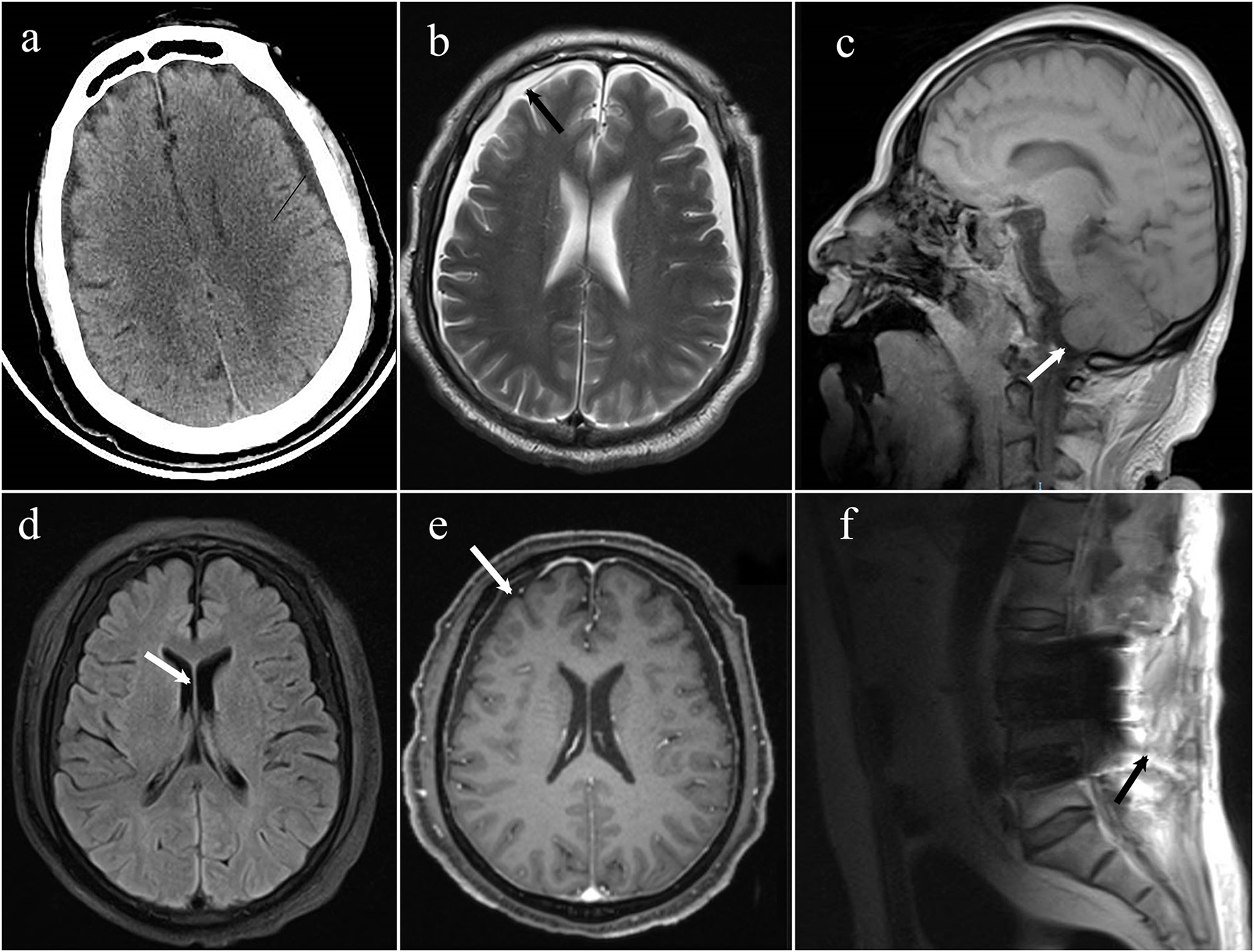
Patient concerns: A 72-year-old Chinese male patient developed status epilepticus, disorder of consciousness, and quadriplegia when he finished spinal surgery. While he had no previous seizures, nor any seizure risk factors. Diagnosis: After MRI and CT examination, combined with the clinical manifestations of the patient, intracranial hypotension due to cerebrospinal fluid leakage was diagnosed. Interventions: In the early stage, we carried out strict perioperative critical care for the patient. Trendelenburg position was conducted to relieve intracranial hypotension. The dural repair surgery was performed after diagnosis of CSF leakage. Traditional Chinese acupuncture and massage therapy also offered significant benefits in the rehabilitation process. Outcomes: Seizures in the patient were cured. Three months after discharge, he was gradually returning to normal life. Lessons: Unexplained seizures and disorder of consciousness after spinal surgery may be highly suggestive of the presence of a cerebrospinal fluid leakage associated with intracranial hypotension syndrome. Trendelenburg position and dural repair surgery are effective ways to relieve intracranial hypotension and associated symptoms. Better awareness of the association between IH (intracranial hypotension) and SE (status epilepticus) may help us improve early recognition of the syndrome.

11,320 views

5 citations

CASE REPORT
20 June 2022
Case Report: Late-Onset Lennox-Gastaut Syndrome Treated With Stereotactic Electroencephalography-Guided Radiofrequency Thermocoagulation Before Craniotomy
Sixian Li, 6 more and Lei Chen

3,507 views

5 citations

CASE REPORT
12 May 2022
Newly Diagnosed Hepatic Encephalopathy Presenting as Non-convulsive Status Epilepticus: A Case Report and Literature Review
Marco Olivero, 8 more and Megi Meneri
Newly Diagnosed Hepatic Encephalopathy Presenting as Non-convulsive Status Epilepticus: A Case Report and Literature Review
Background: Hepatic encephalopathy is characterized by psychiatric and neurological abnormalities, including epileptic seizure, nonconvulsive and convulsive status epilepticus. Conventional brain magnetic resonance imaging is useful in supporting the diagnosis, since it can reveal specific radiological findings. In the literature, there is no description of hepatic encephalopathy onset as nonconvulsive status epilepticus; we provide the first report. Case summary: We report a case of a 67-years old woman, without history of cirrhosis, presenting altered mental state, normal brain computed tomography imaging and electroencephalography suggestive of epileptic activity. We suspected nonconvulsive status epilepticus and we administered diazepam and levetiracetam with clinical improvement. Thus, we made a diagnosis of nonconvulsive status epilepticus. Radiological study with brain magnetic resonance imaging showed bilateral hyperintensity on T1-weighted sequences of globus pallidus and hyperintensity of both corticospinal tracts on T2-weighted fluid-attenuated inversion recovery sequences. Blood tests revealed hyperammonemia, mild abnormality of liver function indices, chronic Hepatitis B and D virus coinfection. Hepatic elastosonography suggested liver cirrhosis. The patient started antiviral therapy with entecavir and prevention of hepatic encephalopathy with rifaximin and lactulose; she was discharged with a normal mental state. Conclusions: Hepatic encephalopathy can present as initial manifestation with nonconvulsive status epilepticus. Electroencephalography is useful in differentiating nonconvulsive status epilepticus from an episode of hepatic encephalopathy and neuroimaging aids the diagnostic process.

8,249 views

5 citations

CASE REPORT
9 May 2022
Macroglossia Associated With Clobazam Administration: A Case Report and Literature Review
Jeff F. Zhang, 3 more and Anil K. Swayampakula

3,221 views

6 citations

CASE REPORT
4 April 2022
Case Report: Stereoelectroencephalography and Stereoelectroencephalography-Guided Radiofrequency Thermocoagulation in Familial Lateral Temporal Lobe Epilepsy
Ziqi Wei, 5 more and Jun Zhao

2,673 views