sara.palermo@unito.it 13In the vast realm of scientific inquiry, women have played a pivotal yet often unacknowledged role in 14 shaping our understanding of the intricate workings of the human nervous system. The research 15 landscape, however, remains a challenging terrain for women, with less than 30% of researchers 16 worldwide being female (https://uis.unesco.org/en/topic/women-science Farshchi and collaborators address the limited understanding of the neurophysiological processing of 49 negation in natural language, particularly in the context of spoken language. While previous research 50 based on written stimuli suggested processing costs related to negation, the study developed an auditory 51 paradigm replicating these costs but revealing distinct patterns of ERP effects. The findings suggest 52 that processing negation in spoken language may be less effortful, possibly due to the natural flow of 53 speech reducing variability in neural responses, as opposed to the written word-by-word paradigm. 54Searinen and colleagues investigated whether there is a neural inter-group bias between minority and 55 majority members based on ethnicity and explored differential neural processing of various ethnic 56 groups. The results indicate that ethnic minority members did not exhibit the bias, while ethnic majority 57 members displayed biased responses towards minority members in brain regions associated with 58 several neural processes such as facial elaboration, and attention. 59Morellini and collaborators propose that highly sensitive people may be particularly susceptible to 60 social exclusion conditions beyond the physical pain, offering insights for developing interventions to 61 support their well-being. While not pathological, sensory-processing sensitivity (SPS) may increase 62 vulnerability to risk conditions during vulnerable life periods ad childhood and adolescence. 63In celebrating the achievements of women in brain health and clinical neuroscience, we not only honor 64 their individual contributions but also challenge the prevailing norms that hinder the full realization of 65 their potential.
Editorial06 March 2024
Editorial: Women in brain health and clinical neuroscience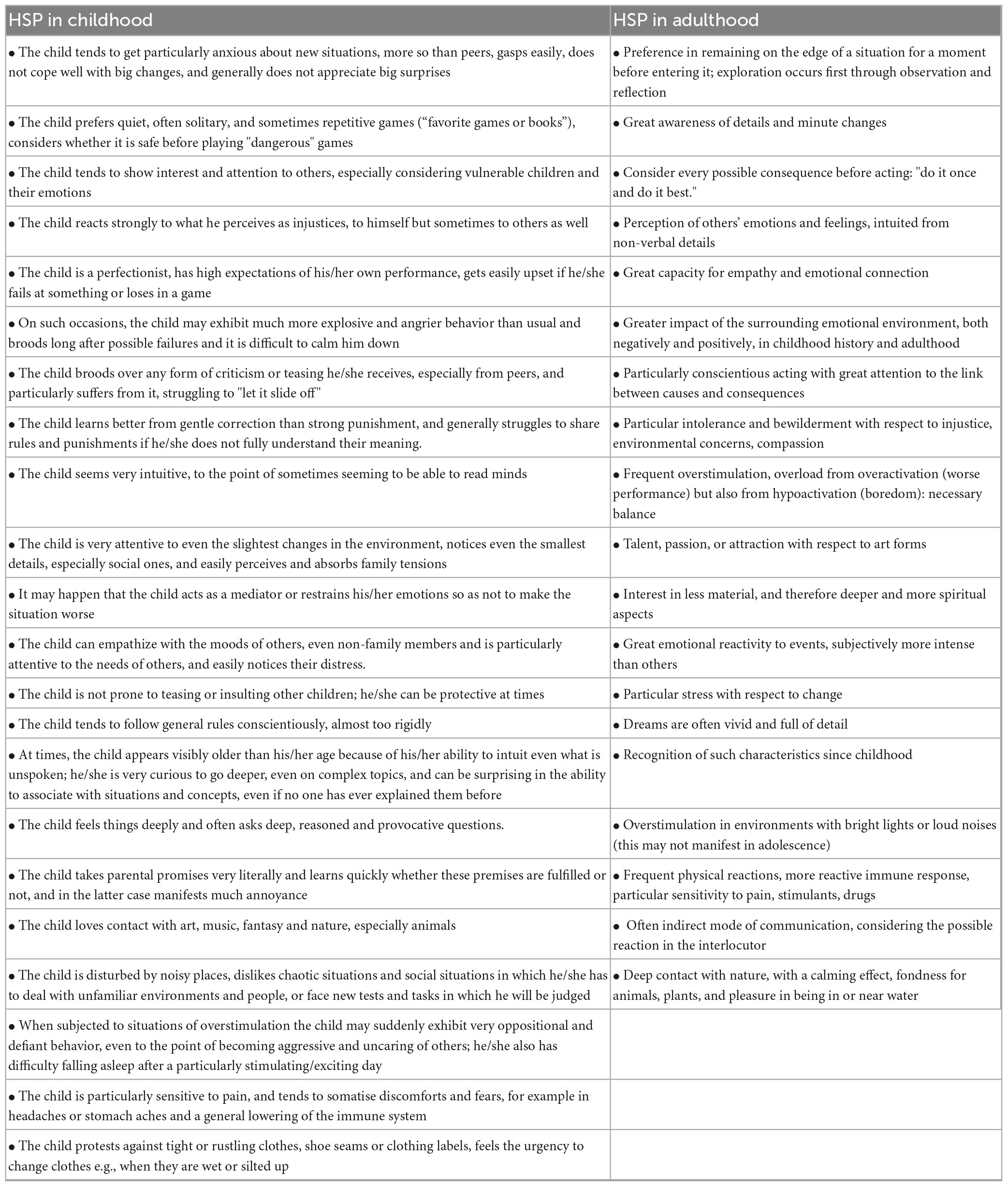
HYPOTHESIS AND THEORY
14 June 2023
Lucia Morellini, 3 more and Rosalba Morese
5 Authors
- LM
Lucia Morellini
Faculty of Biomedical Sciences, Università della Svizzera italiana, Switzerland
- AI
Alessia Izzo
Faculty of Biomedical Sciences, Università della Svizzera italiana, Switzerland
- AC
Alessia Celeghin
Department of Psychology, University of Turin, Italy
- SP
Sara Palermo
Department of Psychology, University of Turin, Italy
- RM
Rosalba Morese
Faculty of Biomedical Sciences, Università della Svizzera italiana, Switzerland
Sensory-processing sensitivity (SPS) defined, as a personality trait, seems to be characterized by emotional sensitivity, and stronger reactivity to both external and internal stimuli. SPS can represent a risk factor for developing clinical conditions during childhood and adolescence. This personality trait is not to be considered a pathological clinical condition, however, can expose to greater environmental vulnerability. In particular, the recent studies about SPS can be contextualized to social situations that evoke traumatic and stressful emotional responses such as social exclusion. We hypothesize that Highly Sensitive People (HSP) are more vulnerable to social exclusion and social pain. This hypothesis could help structure new educational and intervention models designed to improve coping strategies and promote HSP’s psychophysical and social well-being.

Long-term potentiation (LTP) is one of the most extensively studied forms of neuroplasticity
and is considered the strongest candidate mechanism for memory and learning. The use of event-related potentials and sensory stimulation paradigms has allowed for the translation from animal
studies to non-invasive studies of long-term potentiation (LTP)-like synaptic plasticity in humans.
Accumulating evidence suggests that synaptic plasticity as measured by stimulus-specific response
modulation is reduced in neuropsychiatric disorders such as major depressive disorder, bipolar
disorders and schizophrenia, suggesting that impaired synaptic plasticity plays a part in the underlying
pathophysiology of these disorders. This is in line with the neuroplasticity hypothesis of depression,
which postulate that deficits in neuroplasticity might be a common pathway underlying depressive
disorders. The current study aims to replicate and confirm earlier reports that visual stimulus-specific
response modulation is a viable probe into LTP-like synaptic plasticity in a large sample of healthy
adults (n = 111). Further, this study explores whether impairments in LTP-like synaptic plasticity is
associated with self-reported subclinical depressive symptoms and stress in a healthy population.
Consistent with prior research, the current study replicated and confirmed reports demonstrating
significant modulation of visual evoked potentials (VEP) following visual high-frequency stimulation.
Current results further indicate that reduced LTP-like synaptic plasticity is associated with higher levels
of self-reported symptoms of depression and perceived stress. This indicate that LTP-like plasticity is
sensitive to sub-clinical levels of psychological distress, and might represent a vulnerability marker for
the development of depressive symptoms.