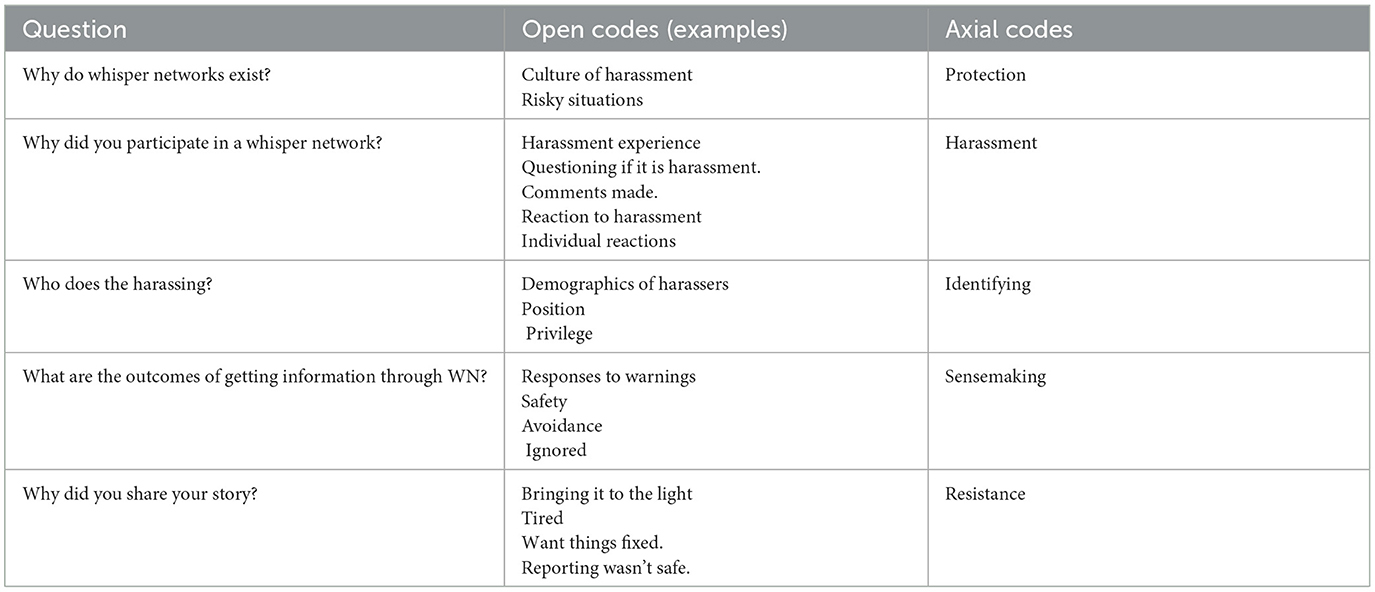
The growing body of research on workplace bullying and harassment continues to expand our understanding of how toxic communication operates to harm people and organizations. No longer viewed merely as isolated incidents caused by difficult personalities, workplace bullying and harassment are increasingly conceptualized as a complex organizational phenomenon shaped by communication, power, and culture that have serious consequences for individuals and organizations. The articles in this special issue-on workplace gaslighting, abusive supervision, role stressors and bullying, organizational identification, and whisper networks-collectively illustrate important tensions in how researchers interpret employee vulnerability, organizational responsibility, and worker agency.One of the clearest themes across these studies is that workplace harm is fundamentally communicative, relational, and systemic. The gaslighting study, for example, moves beyond simplistic notions of manipulation by highlighting how concerns are minimized in ways capable of causing distress, confusion, and/or self-doubt. While intentionality is often highlighted in definitions of bullying, the authors argue that intentionality is not always necessary for gaslighting to occur because workplace harm often emerges through subtle, normalized, and difficult-to-prove interactions. This represents an important contribution in understanding toxicity as being embedded in organizational power relations, culture, and communicative patterns.Similarly, the article on role stressors and workplace bullying emphasizes structural rather than purely interpersonal causes of harm. Role conflict, role ambiguity, and overload are not simply stressful working conditions; they become fertile ground for bullying behaviors. Of note is the finding that role conflict consistently predicts bullying to a higher degree than other stressors. This suggests that organizations themselves may unintentionally create environments Workplace Bullying and Harassment Editorial 3 where aggression and mistreatment flourish through poor role design, contradictory expectations, and insufficient support systems. The focus on perceived organizational support further reinforces the idea that organizational climate matters profoundly, indicating that supportive cultures can partially offset the negative consequences of bullying and harassment.Other studies in this special issue reveal the deep personal and psychological consequences of workplace harm. The abusive supervision study centers on fear of failure as the emotional mechanism connecting supervisory abuse to employee learning outcomes. Unlike traditional research that treats abusive supervision as uniformly destructive, this study introduces a unique argument that fear is linked to task variety and fear of failure. The authors found that while fear can be motivating in complex jobs with high task variety it can have also have the opposite effect particularly in jobs with low task variety. A major contribution of this study is in highlighting the complicated relationship between fear, motivation, and performance. Ultimately, they argue that emotional distress does not always produce identical organizational consequences.The next two articles in the special issue utilize qualitative methods to explore individualized experiences of workplace bullying and harassment. The articles exploring organizational identification and whisper networks portray employees not merely as passive victims but as active meaning-makers navigating toxic environments. The organizational identification study reveals that harmful workplace experiences do not automatically sever employees' attachment to organizations. Some participants psychologically disengage and experience organizational disidentification, while others maintain their identification with the organization by separating the organization from individual perpetrators or by relying on supportive interpersonal relationships. These findings weave together the emotional and identity-Workplace Bullying and Harassment Editorial 4 based negotiations employees undertake when confronting workplace mistreatment. Workers do not simply decide whether an organization is "good" or "bad"; they continuously reinterpret their experiences to preserve coherence, organizational identification, and professional identity.The whisper networks article extends this relational perspective by examining informal communication systems women use to protect one another from sexual harassment. Perhaps more than any of the other studies, this research underscores organizational failure. Whisper networks emerge precisely because formal reporting structures are perceived as inadequate, unsafe, or ineffective. Women share information privately not only to identify dangerous individuals but also to validate experiences that organizations often minimize or ignore altogether. In this sense, whisper networks function simultaneously as protective systems, support networks, and mechanisms of collective survival. In instances where organizations fail to respond effectively to sexual harassment supportive informal communicative networks form to help others make sense of and potentially avoid harassment. While powerful and important the author notes that whisper networks do little to remediate these harmful behaviors.The articles in this special issue differ in how they conceptualize employee agency. The gaslighting, abusive supervision, and bullying studies largely position employees as recipients of harmful organizational dynamics and highlight elements that limit target agency. By contrast, the organizational identification and whisper network studies foreground workers' active efforts to interpret, resist, and navigate harmful organizational behaviors. Employees build informal support systems, maintain selective relationships, and create alternative channels of organizational support and sensemaking when formal systems fail them.Together, these studies reveal that workplace toxicity cannot be reduced to isolated acts of incivility or misconduct. Harmful workplace experiences emerge through communication Workplace Bullying and Harassment Editorial 5 practices, leadership behaviors, social identities, culture, and informal networks. As a result, employees experience fear, confusion, and distress, but they also engage in sensemaking, identity negotiation, and collective protection and resistance. The broader implications of these articles is difficult for organizations to ignore. Workplace bullying and harassment are not simply the product of a few "bad actors." It often reflects deeper institutional conditions: ambiguous roles, power imbalances, weak accountability systems, normalized aggression, and cultures that fail to provide meaningful support. Employees' reliance on whisper networks, emotional coping strategies, and interpersonal alliances signal not only individual resilience but also organizational ineffectiveness.Future research should continue to explore the complexity of toxic workplace communication. Workplace toxicity is not universally experienced or interpreted. Harmful behaviors can produce varying psychological and organizational outcomes depending on context, support, identity, and social networks. What these studies collectively demonstrate is that understanding workplace harm requires moving toward a richer understanding of organizations as communicative, relational, and embedded in larger power structures where both harm and resistance are continuously produced and reproduced. This special issue focused on the communicative nature of workplace bullying and harassment. The articles included wonderfully capture the importance of understanding the role of communication in navigating and addressing bullying and harassment in organizations.
5 Authors
- HW
Haizhen Wang
School of Business, Xi’an International Studies University, China
- GA
Ge An
School of Business, Nanjing University, China
- JX
Jiajia Xu
School of Business, Xi’an International Studies University, China
- LD
Lin Ding
School of Business, Xi’an International Studies University, China
- JC
Jie Chen
School of Business, Xi’an International Studies University, China
1,849 views
1 citations
5,244 views
2 citations
2,499 views
2 citations

7 Authors
- KH
Karen Harlos
Department of Business and Administration, University of Winnipeg, Canada
- DG
Duygu Gulseren
School of Human Resources Management, York University, Canada
- GO
Grace O'Farrell
Department of Business and Administration, University of Winnipeg, Canada
- WJ
Wendy Josephson
Department of Psychology, University of Winnipeg, Canada
- LA
Larry Axelrod
The Neutral Zone Coaching and Consulting Services, Canada
- AH
Aynslie Hinds
Department of Psychology, University of Winnipeg, Canada
- CM
Cassandra Montanino
Department of Psychology, University of Winnipeg, Canada