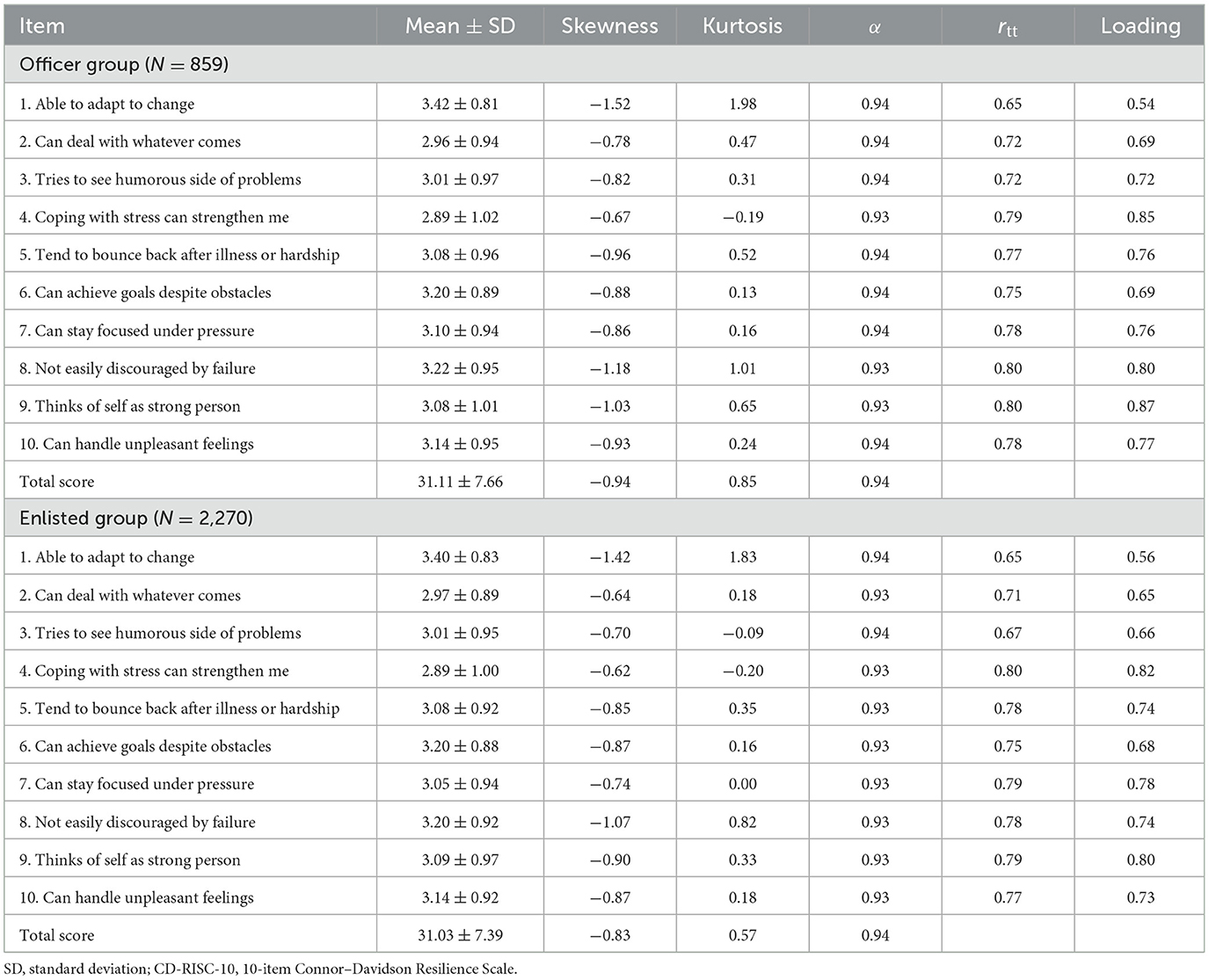
The convergence of data science and psychology presents a promising fron5er for research and innova5on. We received 25 original contribu5ons for this special topic but only seven were deemed suitable for publica5on. This disparity highlights a poten5al gap in understanding the applica5on of data science within psychology and underscores the need for further methodological development. Data science presents a versa5le toolkit with diverse applica5ons. We have iden5fied its poten5al in valida5ng psychometric scales, scru5nizing response integrity, and analyzing decision-making processes. Addi5onally, a new tool designed to enhance data science applica5on emerged.Four of the studies were devoted to the valida5on of relevant psychometric scales for Chinese popula5on. The first one validates a scale aimed at assessing childhood maltreatment in China, a pervasive issue with profound implica5ons for both physical and mental well-being. Data compiled from 68 studies reveal alarming sta5s5cs in this country: 19.6% of children under the age of 18 have experienced emo5onal abuse, 26.6% physical maltreatment, and 8.7% sexual abuse (Fang et al., 2015). Peng et al. evaluated the psychometric proper5es and norma5ve data of the Childhood Trauma Ques5onnaire-Short Form (CTQ-SF) for Chinese adolescents, in a na5onally representa5ve sample from diverse provinces. The most fiTng model featured a four-factor structure, demonstra5ng robust internal consistency, test-retest reliability, and convergent validity.Secondly, Meng et al. validated the Sussex Oxford Compassion for the Self Scale (SOCS-S) in a Chinese working sample of 1132 par5cipants. Self-compassion, rooted in Buddhist psychology, posi5vely influences coping in daily life and organiza5onal seTngs, promo5ng a posi5ve selfconcept. It has been associated to many posi5ve outcomes including enhanced intrinsic mo5va5on, reduced nega5ve emo5ons, and improved adaptability. The study's significance is underscored by a recent systema5c review emphasizing the necessity of modifying exis5ng instruments for compassion measurement to cater to diverse popula5ons and cultures (Jiang et al., 2023). Employing Classical Test Theory, Item Response Theory (IRT), and Network Analysis, the research confirmed the SOCS-S's five-factor structure, with high internal consistency and measurement invariance across genders. IRT analysis revealed that all 20 items exhibited sufficient discrimina5on and acceptable difficulty indices among Chinese occupa5onal groups.Thirdly, Tu et al. aimed to evaluate the psychometric proper5es of the 10-item Connor-Davidson Resilience Scale (CD-RISC-10) in a Chinese military personnel sample of 3129 par5cipants. The CD-RISC-10 is a widely used assessment of resilience. However, psychometric proper5es of CD-RISC-10 had not been inves5gated in Chinese military personnel sample. The present study demonstrated that the CD-RISC-10 measurements in military personnel were reliable, valid, and consistent across military rank, gender, and 5me. In addi5on, resilience score was strongly related to depression and anxiety symptoms, and it was predic5ve of military training performance.Finally, Lei et al. study assessed the validity and reliability of the Chinese version of the Core Extrusion Schema-Revised (CES-R) for high school students. The core extrusion schema involves the belief that one's true self will be rejected, leading to a tendency to conceal one's authen5c self, and it may be an important contributor to prevalent disorders such as the social anxiety disorder. Involving 1334 students in Wuhan for item analysis and valida5on, and 1745 students in Zhejiang for ques5onnaire valida5on, the results indicated that the twodimensional model of CES-R fit well, showing posi5ve correla5ons with related measures. The Chinese CES-R demonstrated good validity and reliability for evalua5ng high school students, with acceptable measurement invariance across genders and grades.Data science brings a mul5tude of uses and approaches for psychology. For instance, emerging technologies leveraging data science can verify the accuracy of responses. Scarpazza et al. sought to illustrate how individual responses to ques5ons can be an5cipated by es5ma5ng peer reac5ons to the same queries, and how this an5cipa5on can be leveraged to reconstruct an individual's response to a single item as well as the collec5ve response to all items. In a cohort comprising 187 subjects, they validated the use of machine learning models to reconstruct individual responses from peer es5ma5ons across two studies: one focusing on anxiety-related inquiries and the other on the Dark Triad of personality traits. The findings indicated that individual responses to a single ques5on could be predicted with 70-80% accuracy. Moreover, the overall par5cipant-predicted score across all ques5ons exhibited a correla5on of 0.7-0.77 with actual results. The u5liza5on of the false consensus effect framework shows promise as a technique for reconstruc5ng truthful responses, par5cularly in forensic seTngs where respondents are highly inclined to conceal their true responses and authen5c test responses are unavailable.Guenther and Lordan employed data science techniques to explore how the disposi5on effect varies across decision-making scenarios involving mean-rever5ng commodi5es and nonmean-rever5ng equi5es. Furthermore, they inves5gated whether a straighjorward informa5onal interven5on highligh5ng the disposi5on effect could influence decision-making. This study conducted a within-subject experiment involving 193 professional traders. The findings indicated that prior to the interven5on, traders exhibited the disposi5on effect in a manner consistent with profit maximiza5on objec5ves. Moreover, the study revealed that the informa5onal interven5on effec5vely altered the observed level of the disposi5on effect and subsequent decision-making. Notably, the simple informa5onal interven5on enhanced trader returns when deciding on non-mean-rever5ng securi5es, but conversely had adverse effects when applied to commodi5es. Their study highlights the power of simple interven5ons to make dispropor5onately large changes to decision-making.Finally, data science can contribute to the development of prac5cal tools. Lu introduces the metavcov package designed for mul5variate meta-analysis (MMA). MMA is a powerful sta5s5cal technique that can provide more reliable and informa5ve results than tradi5onal univariate meta-analysis, which allows for comparisons across outcomes with increased sta5s5cal power. However, implemen5ng appropriate sta5s5cal methods for MMA can be challenging. The metavcov package provides useful tools for conduc5ng MMA with examples in R under a generalizable, sta5s5cally principled analy5cal framework. It is very flexible in accommoda5ng func5ons for different effect sizes and func5ons for different coefficient es5ma5on methods. It is very prac5cal with func5ons for data visualiza5on and handling missing values. As well as being sta5s5cally principled, it is helpful in prac5ce that once the model has been specified, mul5ple imputa5on can be conducted automa5cally.
Fang, X., Fry, D. A., Ji, K., Finkelhor, D., Chen, J., Lannen, P., & Dunne, M. P. ( 2015). The burden of child maltreatment in China: A systema5c review. Bulle%n of the World Health Organiza%on, 93(3), 176-185C. hnps://doi.org/10.2471/ BLT.14.140970 Jiang, H., Wang, W., Mei, Y., Zhao, Z., Lin, B., & Zhang, Z. (2023). A scoping review of the selfreported compassion measurement tools. BMC Public Health, 23(1), 2323. hnps://doi.org/10.1186/s12889-023-17178-2