regulators, drug developers, scientists, clinicians and patients, where evidence-based insights and methodological advances would be highly valuable. For example, the EMA Regulatory Science Research Needs include the following uncertainty-related research needs (2,3):-
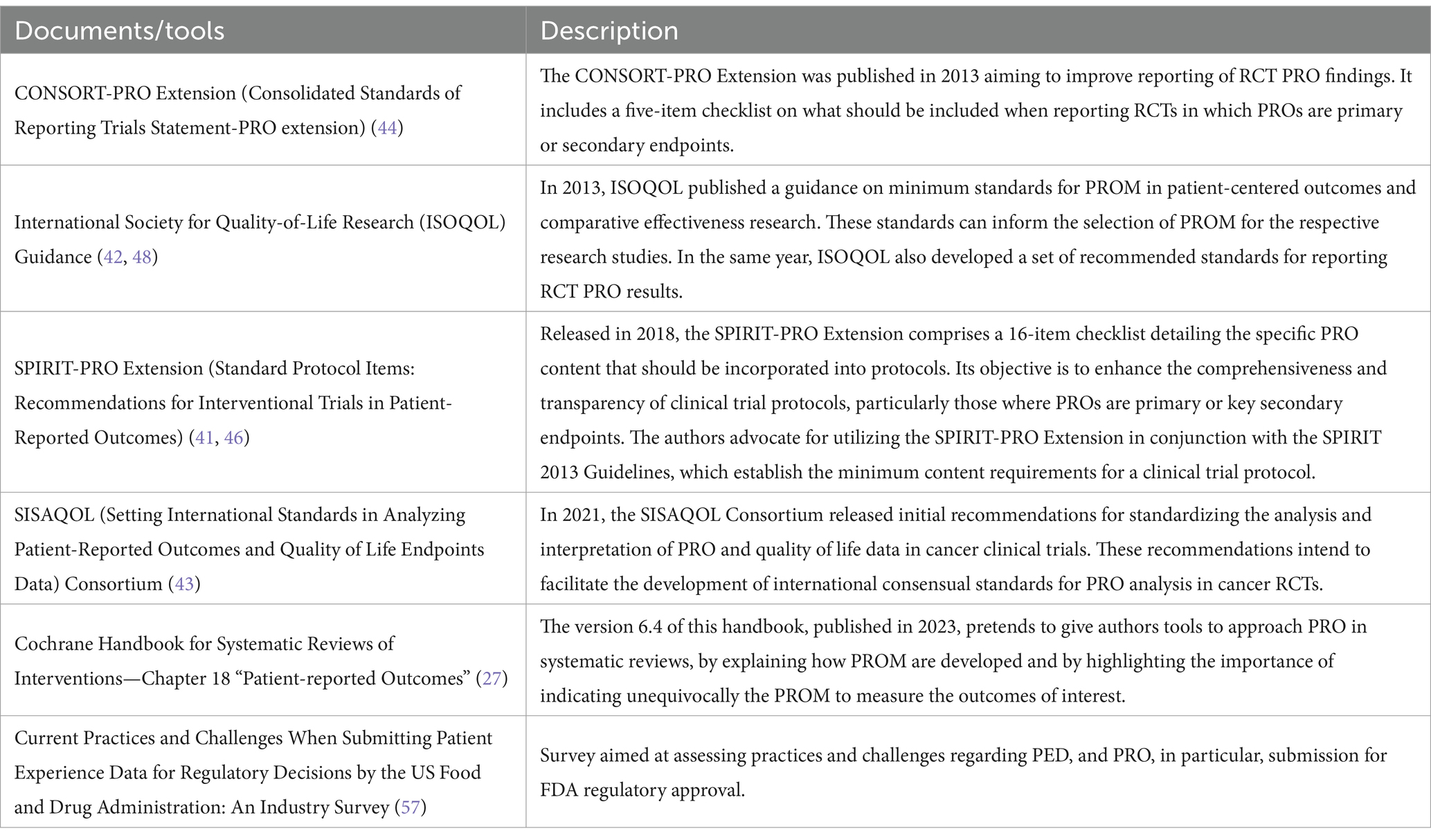
Assessment Reports (EPARs) to better support HTA decision-making.-Studies to improve understanding of the potential effects of medicines on foetal and newborn health and in pregnant and breastfeeding women, thereby supporting more informed benefitrisk decision-making in these populations.-Developing methods to quantify and report uncertainties in complex modelling and simulation models, such as diagnostic and reporting tools to facilitate regulatory decision based on these models.-Developing standards and quality requirements for evidence generation methods to help address uncertainties, such as for the design, conduct, analysis, and reporting of patient-reported outcome (PRO) studies for regulatory submissions, and assessment of how such standards help evaluating the evidence from PRO studies during benefit-risk assessment and HTA. We hope that this curated special issue will provide insight, inspiration and direction for researchers and stakeholders interested in advancing the topic of uncertainty identification, management and communication.
Several contributions focus on how uncertainties and mitigation strategies are discussed and applied within regulatory decision-making. Medicine regulators are tasked to determine whether a medicine's favourable effects outweigh its unfavourable effects based on the evidence submitted. The articles in this section examine how uncertainties surfaced in this process and propose approaches to improve their transparency, communication and systematic handling. To enable early access to promising medicines for patients with unmet medical needs, e.g. those with rare or poorly treatable diseases, regulators have implemented pathways to expedite access, including EMA's Conditional Marketing Authorization (CMA). Medicine developers may be granted a CMA for medicines that address an unmet medical need on less comprehensive clinical data than normally required. It is important to note that such a CMA can only granted when a positive benefit risk balance of the medicine has been concluded with the benefit of the medicine's availability to the patient outweighing the risk inherent in the fact that additional data are still required, and this in addition to other criteria that need to be met. Once a CMA has been granted, the marketing authorisation holder must fulfil specific obligations and this within defined timelines to provide comprehensive data postauthorisation (6). In a policy brief, Maksimova and colleagues examine ethical considerations associated Additional contributions on this topic address patient-focused drug development through the analysis of patient perspectives shared on social media (Cimiano et al., 2024). Authors explore how social media listening (SML) methods are increasingly applied and how evidence derived from social media can be used in the drug development process, for identification of unmet patient needs and its impact on regulatory decision making. The perspectives of patients, developers and regulators on the role of SML in drug development were reviewed, together with a review of current SML practices and use cases.Findings suggest that stakeholders are strongly aligned regarding the potential of SML for patientfocused drug development, while also identifying areas where regulatory guidance is needed to reduce uncertainty regarding the impact of SML as a source of PED. Also, in an EMA HMA expert review report the potential of social media data for regulatory use was investigated through an analysis of scientific literature. This work resulted in a set of regulatory use cases, identification of challenges and opportunities, and key points for consideration to guide future actions for establishing the value and enabling the use of social media in medicine regulation (9).