
Prejudice and discrimination in which people are penalised for having darker skin and features not associated with whiteness is known as colourism (Hunter, 2005;Phoenix and Craddock, 2025). Rooted in histories of colonialism, slavery, caste and racialised hierarchies, colourism operates both within and between racialised groups, shaping opportunities and lived experiences across diverse cultural contexts. Colourism has far-reaching consequences for health and wellbeing, education and employment opportunities, interpersonal relationships, and within legal justice systems (Monk, 2018;Monk, 2021;Strmic-Pawl et al., 2021), shaping, for instance, who is hired, who is considered desirable as a romantic partner, and who is believed in court. Technological innovations, including the algorithms driving social media platforms and AI-enhanced beauty standards, have only added to the power of global messaging that prioritises light skin and devalues dark skin. Despite increasing scholarly attention, research has remained disproportionately concentrated on the United States and the experiences of Black Americans, leaving important geographical contexts, populations, and disciplinary perspectives comparatively underexplored. This research topic, 'Understandings and Experiences of Colourism: Global Perspectives' brings together international scholars whose work advances understanding of how colourism operates across multiple regions, populations, and social institutions. The nine articles in this volume highlight both the global reach of colourism and the diverse ways in which it is experienced, reproduced, and challenged, offering new theoretical, and empirical insights into an enduring yet under-researched form of inequity. Many articles take an intersectional approach to their investigations of colourism and include studies of colourism and migration, gender, sexuality, and class. For example, Hersch's article investigates the interaction between immigration and colourism, Veak's article explores the relationship between gender and colourism, and Dixon's article examines how class and skin colour influence health outcomes. Moreover, the entire volume demonstrates that colourism operates across multiple levels of social life, from everyday interactions to institutions and systems of inequality. We have grouped articles accordingly, though acknowledge that some papers straddle more than one theme.Three articles in the collection examine how colourism shows up in individuals' everyday lives: online, in relationships, and in family/community settings. First, Majumdar's work qualitatively explores how colourism operates on social media, examining how the video platform TikTok perpetuates, normalises and commodifies colourism through an examination of British South Asian women's engagement with skincare and beauty content on the platform. Second, another interview study written by two of the guest editors, Phoenix and Craddock, explores how colourist beauty ideals that privilege light skin affect Black and mixed Black-White women's experiences of the heterosexual relationship market. Findings suggest that women with light skin are often desired while those with darker skin are overlooked. In turn, colourist injustices stoke competition between women of different skin shades, with those with light skin holding an advantage in the relationship market. Third, also employing qualitative methods, Veak advances understandings of colourism among Cambodians by examining how family and community shape Khmer women's perceptions of colourism. Veak explores the colourism experiences of Khmer women living in the USA and Cambodia and reports that self-esteem and colourism experiences were shaped by the way in which support from family and cultural connections to Khmer identity interacted with relative skin shade within families and communities. Together, these three studies show colourism operating through ordinary, everyday practices, from engaging with social media to family and peer relationships.The next three articles in this collection examine associations between colourism and psychological wellbeing, health, and identity. First, Craddock and colleagues examine associations between experiences of colourism and body image and self-esteem among Black and South Asian adolescents in the UK based on online survey data. One of their major findings is that colourism from people of the same racialised group was a stronger predictor of low self-esteem than colourism from other racialised groups. Second, Dixon's article contributes to the literature on colourism and health by exploring Latin American adult's personal and vicarious experiences of skin shade discrimination. She found that witnessing colourism directed at others (i.e., vicarious colourism) was associated with worse self-rated health, while personally experiencing colourism was not. Third, Camacho and colleagues' article uses computer mouse tracking to examine how skin shade and prototypicality of Latin Americans, i.e. the extent to which their phenotypical appearance aligns with features associated with Latin Americans, relates to the ways in which they are racialised and stereotyped. These findings complement the qualitative findings of Phoenix and Craddock, by demonstrating that skin shade can shape the processes through which people are racialised and stereotyped. Collectively, these three studies indicate that colourism, like other forms of discrimination, is detrimental to wellbeing and can shape self-perceptions and social belonging.The final three articles focus on colourism as a system of inequality. Naqvi focuses on the invisibility of colourism in the UK legal system. She argues that colourism is absent from the UK legal framework despite colourism-related incidents being brought to court and suggests that the law is poorly equipped to address racism let alone colourism. Naqvi demonstrates that colourism is neither specifically recognized in the UK hate crime framework, nor the 2010 Equality Act, making legal claims exceptionally difficult. Kelly considers one aspect of colourism in the Caribbean with her article on colourism occurring both between and within racialised groups in Trinidad and Tobago. Drawing on AmericasBarometer surveys, she finds that there is a significant association between darker skin and reduced odds of attaining higher levels of education as well as reduced access to household amenities. Hersch's research focuses on an association between skin shade and earnings in the United States. In her analysis of Current Population Survey 2015-2024 data matched to New Immigrant Survey skin colour data, she reported that immigrants from countries where people have darker skin experience a significant earnings penalty, even when controlling for age, education, ethnicity, and immigration status. Together, these three articles suggest that colourism operates as a structural force with material consequences across law, education, and the labour market.Collectively, these nine articles highlight the pervasiveness of colourism and its relevance in different parts of the world. Moreover, they show that colourism operates at different levels within society, enacted through everyday practices and conversations as well as through institutions, and that experiencing colourism is associated with worse wellbeing outcomes. Addressing colourism, many of the authors suggest, requires action at each of these levels. These include: increasing understanding of how it operates; facilitating conversations about colourism; challenging and addressing colourism through educational programs and anti-discrimination policies; improving media representation of people with darker skin and features not associated with whiteness and challenging colourist beauty ideals. The collection also points to important priorities for future scholarship, including longitudinal studies, intervention development and comparative international research. Despite our efforts to include articles from around the world, the collection has no contributions on colourism in sub-Saharan Africa, North Africa, the Middle East or East Asia. It is important that future collections foreground research in these regions to further understandings of how colourism operates.
Editorial30 September 2026
Editorial: Understandings and experiences of colourism: global perspectivesThis study investigates how British South Asian women engage with and interpret skincare and beauty content on TikTok, with particular attention to how the platform reproduces, normalizes, and commodifies colourism through its algorithmic and influencer-driven structures. The study is qualitative in design centring participants' own accounts of how TikTok's beauty culture shapes their self-perception, identity, and consumption practices. Data were collected from 15 participants via an online survey of open-ended qualitative questions, supplemented by a small number of descriptive Likert-scale items used solely as contextual framing. Participants' open-ended narratives form the exclusive analytical basis of the study and were analyzed using reflexive thematic analysis. The findings reveal that TikTok operates as both a site of creative self-expression and a mechanism that participants experienced as reinforcing colonial hierarchies of skin tone through subtle and overt colourist discourses. Participants reported that repeated exposure to brightening trends and influencer marketing heightened self-comparison and internalized beauty pressures. However, participants also demonstrated moments of resistance and critical reflection, challenging these ideals and reclaiming pride in their natural complexions. The tension between internalization and resistance emerges as the study's central analytical contribution: these positions coexist within individuals rather than representing opposing responses, revealing the structural ambiguity of agency within platform capitalism. Overall, the study concludes that TikTok's algorithmically personalized content simultaneously reinforces and exposes colourism, shaping how British South Asian women understand and negotiate identity amid digital empowerment and structural inequality.
2,401 views
IntroductionAn extensive body of literature has established that perceived discrimination is linked to adverse health outcomes. In Latin America, a region deemed a pigmentocracy due to its pronounced skin color–based stratification, research on the relationship between color discrimination and health remains limited and mixed. This ambiguity may reflect a perception paradox in the context of national ideologies of mestizaje (race-mixture) and racial democracy that purport colorblindness. Latin Americans tend to report high levels of witnessing color discrimination against others (vicarious discrimination) but paradoxically low levels of experiencing discrimination against themselves (personal discrimination).MethodsUsing cross-sectional survey data for Brazil, Mexico, Peru, and Colombia from the Project on Ethnicity and Race in Latin America, I examine the relationship between self-rated health and both personal and vicarious color discrimination. Given that national ideologies have historically privileged class-based explanations of stratification while obscuring the role of skin color, I also examine class discrimination as a comparator.ResultsThe results show that the observed associations between discrimination and health vary by both the target and the attribute of discrimination. While personal color discrimination does not show a statistically significant association with poor health, vicarious color discrimination is robustly associated with poor health. In contrast, personal class discrimination is consistently associated with poor health, while vicarious class discrimination is not.DiscussionTaken together, these findings suggest that associations between perceived discrimination and health must be understood in light of the Latin American racial order in which mestizaje and racial democracy work to define which explanations of inequality and unfair treatment are deemed legitimate and reportable.
1,241 views
In this paper I explore legal and judicial responses toward skin tone and colourism in the UK. I argue that despite incidents involving colourism coming before the courts, there is no mention of this oppression in the legal framework. Colourism is invisible to the law and courts. “Colour” is included under the protected characteristic of “race” in the equalities and hate crime frameworks, but this is inadequate. This approach, I argue, reinforces the wider issue that the law is incapable of effectively addressing racism so measures to tackle colourism are even further beyond its scope. The law’s weaknesses here are emblematic of its indifference toward racially minoritised communities and their experiences. This colonial-inspired strategy of indifference is dismissive, dehumanising, and disdainful toward the vulnerable people and groups who are most affected by colourism.
4,290 views
1 citations
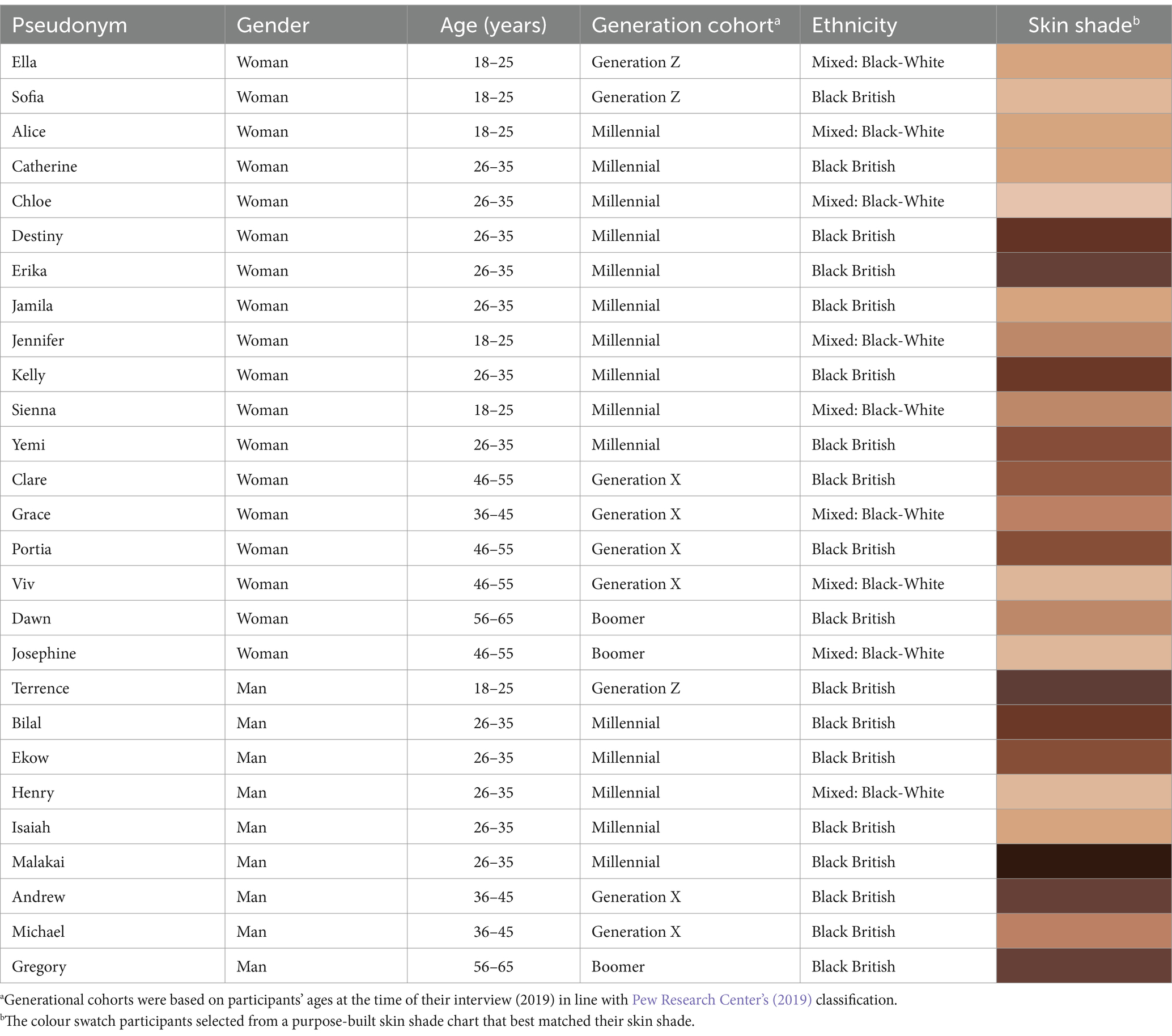
IntroductionColourism, prejudice where people are penalised the darker their skin and the further their features are from those associated with whiteness, occurs within and between racialised groups and can affect relationships. In this paper we examine the complex processes through which colourism positions Black and mixed Black-White women in contrasting positions in beauty and desirability hierarchies based on their skin shade.MethodSemi-structured interviews were conducted with 27 Black (n = 18) or mixed Black-White (n = 9) adults (18 women, 9 men) living in Britain. Data were analysed using reflexive thematic analysis.ResultsAnalysis generated four main themes. First, colourist and gendered appearance ideals promoted by mainstream media serve to devalue and thus harm Black people, particularly Black women with dark skin. Second, these ideals can affect Black and mixed Black-White women’s experiences of the heterosexual relationship market where women with light skin are desired and those with darker skin often overlooked. Third, colourist appearance ideals and colourist-induced inequities in the heterosexual relationship market affect relationships between Black and mixed Black-White women of different skin shades. Fourth, fostering Black self-acceptance, celebrating natural Black beauty, and creating spaces for dialogue between women of different skin shades are seen as ways to address some aspects of colourism and/or their affects.DiscussionFindings highlight how colourism shapes desirability in gendered ways and how this affects the lives of Black and mixed Black-White women, influencing within-group social dynamics and relationships.
ORIGINAL RESEARCH
26 November 2024
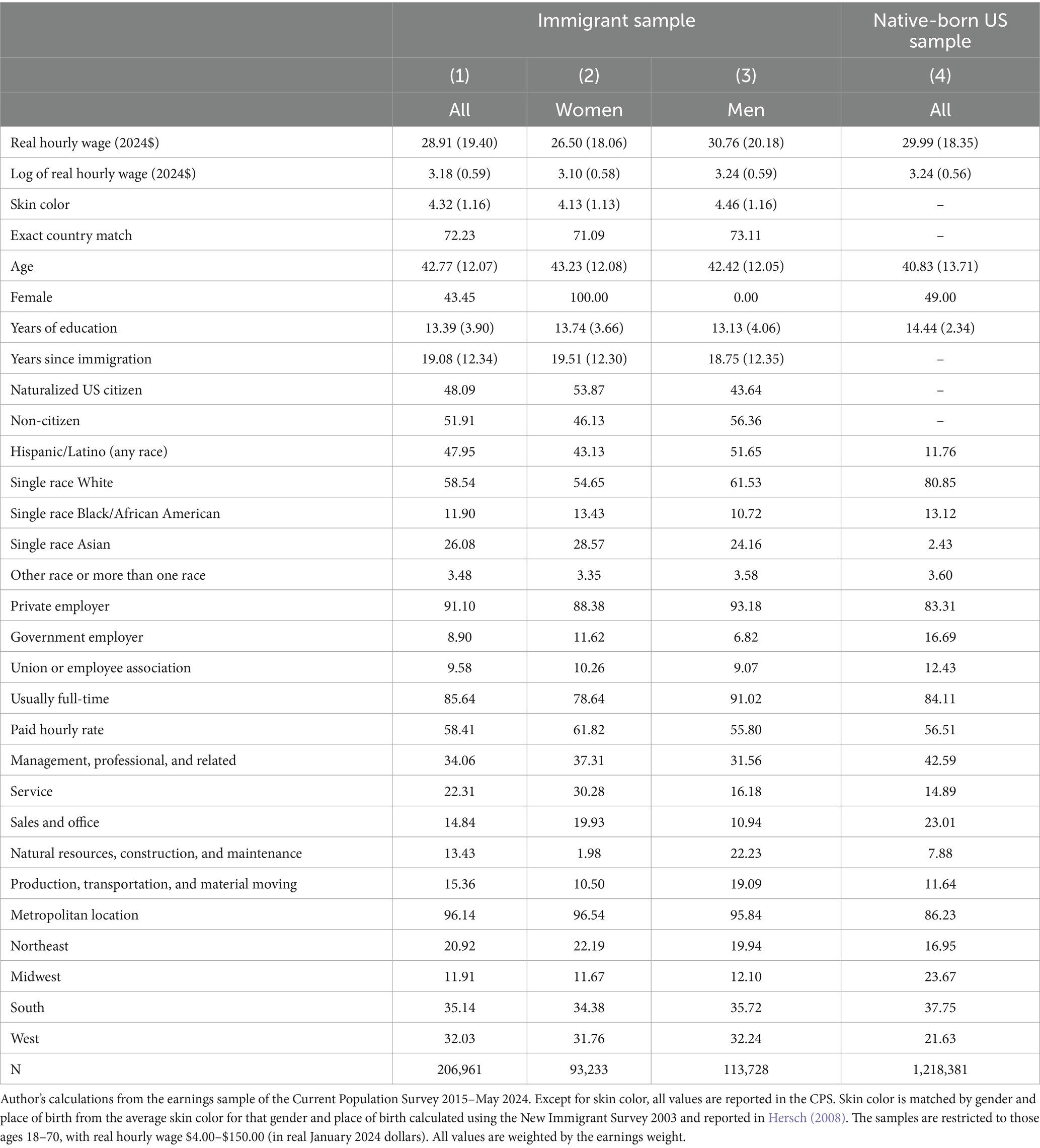
Joni Hersch
Using data from the Current Populations Survey 2015–2024 matched to skin color data in the New Immigrant Survey, this article shows that immigrants from countries with darker skin color face a substantial earnings penalty. The penalty is similar to that found using 2003 data on individual immigrants. Controls for extensive labor market characteristics and race and ethnicity does not eliminate the negative effect of darker skin tone on wages. Color discrimination lawsuits in light of the addition of a Middle Eastern and North African (MENA) reporting category for US government surveys may become more viable.