Exploring the New Biomarkers and Clinical Indicators for Diabetes: Insights from Real-World Studies

Cover image for Research Topic "Exploring the New Biomarkers and Clinical Indicators for Diabetes: Insights from Real-World Studies"
155kviews
ORIGINAL RESEARCH
2 July 2025
Association between KCNQ1 gene polymorphisms and gestational diabetes mellitus susceptibility in a Chinese population
Yanying Wu, 6 more and Runmin Guo

2,409 views

1 citations

ORIGINAL RESEARCH
22 April 2025
Association between triglyceride-glucose index and Helicobacter pylori infection: a cross-sectional study
Dan Long, 2 more and Ying Zhu

4,178 views

2 citations

Value of triglyceride glucose-body mass index in predicting nonalcoholic fatty liver disease in individuals with type 2 diabetes mellitus
ORIGINAL RESEARCH
20 January 2025
Value of triglyceride glucose-body mass index in predicting nonalcoholic fatty liver disease in individuals with type 2 diabetes mellitus
Xiaoyi Qian, 8 more and Xiulou Li
BackgroundThere is limited data on the association between TyG-BMI and NAFLD in patients with Type 2 Diabetes Mellitus (T2DM). The magnitude of risk prediction and predictive efficacy of TyG-BMI for T2DM with NAFLD remains unclear.ObjectiveTo examine the association of TyG-BMI with NAFLD in T2DM patients and assess the effectiveness of screening using the TyG-BMI index.MethodsWe conducted a retrospective analysis of clinical data from 602 T2DM patients at an enterprise health lodge from September 2021 to November 2022. Patients were categorized into two groups: T2DM alone (n=250) and T2DM with NAFLD (n=352). The Mann-Whitney U test was used for comparing non-normally distributed continuous data between groups, while the Chi-square test was used for categorical data. Logistic regression analysis was performed to evaluate the effect of BMI, TyG index, and TyG-BMI index on NAFLD. The ROC curve was used to assess the predictive efficacy of the TyG-BMI index for NAFLD in T2DM patients.ResultsBMI predicted the development of NAFLD in T2DM patients with an area under the receiver operating characteristic (ROC) curve of 0.792 (95% CI 0.757-0.828), and the optimal cutoff value was 25.22, with 72.2% sensitivity and 71.6% specificity; The area under the receiver operating characteristic (ROC) curve of the TyG index to predict the development of NAFLD in patients with T2DM was 0.755 (95% CI 0.716-0.794), and the optimal cutoff value was 8. 945, with a sensitivity of 80.1% and a specificity of 59.2%; The area under the receiver operating characteristic (ROC) curve of TyG-BMI index to predict the development of NAFLD in T2DM patients was 0.852, (95% CI 0.822-0.882), and the optimal cutoff value was 227.385, with a sensitivity and specificity of 80.1% and 59.2%, respectively.ConclusionsThe TyG-BMI index is a significant predictor of comorbid NAFLD in T2DM patients and provides better screening performance than BMI alone. The TyG-BMI index shows promise as an early screening tool for NAFLD in T2DM patients.

4,854 views

17 citations

ORIGINAL RESEARCH
22 January 2025
Uric acid to albumin ratio is a novel predictive marker for all-cause and cardiovascular death in diabetic patients: a prospective cohort study
Shengnan Chen, 5 more and Kai Nan

2,550 views

17 citations

Relationship between ferroptosis and healing of diabetic foot ulcer: a prospective clinical study
ORIGINAL RESEARCH
14 January 2025
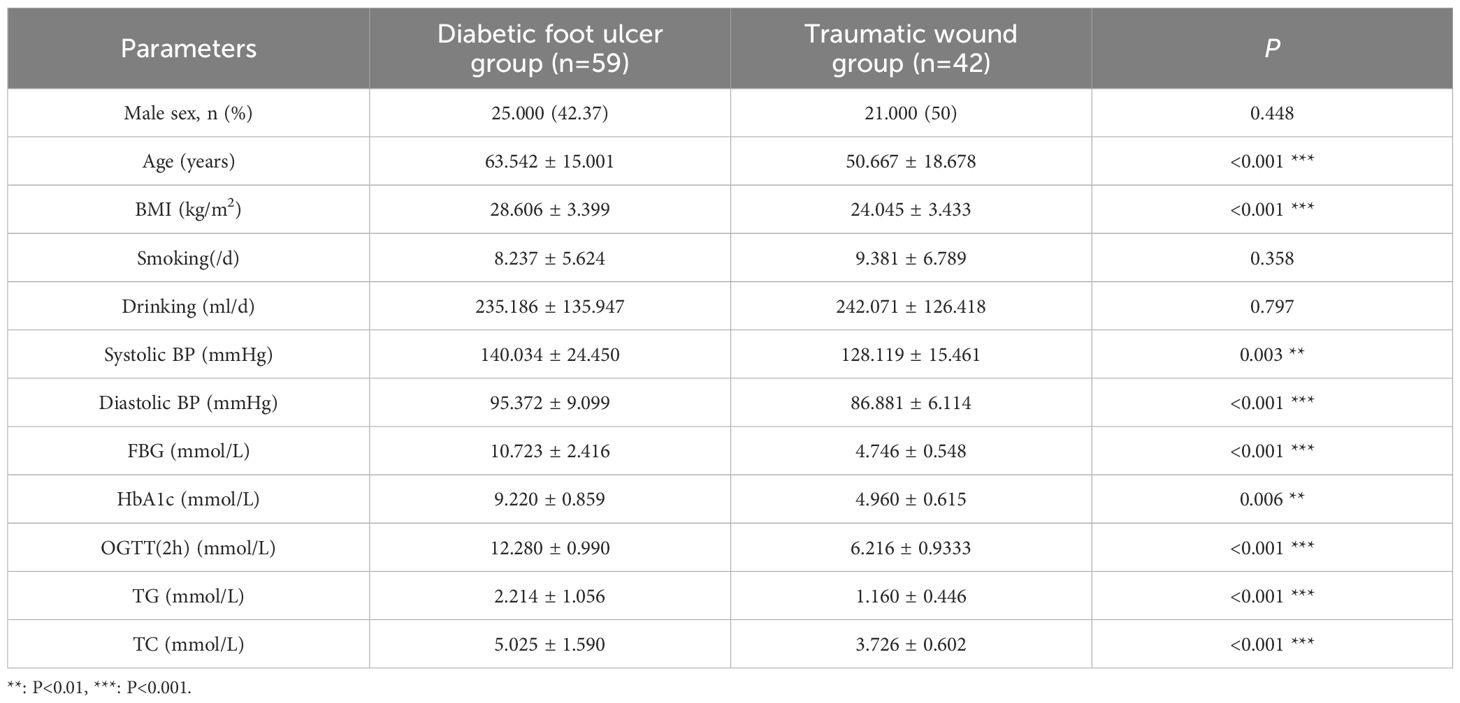
Relationship between ferroptosis and healing of diabetic foot ulcer: a prospective clinical study
Qian Jiang, 1 more and Shuao Xiao

3,406 views

19 citations

Association between different insulin resistance indices and all-cause mortality in patients with diabetic kidney disease: a prospective cohort study
ORIGINAL RESEARCH
13 January 2025
Association between different insulin resistance indices and all-cause mortality in patients with diabetic kidney disease: a prospective cohort study
Huan Zhu, 2 more and Hui Chen
AimPrevious research has shown a strong association between insulin resistance (IR) and both the onset and advancement of diabetic kidney disease (DKD). This research focuses on examining the relationship between IR and all-cause mortality in individuals with DKD.MethodsThis study utilized data obtained from the National Health and Nutrition Examination Survey (NHANES), spanning the years 2001 to 2018. Insulin resistance was assessed using reliable indicators (HOMA-IR, TyG, TyG-BMI, and METS-IR). The relationship between IR indices and survival outcomes was evaluated through weighted multivariate Cox regression, Kaplan-Meier survival analysis, and restricted cubic spline (RCS) modeling. To examine non-linear associations, the log-likelihood ratio test was employed, with piecewise regression models used to establish confidence intervals and identify threshold values. Diagnostic precision and efficacy were gauged using Receiver Operating Characteristic (ROC) curves, Area Under the Curve (AUC) evaluations, and calibration plots. Moreover, to verify the consistency of our results, stratified analyses and interaction tests were conducted across variables including age, gender, Body Mass Index (BMI), hypertension, and cardiovascular status.ResultsThis research involved a group of 1,588 individuals diagnosed with DKD. Over a median observation period of 74 months, 630 participants passed away. Using weighted multivariate Cox regression along with restricted cubic spline modeling, we identified non-linear associations between the four insulin resistance indices and all-cause mortality. An analysis of threshold effects pinpointed essential turning points for each IR index in this research: 1.14 for HOMA-IR, 9.18 for TyG, 207.9 for TyG-BMI, and 35.85 for METS-IR. It was noted that levels below these thresholds inversely correlated with all-cause mortality. In contrast, values above these points showed a significantly positive correlation, suggesting heightened mortality risks. The accuracy of these four IR metrics as indicators of all-cause mortality was confirmed through ROC and calibration curve analyses.ConclusionIn patients with DKD, an L-shaped association is noted between HOMA-IR and all-cause mortality, while TyG, TyG-BMI, and METS-IR exhibit U-shaped relationships. All four IR indices show good predictive performance.

5,775 views

14 citations

ORIGINAL RESEARCH
16 December 2024
Association of oxidative balance score with cardiovascular disease and all-cause and cardiovascular mortality in American adults with type 2 diabetes: data from the National Health and Nutrition examination survey 1999-2018
Meilin Fan, 5 more and Jing Yang

2,783 views

7 citations

Thyroid FT4-to-TSH ratio in the first trimester is associated with gestational diabetes mellitus in women carrying male fetus: a prospective bi-center cohort study
ORIGINAL RESEARCH
29 November 2024
Thyroid FT4-to-TSH ratio in the first trimester is associated with gestational diabetes mellitus in women carrying male fetus: a prospective bi-center cohort study
Shuoning Song, 15 more and Weigang Zhao
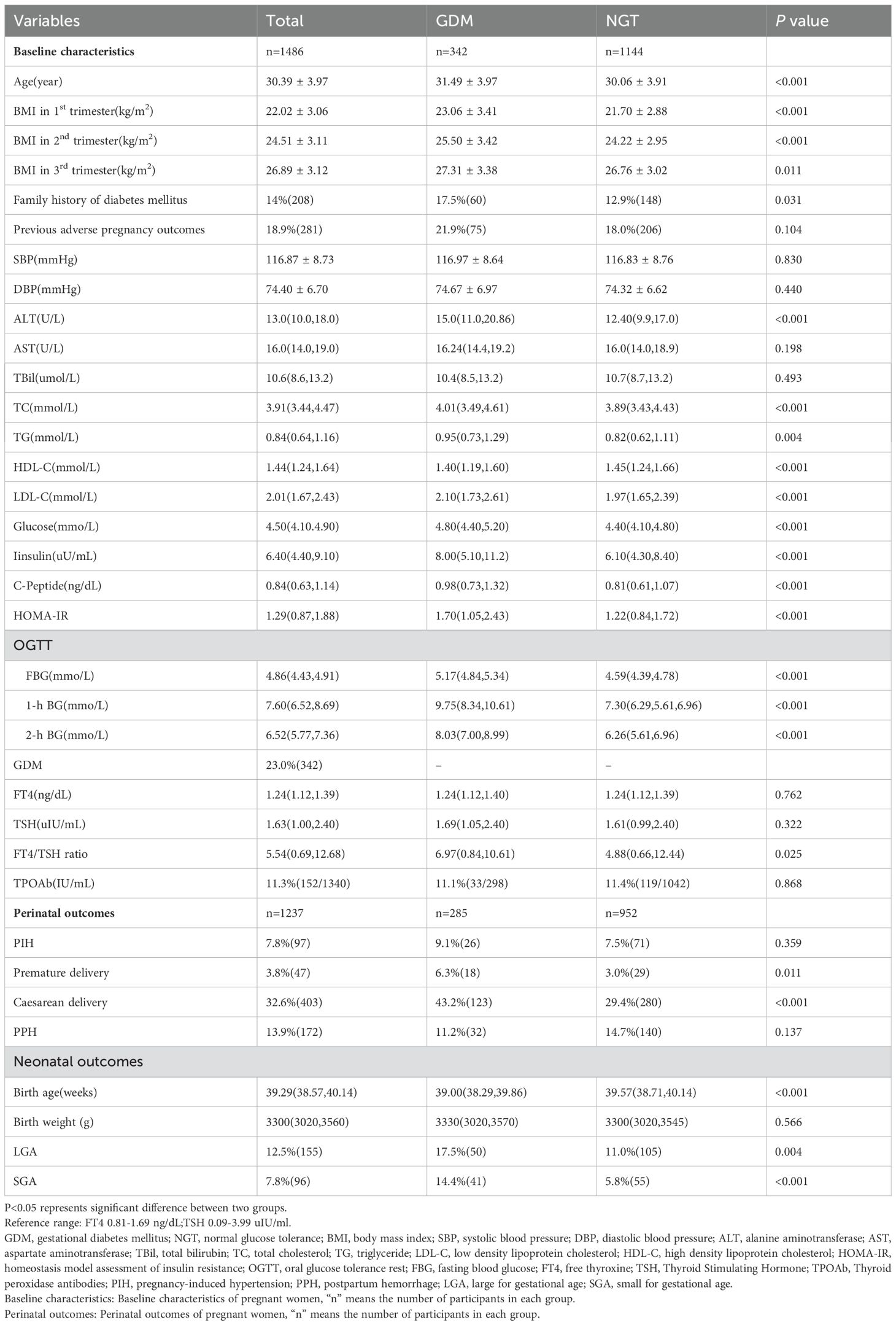
Gestational diabetes mellitus (GDM) is one of the most common medical complications of pregnancy, which increases the risk of other pregnant complications and adverse perinatal outcomes. Thyroid dysfunction is closely with the risk of diabetes mellitus. However, the relationship between euthyroid function in early pregnancy and GDM is still controversial.This study was to find the relationship between thyroid function within normal range during early pregnancy as well as glucose and lipids metabolisms as well as the risk of subsequent GDM.A total of 1486 pregnant women were included in this prospective double-center cohort study. Free thyroxine (FT4), thyroid stimulating hormone (TSH) and antithyroid peroxidase antibodies (TPOAb) were tested during 6-12 weeks of gestation and oral glucose tolerance test (OGTT) was conducted during 24-28 weeks to screen GDM. Relative risks (RR) with 95% confidence intervals (CI) for subsequent risk of GDM by thyroid function quartiles were assessed adjusting for major risk factors.The incidence of GDM was 23.0% (342/1486). TSH, FT4 and the percentage of positive TPOAb were no significant difference between women with and without GDM, but FT4/TSH ratio was significantly higher in GDM group compared with NGT group [6.97(0.84,10.61) vs. 4.88(0.66,12.44), P=0.025)]. The linear trends of TC, TG, HDL-C, LDL-C, fasting glucose in the first trimester, insulin, C-peptide, HOMA-IR, fasting glucose during OGTT and incidence of GDM according to FT4/TSH ratio were all statistically significant. Further analysis based on fetal sex presented only the third quartile of FT4/TSH ratio in women carrying male fetus was associated with higher incidence of GDM statistically significant [RR (95% CI), 1.917 (1.143,3.216)], rather than in women carrying female fetus.Thyroid function even in normal range is closely related to glucose and lipids metabolisms during the first trimester. Unappropriated FT4/TSH ratio in the first trimester is an independent risk factor of GDM in women carrying male fetus.

3,244 views

10 citations

ORIGINAL RESEARCH
11 December 2024
Elevated circulating homocysteine concentrations delayed nerve conduction velocity and increase the risk of diabetic kidney disease in patients with type 2 diabetes
Nannan Lv, 5 more and Xin Chen

4,025 views

7 citations

Association of systemic immune-inflammation index with all-cause and cardio-cerebrovascular mortality in individuals with diabetic kidney disease: evidence from NHANES 1999-2018
ORIGINAL RESEARCH
26 November 2024
Association of systemic immune-inflammation index with all-cause and cardio-cerebrovascular mortality in individuals with diabetic kidney disease: evidence from NHANES 1999-2018
Manhuai Zhang, 13 more and Wei Chen

5,140 views

7 citations

ORIGINAL RESEARCH
23 September 2024
Nonlinear relationship between triglyceride-glucose index and the risk of prediabetes and diabetes: a secondary retrospective cohort study
Changchun Cao, 6 more and Yulong Wang

2,975 views

12 citations

ORIGINAL RESEARCH
16 September 2024
Glycated CD59 is a potential biomarker for gestational diabetes mellitus
Wanying Wang, 6 more and Yu Sun

2,739 views

7 citations

ORIGINAL RESEARCH
24 September 2024
Study on risk factors of impaired fasting glucose and development of a prediction model based on Extreme Gradient Boosting algorithm
Qiyuan Cui, 7 more and Mingqing He

2,573 views

6 citations

Associations of total protein, albumin, and globulin with insulin resistance: an NHANES study
ORIGINAL RESEARCH
13 September 2024
Associations of total protein, albumin, and globulin with insulin resistance: an NHANES study
Rui-Xiang Zeng, 5 more and Li-Heng Guo

5,436 views

19 citations

ORIGINAL RESEARCH
29 August 2024
Association between anemia and diabetic lower extremity ulcers among US outpatients in the National Health and Nutrition Examination Survey: a retrospective cross-sectional study
Jinmin Cao, 2 more and Guiyun Gao
Association between anemia and diabetic lower extremity ulcers among US outpatients in the National Health and Nutrition Examination Survey: a retrospective cross-sectional study
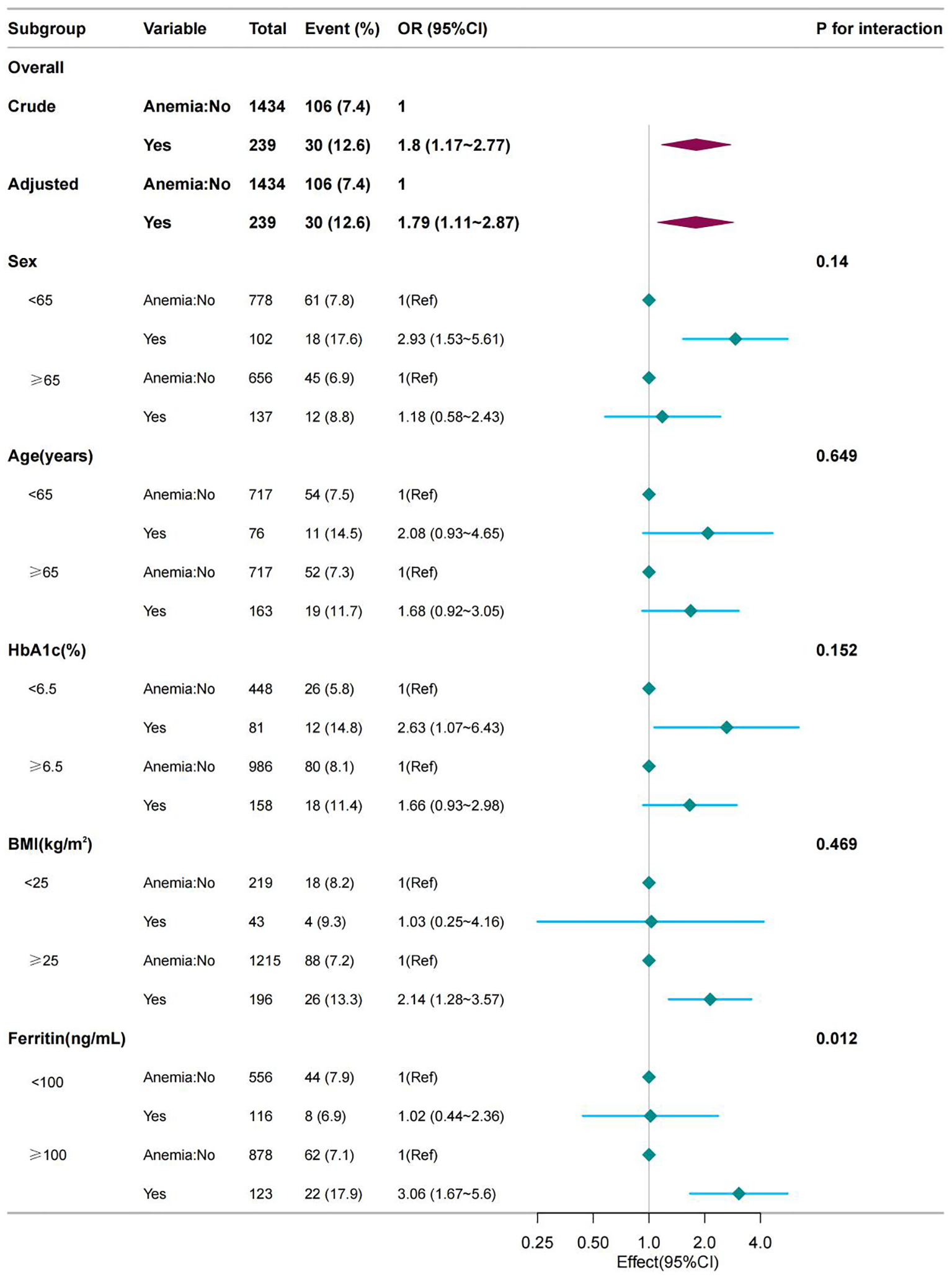
The aim of this study was to explore the relationship between hemoglobin levels, anemia and diabetic lower extremity ulcers in adult outpatient clinics in the United States.A retrospective cross-sectional study was conducted on 1673 participants in the National Health and Nutrition Examination Survey (NHANES) from 1999 to 2004. Three logistic regression models were developed to evaluate the relationship between anemia and diabetic lower extremity ulcers. Model 1 adjusted for demographic and socioeconomic variables (age, sex, race and ethnicity, educational level, family income, and marital status). Model 2 included additional health-related factors (BMI, cardiovascular disease, stroke, family history of diabetes, hyperlipidemia, alcohol and smoking status). Model 3 further included clinical and laboratory variables (HbA1c, CRP, total cholesterol, and serum ferritin levels).Stratified analyses were also conducted based on age, sex, HbA1c level, body mass index (BMI), and serum ferritin level.The study included 1673 adults aged 40 years and older, with a mean age of 64.7±11.8 years, of whom 52.6% were male. The prevalence of diabetic lower extremity ulcers (DLEU) was 8.0% (136 participants). Anemia was found in 239 participants, accounting for 14% of the study group. Model 1 showed an OR of 2.02 (95% CI=1.28~3.19) for anemia, while Model 2 showed an OR of 1.8 (95% CI=1.13~2.87). In Model 3, the OR for DFU in patients with anemia was 1.79 (95% CI=1.11~2.87). Furthermore, when serum ferritin was converted to a categorical variable, there was evidence of an interaction between DLEU status and serum ferritin in increasing the prevalence of DLEU.After adjusting for confounding variables, higher levels of anemia were proportionally associated with an increased risk of incident DLEU. These results suggest that monitoring T2DM patients during follow-up to prevent the development of DLEU may be important. However, further prospective studies are needed to provide additional evidence.

6,182 views

14 citations

Genetics causal analysis of oral microbiome on type 2 diabetes in East Asian populations: a bidirectional two-sample Mendelian randomized study
ORIGINAL RESEARCH
23 August 2024

4,724 views

7 citations

ORIGINAL RESEARCH
26 August 2024
Threshold effect of physical exercise on its association to diabetes mellitus in short sleep population: evidence from a nationwide study
Yanwei You, 9 more and Xindong Ma

3,051 views

6 citations