In the evolving landscape of global education, the integration of language and content learning has emerged as a powerful pedagogical paradigm. Whether through Content and Language Integrated Learning (CLIL) or English Medium Instruction (EMI), educators are increasingly tasked with preparing students not only to master disciplinary knowledge but also to navigate multilingual academic and professional environments. The five studies presented in this collection of articles offer a compelling narrative and collectively advocate for a more nuanced, interdisciplinary, and learner-centered approach to education. At the heart of these studies lies a shared concern: how can we best support learners in acquiring subject-specific literacies while simultaneously developing their linguistic competencies? This editorial explores this question by weaving together the findings of the five abstracts into a coherent vision for the future of integrated education.
The first article (Sercu) sets the tone by examining how CLIL and non-CLIL students perform in writing historical reports. Using Systemic Functional Linguistics, the study finds that studentsregardless of the language of instruction-are capable of expressing the "voice of the historian." This finding is significant because it suggests that disciplinary literacy can be achieved even when the medium of instruction is a second language. It challenges the assumption that language proficiency is a barrier to mastering academic genres and instead highlights the potential of CLIL to foster deep engagement with subject matter. This theme of disciplinary voice recurs throughout the other studies, underscoring the importance of genre awareness and cognitive discourse functions in subject-specific contexts. It also raises critical questions about assessment: if students can demonstrate disciplinary thinking in a second language, should our evaluation systems be more flexible in recognizing multilingual competencies?
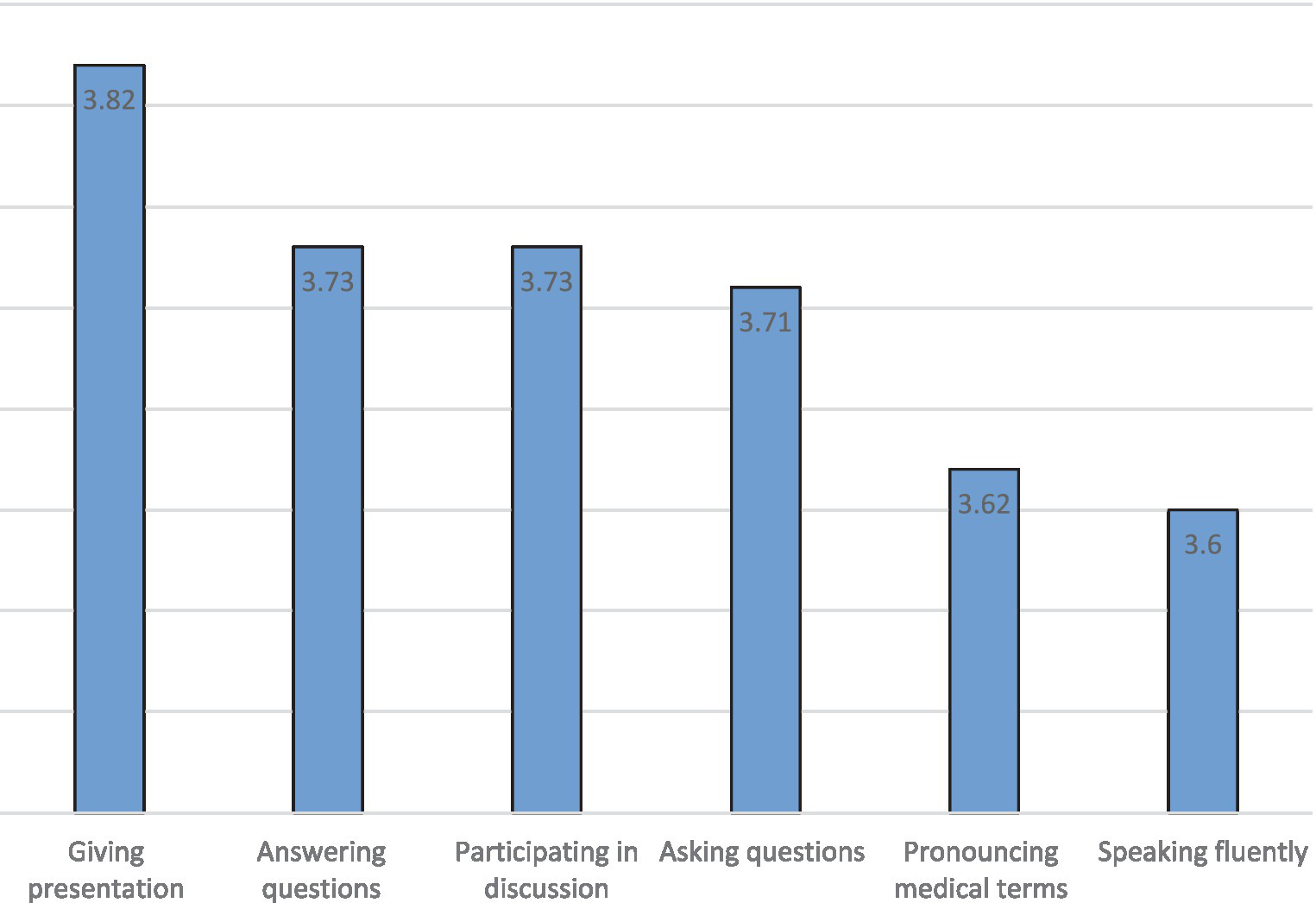
The second article (Alanazi & Curle) shifts the focus to EMI in medical education in Saudi Arabia, where students face significant linguistic challenges, especially in the early years of study. These include difficulties in reading technical materials, understanding lectures, and speaking fluently. However, the study also notes that these challenges diminish over time, suggesting a developmental trajectory in language acquisition that parallels subject mastery.This finding complements the first study by emphasizing the temporal dimension of language learning. It also points to the need for targeted scaffolding in EMI contexts, particularly in the initial stages of academic programs. Importantly, it calls for pedagogical strategies that recognize the evolving nature of language proficiency and its impact on subject comprehension.
The third article (Caira, Declerck & Struys) introduces a provocative idea: that language mixing in CLIL may not be as detrimental as once thought. In fact, the study finds that mixed-language input can enhance recall compared to L2-only instruction, though it still lags behind L1 input. This nuanced finding invites educators to rethink the "one subject-one language" orthodoxy and consider more flexible approaches to language use in the classroom.From a cognitive perspective, this study contributes to a growing body of research that supports translanguaging-the strategic use of multiple languages to support learning. It aligns with the broader theme of this editorial: that rigid language boundaries may hinder rather than help students in developing both linguistic and disciplinary literacies.
The fourth article (Huettner, Llinares & Nikula) expands the discussion to a global scale, highlighting the work of the CLILNetLE network. It emphasizes the importance of disciplinary literacies in both L1 and English, especially given the latter's status as a global lingua franca. The study explores how these literacies manifest across subjects, school levels, and digital practices, using Cognitive Discourse Functions as a framework. This contribution is particularly valuable because it situates CLIL and EMI within the broader context of 21st-century education. It recognizes that students must be prepared not only for academic success but also for participation in multilingual professional environments. The emphasis on digital and out-of-school literacies also reflects the changing nature of knowledge production and communication, suggesting that integrated learning must extend beyond the classroom.
Finally, the fifth article (Segura Hudson) offers a vivid example of integrated learning through a United Nations role-play in a plurilingual high school. Students engaged in tasks that combined International Relations, History, Social Studies, and English, producing both prepared and spontaneous speech. The study highlights how such activities foster subject knowledge, language proficiency, and critical thinking.This example illustrates the transformative potential of integrated learning. It shows that when students are given authentic, meaningful tasks, they can simultaneously develop subjectspecific literacies and linguistic competencies. It also underscores the importance of learner agency and the role of performance-based assessment in capturing the full spectrum of student learning.
Taken together, these five studies illustrate a holistic pedagogy. They support the notion that language and content should not be taught separately, instead proposing models where the two are mutually reinforced. Key themes that emerge from the studies include a) Genre and disciplinary voice as markers of academic literacy, b) Scaffolding and developmental trajectories in language acquisition, c) Translanguaging and language mixing as pedagogical tools, d) Global and digital literacies as essential competencies, and e) Authentic tasks and learner agency as drivers of deep learning. This editorial calls on educators, researchers, and policymakers to embrace this integrated vision. By supporting students' capacity to think, communicate, and act across languages and disciplines, we help prepare them for the complex, multilingual realities of the modern world.Lies Sercu, KU Leuven Pauline Degrave, UCLouvain Alberto Fernandez Costales, Universidad de Oviedo Eva Olsson, Göteborgs Universitet