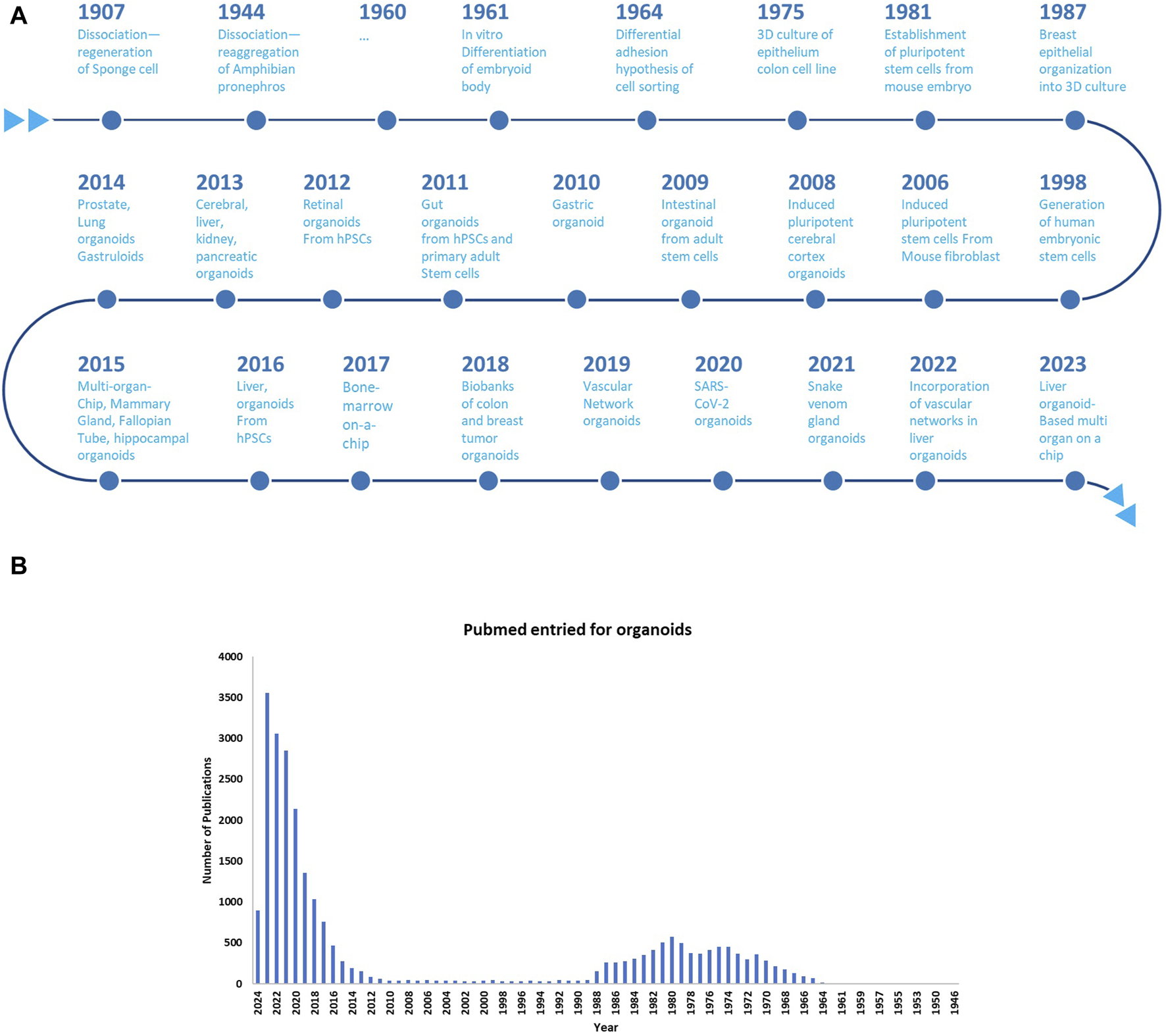
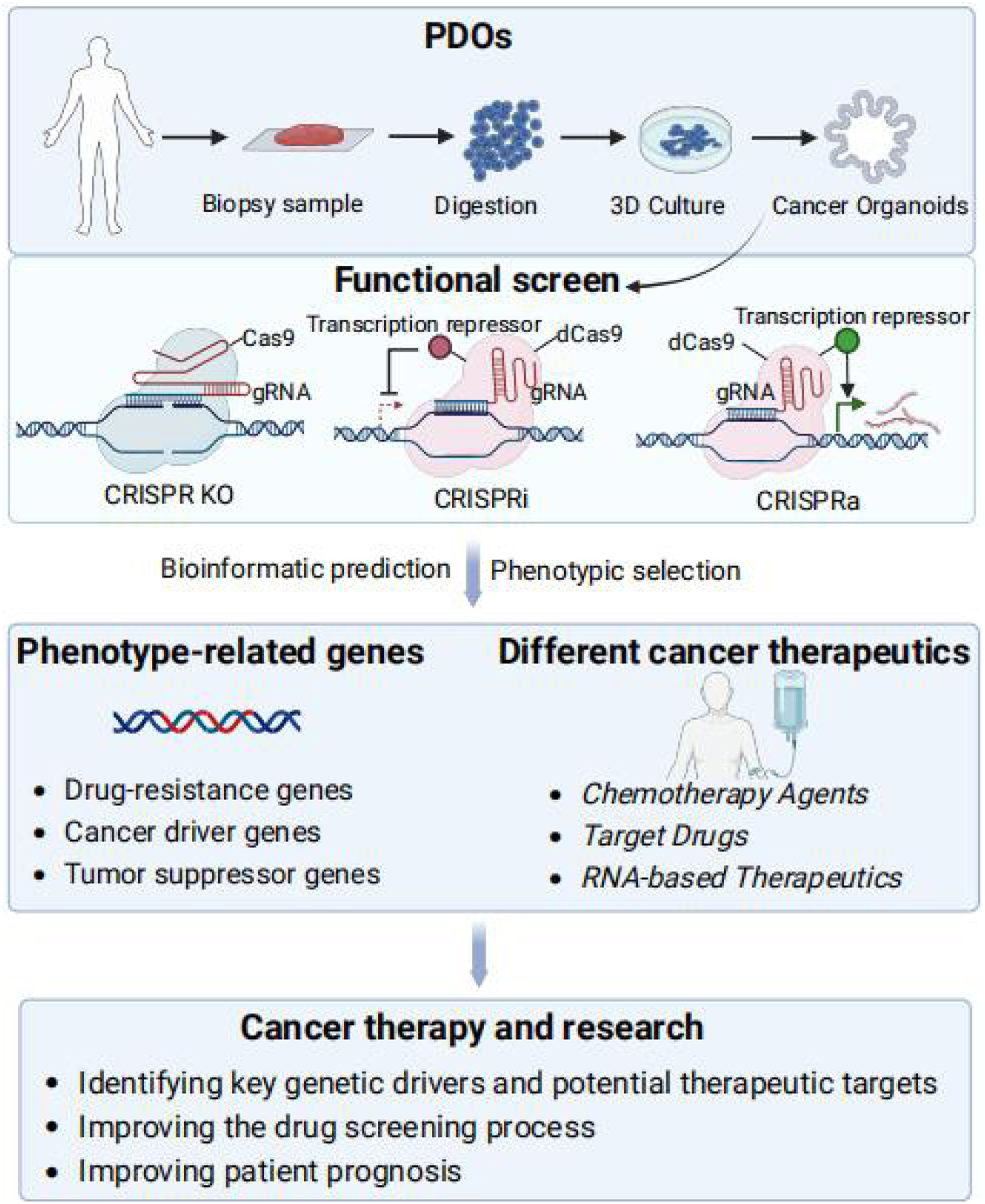
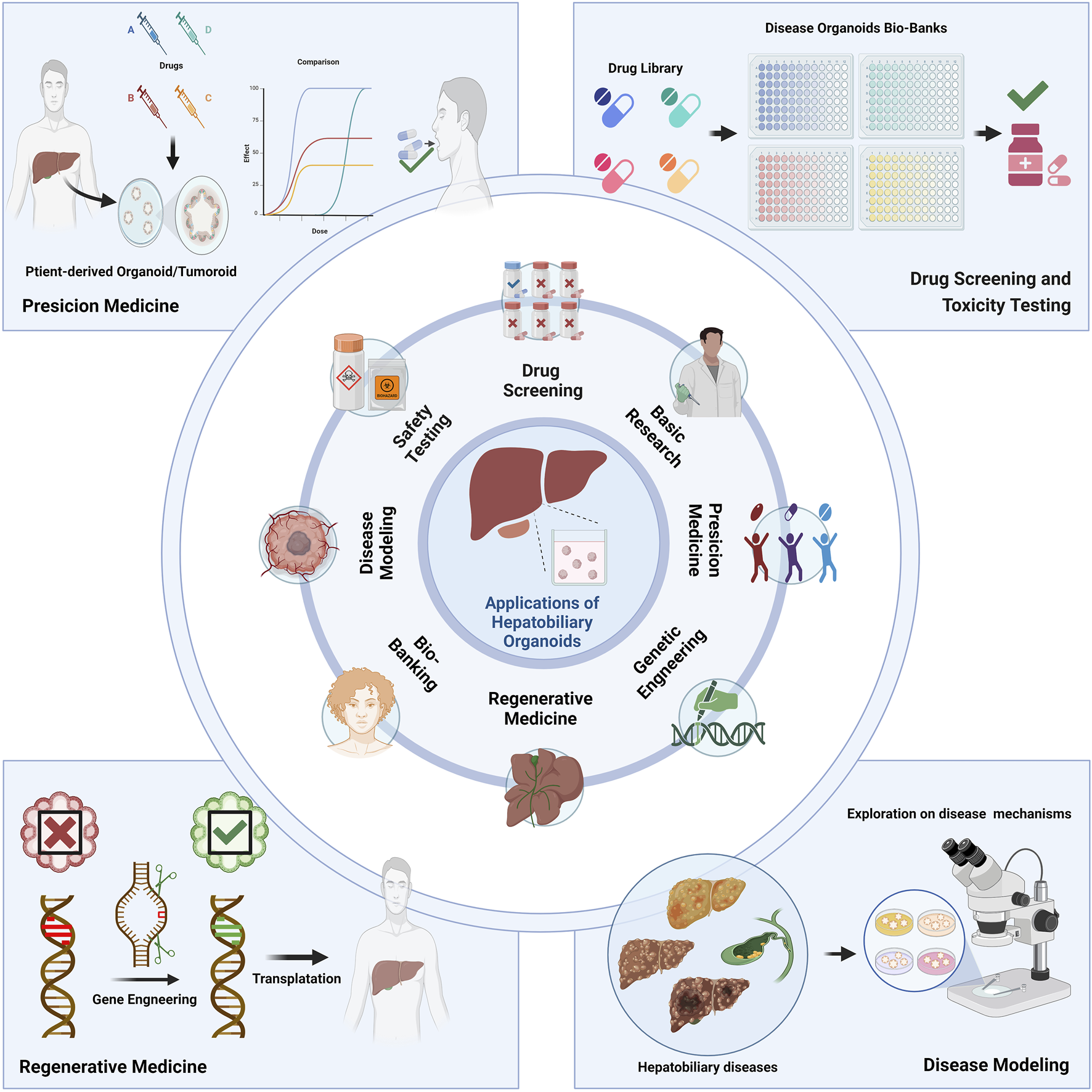
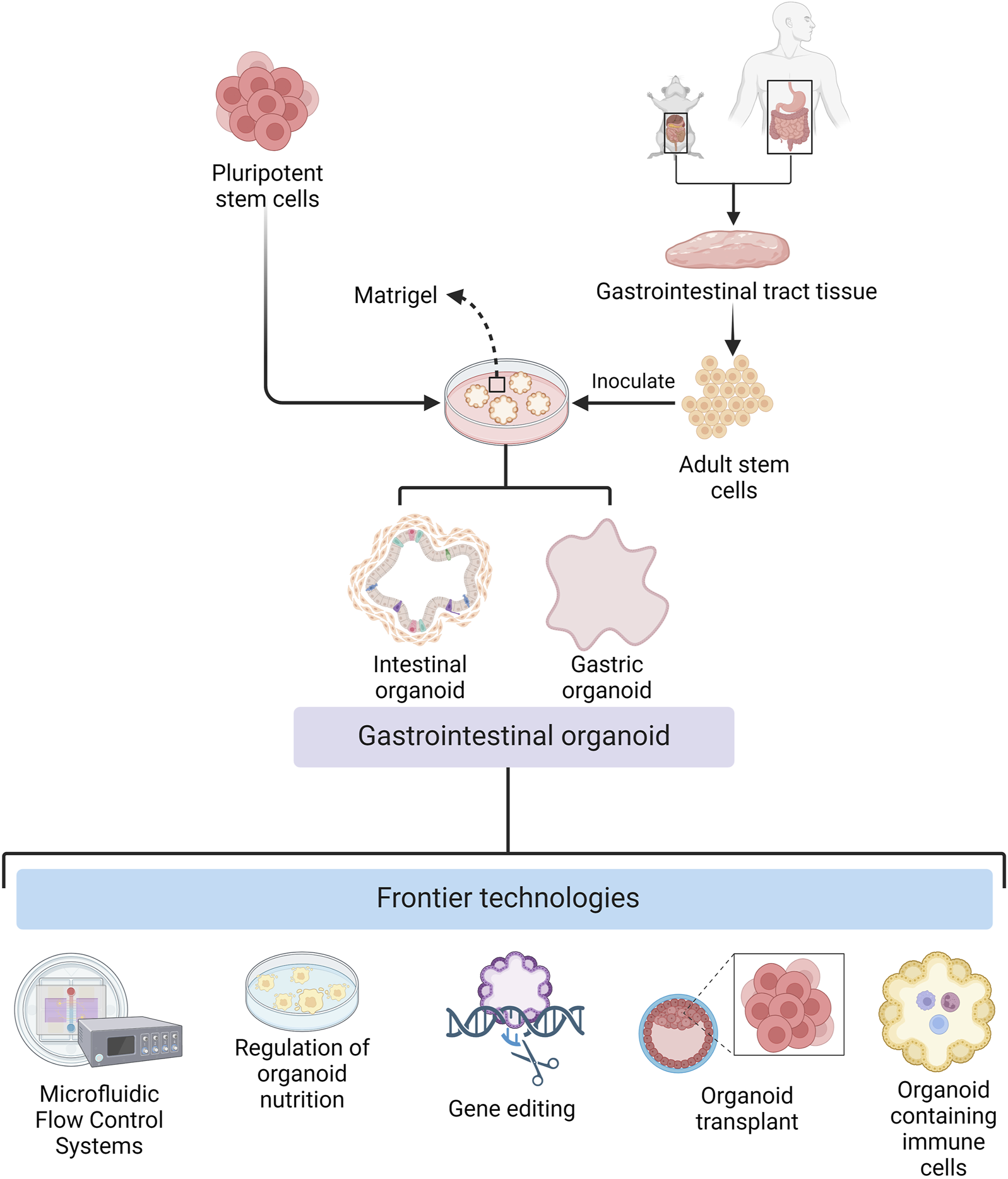
Organoids models represent valuable approaches for studying cancer development and drug resistance, and their in vitro culture allows extensive manipulations, such as genetic modification. Researchers have constructed organoids of specific lineages, including brain, liver, kidney, lung, intestinal, and skin, using human embryonic stem cells (hESCs) or induced pluripotent stem cells (iPSCs). Organoids derived from hESCs or iPSCs recapitulate numerous features, such as high structural complexity, size, and organization. However, most organoids lack the stromal, immune, neural, and vascular endothelial cell, limiting their utility in disease modeling. To model whole-body physiology and systemic diseases, multi-organ interaction chip with recirculating vascular flow and real-time monitoring system are required. Therefore, organoids models incorporating these key components represent an emerging platform with significant potential for evaluation of new drug efficacy and toxicity.On April 10, 2025, the FDA announced plan to phase out animal testing, replaced using (New Approach Methodologies, NAM), including (Artificial Intelligence, AI) computational models and organoids based efficacy and toxicity testing. Al, particularly deep Learning models, can now design completely novel molecular structures that have never been synthesized and predict the strength of drug-target interactions as well as potential toxicity. The integrating of AI, organoids, and computational biology has emerged as a transformative approach for exploring novel therapeutic strategies and providing human-relevant toxicity data. We, the editors from this research topic, thank all authors for their contributions. We also extend our sincere gratitude to the editors and reviewers for their dedicated efforts in reviewing, revising, and providing timely feedback on the manuscript.
6 Authors
- ZZ
Ziyi Zhu
The First Affiliated Hospital of Yangtze University, China
- JS
Jiayang Shen
The First Affiliated Hospital of Yangtze University, China
- PC
Paul Chi-Lui Ho
School of Pharmacy, Malaysia
- YH
Ya Hu
The First Affiliated Hospital of Yangtze University, China
- ZM
Zhaowu Ma
The First Affiliated Hospital of Yangtze University, China
- LW
Lingzhi Wang
Department of Pharmacology, Singapore
6 Authors
- RZ
Rui-Qi Zou
Division of Biliary Surgery, China
- YD
Yu-Shi Dai
Division of Biliary Surgery, China
- FL
Fei Liu
Division of Biliary Surgery, China
- SY
Si-Qi Yang
Division of Biliary Surgery, China
- HH
Hai-Jie Hu
Division of Biliary Surgery, China
- FL
Fu-Yu Li
Division of Biliary Surgery, China

10 Authors
- LZ
Li Zhou
School of Basic Medicine, China
- DL
Dan Luo
School of Basic Medicine, China
- WL
Wei Lu
Department of Elderly Care Center, China
- JH
Jun Han
School of Basic Medicine, China
- MZ
Maoyuan Zhao
Department of Geriatrics, China
- XL
Xueyi Li
School of Basic Medicine, China
- TS
Tao Shen
School of Basic Medicine, China
- ZJ
Zhao Jin
School of Basic Medicine, China
- JZ
Jinhao Zeng
Department of Geriatrics, China
- YW
Yueqiang Wen
School of Basic Medicine, China