
Emerging environmental contaminants represent an increasing challenge for toxicological research and risk assessment. The growing diversity of anthropogenic chemicals, novel materials, pharmaceuticals, endocrine disruptors, micro-and nanoplastics, and other types of nanoparticles, together with the complexity of realistic exposure scenarios, has substantially exceeded the capacity of traditional toxicological approaches based primarily on individual compounds and apical endpoints. In addition, chronic low-dose exposures and interactions among multiple stressors further complicate the interpretation of adverse effects and their implications for human and environmental health. The widespread occurrence of these contaminants and the diversity of exposure scenarios, including occupational exposure in some populations, further highlight the need for new methods and approaches for hazard identification and risk assessment. peripheral blood mononuclear cells and dendritic cell models to investigate the immunotoxicity of per-and polyfluoroalkyl substances (PFAS). Their findings demonstrated that immunotoxic potential cannot be explained solely by carbon chain length and emphasized the need for compound-specific assessment strategies. Similarly, Muhammad et al. reviewed the contribution of micro-and nanoplastics to Parkinson's disease and highlighted the advantages of stem cell-derived models for investigating neuroinflammation and neurodegeneration. These systems may improve human relevance and allow detailed investigation of disease-associated pathways, while complementing existing animal models.Mechanistic insights were further expanded by Pan et al., who demonstrated that perinatal exposure to bisphenol S induces ferroptosis through disturbances in hepatic lipid metabolism in offspring mice. These findings further support the need for careful toxicological evaluation of replacement chemicals and their potential long-term effects. At the organismal level, Pacchini et al. investigated the effects of chronic PFAS exposure in European chub and revealed coordinated responses extending from gene expression and antioxidant enzymes to tissue morphology. Their work illustrates how persistent environmental contamination can trigger adaptive responses across multiple levels of biological organization, from genes to organs.Advances in computational toxicology and systems-based approaches are represented by the study of Li et al., who integrated network toxicology, machine learning, molecular docking, molecular dynamics simulations, and experimental validation to identify DEHPassociated targets and molecular signatures relevant to glioma biology. By combining several computational approaches with in vitro confirmation, the study provides an example of how artificial intelligence and systems toxicology can contribute to predictive toxicology.Another important theme emerging from this Research Topic concerns the complexity of environmental exposures and the increasing importance of effect-based approaches. Ambroz et al. investigated oxidative stress and inflammatory biomarkers in mothers and newborns from environmentally distinct regions and demonstrated differential associations between pollutant exposure and oxidative damage. Their work highlights the importance of considering developmental susceptibility and the complexity of exposureresponse relationships.Effect-based monitoring was further addressed by Ezechiáš et al., who combined passive sampling with cell-based bioassays to evaluate the efficiency of drinking water treatment plants. Persistent CYP1A induction indicated residual bioactivity not apparent from conventional chemical analyses and emphasized the value of effect-based monitoring for assessing drinking water treatment efficiency. Fu et al. investigated combined exposure of zebrafish to cadmium and β-cypermethrin and demonstrated that co-exposure induced stronger oxidative stress responses and more severe histopathological alterations than individual compounds, emphasizing the ecological relevance of mixture toxicity. Complementing these studies, Alblooshi reviewed the health risks associated with perfumes and cosmetic products and discussed concerns related to cumulative exposure to endocrine disruptors, volatile organic compounds, and heavy metals. Together, these contributions illustrate the need to move beyond the traditional one chemical-one effect paradigm and adopt approaches capable of capturing realistic exposure scenarios.Several contributions focused on improving methodologies for environmental risk assessment. Nugnes et al. proposed a comprehensive framework for standardized ecotoxicological assessment of titanium dioxide-based sunscreen leachates under realistic freshwater and marine conditions. Their work demonstrated the value of combining multi-species testing with realistic exposure scenarios. Machado et al. evaluated the ecotoxicity of montmorillonite-based essential oil formulations and demonstrated that bio-based products and natural carriers require rigorous ecotoxicological evaluation despite their natural origin. These results suggest that products perceived as sustainable alternatives should also undergo comprehensive safety assessment.Environmental dimensions of toxicology were further addressed by Gil et al., who examined antifungal contamination from a One Health perspective and proposed predicted no-effect concentrations to support wastewater management and agricultural applications. Their study further illustrates the close links between environmental contamination, antimicrobial resistance, and public health, emphasizing the need for integrated management strategies.An emerging issue highlighted in this Research Topic concerns the omnipresence of plastic particles and their potential influence on experimental systems. Lundqvist et al. demonstrated that routine laboratory procedures involving plastic tubes and ultrasound treatment can generate considerable amounts of nanoplastic particles that may influence experimental outcomes. These observations draw attention to hidden sources of contamination and raise important questions regarding the interpretation and reproducibility of studies involving nano-and microplastics.Several challenges remain in advancing next-generation toxicology of emerging contaminants. These include the interpretation of mixture effects, the translation of mechanistic findings into regulatory frameworks, the validation and standardization of novel methodologies, and the integration of large experimental and computational datasets. Although many emerging approaches have demonstrated considerable promise, their broader implementation still requires robust performance standards, reproducibility, and demonstration of fitness for purpose.Future progress in the toxicology of emerging contaminants will likely depend on the continued integration of human-relevant models, omics technologies, machine learning, effect-based monitoring, and systems toxicology, together with the broader adoption of One Health principles emphasizing the interconnected nature of environmental quality, ecosystem integrity, and human health. Overall, the contributions assembled in this Research Topic reflect the diversity of contemporary toxicological research and demonstrate how experimental, computational, effect-based, and environmentally realistic approaches are increasingly being integrated into the assessment of emerging environmental contaminants. Collectively, these studies illustrate the ongoing evolution of toxicology toward more predictive and biologically relevant frameworks for the assessment of emerging environmental contaminants.
Editorial28 July 2026
Editorial: New methods and approaches in toxicology of emerging environmental contaminants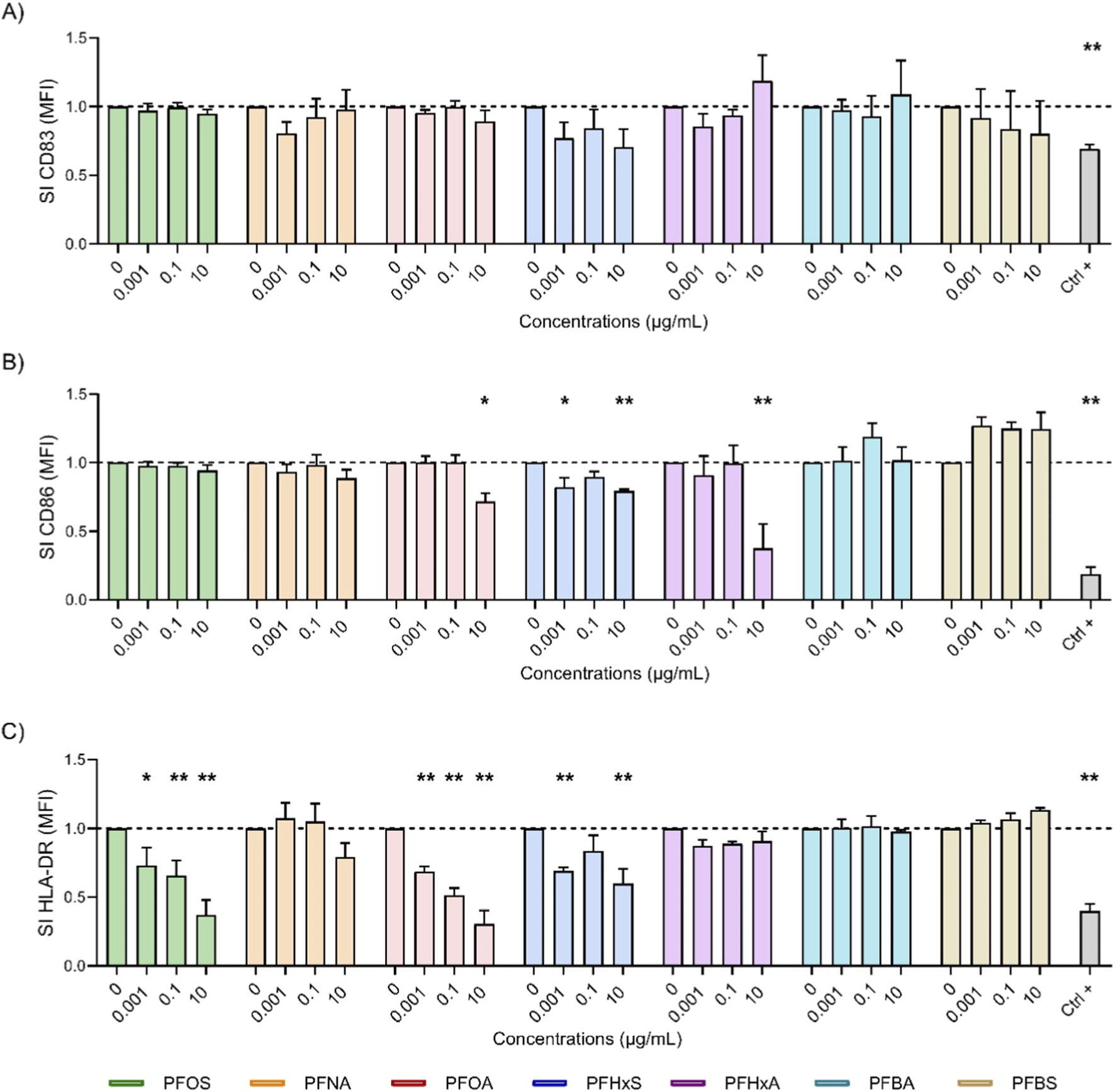
ORIGINAL RESEARCH
19 November 2025
Martina Iulini, 2 more and Emanuela Corsini
4 Authors
- MI
Martina Iulini
Laboratory of Toxicology and Risk Assessment, Department of Pharmacological and Biomolecular Sciences “Rodolfo Paoletti”, University of Milan, Italy
- VG
Valentina Galbiati
Laboratory of Toxicology and Risk Assessment, Department of Pharmacological and Biomolecular Sciences “Rodolfo Paoletti”, University of Milan, Italy
- MM
Marina Marinovich
Laboratory of Toxicology and Risk Assessment, Department of Pharmacological and Biomolecular Sciences “Rodolfo Paoletti”, University of Milan, Italy
- EC
Emanuela Corsini
Laboratory of Toxicology and Risk Assessment, Department of Pharmacological and Biomolecular Sciences “Rodolfo Paoletti”, University of Milan, Italy
IntroductionPer- and polyfluoroalkyl substances (PFAS) are persistent environmental pollutants with potential immunotoxic effects. Most toxicological studies have focused on long-chain PFAS such as perfluorooctanesulfonic acid (PFOS) and perfluorooctanoic acid (PFOA). However, short-chain and ultra-short-chain alternatives, including trifluoroacetic acid (TFA), are increasingly used despite limited toxicological data.MethodsThis study evaluated and compared the immunotoxic effects of PFAS with varying chain lengths—long-, short-, ultra-short-chain compounds, and fluoropolymer representatives (polytetrafluoroethylene, PTFE)—using human-relevant new approach methodologies (NAMs). Two complementary in vitro models were employed. Peripheral blood mononuclear cells (PBMCs) from healthy donors to assess antibody (IgG and IgM) production. THP-1-derived dendritic cells (DCs) to evaluate maturation marker expression (CD83, CD86, HLA-DR). Environmentally and occupationally relevant PFAS concentrations were tested.ResultsPFOS, PFOA, and perfluorononanoic acid (PFNA) suppressed antibody production and impaired DC maturation in a concentration-dependent manner, consistent with previous in vivo and epidemiological data. Short-chain PFAS (PFHxS, PFBS, PFHxA, PFBA) showed modest to intermediate immunomodulatory activity, with subtle immunosuppressive trends in female donors. Notably, TFA reduced antibody production at levels comparable to PFOS, indicating that chain length alone is not a reliable predictor of immunotoxic potential. PTFE exhibited no suppressive effects; instead, increased antibody release was observed in female donors, suggesting possible sex-dependent immunostimulation.DiscussionFindings support a nuanced, compound-specific approach to PFAS risk assessment rather than a simple long- vs. short-chain distinction. In vitro NAMs provided mechanistic, human-relevant insights and reinforce their integration into regulatory frameworks.

REVIEW
29 August 2025
Sharifa Alblooshi
BackgroundThe use of perfumes and cosmetic products is widespread, serving personal hygiene, aesthetic, and olfactory functions. However, concerns have been raised regarding the potential health impacts associated with long-term exposure to various ingredients used in these products.ObjectivesThis narrative review aims to synthesize evidence on the health risks associated with perfumes and cosmetics, focusing on specific health concerns, including fertility, respiratory health, cancer risk, allergies, skin disorders, endocrine disruption, and neurological effects. It also discusses the presence of heavy metals in cosmetics, regulatory challenges, and the need for transparency in ingredient disclosure.MethodsA comprehensive review of literature published between 2005 and 2025 was conducted, examining findings from interdisciplinary studies relevant to the health impacts of cosmetic and fragrance products. The review highlights health concerns linked to specific chemical components, including synthetic chemicals such as phthalates, parabens, and volatile organic compounds (VOCs).ResultsThe findings indicate that many synthetic chemicals in perfumes and cosmetics are associated with adverse health outcomes. These include allergies, respiratory issues, endocrine disruption, reproductive problems, and potentially cancer. Heavy metals in cosmetics also pose significant health risks. Despite regulatory guidelines, the cumulative and long-term effects of combined exposure to multiple cosmetic ingredients remain poorly understood and inadequately addressed.ConclusionThere is a pressing need for stricter regulatory oversight and improved transparency in ingredient disclosure to safeguard consumer health. Further research is required to clarify the long-term health risks associated with the daily use of cosmetic products and to develop safer alternatives.