210kviews
Editorial19 January 2026
Editorial: Children's health and screen time
Dandan Wu, Georgios Florosand Hui Li

papers-are synthesized and organized into four key themes: (1) core impacts on physical, mental, and social development; (2) the critical role of family and cultural context; (3) pathways from risk to resilience and intervention; and (4) confronting methodological challenges in the field. The synthesis highlights the importance of examining content, context, and underlying mechanisms rather than mere duration of use. Key findings reveal complex, often bidirectional relationships and the critical influence of mediating factors (e.g., sleep, executive function) and moderating variables (e.g., parental mediation, culture). Acknowledging the limitations of the current evidence base, including the prevalence of correlational data, the editorial argues for a paradigm shift from simple restriction to fostering mindful digital The impact of screen time is not deterministic; it is profoundly shaped by a child's environment, challenging the efficacy of one-size-fits-all prescriptions. This extends beyond just the family or culture to the very nature of the digital activity itself. Reinforcing this issue's central thesis, a large-scale study by Cao and Li (2025) found that for preschoolers, the type of digital engagement-not the total duration-was the key predictor of their well-being profile. Entertainment-focused activities were associated with higher-risk profiles, whereas creative activities acted as a protective factor. This crucial distinction between content and mere time underscores the need to look inside the "black box" of screen use.Adverse events during this sensitive period may leave a mark in the future, as a study by Elkin et al.(2025) showed that university students with childhood trauma had higher social media addiction.Several articles in this issue further underscore the pivotal role of the family. C.

The articles in this special issue, taken together, paint a picture of great complexity. A unifying thread is the move from asking if screen time is harmful to exploring how, why, and for whom. The evidence illuminates a series of intricate mechanisms: we see how screen time can erode internal resources like self-control (Yang & Shanshan, 2025), how physical health (BMI) can mediate its effects on mental health, and how good sleep can act as a protective buffer (Wang et al., 2025).While this collection marks a significant step forward, it is by no means the final word.Critical questions regarding the long-term causal impacts of screen use, the influence of emerging AI-driven content algorithms, and the socioeconomic disparities in digital access and literacy remain urgent areas for future inquiry. The heavy reliance on correlational data across field still makes definitive causal claims challenging.Nevertheless, the evidence presented here provides a clear mandate. We must shift our focus from mere restriction to fostering mindful and intentional digital citizenship. This involves promoting active parental mediation, strengthening children's internal self-regulation, tailoring strategies to developmental and cultural contexts, and demanding high-quality, prosocial content from industry. The digital world is here to stay; this research provides an invaluable, albeit incomplete, roadmap to help us guide the next generation in navigating its maze-not just to survive, but to thrive.
1,908 views

1 citations

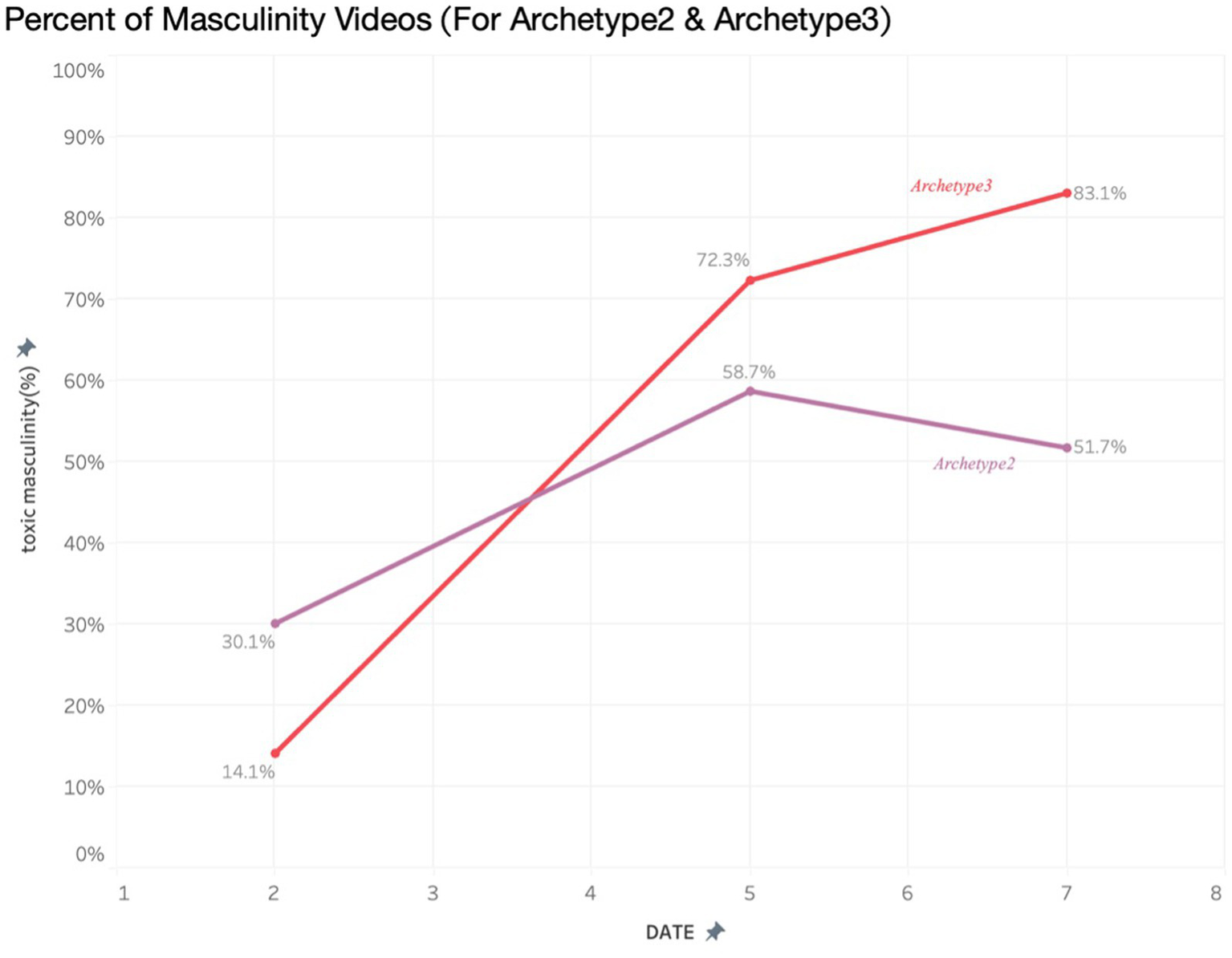
This article explores how social media recommendation systems shape the digital consumption practices of young people and the potential implications for mental health and wellbeing. It examines how the consumption of increasingly radical content, with a focus on gender-based violence and misogyny, is presented on young people’s feeds in increasingly high dosages, which has significant implications for young people’s social development. Employing a mixed-methods approach, this research draws on three data sources: (i) long-form interviews with young people, (ii) algorithmic analysis of over 1,000 social media videos, and (iii) roundtable discussions and interviews with school leaders from across England and Wales. These methods were used to triangulate how digital environments encourage and normalize harmful ideologies, normalizing radical content, and the affective impacts of this content on young people’s wellbeing. The study presents three main findings. First, recommendation systems amplify and subsequently normalize harmful ideologies, increasing users’ exposure to radical material. Second, misogynistic content is often presented as entertainment, which enables it to gain high levels of traction on social media platforms. As a result, hateful ideologies and misogynistic tropes appear in young people’s behaviors, which may have significant impacts on their mental health and peer relationships. Our findings suggest the need for a significant change in approaches to digital literacy, education and policy to support young people’s wellbeing and social development in digital spaces.

25,442 views

25 citations

Touchscreen technologies—ranging from smartphones and tablets to interactive whiteboards and tabletops—are increasingly embedded in the daily lives of young children, shaping how they communicate and interact socially. The present systematic review aims to understand aspects of touchscreen use that support, hinder or explain changes in how young children (ages 1–6) develop social functioning skills such as peer interaction, cooperation, collaboration and communication. Specifically, it explores: (1) the types of touchscreen devices used, (2) their influence on peer interaction, cooperation and collaboration, (3) their effects on communication skills and (4) the developmental, educational, and policy recommendations emerging from the literature. A comprehensive search across Web of Science, ERIC, and Scopus yielded 365 studies, of which 82 met inclusion criteria following PRISMA guidelines. Using a theoretically grounded definition of social functioning and communication, we conducted a content analysis of empirical studies across social sciences, psychology, art and humanities, and computer science. Findings reveal a pervasive presence of touchscreen media in early childhood, with varied impacts shaped by device type, content quality, adult mediation, and contextual factors. This review offers evidence-based insights for educators, parents, and policymakers, emphasizing the value of interactive engagement, teacher training, public education efforts, and community-based approaches in promoting meaningful digital experiences. It stressed the importance of intentional, guided and contextual use of touchscreen technologies in early childhood and family settings. This review offers evidence-based insights for educators, parents, and policymakers, emphasizing the value of interactive engagement, teacher training, public education efforts, and community-based approaches in promoting meaningful digital experiences. It stressed the importance of intentional, guided and contextual use of touchscreen technologies in early childhood and family settings.Systematic review registrationOpen Science Framework https://osf.io/9athz/?view_only=1fa731457d7e48248b7482bca02793f9.

16,025 views

18 citations

ORIGINAL RESEARCH
18 September 2025
Sleep quality moderated the mediating effect of BMI and waist circumference on the relationship between screen time and mental health in Chinese adolescents
Yi Wang, 3 more and Jinxian Wang

3,170 views

3 citations

8,548 views

11 citations

ORIGINAL RESEARCH
21 July 2025
How parental mediation affects adolescents’ problematic smartphone use: the chain mediating role of basic psychological needs and positive outcome expectations
Yan Chen, 5 more and Yuqi Cao

7,615 views

10 citations

ORIGINAL RESEARCH
3 July 2025
Differential effects of exposure to cooperative versus competitive games on sharing behavior in young children
Qian Zhang, 1 more and DingYong Xiong

6,322 views

5 citations

ORIGINAL RESEARCH
2 July 2025
The relationship and mechanism of screen time and academic performance among adolescents: an empirical study based on CEPS
Xiaosu Feng, 1 more and Peng Shi
The relationship and mechanism of screen time and academic performance among adolescents: an empirical study based on CEPS
ObjectiveThere is an association between adolescents’ screen time and academic performance, but the conclusions remain controversial. In particular, there is a lack of research on Chinese students who face higher academic pressure. Based on this, we aim to explore the relationship and mechanisms between screen time and academic performance among Chinese adolescents.Methods17,150 junior middle school students from China Education Panel Survey (CEPS) from 2013 to 2014 were selected as the participants of the survey. Multiple linear regression analysis was used to explore the relationship between screen time and adolescents’ academic performance. On this basis, the Z-test of regression coefficient is used to further investigate whether there is heterogeneity in the type of screen exposure in this relationship. The possible mediating mechanism of the relationship between screen time and adolescents’ academic performance was investigated through path analysis.ResultsScreen time and Chinese (β = −0.022), mathematics (β = −0.048), English (β = −0.043) and 3 total scores (β = −0.113), there was a significant negative correlation (p < 0.01). The time spent watching TV and the time spent on the Internet and playing games were significantly negatively correlated with the academic performance of adolescents (p < 0.01), but there was heterogeneity in the type of screen exposure. The time spent on the Internet and playing games had a significant impact on adolescent mathematics (β = −0.063), English (β = −0.047) and total scores (β = −0.148) produced more negative effects. Path analysis found that cognitive performance was the main path of the relationship between the two, sleep time, mental health, classmate relationship and parent–child relationship were important distal paths, and social relationship construction played a stronger intermediary role in the relationship between screen time and adolescent academic performance.ConclusionThe results support the “negative impact” hypothesis, and the negative effect of surfing the Internet and playing games on adolescents’ academic performance is greater. Screen time directly or indirectly affects academic performance by increasing sleep time, mental health, classmate relationship and parent–child relationship, but the mediating effect of BMI and subjective health perception has not been verified.

43,063 views

18 citations

5,201 views

3 citations

PERSPECTIVE
23 May 2025
Navigating child and adolescent mental health in the digital age
Giorgia Di Iorio, 10 more and Benedetto Vitiello

9,947 views

6 citations

2,539 views

4 citations