Clinical Nutrition in Newborns and Children with Disabilities

Cover image for Research Topic "Clinical Nutrition in Newborns and Children with Disabilities"
23kviews
Validity and predictability of mid-upper arm circumference for nutrition screening in outpatient preschoolers with cerebral palsy
ORIGINAL RESEARCH
5 September 2025
Validity and predictability of mid-upper arm circumference for nutrition screening in outpatient preschoolers with cerebral palsy
Hongyu Zhou, 16 more and Kaishou Xu
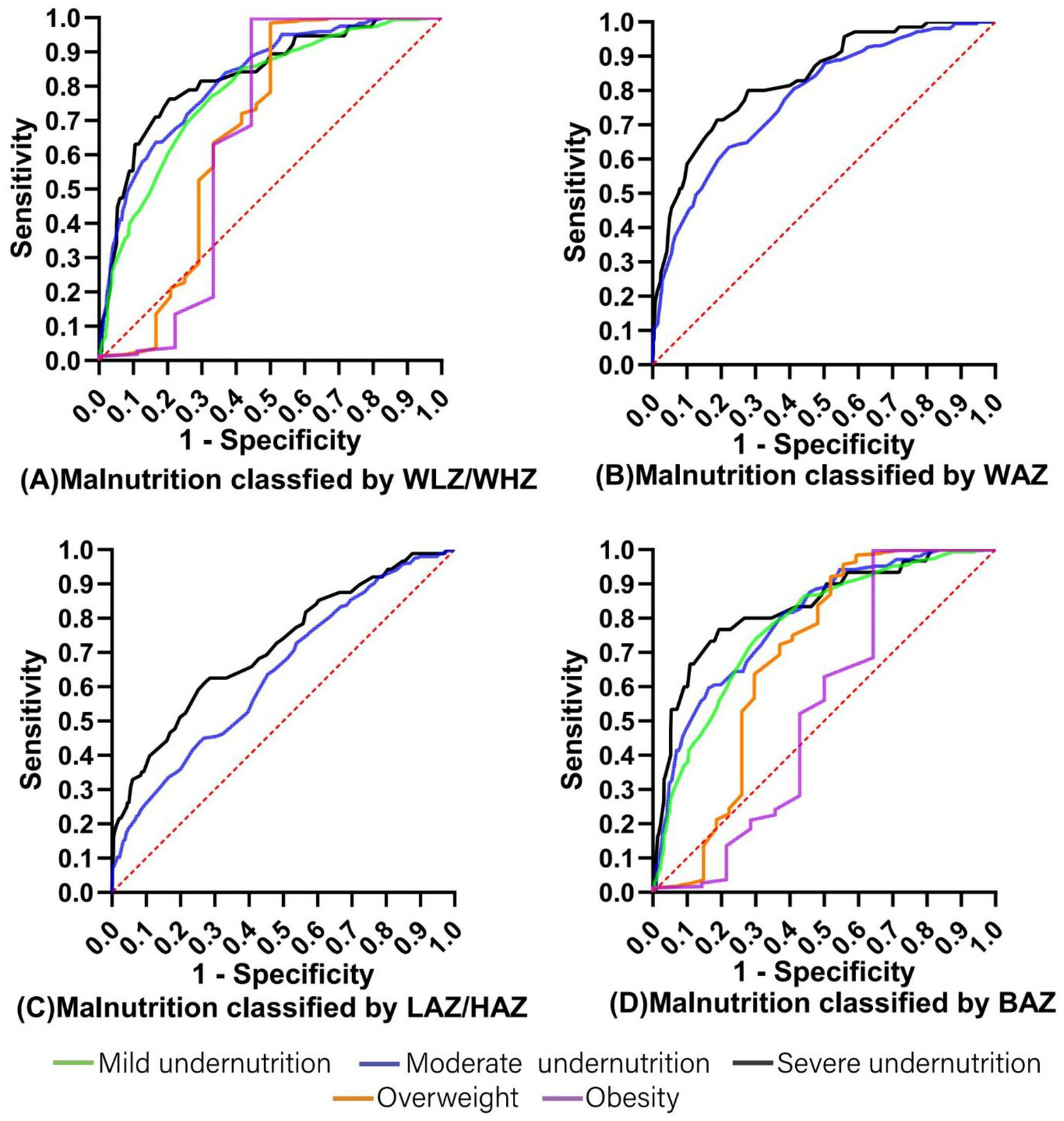
AimEvaluating the nutritional status of children with cerebral palsy (CP) is difficult due to spasticity and contractures. Mid-upper arm circumference (MUAC) is a potential screening tool for malnutrition in children with CP, but its effectiveness is unproven. This study aims to provide evidence on the psychometric qualities of MUAC for clinical use and establish optimal cutoffs for preschoolers with CP.MethodsChildren with CP aged 12–60 months (n = 937) were recruited from 24 hospitals across 13 provinces in China for the cross-sectional study, while those had genetic or metabolic diseases were excluded. Weight, length/height and MUAC were obtained from participants. Weight and length/height were calculated into Z scores by using WHO Anthro software to assess the nutritional status. The sensitivity and specificity of the WHO-recommended MUAC cutoffs were calculated. The Spearman’s rank correlation, Receiver operating characteristic (ROC) curve, and Youden Index were conducted to establish the optimal MUAC cutoffs for preschoolers with CP.ResultsCompared to Z score cutoffs, WHO-recommended MUAC cutoffs showed high specificity but low sensitivity for malnutrition. MUAC significantly correlated with weight-for-length/height Z score (r = 0.606), weight-for-age Z score (r = 0.557), length/height-for-age Z score (r = 0.276), and BMI-for-age Z score (r = 0.575). The optimal MUAC cutoffs for mild, moderate, and severe undernutrition were 15.35, 15.05, and 14.35 cm, respectively; the optimal cutoffs for overweight and obesity were 17.55 and 20.4 cm, respectively.ConclusionOur study suggests that MUAC is a useful tool for screening the nutritional status of children with CP. However, the WHO-recommended MUAC cut-off may not be suitable for preschool with CP. We estimated that the optimal MUAC cutoffs were 15.35 cm for mild undernutrition, 15.05 cm for moderate undernutrition, and 14.35 cm for severe undernutrition, and 17.55 cm for overweight and 20.4 cm for obesity in preschool with CP.Clinical trial registrationwww.chictr.org.cn, ChiCTR2000033869.

2,555 views

4 citations

ObjectiveThis study aims to (1) determine the prevalence of malnutrition among hospitalized children with congenital heart disease (CHD), (2) evaluate the effectiveness of common pediatric nutritional screening tools across various age groups, and (3) specifically assess the tools’ efficacy in identifying severe malnutrition, thereby facilitating early nutritional intervention.MethodsA retrospective observational analysis was performed using clinical data from 3,677 children (0–18 years) with congenital heart disease who underwent surgical intervention at the Cardiothoracic Surgery Center between January 2018 and December 2022. The World Health Organization growth curves were used as standards to compare the efficacy of four screening tools: Screening Tool for the Assessment of Malnutrition in Pediatrics (STAMP), Screening Tool Risk on Nutritional status and Growth (STRONGkids), Risk Adjustment in Congenital Heart Surgery-1 method (RACHS-1), and the combined STAMP + STRONGkids (SS) adjusted score across different age groups. Categorical data were expressed as percentages, and Chi-square tests were used for statistical analysis, with pairwise comparisons performed using Bonferroni correction. Receiver Operating Characteristic (ROC) curves were employed to calculate specificity, sensitivity, and optimal cutoff values. The consistency of screening results was further assessed using Youden’s index and Kappa values.ResultsThe prevalence of malnutrition among CHD patients was 32.9% (1,208/3,667). Using World Health Organization (WHO) curves as the gold standard for diagnosing malnutrition, the AUC for the ROC curves of STAMP, STRONGkids, and SS were 0.841, 0.747, and 0.863 (P < 0.01), respectively, for nutritional risk screening among CHD patients. Optimal Youden indices were achieved at a STAMP score of 3.5 (55.9%), a STRONGkids score of 2.5 (41.5%), and an SS score of 3.25 (64.5%). Age-based subgroup analysis revealed that STAMP had the best sensitivity of 70.1% (Negative Prediction Rate (NPV) 96.1) at a score of 3.5 for children aged 6–18 years, STRONGkids showed optimal sensitivity of 78.1% (NPV 77.3) at a score of 2.5 for infants aged 0–1 year, and SS demonstrated 74.7% sensitivity (NPV 96.6) at a score of 3.25 for children aged 6–18 years. Further analysis indicated that STAMP at a score of 2.5 and SS at a score of 2.75 showed balanced sensitivity and specificity across all age groups. Additionally, for different degrees of nutritional deficiencies, STAMP at 3.5 and SS at 3.25 demonstrated ideal specificity, with all Kappa values being P < 0.001.ConclusionFor hospitalized CHD patients aged 0–18 years, the nutritional screening tool STAMP is more effective than STRONGkids, and SS combines the advantages of both tools as it demonstrates the best screening efficacy. However, the area under the ROC curve (AUC) for the RACHS-1 score was 0.525 (P >0.01), indicating not suitable for nutritional risk screening. To enhance sensitivity in screening malnutrition in CHD patients, the recommended cutoff values are 3 for STAMP and 2.5 for SS. For identifying severe malnutrition, STAMP at a cutoff of 3.5 and SS at 3.25 show higher overall screening efficacy.

3,382 views

5 citations

Scurvy, a condition caused by a deficiency in ascorbic acid, is often considered an outdated, textbook disease, largely forgotten in the 21st century. However, recent reports indicate a rise in cases, particularly among individuals with risk factors for nutritional deficiencies or those with specific dietary habits. These cases are frequently misdiagnosed, leading to a series of unnecessary tests that could be avoided with a thorough assessment of dietary intake. In this report, we present the case of a 10-year-old with autism spectrum disorder (ASD) and a selective eating pattern, who presented with a limping gait, tenderness in the right calf, and significant weight loss. A skin examination revealed multiple perifollicular hemorrhages with corkscrew-shaped hair, as well as localized erythematous and hypertrophic gingiva in all four quadrants. Based on clinical findings, scurvy was suspected, and vitamin C supplementation was initiated both for diagnostic and therapeutic purposes. The diagnosis was confirmed when serum vitamin C levels were found to be critically low (5 µmol/L, normal range: 28–120 µmol/L). The patient's response to vitamin C was impressive, with complete gingival healing and noticeable weight gain within three weeks. Although scurvy is often thought of as an ancient disease, it has seen a resurgence, posing diagnostic challenges due to its diverse clinical manifestations. Early diagnosis, along with appropriate intervention and dietary changes, can lead to an excellent prognosis for individuals with scurvy.

2,971 views

1 citations

Association between gastroesophageal reflux and bronchopulmonary dysplasia in preterm infants: a systematic review and meta-analysis
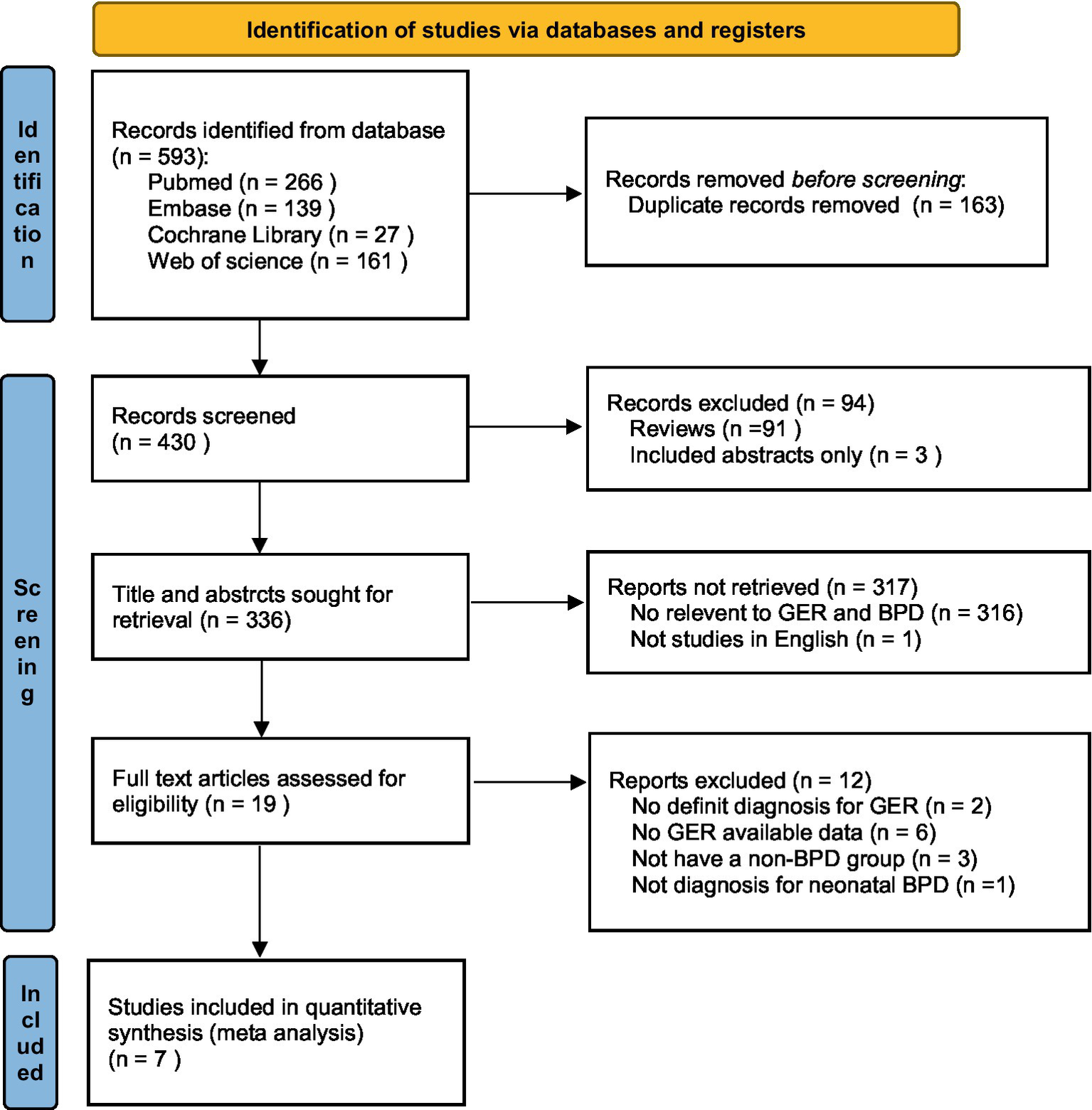
ObjectiveGastroesophageal reflux (GER) has emerged as a potential contributor to lung injury. This meta-analysis aimed to evaluate the association between GER and bronchopulmonary dysplasia (BPD) in preterm infants.MethodsA systematic literature search was conducted in PubMed, Embase, Web of Science, and Cochrane Library databases up to Oct 19, 2024. Studies assessing the association between BPD and GER in preterm infants were included. Random-effects models was used to calculate pooled risk ratios (RR) with 95% confidence intervals (CIs). Sensitivity analyses and subgroup analyses were performed to assess the robustness of the findings.ResultsSeven studies were included in the meta-analysis. The overall analysis revealed a non-significant association between GER and BPD (RR = 1.35, 95% CI = 0.91–2.01), but significant heterogeneity was observed across the studies (p < 0.001, I2 = 95.2%). The pooled RR ranged from 1.17 (95% CI = 0.79–1.74) to 1.51 (95% CI = 1.02–2.22) with each study omitted. Funnel plot analysis showed noticeable asymmetry, and Egger’s test confirmed potential publication bias (P > |t| = 0.076). Subgroup analysis revealed that GER diagnosed with clinical therapy or ICD-9 codes was significantly associated with BPD (RR = 1.72, 95% CI = 1.52–1.95 and RR = 2.70, 95% CI = 2.48–2.94, respectively). However, GER diagnosed by pH monitoring did not show a statistically significant association with BPD (RR = 0.86, 95% CI = 0.71–1.05).ConclusionPreterm infants with clinically diagnosed GER may face an elevated risk of developing BPD. GER diagnosed by pH monitoring was not associated with BPD.Systematic Review Registrationhttps://www.crd.york.ac.uk/prospero/.

3,345 views

5 citations