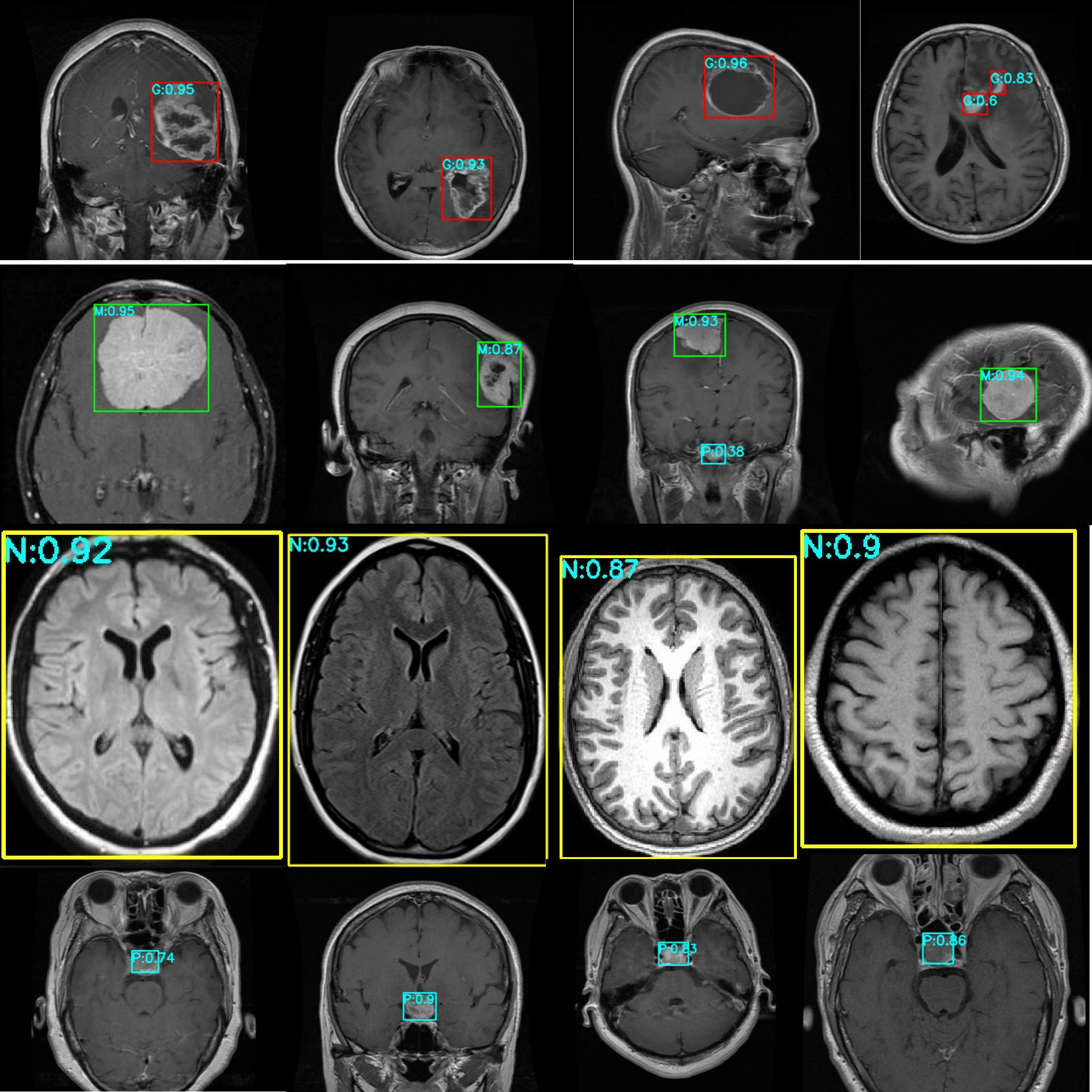
This Research Topic presents 11 papers that collectively highlight the breadth of AI-driven neuroimaging research. The contributions span a wide range of applications from brain tumor detection and stroke prediction to epilepsy monitoring and autism diagnosis demonstrating how interdisciplinary advances are transforming precision medicine and neuroscience.Among the notable contributions, Priyadharshini et al. introduce QBrainNet, a hybrid quantum-classical neural network that leverages quantum superposition and entanglement to improve stroke prediction accuracy to 96%, outperforming traditional CNN-based approaches. By combining quantum feature extraction with variational quantum circuits, this model demonstrates the transformative role of quantum-assisted intelligence in medical imaging. In the domain of multimodal neuroimaging, Chandrasekaran et al. propose a powerful ensemble model combining VGG19 and Bidirectional LSTM with LightGBM for MRIbased brain simulations, achieving 97% accuracy and an AUC of 0.997. This hybrid design demonstrates how spatial and temporal feature fusion can improve diagnostic performance while supporting sustainable healthcare AI, a crucial step toward scalable clinical deployment. Collectively, these contributions highlight the evolution of AI in neuroimaging from task-specific models toward integrated, interpretable, and efficient systems capable of supporting real-world clinical decision-making. Ciftci et al. present a dual-model AI framework that synergistically combines clinical analytics and neuroimaging to improve Alzheimer's disease diagnosis. An Artificial Neural Network (ANN) trained on demographic and behavioral data from 1,200 patients provides risk prediction with 87.08% accuracy, while a Convolutional Neural Network (CNN) analyzes 4,876 MRI scans to stage disease progression with 97% accuracy using explainable Grad-CAM visualizations. By integrating structured clinical features with imaging-based assessment, the hybrid system enhances both diagnostic precision and clinical interpretability, aligning with the growing trend toward multimodal, scalable, and AIassisted neuroimaging solutions for neurodegenerative disorders.
Across the eleven studies in this collection, several unifying themes emerge. First, hybrid intelligence, the integration of quantum computing, CNNs, Transformers, and ensemble learning, is redefining neuroimaging accuracy and adaptability. Second, explainability has become a cornerstone of modern neuro-AI research. Through SHAP, counterfactual reasoning, and attention visualization, the models presented here strive not only for accuracy but also for interpretability, fostering clinical trust in AI-driven diagnostics. Third, the move toward data-efficient models such as lightweight CNNs and transfer learning underscores a shift toward accessibility, enabling AI adoption even in dataconstrained healthcare systems.Additionally, multimodal integration combining MRI, fMRI, EEG, and behavioral data reflects a growing recognition that brain disorders are inherently multifactorial and cannot be captured through a single data source. These multimodal approaches bridge the gap between structure and function, allowing for more holistic assessments of neurological conditions. Finally, the emphasis on sustainability and scalability ensures that emerging AI technologies can transition from research prototypes to clinical practice, empowering healthcare systems globally.