Forest Hazard Mitigation and Ecosystem Function Restoration in the Era of Climate Crisis: Safeguarding Ecological Integrity for Sustainable Forest Management
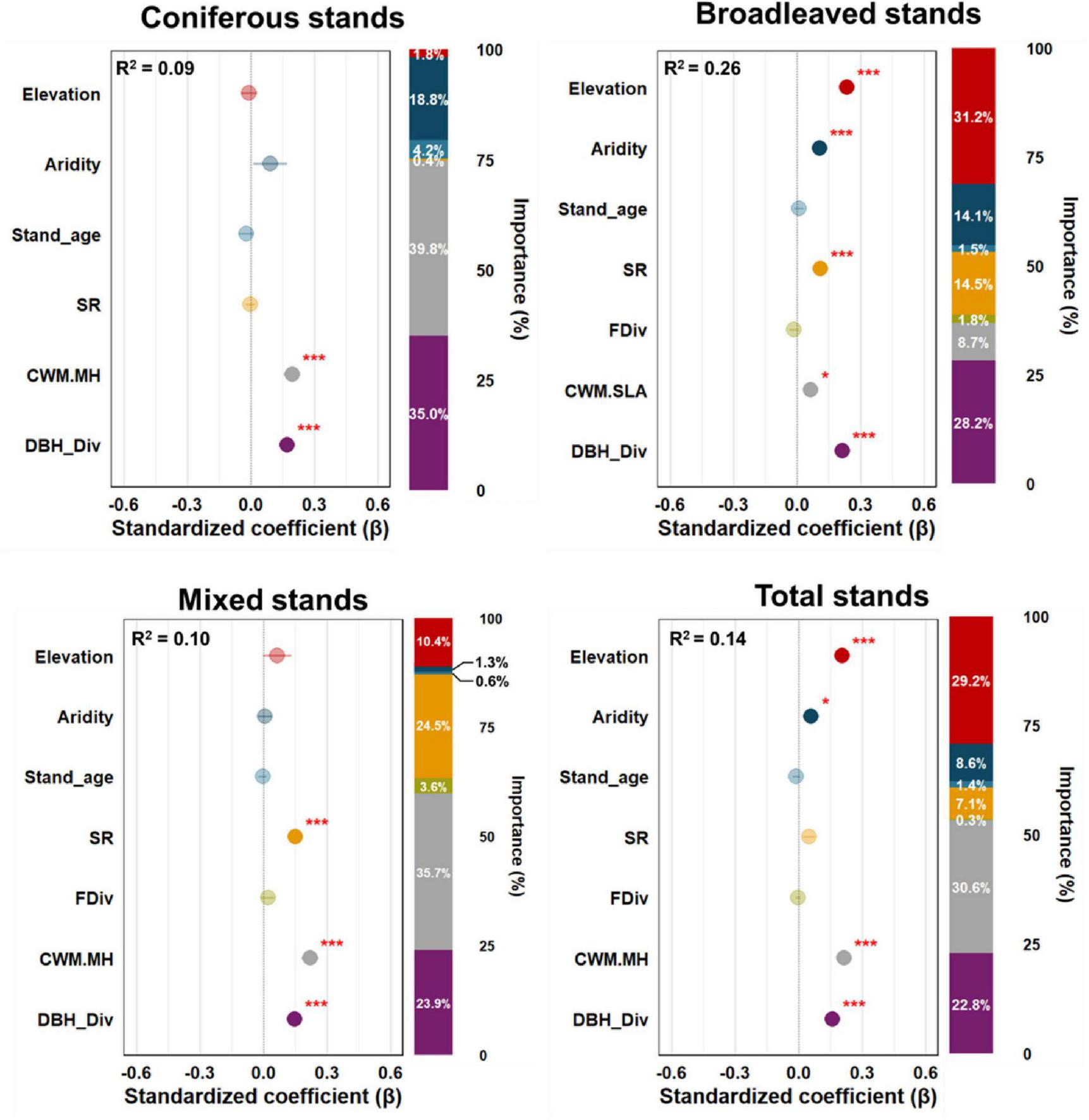
IntroductionMaintaining the stability of forest ecosystem functions and mitigating climate-driven declines in ecosystem multifunctionality (EMF) are central objectives of contemporary forest management.MethodsWe evaluated the spatial stability of 11 forest ecosystem functions and overall multifunctionality using data from 2,859 natural forest plots in South Korea’s 7th National Forest Inventory. Specifically, we investigated how biotic factors (species, functional, and structural diversity), abiotic factors (elevation and aridity), and stand age influence the spatial stability of EMF and individual functions. Variance partitioning and regression analyses were conducted to determine the relative contributions of these factors.ResultsBiodiversity-related biotic factors—particularly species richness and structural diversity—were the main determinants of spatial stability for most individual functions and multifunctionality, generally showing positive effects. However, these relationships varied among different functions. Among abiotic variables, higher elevations and lower water stress (i.e., a higher aridity index) were associated with greater stability. In addition, community-weighted means of functional traits influenced EMF, with maximum tree height showing a particularly strong link to multifunctionality and its stability.DiscussionOverall, our findings underscore the importance of developing targeted management strategies to enhance EMF and individual ecosystem functions. They further suggest that biodiversity alone does not guarantee stability across all ecosystem functions, highlighting the need to consider both biotic and abiotic contexts in forest management planning.
IntroductionIn order to effectively manage ecosystems, it is important to understand how the structure and function of the ecosystem are measured and interpreted, and ecosystem multifunctionality (EMF) is being used as an important indicator for providing sustainable ecosystem functions and managing qualitative stability. The objective of this study is to examine the biotic and abiotic mechanisms underlying the production and regulation of EMF within various forest stand types.MethodsTo this end, we assessed the influence of biotic (tree species, functional, and stand structural diversity of trees), abiotic (elevation, aridity index), and stand age (mean age of the five dominant trees per plot) factors on EMF. A total of 2,859 natural forest plots—comprising coniferous, broadleaved, and mixed stands—were analyzed based on data from the 7th National Forest Inventory of South Korea. To determine the major factors influencing EMF, we applied a multi-model inference approach along with piecewise structural equation modeling.ResultsOur results suggest that higher plant biodiversity was positively associated with EMF. In addition, older forests exhibit greater stand structural diversity, which in turn enhances the maintenance of EMF. The analysis of abiotic factors revealed that EMF increased with elevation. Furthermore, variables related to plant water stress consistently had negative direct and indirect effects across all forest stand types. Finally, the mechanisms controlling EMF differed among forest stand types.DiscussionThese findings suggest that promoting forest succession, maintaining biodiversity, and enhancing stand structural diversity are essential forest management strategies for improving EMF. Furthermore, since the controlling factors of EMF varied among forest stand types, forest-type specific management strategies are required. Lastly, this study provides valuable insights for guiding sustainable forest management that enhances both EMF and specific ecosystem functions, while supporting human well-being.