ZZ
zhichang zhang
Northwest Normal University
Lanzhou, China
1,679
Total downloads
13k
Total views and downloads
Submit your idea
You will be redirected to our submission process.
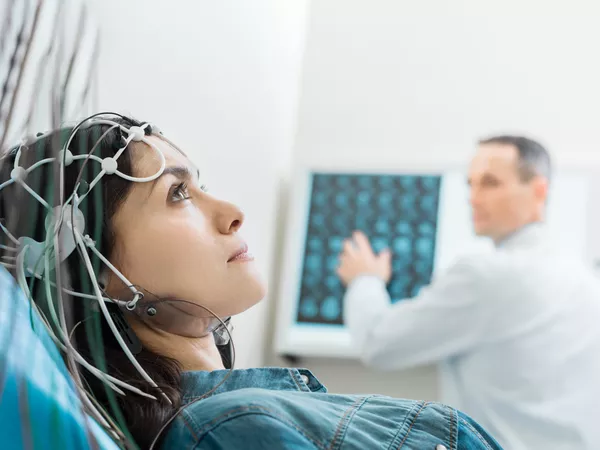
The rapid advancement of Artificial Intelligence (AI) is reshaping the landscape of neuroscience and clinical neurology. In recent years, deep learning, graph neural networks, and multimodal fusion algorithms have demonstrated tremendous potential in the analysis of neural and physiological data such as electroencephalography (EEG), functional magnetic resonance imaging (fMRI), and structural MRI (sMRI). These technologies enable researchers to decode neural activity patterns with unprecedented accuracy and uncover complex relationships between brain function, cognition, and behavior. This Research Topic aims to bring together cutting-edge studies and perspectives exploring how AI can drive breakthroughs in brain and physiological state decoding, from foundational modeling to clinical translation.
Key areas of interest include, but are not limited to:
• End-to-end decoding of neural and physiological signals for cognitive, affective, or behavioral inference
• AI-based multimodal fusion of EEG, MEG, fMRI, and other neurophysiological data
• Knowledge-enhanced and explainable deep learning models for neuro-signal interpretation
• Brain-age prediction, cognitive workload monitoring, and emotional state recognition
• Biomarker discovery for neurological, psychiatric, or neurodegenerative disorders
• AI applications in brain–computer interfaces (BCIs), neural rehabilitation, and assistive systems
• Integration of wearable, imaging, and invasive recordings for holistic brain–body modeling
• Self-supervised, transfer, or foundation models for neural and physiological data representation
• Graph- or transformer-based architectures for large-scale neuroimaging or biosignal datasets
• Cross-modal representation learning linking neural, physiological, and behavioral domains
• Clinical translation of AI models for diagnosis, prognosis, or personalized neuro-intervention
• Ethical, robustness, and interpretability considerations in medical AI for neuroscience
By fostering collaboration between computational scientists, neuroscientists, and clinicians, this Research Topic seeks to advance our understanding of brain–body dynamics, enhance interpretability of AI-based neuro-signal models, and accelerate the development of intelligent neurotechnologies for diagnosis, monitoring, and therapeutic applications.

This Research Topic accepts the following article types, unless otherwise specified in the Research Topic description:
Articles that are accepted for publication by our external editors following rigorous peer review incur a publishing fee charged to Authors, institutions, or funders.
Keywords: artificial intelligence, brain decoding, physiological signals, multimodal learning, deep learning, neural biomarkers, cognitive neuroscience, brain-computer interface, clinical neurology
Important note: All contributions to this Research Topic must be within the scope of the section and journal to which they are submitted, as defined in their mission statements. Frontiers reserves the right to guide an out-of-scope manuscript to a more suitable section or journal at any stage of peer review.
Manuscripts can be submitted to this Research Topic via the main journal or any other participating journal.
Submit your idea
You will be redirected to our submission process.