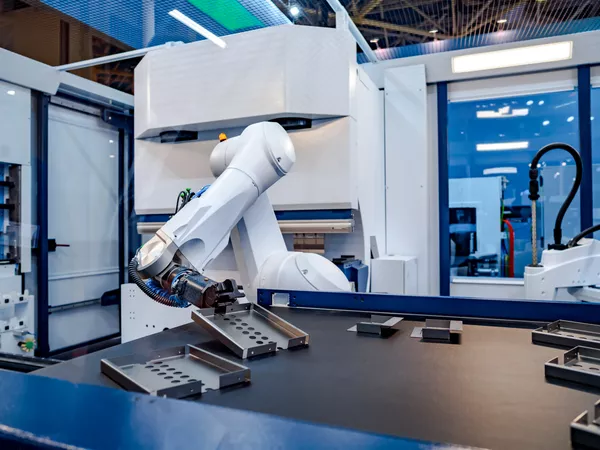
The field of embodied robotics has experienced a significant paradigm shift toward understanding how a robot’s physical structure (morphology) and its adaptive control mechanisms (learning) co-evolve to produce intelligent behaviors. Traditional approaches have often treated morphology and learning as separate design components, but recent perspectives emphasize that their interaction is essential for achieving higher levels of autonomy and adaptability. Studies inspired by natural developmental processes have demonstrated the potential of integrated developmental strategies in improving robot performance across dynamic tasks. However, key conflicts remain unresolved. For example, evolved morphologies that excel in simulation frequently fail to transfer to physical hardware (the “reality gap”), and there is conflicting evidence on whether co-optimizing body and controller jointly outperforms optimizing them sequentially—some studies report that simultaneous search destabilizes learning and collapses morphological diversity, while others show it is essential for discovering high-performing designs. Methodological limitations compound these disputes: the absence of standardized benchmarks, inconsistent metrics for “adaptability,” and the prohibitive sample cost of evaluating physical morphologies make cross-study comparison difficult. Addressing these gaps requires systematic investigation into how developmental plasticity can be operationalized within robotic systems.
This Research Topic aims to explore and define the mechanisms that underpin the synergy between morphological development and learning in robotics. It seeks to bring together foundational theories, computational frameworks, and empirical studies that investigate how physical embodiment and adaptive algorithms can co-influence each other to enhance emergent intelligence. Key objectives include identifying the principles governing morphological adaptability, evaluating the interplay between structure and learning dynamics, and formulating design methodologies that facilitate open-ended, autonomous evolution of robotic systems. The ultimate goal is to develop a coherent theoretical and practical basis for next-generation robots capable of self-optimizing through integrated developmental processes.
To gather further insights into the evolving intersection of morphology and learning in robots, we welcome contributions that focus on conceptual, experimental, and computational advances in this domain. Articles may include but are not limited to the following themes:
- Co-optimization of morphology, control, and learning in autonomous agents, including hybrid model-based and learning-based control - Foundation models, large multimodal models, and vision-language-action policies for embodied and morphologically adaptive agents - Sim-to-real transfer, domain randomization, and closing the reality gap for adaptive and reconfigurable morphologies - Neuroevolutionary, developmental, and generative-design algorithms for embodied intelligence - Reinforcement learning and self-supervised, intrinsically motivated exploration in developmental robotics - Soft, growing, and self-reconfigurable robots that exploit morphological computation - Task-driven morphological adaptation with standardized benchmarks and quantitative, reproducible evaluation - Theoretical models and safety/robustness guarantees for the coupling between physical form and adaptive behavior
Article types and fees
This Research Topic accepts the following article types, unless otherwise specified in the Research Topic description:
Brief Research Report
Data Report
Editorial
FAIR² Data
General Commentary
Hypothesis and Theory
Methods
Mini Review
Opinion
Articles that are accepted for publication by our external editors following rigorous peer review incur a publishing fee charged to Authors, institutions, or funders.
Article types
This Research Topic accepts the following article types, unless otherwise specified in the Research Topic description:
Brief Research Report
Data Report
Editorial
FAIR² Data
General Commentary
Hypothesis and Theory
Methods
Mini Review
Opinion
Original Research
Perspective
Policy and Practice Reviews
Review
Systematic Review
Technology and Code
Keywords: Morphological Development and Learning, Embodied Intelligence
Important note: All contributions to this Research Topic must be within the scope of the section and journal to which they are submitted, as defined in their mission statements. Frontiers reserves the right to guide an out-of-scope manuscript to a more suitable section or journal at any stage of peer review.