Editorial25 May 2022
Editorial: Omics and Fish Nutrition

Omics and Fish Nutrition

According to a new report published by Food and Agriculture Organization (FAO, 2020), global fish production reached around 179 million tons and aquaculture production accounted for 63.7% of the total production. The rapid expansion of aquaculture industry has been associated with numerous challenges such as shortage of resources for sustainable production of aquafeeds (Bruni et al.,2021, Zhou et al., 2019). For a long time, the focus of traditional fish nutrition studies has been primarily on nutrients requirement and fish metabolism, but nowadays the interaction of nutrients and physiological responses has drawn attention of fish nutritionists. Omics technologies including transcriptomics, proteomics, and metabolomics have made a large contribution to better understanding of fish response to nutrients and dietary manipulations. The omics approaches have been successfully implemented for exploring the molecular basis of complex traits such as feed efficiency, muscle myopathies, immunity, and disease tolerance (Vallejos-Vidal et al., 2022).

Transcriptomics in understanding fish performance

Transcriptomics is often used in identifying the expression of genes in mRNA transcripts in response to different factors. Nutrients can modify gene transcription and translation thereby regulating the animals’ growth and reproduction performances. For example, the liver transcriptomic analysis revealed that n-3 LC-PUFA can promote the ovary development through upregulating the expression of vitellogenesis and zonagenesis related genes (Wang et al.,2021). It was earlier assumed that protein requirement of fish cultured under optimal and high temperatures differs, and interestingly the transcriptomic analysis in a recent study indicated that such variations in dietary protein requirement are associated with the metabolic alterations of three major nutrients in the liver (Cai et al., 2020).

Proteomics in evaluating protein metabolism

Proteomic analysis has been employed as an efficient and useful tool in assessment of the metabolism of proteins. For example, it suggested that different forms of lysine and leucine affect the absorption, synthesis and degradation of protein and ultimately the fish growth (Wei et al.). Moreover, the proteomics suggested that the impairment of growth performance in fish fed terrestrial proteins corresponds with the inhibition of cellular protein biosynthesis (Cao et al.). In the future, proteomics could be implemented as a key tool for understanding the role of specific amino acids in satisfying the physiological needs of fish.

Metabolomics promotes new insights in fish nutrition

Metabolomics can provide new insight into the alterations of nutrients metabolism by identifying small molecule metabolites. The results obtained from metabolomics can indicate the holistic vision of fish metabolism and health monitoring (Roques et al. 2019). Fish fed plant-based diets showed metabolic disturbances illustrated by lower muscle PUFA concentration. Moreover, the metabolomics data revealed the increased muscle malate, fumarate and glycine concentrations which are associated with energy metabolism (Wei et al. 2017). Also, metabolomic analysis suggested that taurine modulates carbohydrate, amino acids, and lipids metabolic pathways in Nile tilapia (Shen et al. 2018). Furthermore, metabolomics results in a rainbow trout study indicated that fish fed the diets in which fish meal and fish oil were replaced with alternative sources exhibited higher energy requirements (Cao et al.).

Overall, omics provides a global insight into molecular response and metabolism of fish in response to nutritional factors. In the future, it could provide novel methods and specific markers for evaluating the nutritional and health status of fish. It will also contribute to elucidating the hidden effects of specific nutrients or feedstuffs in fish.
2,271 views

4 citations

Integrated Analysis of Metabolomics and Transcriptomics for Assessing Effects of Fish Meal and Fish Oil Replacement on the Metabolism of Rainbow Trout (Oncorhynchus mykiss)
ORIGINAL RESEARCH
24 February 2022
Integrated Analysis of Metabolomics and Transcriptomics for Assessing Effects of Fish Meal and Fish Oil Replacement on the Metabolism of Rainbow Trout (Oncorhynchus mykiss)
Yiming Cao, 5 more and Zhongyi Dai
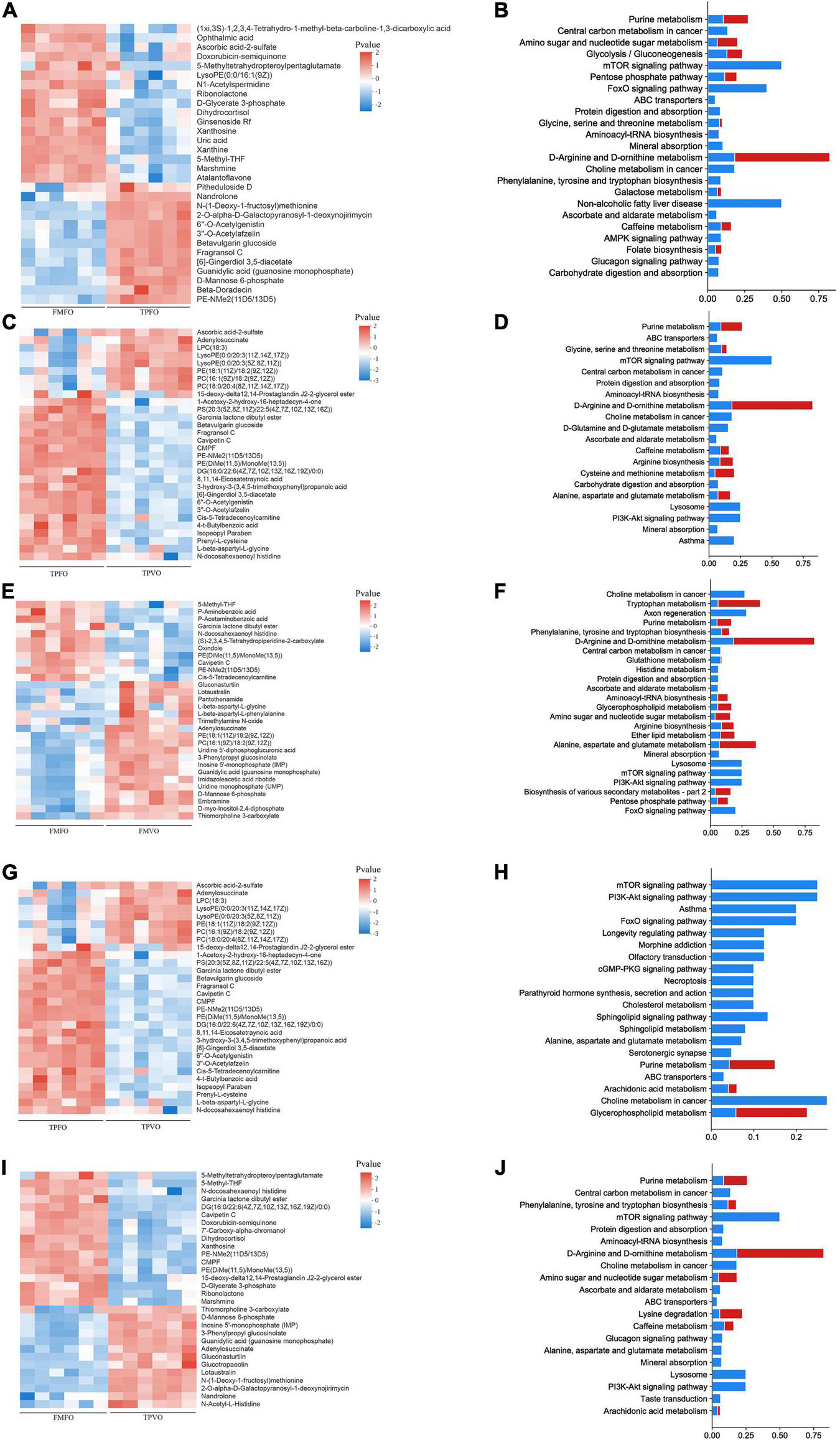
Reducing dependency on dietary fish meal (FM) and fish oil (FO) is extremely important for the sustainable development of the aquaculture industry. However, the metabolic consequences and mechanisms underlying the replacement of dietary FM and FO by terrestrial proteins and lipids remain unclear. To reveal the effects of replacing dietary FM and/or FO on the metabolic changes, the integrated analysis of metabolomics and transcriptomics were employed to evaluate the changes in metabolites and genes of rainbow trout (Oncorhynchus mykiss) feeding different experimental diets. Four diets were formulated for the 84-day duration of the experiment: control group (FMFO), FM and vegetable oil (FMVO), terrestrial protein and FO (TPFO), and terrestrial protein and vegetable oil (TPVO). Integrated metabolomic and transcriptomic analyses revealed the significant difference in the metabolic pathways of O. mykiss among the 3 replacement schemes, i.e., single replacement of dietary FM by TP, single replacement of dietary FO by VO, and combined replacement of FM by TP and FO by VO. The combined replacement of FM and FO by TP and VO, respectively, disturbed immune function, energy metabolism, cellular protein biosynthesis capacity, and lipid metabolism of O. mykiss. The reduction of antioxidant capacity was only observed in individuals feeding diets with replacement of FM by TP. Furthermore, as soon as the dietary FM and/or FO were reduced, cellular protein biosynthesis ability was suppressed and accompanied by higher energy consumption in response to fluctuations of dietary quality, resulting in reduced growth performance. Interestingly, adenylosuccinate and adenosine monophosphate involved in purine metabolism were induced by both individual and combined replacement of FM and FO by terrestrial proteins and lipids, respectively. It suggested that these two metabolites might be potential biomarkers for O. mykiss fed diets with reduction of FM and/or FO. This study constitutes a new understanding of the molecular and metabolic mechanisms of O. mykiss in response to the replacement of dietary FM and/or FO by TP and/or VO, respectively, and built a theoretical basis for further improvement of aquafeed formulation and sustainable development of aquaculture.

6,959 views

22 citations

ORIGINAL RESEARCH
30 November 2021
Changes in Growth Performance, Nutrient Metabolism, Antioxidant Defense and Immune Response After Fishmeal Was Replaced by Low-Gossypol Cottonseed Meal in Golden Pompano (Trachinotus ovatus)
Yawen Qin, 6 more and Fei Song

2,991 views

17 citations

ORIGINAL RESEARCH
22 September 2021
Dietary Analysis Based on 18S rDNA, and Stable Carbon and Nitrogen Isotopes in Juvenile Eriocheir sinensis Crabs Reared Under Three Feeding Modes
Zhenzhen Lu, 2 more and Yongxu Cheng

2,822 views

10 citations

CORRECTION
2 February 2022
Corrigendum: Liver Transcriptomic Analysis of the Effects of Dietary Fish Oil Revealed a Regulated Expression Pattern of Genes in Adult Female Spotted Scat (Scatophagus argus)
Tuo Wang, 8 more and Guangli Li

1,156 views

Evaluation of the Dietary Black Soldier Fly Larvae Meal (Hermetia illucens) on Growth Performance, Intestinal Health, and Disease Resistance to Vibrio parahaemolyticus of the Pacific White Shrimp (Litopenaeus vannamei)
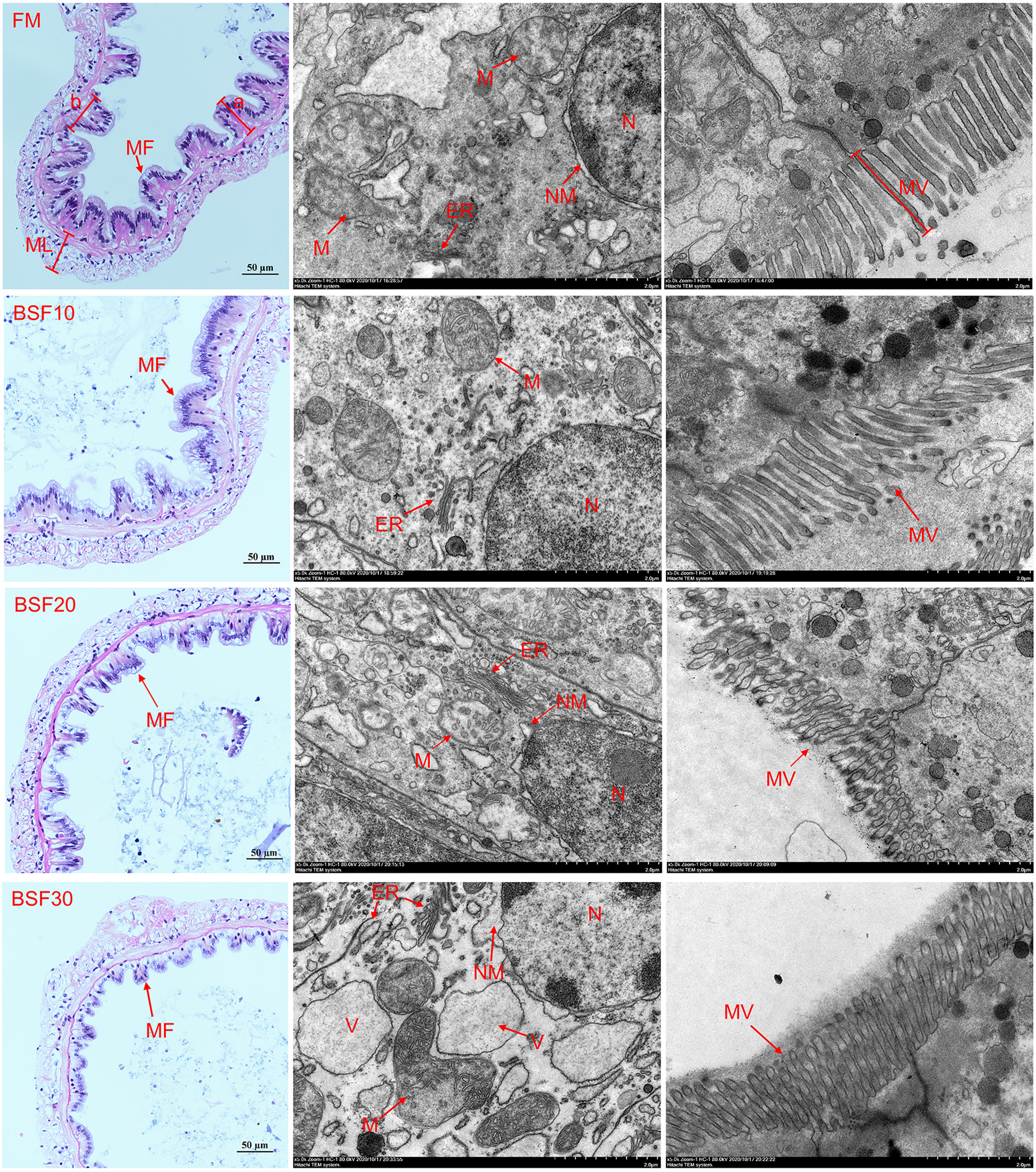
The present study evaluated the effects of dietary black soldier fly larvae meal (BSF) on growth, intestinal health and susceptibility to Vibrio parahaemolyticus in Pacific white shrimp Litopenaeus vannamei. The basal diet was formulated to contain 25% fish meal, and then 10%, 20% and 30% of the fish meal protein were replaced by BSF in the experimental diets, which referred to FM, BSF10, BSF20 and BSF30, respectively. 480 shrimp (0.88 ± 0.00g) were equally distributed to four groups of three replicates, each replicate in a 300L tank with 40 shrimp and fed four times daily for 7 weeks. Results showed that growth performance did not change significantly in shrimp fed BSF10 and BSF20 diets, but significantly decreased in those fed BSF30 diet compared to FM. After feeding trial and sampling, a Vibrio parahaemolyticus infection challenge trial was conducted, showing that the survival rate of shrimp fed BSF10 significantly higher than those fed FM. Results of midgut histology showed that the width and height of intestinal mucosal folds decreased significantly in shrimp fed BSF20 and BSF30, and the early signs of apoptosis in the intestinal cells were found in shrimp fed BSF30. The mRNA levels of non-specific immune-related genes dorsal and relish were downregulated in shrimp fed BSF20 and BSF30 diets. The mRNA levels of antimicrobial peptides-related genes alf (anti-lipopolysaccharide factor) were upregulated in shrimp fed BSF10 but downregulated in shrimp fed BSF30. The mRNA level pen3 (penaeidins 3) was upregulated in shrimp fed BSF10 and BSF20 diets. The intestinal bacterial communities on OTU levels among groups were not significantly differentiated according to the beta diversity analysis. At the genus levels, a decrease in Vibrio, Photobacterium and Candidatus_Bacilloplasma, as well as the increase in Bacillus and Pseudoalteromonas abundance, indicated the improvement of intestinal microbiota in shrimp fed dietary BSF. Therefore, the use of BSF in shrimp diet should be controlled at a dosage of 20% of the fish meal, which can improve the intestinal microbiota without causing negative effects.

10,388 views

67 citations

ORIGINAL RESEARCH
13 April 2021
Influence of Non-protein Diets on Hepatic Metabolism and Endocrine in Barramundi (Lates calcarifer)
Zhengyi Fu, 4 more and Zhenhua Ma

2,694 views

6 citations