
Constructing New Motifs in Hematology

85kviews
Editorial06 June 2023
Editorial: Constructing new motifs in hematology

The word "hematology" referred first in 1748 with publication of Thomas Schwenke's book, Haematologia, a "treatise as compete as it could then be, upon the blood considered in its state of health and of disease" (1). From then on, tremendous efforts put forth to evolve hematology with the influences in application of novel diagnostic technologies, genetic revolution, and molecular mechanisms to lighten the challenges in pathogenesis of diseases. In the current Research Topic, we aimed to update the community on the new era in hematology which included state-of-the-art knowledge in all fields of hematology including recent diagnostic technologies, novel treatment approaches of malign/benign hematological diseases and unsolved issues.Anemia, the reduction in hemoglobin (Hb) or hematocrit (HCT) or red blood cell, is the most common blood disorder. Research is going on for methods of detection, genetic and molecular aspects in pathophysiology as well as treatment approaches.Voxelotor is an HBs polymerization inhibitor approved by FDA where it demonstrated an improved Hb level, and reduced hemolysis, with an improved rate of vaso-oclusive crises (2). Alkindi and colleagues defined the abnormal HbD variant on high-performance liquid chromatography (HPLC) in patients under Voxelotor that will provide data on patient compliance. Β-thalassemia is another inherited hemoglobin disorder mainly effecting Mediterranean area, North and Central Africa, Southeast Asia, and the Middle East (3). Granulocyte transfusions (GCs) are potential therapy for neutropenic patients with infections resistant to antibiotics and anti-fungal drugs (10). Fernandes and colleagues investigated unknown points in various manufacturing strategies of granulocyte transfusions by evaluating leukocyte composition, neutrophil viability, calcium mobilization, chemotaxis, phagocytosis, reactive oxygen species, cytokine production and metabolites. G-CSF GCs contained more neutrophils than prednisone GCs.

Prednisone GC neutrophils showed enhanced phagocytosis and G-CSF GC neutrophils exhibited decreased chemotaxis but increased IL-8 production. G-CSF neutrophils seemed to be more sensitive to storage. Review by Castagna et al lightens up a controversial issue in the care of relapsed/refractory aggressive lymphomas (large B-cell lymphoma and MCL) by results obtained after allo-HSCT and CAR T cell therapies.In summary, today, excessive data have been accumulated in malign and benign hematology. Novel diagnostic and methods sculpture the concept of 'personalized medicine' rather than conventional approach.
1,778 views

1 citations

REVIEW
6 December 2022
The place of allogeneic stem cell transplantation in aggressive B-cell non-Hodgkin lymphoma in the era of CAR-T-cell therapy
Luca Castagna, 8 more and Caterina Patti

6,522 views

4 citations

ORIGINAL RESEARCH
9 June 2022
A Novel Phenotype of the Factor 5 Gene Mutation (Homozygote Met1736Val and Heterozygote Asp68His) Is Associated With Moderate Factor V Deficiency
Yueh-Shih Chang, 5 more and Kun-Yun Yeh

3,134 views

3 citations

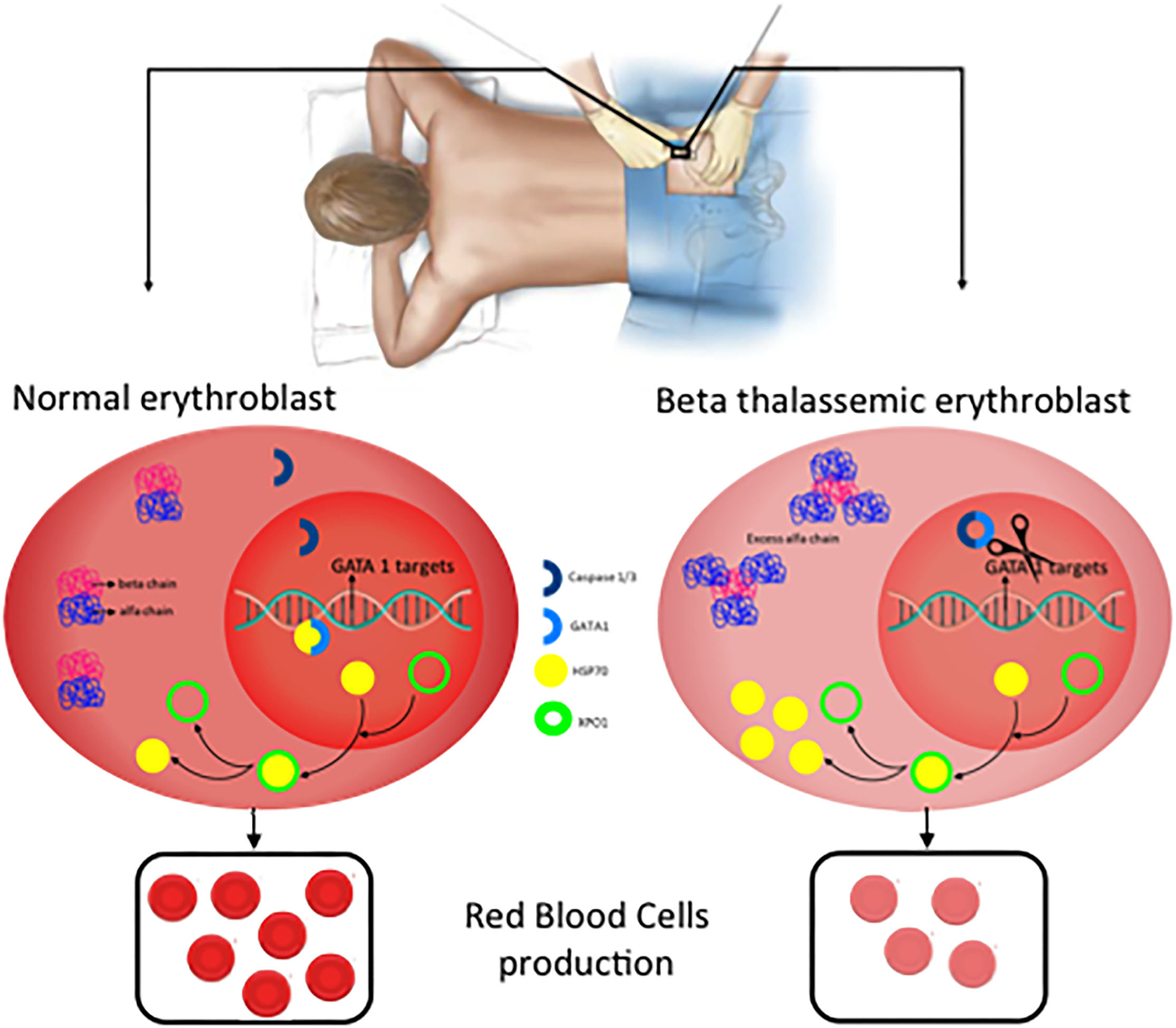
β-thalassemia is a disease caused by genetic mutations as a result of single nucleotide substitution, small deletions or insertions within the β-globin gene, or in rare cases, gross deletions into the β-globin gene. These mutations affect globin-chain subunits within the hemoglobin tetramer that leads to an imbalance in the α/β-globin chain ratio, with an excess of free α-globin chains that triggers the most important pathogenic events of the disease: ineffective erythropoiesis, chronic anemia/chronic hypoxia, compensatory hemopoietic expansion and iron overload. Based on advances in our knowledge of the pathophysiology of β-thalassemia, in recent years, emerging therapies and clinical trials are being conducted and can be classified into three major categories based on the different approach features of the underlying pathophysiology: correction of the globin chain imbalance; reverse ineffective erythropoiesis; and improving iron overload. However, pathways such as the dysregulation of transcriptional factors, activation of the inflammasome, or approach to mechanisms of bone mineral loss, remain unexplored for future therapeutic targets. In this review, we update the main pathophysiological pathways involved in β-thalassemia, focusing on the development of new therapies directed at new therapeutic targets.

37,504 views

70 citations

4,096 views

13 citations

ORIGINAL RESEARCH
4 February 2022
Development of a Nomogram to Predict the Risk of Chronic Active Epstein-Barr Virus Infection Progressing to Hemophagocytic Lymphohistiocytosis
Xiaodan He, 2 more and Zhao Wang

3,987 views

15 citations

ORIGINAL RESEARCH
25 January 2022
Measurement for the Area of Red Blood Cells From Microscopic Images Based on Image Processing Technology and Its Applications in Aplastic Anemia, Megaloblastic Anemia, and Myelodysplastic Syndrome
Yongfeng Zhao, 4 more and Bei Xiong

5,012 views

6 citations

ORIGINAL RESEARCH
22 December 2021
MLL-SEPT5 Fusion Transcript in Myelodysplastic Syndrome Patient With t(11;22)(q23;q11)
Duobing Zou, 4 more and Qitian Mu

2,727 views

3 citations