Learning for Action in Policy Implementation

Cover image for Research Topic "Learning for Action in Policy Implementation"
72kviews
Editorial19 November 2024
Editorial: Learning for action in policy implementation

integration of legal epidemiology and IS (Lane and Stergachis); a measurement study on acceptability and feasibility of policy implementation strategies (Purtle et al.); one qualitative comparative case study on policy intermediaries (Bullock et al.); and one case study on food assistance policy implementation (Kenney et al.); one quantitative evaluation effective communication related to policy IS (Dodson et al.); one mixed-method study on inter-sector care for the homeless (Martins et al.); one design study on participatory development of a target policy profile (Means et al.). Reviewing the papers included in this Research Topic, we identified several themes salient to the future of policy IS.

Policies include regulatory, promotional, and redistributive decisions and guidelines for implementing programs to achieve societal goals. 1 Lane and Stergachis addressed the importance of systematic collection and coding of laws to enable policy implementation analysis. It is notable to observe that a consensus was implicitly reached in the 12 manuscripts regarding the importance of the evidence base for policy and practice (EBPP). The working definition of policy IS in the 12 manuscripts aligns with the National Cancer Institute definition of policy IS. 2 However, from a policy perspective, research evidence is not the only input into policy decisions and that is why evidence-informed policies and practices (EIPP) was raised as a critical concept. 3 In public administration, policy implementation is defined as a deliberate, sanctioned change to public policy legitimized by a political authority, with an emphasis on changing the status quo and adapting to diverse contexts. 4 Scientific evidence is considered as one of multiple resources in implementation. Policy implementation strategies include information campaigns (Kenney et al.), licensing (Bera et al.), as well as others (e.g., contracting, subsidies, accreditation).Through literature review and synthesis, Tao et al. highlighted policy implementation strategies, including training, resource reallocation, and increased insurance coverage.

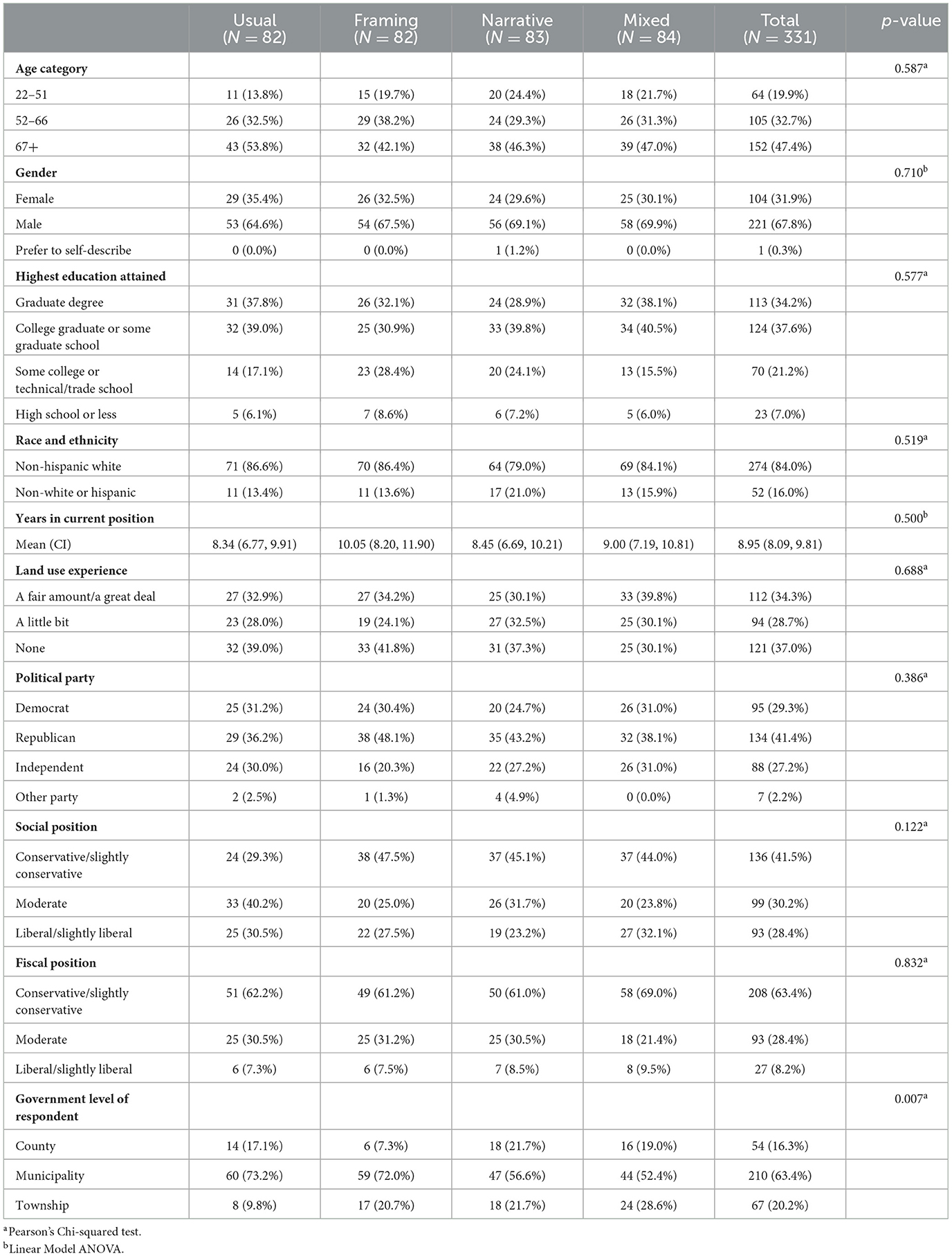
Policy IS has distinctive challenges in different settings and contexts (e.g., global vs. domestic). Incorporating contextual contingencies is important to address the factors affecting policy IS. List et al. brought the concept of Global North (United States, Canada, and Western Europe) and Global South in the discussion of global policy implementation in decolonizing global health. They highlighted donors as the bridge and power to connect two types of partners and reflected on who produced the frameworks and whether it was reciprocal.In synthesizing scientific evidence, conceptual frameworks are crucial to cluster the findings and aggregate knowledge, with the potential of theorization. Health Triangular Policy Framework by O'Brien et al. (2020) was applied in the narrative review by Tao et al., with an emphasis on actor-relevant contexts, contents, and processes. 5 In survey-based studies with policymakers and implementers, low response rates are a general challenge. For example, Dodson et al. had a 4.5% response rate in a national survey of local officials. Nonetheless, the results from these studies shed light on policy implementation practice. Dodson et al. studied the strategies to deliver policy briefs to facilitate information dissemination to local policymakers. Their study found that the narrative policy briefs had the lowest score (42%) related to strength in reasoning. In contrast, usual-care and risk-framing brief types had significantly higher scores to reflect strong reasoning (59% and 52%, respectively). This Research Topic collected diverse studies to learn for action. Bullock

Challenges in policy IS include the complexity of developing overarching theories that address diverse contexts and evolving implementation partners. Contextual analysis often lacks direct causal links to outcomes, while randomized trials are difficult due to the nature and scale of policy implementation. Other useful policy IS methods include legal epidemiology (Lane and Stergachis) and coincidence analysis. 7 Additionally, measuring outcomes across macro, meso, and micro levels, accounting for both intended and unintended effects, remains complex.A limitation of this Research Topic is that all of the manuscripts are in health and related domains such as food and nutrition (Kenney et al. and Smith et al.) and housing instability (Martins et al.). We anticipate that future Research Topics will cover other social policies, such as unemployment, poverty, education, and LGBTQIA+ marriage. We also anticipate future studies on systematic reviews to understand the overarching landscape of policy implementation, modeling studies to predict policy impacts, costing methods for use in policy implementation, and others.

2,276 views

2 citations

ORIGINAL RESEARCH
21 August 2024
An examination of mental health policy implementation efforts and the intermediaries that support them in New Zealand, Canada and Sweden: a comparative case study
Heather L. Bullock, 2 more and Michael G. Wilson

4,892 views

1 citations

Effectively communicating with local policymakers: a randomized trial of policy brief dissemination to address obesity
Word count: 290) Introduction: Evidence-based policies are a powerful tool for impacting health and addressing obesity. Effectively communicating evidence to policymakers is critical to ensure evidence is incorporated into policies. While all public health is local, limited knowledge exists regarding effective approaches for improving local policymakers' uptake of evidence-based policies. Methods: Local policymakers were randomized to view one of four versions of a policy brief (usual care, narrative, risk-framing, and narrative/risk-framing combination). They then answered a brief survey including questions about their impressions of the brief, their likelihood of using it, and how they determine legislative priorities. Results: Responses from 331 participants indicated that a majority rated local data (92%), constituent needs/opinions (92%), and cost-effectiveness data (89%) as important or very important in determining what issues they work on. The majority of respondents agreed or strongly agreed that briefs were understandable (87%), believable (77%), and held their attention (74%) with no brief version rated significantly higher than the others. Across the four types of briefs, 42% indicated they were likely to use the brief. Logistic regression models showed that those indicating that local data were important in determining what they work on were over seven times more likely to use the policy brief than those indicating that local data were less important in determining what they work on (aOR=7.39, 95% CI=1.86,52.57). Discussion: Among local policymakers in this study there was no dominant format or type of policy brief; all brief types were rated similarly highly. This highlights the importance of carefully crafting clear, succinct, credible, and understandable policy briefs, using different formats depending on communication objectives. Participants indicated a strong preference for receiving materials incorporating local data. To ensure maximum effect, every effort should be made to include data relevant to a policymaker's local area in policy communications.

6,794 views

4 citations

ORIGINAL RESEARCH
26 February 2024
Access to health and social protection policies by homeless people during the COVID-19 pandemic: a mixed-methods case study on tailored inter-sector care during a health emergency
Ana Luisa Jorge Martins, 7 more and Rômulo Paes-Sousa

5,825 views

11 citations

Laws and policies affecting access to medicines have been in the global health spotlight for decades, yet our understanding of their effects remains substantially underdeveloped. The emerging field of legal epidemiology combined with the methods of implementation science presents an opportunity to help address this gap. Legal epidemiology refers to the scientific study and deployment of law as a factor in the cause, distribution, and prevention of disease and injury in a population. Legal epidemiology studies consist of a systematic collection and coding of laws and policies relating to a particular topic. Quasi-experimental or observational research methods can then be applied to take advantage of natural experiments resulting from heterogenous adoption and/or implementation of laws and policies. Often legal epidemiology studies fail to account for heterogenous law implementation processes, presenting a need and opportunity to integrate implementation science methods. Researchers may face challenges in integrating these methods for access to medicines studies, including data access issues and a complex legal and implementation environment. Yet, the opportunities presented by increasingly transparent legal environments, improved monitoring of medicine availability, universal health coverage expansion, and electronic health and insurance records integration may facilitate overcoming these challenges. Improved collaboration and communication between researchers, health authorities, manufacturers, and health providers from public and private sectors will be critical. In spite of the challenges, combining the fields of legal epidemiology and implementation science may present an important strategy toward creating a legal and policy environment that supports global and equitable access to medicines.

3,785 views

4 citations

ORIGINAL RESEARCH
19 January 2024
Participatory development of a target policy profile to support soil-transmitted helminth elimination
Arianna Rubin Means, 6 more and Judd L. Walson

3,309 views

Objectives In this review, we aim to highlight the evidence base for the benefits of exercise in relation to the treatment of noncommunicable diseases (NCDs), draw on the Health Triangular Policy Framework to outline the principal facilitators and barriers for implementing exercise in health policy, and make concrete suggestions for action.Methods Literature review and framework analysis were conducted to deal with the research questions.Exercise prescription is a safe solution for noncommunicable diseases prevention and treatment that enables physicians to provide and instruct patients how to apply exercise as an important aspect of disease treatment and management. Combining exercise prescription within routine care, in inpatient and outpatient settings, will improve patients' life quality and fitness levels. This is a provisional file, not the final typeset article Conclusions Inserting exercise prescription into the healthcare system would improve population health status and healthy lifestyles. The suggestions outlined in this study need combined efforts from the medical profession, governments, and policymakers to facilitate practice into reality in the healthcare arena.

6,055 views

17 citations

PERSPECTIVE
2 November 2023
How policy implementation shapes the impact of U.S. food assistance policies: the case study of the Child and Adult Care Food Program
Erica L. Kenney, 4 more and Tatiana Andreyeva

3,959 views

3 citations