Editorial29 September 2023
Editorial: The world of seaweeds

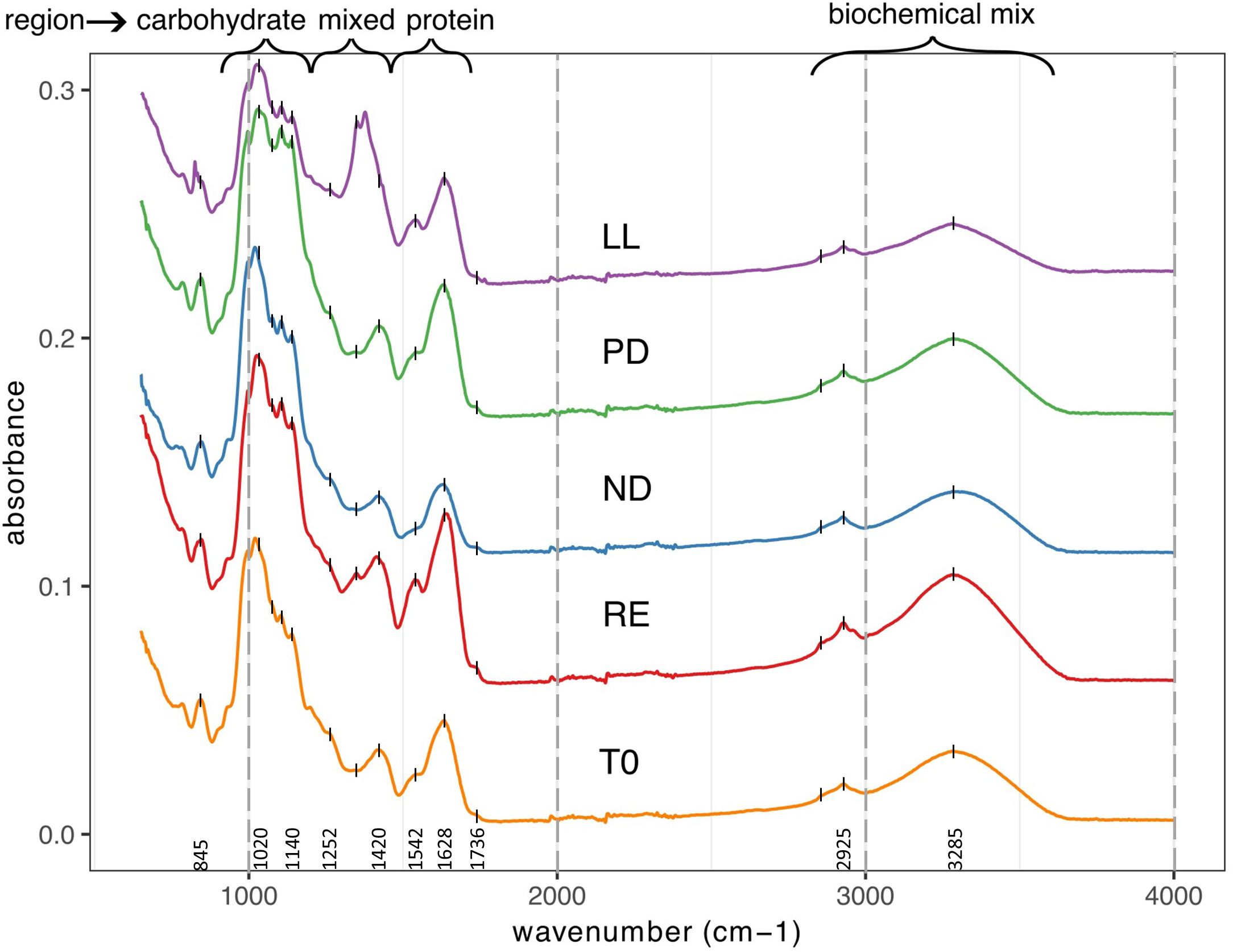
Otherwise Dr. Derksen's group has worked for similar purposes,using a very sensi�ve spectroscopic approach, such as ATR-FTIR, duly combined with mul�variate data analysis. In this way they have been able to detect varia�ons in metabolites (carbohydrates or nitrogen, for example) in the green alga Ulva laetevirens also cul�vated under different experimental condi�ons

The research groups led by Concha-Obando and Yokoya have focused their aten�on on the ability to cul�vate species of interest for their metabolites, with the aim of eventually abandoning the use of natural popula�ons, given the enormous amount of algal biomass needed to exploit a species for industrial pharmacological purposes, for example. Thus, Concha-Obando's group focuses on the produc�on of terpenoids by species of the Dyc�otaceae family and on the effects of cul�va�on condi�ons. On the other hand, Yokoya's group has focused on primary metabolites and their modifica�ons depending on the stage of the seaweed life cycle. The varia�on in the type and amount of compounds of industrial interest, such as carrageenan, depending on the phase of the life cycle is well known in certain species. According to the results of these authors, this also seems to occur with the basic levels of metabolism in the chilean and the antar�c Sarcopeltis species.In vitro growth regula�on may provide us with tools to improve propaga�on.Despite the relevance that growth regula�on may have for developing more efficient cul�va�on prac�ces, one of the least understood aspects of algae is the effect of growth-and development-regula�ng substances in algae. In this volume, Dr. Chen's group presents a new example of the effect of plant growth regulators such as gibberellic acid (GA3), naphthaleneace�c acid (NAA) or 6-benzylaminopurine (BAP) on regenera�on in thalli of the brown alga Sargassum fusiforme whose holdfast regenerated new juveniles induced by these hormones.The group of Dr. Robaina and Dr. Garcia-Jimenez adds a new case to the regula�on of carposporogenesis in red seaweed. On this novel scenario, their results show that methyl jasmonate (MEJA) suppresses carrageenan synthesis (i.e. hydrocolloid of sulfated galactans) by disrup�ng most of the genes encoding precursors or those in charge of transforma�on into sulfated hexoses for galactan backbone synthesis. This dysregula�on of galactan synthesis was illustrated with carrageenan vanishing in MEJA-treated fer�le thalli of Grateloupia imbricata as MEJA disrupted the func�onal groups of carrageenan and flatened the spectral peaks in the FTIR spectrum of carrageenan. The celerity of these events connects with reduc�on in matura�on �me of cystocarps and further altera�ons in ploidy of the carpospores. The ploidy of thalli and spores of G. imbricata seems to confirm the induc�on of mito�c produc�on of haploid spores by MEJA, thus revealing MEJA as a plant regulator affec�ng the cell cycle, apart from its demonstrated effect on the life cycle.

Concerns on poten�al interac�ons between the cul�var-defined popula�on and the natural popula�on always accompany intensive algal cul�va�on prac�ces. Hence the convenience of molecular tools to monitor this undesirable interac�ons Dr. Wang's group shows us effec�ve molecular markers able to track the gene interac�on between cul�var and natural popula�on of Neopyropia yezoensis in China. Their results reveal possible gene�c introgression over �me.
1,669 views

ATR-FTIR analysis is a rapid tool and represents a snapshot of all molecules present in a (plant) sample. Most alternative techniques for biochemical analyses of plant biomass require destructive sampling, complex and laborious sample pre-treatment and precise and costly analysis. These analyses are often limited to soluble compounds instead of all compounds present. Such complicated procedures are not efficient for manipulative studies that involve repeated sampling and rapid nutrient changes over time, such as in agro-industrial cultivation studies. In our study, the green seaweed species Ulva laetevirens (Chlorophyta) was cultivated under different nutritional regimes in on-shore cultivation tanks. The regimes were nitrogen and phosphorous replete, nitrogen-deplete, phosphorous-deplete and light limited. Samples were taken and tested according to common laborious analysis methods to determine the biochemical composition of polysaccharides, proteins, carbon and nitrogen. These results were compared with the potential of ATR-FTIR spectroscopy combined with multivariate analysis to allow for prediction of biomass composition. Statistical analysis of the spectra showed that the samples were clustered according to the nutritional regime during the incubation of U. laetevirens. This made it possible to deduce which abiotic factors were replete or deplete during cultivation. Furthermore, partial least square regression analysis proved the most suitable method to predict carbohydrate concentration and nitrogen content present in the biomass. Based on these findings, it is concluded that ATR-FTIR spectroscopy is an efficient and rapid alternative tool for qualitative and quantitative determination of the biochemical composition of U. laetevirens, that can be used in industrial cultivation setups.

10,787 views

27 citations

ORIGINAL RESEARCH
24 May 2023
SSR and 18S rDNA based molecular profiling of Neopyropia yezoensis (Rhodophyta) in China: insight into genetic impact of laver aquaculture on wild resource
Hui Xu, 3 more and Wenjun Wang

2,766 views

3 citations

ORIGINAL RESEARCH
14 March 2023
Influence of laboratory conditions on two species Dictyotaceae family (Phaeophyceae): Diterpenoid profile and physiological response
Johana Marcela Concha Obando, 7 more and Diana Negrão Cavalcanti

3,889 views

5 citations

Determination of nitrogen content in Ulva fenestrata by color image analysis – a rapid and cost-efficient method to estimate nitrogen content in seaweeds
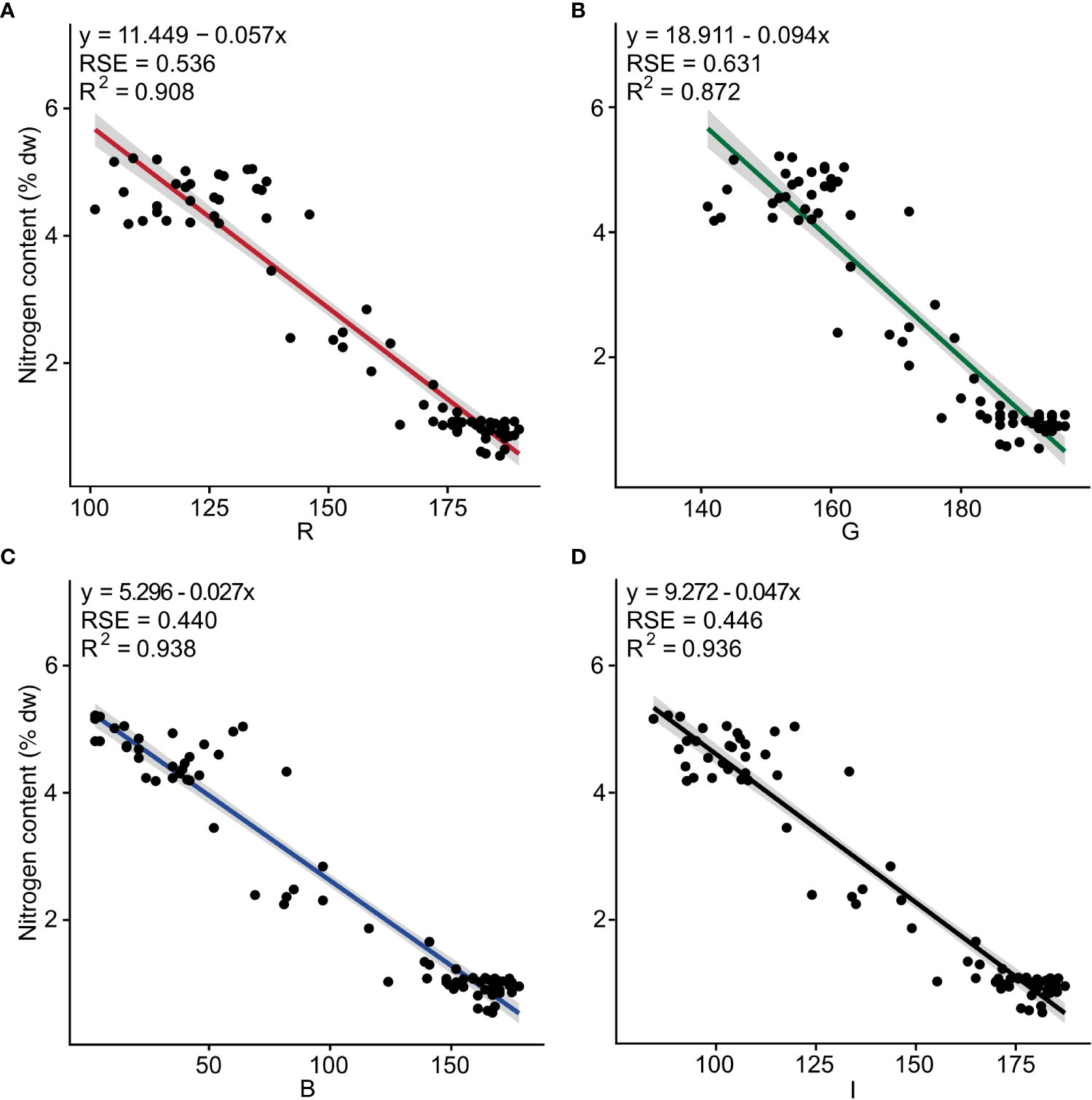
There is an increasing interest in the cultivation of seaweeds for food and feed, and the seaweed aquaculture industry is rapidly developing. The nutritional status of the seaweeds is important to ensure a good quality crop. Cost-efficient and straightforward methods for farmers to analyze their crop are essential for the successful development of the industry. In this study, we developed non-destructive, labor- and cost-efficient models to estimate the nitrogen content in the crop seaweed Ulva fenestrata by color image analysis. We quantified tissue nitrogen content and thallus color in sea-farmed seaweed every week throughout a whole cultivation season (15 consecutive weeks) and analyzed data with linear regression models. We showed that color image analysis accurately estimated the nitrogen content in the seaweed (R2 = 0.944 and 0.827 for fresh tissue and dried powder, respectively), and through tenfold cross validation we showed that the developed models were robust and precise. Based on these models, we developed a web-based application that automatically analyzes the nitrogen content of the seaweeds. Furthermore, we produced a color guide that can easily be brought to the farm for onsite crude estimation of seaweeds’ nitrogen content. Our results demonstrate that color can be a powerful tool for seaweed farmers (and researchers) to estimate seaweeds’ nutritional status. We anticipate that similar models can be developed for other commercially interesting seaweed species.

4,140 views

18 citations

ORIGINAL RESEARCH
4 January 2023
Effects of exogenous hormones on the regeneration of juveniles from Sargassum fusiforme holdfasts
Lin Luo, 5 more and Binbin Chen

2,876 views

14 citations