Mental health professionals working in psychiatric settings face various stressors in their roles, which can negatively impact their physical, mental, and emotional well-being (1,2). During crises like the COVID-19 pandemic or other challenging conditions, these effects can worsen, increasing the risks of stress, burnout, moral injury, and mental health issues among healthcare workers (3,4). Despite these recognized challenges, there has been limited attention in the literature to promoting the health and well-being of mental health professionals (5). Indeed, their experiences in psychiatric centers, facilities, and hospitals remain relatively unexplored and little data is available (6). Of relevance is the topic of the occupational exposure to suicide, since it significantly contributes to suicidality, particularly among mental health professionals and first responders during their duties (7). For the purpose of this collection, we have included in the definition of mental health professional each health care practitioner or social and human services provider who offers services for the purpose of improving an individual's mental health or to treat mental disorders, therefore including students/trainees or residents, paramedical professionals (e.g., housing staff), as well as psychiatrists and psychologists. Therefore, in this Research Topic, we aimed to collect articles dealing with the firsthand experiences, difficulties, frustration, and motivation of mental health professionals in psychiatric and psychological settings. Our goal has been to identify potential risk factors and effective strategies for supporting the mental health, as well as to improve their work, of these professionals through self-care and evidence-based interventions. Additionally, we sought to gather evidence highlighting the necessity for organizational measures, policies, and systemic changes. experiences of mental health professionals in psychiatric settings. We welcomed all articles potentially able to add some elements of novelty and evidence on this sensitive topic. We finally included five papers dealing with this theme from different viewpoints.
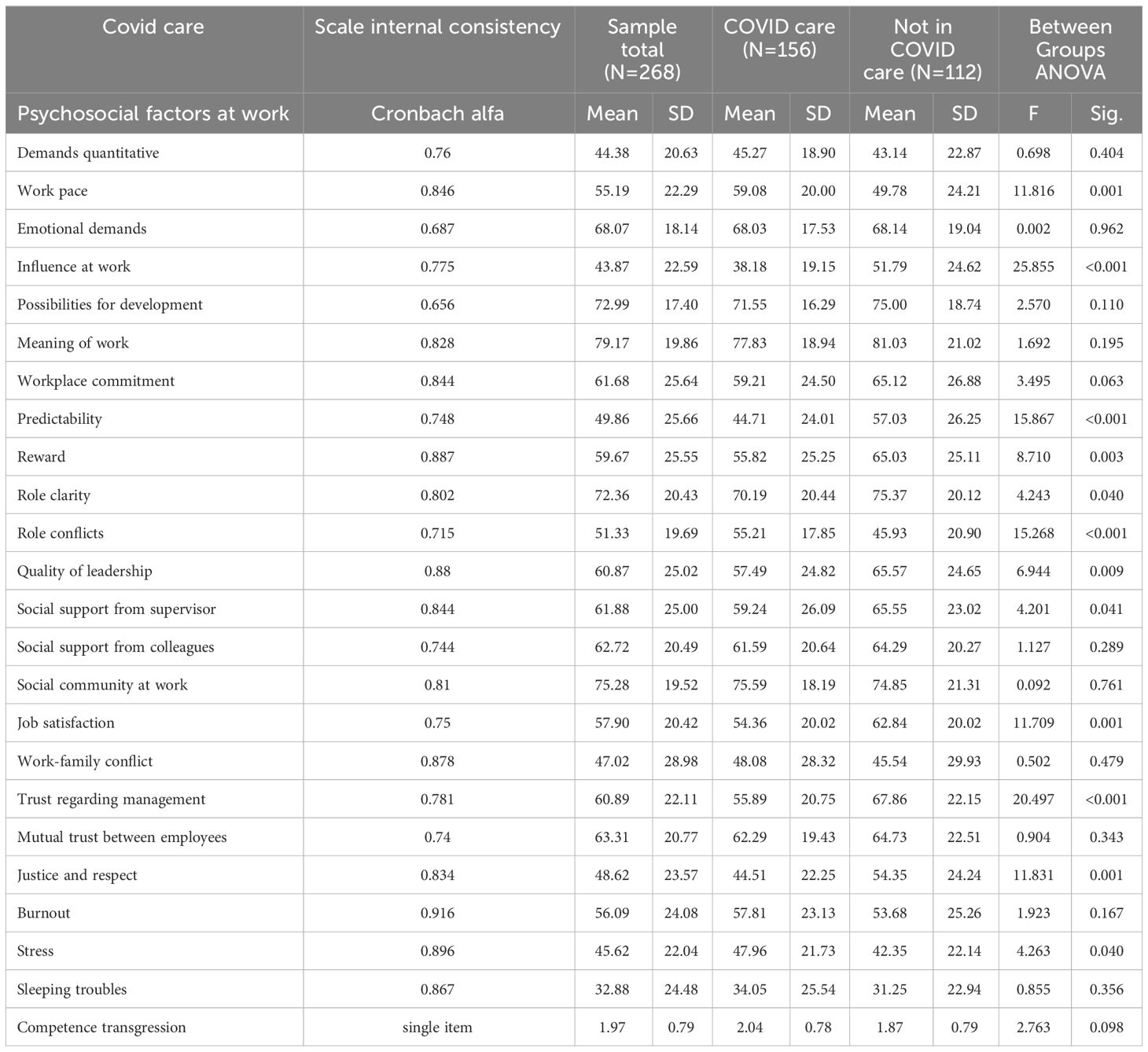
in Caregivers (CRITIC) Study, which investigates the impact of childhood adversity and benevolence on the professional quality of life (ProQOL) of frontline psychiatry staff (8). This cross-sectional survey involves 360 participants from clinical and forensic psychiatry, exploring their personal history, trauma exposure, mental health, coping strategies, and work engagement. French psychiatric residents' careers and practical experiences (10). Nineteen residents participated in focus groups, and, through content analysis, four thematic clusters emerged: reactions to exposure, coping strategies, professional impact, and proposals for prevention and postvention. Participants emphasized the crucial role of support, particularly from senior staff, in mitigating negative effects. They also offered suggestions to enhance prevention and postvention efforts, and the findings highlight the importance of support mechanisms and suggest strategies to minimize its adverse effects.In the paper by Molnár et al., authors examine stress, burnout, and sleeping difficulties among mental health professionals in Hungary, particularly those involved in COVID care during the fourth and fifth waves of the pandemic, through an online cross-sectional survey involving the Copenhagen Psychosocial Questionnaire (COPSOQ II) (11). Participation in COVID care correlated with heightened work pace, increased role conflicts, decreased influence at work, predictability, reward, role clarity, social support from supervisors, job satisfaction, trust in management, justice, and respect. Moreover, competence transgression significantly affected Formatted: Font: (Default) +Headings CS (Times New Roman), Complex Script Font: +Headings CS (Times New Roman), (Complex) Persian stress levels, and being a psychiatric specialist contributed to higher burnout. These factors collectively explained a significant portion of the variance in stress and burnout levels. Despite improved organization of COVID care during subsequent waves, psychiatrists faced challenges regarding their competence and influence at work, likely contributing to their heightened stress and burnout levels.Finally, Brolin and colleagues tried to better understand the perspectives of housing staff on stimulating and supporting resident engagement in activities. Indeed, housing staff may often convey their frustration regarding offering such support to encourage residents to participate in meaningful activities, as well as the challenge of determining appropriate levels of independence within a housing environment constrained by limitations. Therefore, twenty-six staff members from 20 supported housing units across Sweden participated in five focus groups. Through semistructured interviews and qualitative content analysis, three main categories emerged: factors influencing activity support provision, staff approaches to supporting activities, and staff's struggles in their work development. The analysis revealed various obstacles to community activity participation and highlighted conflicting factors like spontaneity versus structure and individual versus group activities, impacting staff motivation efforts. To enhance resident activity engagement within Supported Housing, a comprehensive approach is suggested, including inhouse training focusing on values, recruitment policies, staff supervision, and interventions targeting both residents and staff. This approach aims to support staff in effectively motivating residents towards increased activity participation.In conclusion, in this collection we analyzed experiences of mental health professionals in psychiatric settings from five different viewpoint and perspectives. We welcomed all articles potentially able to add some elements of novelty and evidence on this sensitive topic. This Research Topic aimed to compile papers focusing on the firsthand experiences of mental health professionals in psychiatric and psychological settings. Our goal has been to identify potential risk factors and effective strategies for supporting the mental health of these professionals through self-care and evidence-based interventions. Additionally, we sought to gather evidence highlighting the necessity for organizational measures, policies, and systemic changes. These changes and improvements proposed by this research are essential for addressing the challenges faced by mental health workers and empowering them in their roles in the future.