53kviews
Editorial10 December 2024
Editorial: Women in neurotrauma 2023

Women in Neurotrauma 2023 covers a wide range of areas in neurotrauma research, highlighting the intersection of gender, social determinants of health, and advances in neuroimaging and treatment approaches. The research included focuses primarily on adult and pediatric traumatic brain injury (TBI), but also touches on other neurotraumarelated conditions such as dementia. Furthermore, the goal of this research topic was to engage female scientists and clinicians in an effort to reduce gender bias in neurotrauma research.TBI represents a significant portion of the global injury burden and is a leading cause of morbidity, disability, and mortality across all ages (1). Survivors often face lifelong challenges affecting social relationships, quality of life, work capacity, and societal participation (2). Despite its widespread impact, TBI is often considered a hidden disability, as its consequences are frequently cognitive and psychiatric rather than physical. A major challenge in developing effective treatments, both acutely and in long-term rehabilitation, lies in the heterogeneity of TBI, with varied causes, pathology, patient demographics, and outcomes. While anyone can sustain a TBI, certain groups, like victims of intimate partner violence (IPV), are at higher risk. It is estimated that up to 75% of IPV victims suffer a TBI, often from blows to the head or strangulation (3).The purpose of this editorial is to summarize and categorize research into: 1) adult neurotrauma, 2) pediatric neurotrauma, 3) advances in neuroimaging, and 4) diversity and public health in neurotrauma care. These topics represent the breadth of research and provide a comprehensive overview of dimensions of neurotrauma. The variety of study types, including systematic or narrative reviews, original research studies, or case reports, further reflects the multifaceted nature of this research area.

Rojczyk and colleagues (4) examined the impact of neuropsychiatric conditions such as posttraumatic stress disorder, depression, and substance use disorders on the odds of intimated partner violence (IPV) perpetration among male veterans of the Iraq and Afghanistan wars diagnosed with mild TBI (mTBI). Results indicate that veterans with mTBI and psychiatric disorders are significantly more likely to engage in IPV, with aggression associated with microstructural changes in the limbic system, particularly the amygdala-hippocampal complex. This suggests that neurotrauma-related brain

1,632 views

ORIGINAL RESEARCH
31 May 2024
Intimate partner violence perpetration among veterans: associations with neuropsychiatric symptoms and limbic microstructure
Philine Rojczyk, 15 more and Inga K. Koerte
Intimate partner violence perpetration among veterans: associations with neuropsychiatric symptoms and limbic microstructure
Background: Intimate partner violence (IPV) perpetration is highly prevalent among veterans.Suggested risk factors of IPV perpetration include combat exposure, post-traumatic stress disorder (PTSD), depression, alcohol use, and mild traumatic brain injury (mTBI). While the underlying brain pathophysiological characteristics associated with IPV perpetration remain largely unknown, previous studies have linked aggression and violence to alterations of the limbic system. Here, we investigate whether IPV perpetration is associated with limbic microstructural abnormalities in military veterans. Further, we test the effect of potential risk factors (i.e., PTSD, depression, substance use disorder, mTBI, and war zone-related stress) on the prevalence of IPV perpetration. Methods: Structural and diffusion-weighted magnetic resonance imaging (dMRI) data were acquired from 49 male veterans of the Iraq and Afghanistan wars (Operation Enduring Freedom/Operation Iraqi Freedom; OEF/OIF) of the Translational Research Center for TBI and Stress Disorders (TRACTS) study. IPV perpetration was assessed using the psychological aggression and physical assault sub-scales of the Revised Conflict Tactics Scales (CTS2). Odds ratios were calculated to assess the likelihood of IPV perpetration in veterans with either of the following diagnoses: PTSD, depression, substance use disorder, or mTBI.Fractional anisotropy tissue (FA) measures were calculated for limbic gray matter structures (amygdala-hippocampus complex, cingulate, parahippocampal gyrus, entorhinal cortex). Partial correlations were calculated between IPV perpetration, neuropsychiatric symptoms, and FA. Results: Veterans with a diagnosis of PTSD, depression, substance use disorder, or mTBI had higher odds of perpetrating IPV. Greater war zone-related stress, and symptom severity of PTSD, depression, and mTBI were significantly associated with IPV perpetration. CTS2 (psychological aggression), a measure of IPV perpetration, was associated with higher FA in the right amygdala-hippocampus complex (r=.400, p=.005). Conclusion: Veterans with psychiatric disorders and/or mTBI exhibit higher odds of engaging in IPV perpetration. Further, the more severe the symptoms of PTSD, depression, or TBI, and the greater the war zone-related stress, the greater the frequency of IPV perpetration. Moreover, we report a significant association between psychological aggression against an intimate partner and microstructural alterations in the right amygdala-hippocampus complex. These findings suggest the possibility of a structural brain correlate underlying IPV perpetration that requires further research.

5,170 views

5 citations

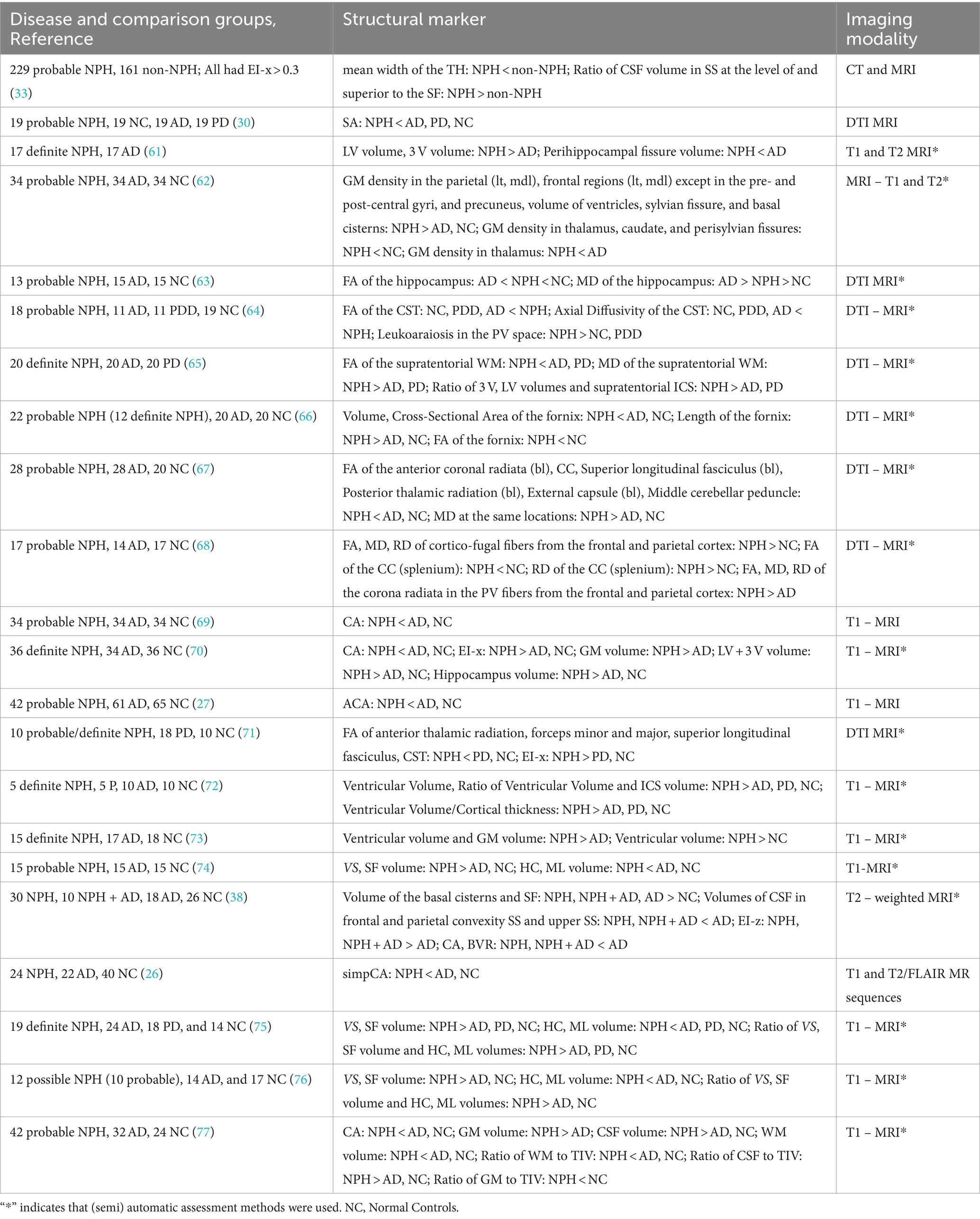
Introduction: Normal Pressure Hydrocephalus (NPH) is a prominent type of reversible dementia that may be treated with shunt surgery, and it is crucial to differentiate it from irreversible degeneration caused by its symptomatic mimics like Alzheimer's Dementia (AD) and Parkinson's Disease (PD). Similarly, it is important to distinguish between (normal pressure) hydrocephalus and irreversible atrophy/degeneration which are among the chronic effects of Traumatic Brain Injury (cTBI), as the former may be reversed through shunt placement. The purpose of this review is to elucidate the structural imaging markers which may be foundational to the development of accurate, noninvasive, and accessible solutions to this problem. Methods: By searching the PubMed database for keywords related to NPH, AD, PD, and cTBI, we reviewed studies that examined the 1) distinct neuroanatomical markers of degeneration in NPH versus AD and PD, and atrophy versus hydrocephalus in cTBI and 2) computational methods for their (semi-) automatic assessment on Computed Tomography (CT) and Magnetic Resonance Imaging (MRI) scans. Results: Structural markers of NPH and those that can distinguish it from AD have been well studied, but only a few studies have explored its structural distinction between PD. The structural implications of cTBI over time have been studied. But neuroanatomical markers that can predict shunt response in patients with either idiopathic or post-traumatic hydrocephalus have not been reliably established. MRI-based markers dominate this field of investigation as compared to CT, which is also reflected in the disproportionate number of MRI-based computational methods for their automatic assessment. Conclusion: Along with an up-to-date literature review on the structural neurodegeneration due to NPH versus AD/PD, and cTBI, this article sheds light on the potential of structural imaging markers as (differential) diagnostic aids for the timely recognition of patients with reversible (normal pressure) hydrocephalus, and opportunities to develop computational tools for their objective assessment.

8,200 views

12 citations

ORIGINAL RESEARCH
14 March 2024
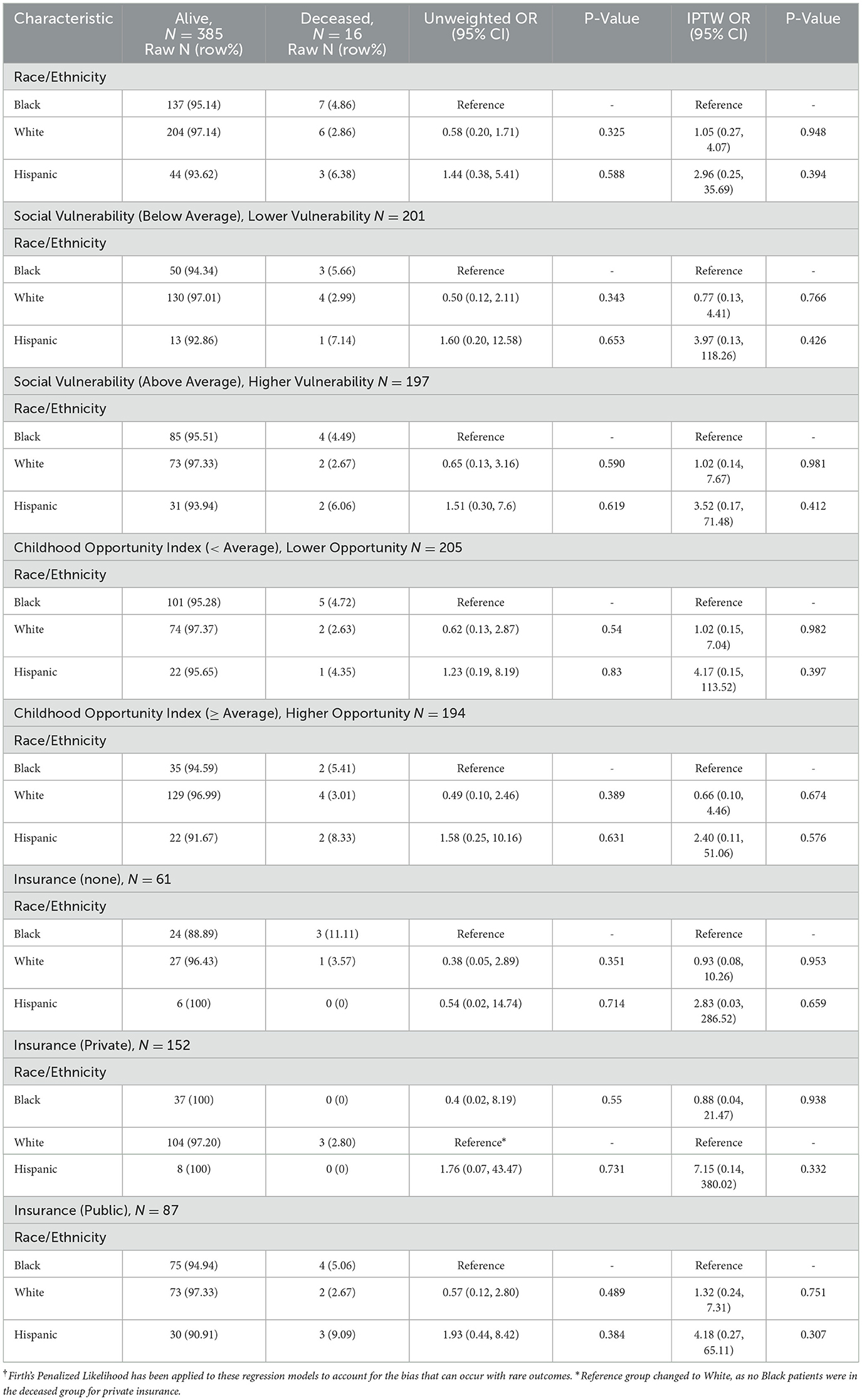
Introduction: Social determinants of health (SDoH) are factors that may impact outcomes following pediatric traumatic brain injuries (TBI). The purpose of this study was to investigate the relationship between race and functional outcomes in a diverse pediatric population. We further explored how this association may be modified by SDoH factors, including insurance status, social vulnerability, and child opportunity. Methods: A cohort study (N=401) of children aged 0-18 (median=9.22 years (IQR: 3.56-13.59)) presenting to the Emergency Department at Level I and II Trauma Centers with mild to severe head injuries. Geocoded variables were used to evaluate SDoH. The sample was described overall and by racial/ethnic group, which were adjusted for confounders using inverse propensity treatment weights (IPTW). Weighted and unweighted Firth logistic regression models (mortality) and generalized linear regression models (GOS-E scores) were reported without and then with potential effect modifiers. Results: The sample is majority male (65.84%); race/ethnicity are as follows: White (52.37%), Black/African Americans (35.91%), and Hispanic (11.72%). Black (31.25%) and Hispanic (27.66%) patients had higher rates of severe TBI. 35.89% of White patients were categorized as more socially vulnerable compared to 62.68% Black and 70.21% Hispanic patients. 63.64% of White patients were from higher opportunity neighborhoods, compared to 25.87% of Black and 51.06% of Hispanic patients. 50.95% of White patients, 25.87% of Black patients, and 17.02% of Hispanic patients were privately insured. There were no differences found between racial and ethnic groups on mortality or GOS-E scores. Discussion: Patients from minority backgrounds had more severe injuries, many resulting from pedestrian versus motor vehicle accidents. Additionally, patients from minority backgrounds experience more social vulnerability and lower opportunity. Despite these discrepancies, we did not observe differences on rates of mortality or functional outcomes in either racial or ethnic groups. SDoH were not found to impact outcomes. Further research is needed to determine how these complex social and environmental variables impact health outcomes.
Association between social determinants of health and pediatric traumatic brain injury outcomes

4,287 views

13 citations

CORRECTION
11 March 2024
Corrigendum: Psychometric evaluation and reference values for the German Postconcussion Symptom Inventory (PCSI-SR8) in children aged 8–12 years
Marina Zeldovich, 11 more and Katrin Cunitz

1,293 views

SYSTEMATIC REVIEW
7 February 2024
The effect of antiplatelet and anticoagulant therapies on clinical outcome of patients undergoing decompressive craniectomy: a systematic review
Chiara Angelini, 4 more and Alba Scerrati

2,455 views

5 citations

Traumatic tension pneumocephalus: a case report and perspective from Indonesia
CASE REPORT
7 February 2024
Traumatic tension pneumocephalus: a case report and perspective from Indonesia
Alphadenti Harlyjoy, 2 more and Kevin Gunawan
Traumatic tension pneumocephalus is a rare and life-threatening complication of traumatic brain injury necessitating prompt diagnosis and neurosurgical treatment. Nevertheless, various possibilities for impedance in timely management, including patient-related barriers are commonly experienced in low-and middle-income countries setting. Here we presented a delay of management in traumatic tension pneumocephalus case due to initial refusal for emergency surgery. A 59-year-old male presented to the emergency department following a motorcycle accident fully alert with no neurological deficit. He acknowledged clear nasal discharge within 1 hour after the initial trauma, but no rhinorrhea or otorrhea was present during physical examination. Head CT revealed extensive pneumocephalus with "Mount Fuji sign", anterior skull base fracture, and frontal sinus fracture. The patient initially refused immediate surgical intervention due to excellent clinical condition and financial scare. Acute decrease of consciousness occurred 40 hours post-trauma: GCS of 6 with slight dilatation of both pupils (4 mm) and sluggish pupillary reflex. Emergency bifrontal craniotomy, subdural air drainage, and dura mater tear repair were performed afterwards. Postoperative care was uneventful, with rapid improvement of consciousness and follow-up head CT showing minimal subdural fluid collection and absence of remaining pneumocephalus. The patient was discharged from the hospital after 7 days with GCS of 15 and GOS of 5, proving the importance of overcoming barriers for delay in delivering neurotrauma care in low-and middle-income countries.

5,235 views

9 citations

ORIGINAL RESEARCH
17 November 2023
Psychometric evaluation and reference values for the German Postconcussion Symptom Inventory (PCSI-SR8) in children aged 8–12 years
Marina Zeldovich, 11 more and Katrin Cunitz

2,923 views