Advancements in Multimodal Data Analysis for Lung Tumor Diagnosis

53kviews
MAEMC-NET: a hybrid self-supervised learning method for predicting the malignancy of solitary pulmonary nodules from CT images
ORIGINAL RESEARCH
12 February 2025
MAEMC-NET: a hybrid self-supervised learning method for predicting the malignancy of solitary pulmonary nodules from CT images
Tianhu Zhao, 7 more and Shouliang Qi
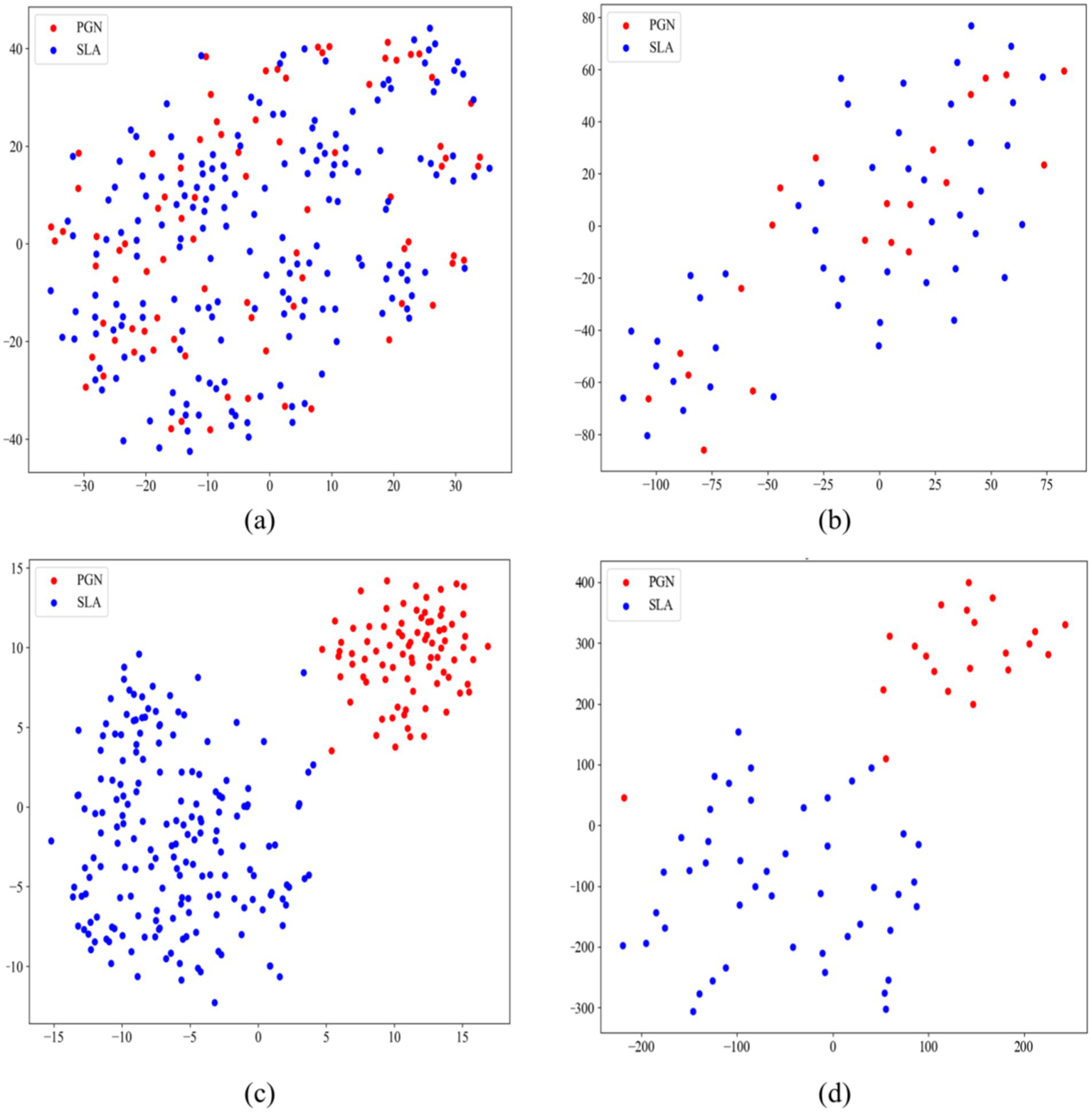
IntroductionPulmonary granulomatous nodules (PGN) often exhibit similar CT morphological features to solid lung adenocarcinomas (SLA), making preoperative differentiation challenging. This study aims to address this diagnostic challenge by developing a novel deep learning model.MethodsThis study proposes MAEMC-NET, a model integrating generative (Masked AutoEncoder) and contrastive (Momentum Contrast) self-supervised learning to learn CT image representations of intra- and inter-solitary nodules. A generative self-supervised task of reconstructing masked axial CT patches containing lesions was designed to learn intra- and inter-slice image representations. Contrastive momentum is used to link the encoder in axial-CT-patch path with the momentum encoder in coronal-CT-patch path. A total of 494 patients from two centers were included.ResultsMAEMC-NET achieved an area under curve (95% Confidence Interval) of 0.962 (0.934–0.973). These results not only significantly surpass the joint diagnosis by two experienced chest radiologists (77.3% accuracy) but also outperform the current state-of-the-art methods. The model performs best on medical images with a 50% mask ratio, showing a 1.4% increase in accuracy compared to the optimal 75% mask ratio on natural images.DiscussionThe proposed MAEMC-NET effectively distinguishes between benign and malignant solitary pulmonary nodules and holds significant potential to assist radiologists in improving the diagnostic accuracy of PGN and SLA.

3,968 views

12 citations

ORIGINAL RESEARCH
4 March 2025
Construction of a risk screening and visualization system for pulmonary nodule in physical examination population based on feature self-recognition machine learning model
Fang Tian, 3 more and Kaiwen Hou

2,180 views

3 citations

ORIGINAL RESEARCH
24 January 2025
Gene mutation in diabetic patients with lung adenocarcinoma: a real-world retrospective cohort study
Lei Yang, 3 more and DePeng Jiang

2,039 views

1 citations

ORIGINAL RESEARCH
19 November 2024
Comprehensive analysis of the diagnostic and therapeutic value, immune infiltration, and drug treatment mechanisms of GTSE1 in lung adenocarcinoma
Guanqiang Yan, 5 more and Huafu Zhou

2,432 views

2 citations

ORIGINAL RESEARCH
23 October 2024
Investigating the role of disulfidptosis related genes in radiotherapy resistance of lung adenocarcinoma
Xiaoxia Pan, 6 more and Gaoren Wang

3,380 views

4 citations

ORIGINAL RESEARCH
12 August 2024
A non-enhanced CT-based deep learning diagnostic system for COVID-19 infection at high risk among lung cancer patients
Tianming Du, 7 more and Chen Li

2,462 views

2 citations

ORIGINAL RESEARCH
28 May 2024
Three-year follow-up study reveals improved survival rate in NSCLC patients underwent guideline-concordant diagnosis and treatment
Huijuan Mu, 9 more and Guowei Pan

3,016 views

4 citations

ORIGINAL RESEARCH
10 May 2024
Endobronchial ultrasound-guided transbronchial needle aspiration for diagnosing thoracic lesions: a retrospective cohort study
Huibin Liao, 5 more and Zhenshun Cheng

3,737 views

7 citations

The morbidity and mortality rate in Lung cancer are high worldwidely. Early diagnosis and personalized treatment are important to manage this public health issue. In recent years, artificial intelligence (AI) has played increasingly important roles in early screening, auxiliary diagnosis, and prognostic assessment. AI uses algorithms to extract quantitative feature information from high-volume and high-latitude data and to learn existing data to predict disease outcomes. In this review, we describe the current uses of AI in lung cancer-focused pathomics, imageomics, and genomics applications.

7,198 views

8 citations

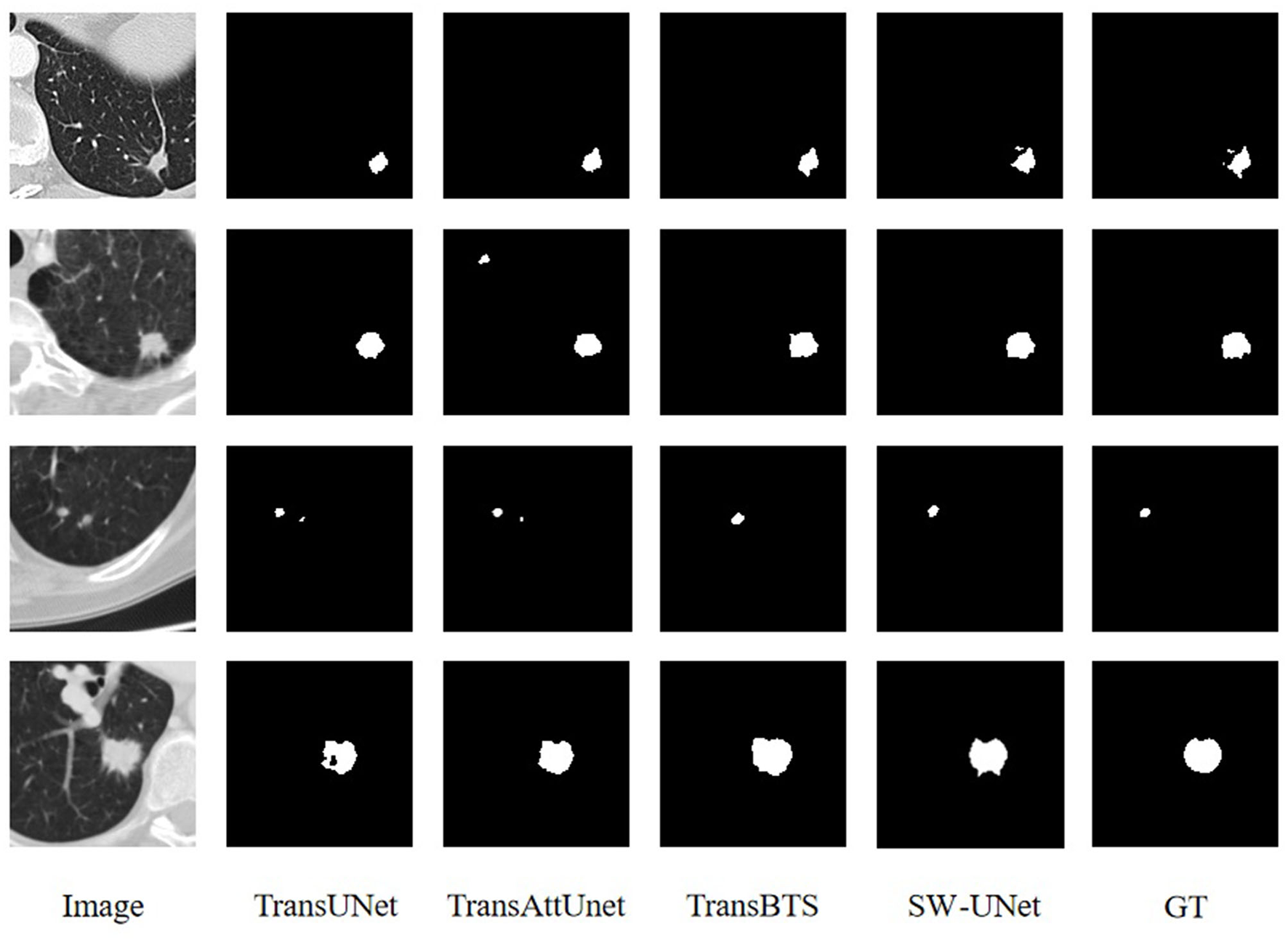
SW-UNet: a U-Net fusing sliding window transformer block with CNN for segmentation of lung nodules
ORIGINAL RESEARCH
28 September 2023
SW-UNet: a U-Net fusing sliding window transformer block with CNN for segmentation of lung nodules
Jiajun Ma, 3 more and Minting Zheng

4,510 views

29 citations