Exploring the Key Targets and Compounds That Manipulate Brain Neurocircuits Against Mental Disorders and Psychiatric, volume II

65kviews
Editorial14 April 2025
Editorial: Exploring the key targets and compounds that manipulate brain neurocircuits against mental disorders and psychiatric volume II

Neuroinflammation and oxidative stress are pivotal contributors to neurodegenerative and psychiatric disorders. Two studies exemplify how novel compounds can mitigate these processes. Xixi Hou et al. synthesized 2H-1,4-benzoxazin-3(4H)-one derivatives fused with 1,2,3-triazole, demonstrating potent anti-inflammatory effects in LPSstimulated microglia. These compounds suppressed pro-inflammatory cytokines (IL-1β, IL-6, TNF-α) and activated the Nrf2-HO-1 pathway, underscoring their dual antioxidant and anti-inflammatory potential. Similarly, Chencen Lai et al. revealed that (+)-catechin alleviates corticosterone-induced oxidative stress and pyroptosis in PC12 cells by activating PI3K/AKT and Nrf2/HO-1/NF-κB pathways. Both studies emphasize the therapeutic promise of targeting oxidative-inflammatory cascades, particularly through Nrf2 activation, to preserve neuronal integrity.Cutting-edge neuroimaging techniques continue to unravel how neuromodulators and disease states reshape brain networks. Abraham Tonny Hagan et al. demonstrated that intranasal oxytocin enhances small-world topology in resting-state networks, particularly in regions governing social cognition. This suggests oxytocin's therapeutic potential lies in optimizing information flow within critical circuits.Complementing this, Ye Liu et al. employed bibliometric analysis to identify adult hippocampal neurogenesis (AHN) as a hotspot, linking its dysfunction to Alzheimer's disease and anxiety. Meanwhile, Xin Che et al. used ¹ H-MRS to correlate hippocampal metabolite ratios with cognitive decline in general paresis patients, highlighting neuroimaging's role in tracking neurodegeneration. Together, these studies illustrate how multimodal imaging and meta-analyses can bridge molecular changes to brain neurocircuit-level dysfunctions.The efficacy and side effects of psychotropic drugs remain central to clinical psychiatry. Kuan Zhao et al. compared five antidepressants in cancer patients, revealing escitalopram, duloxetine, and vortioxetine as superior to sertraline, with trazodone augmentation enhancing outcomes. However, metabolic side effects of antipsychotics, such as olanzapine-induced weight gain, pose significant challenges.Lixuan Huang et al. identified lipid metabolism dysregulation in the lateral septum as a key driver of olanzapine's adverse effects, implicating APOA1/APOC3/APOH genes. Conversely, Ke Zhang et al. demonstrated that the α2-adrenoceptor agonist dexmedetomidine alleviates pain by restoring neuronal metabolism and spinal perfusion, suggesting metabolic modulation as a dual therapeutic strategy. These findings underscore the need for precision medicine to balance efficacy and safety. Mitochondrial dysfunction is a common thread in brain injury and neurodegeneration.Ting Zhu et al. demonstrated that Dl-3-n-butylphthalide (NBP) mitigates cerebral ischemia/reperfusion injury by enhancing mitochondrial fusion via AMPK/Mfn1 activation. This aligns with broader efforts to harness mitochondrial dynamics as a neuroprotective strategy, providing hope for stroke and related disorders.This Research Topic underscores the complexity of mental disorders and the need for interdisciplinary approaches, including multi-target therapies (e.g., Nrf2 activators, PI3K/AKT enhancers), precision neuroimaging, genetic and omics-driven insights, and mitigating drug side effects. Future research should prioritize translational studies bridging preclinical findings to clinical trials, leveraging emerging technologies like single-cell omics and AI-driven drug discovery. By integrating these avenues, we advance our understanding and ability to manipulate the neural circuits related to mental health, ultimately aiming to apply these advancements in clinical settings.

1,664 views

1 citations

Design, synthesis, and anti-inflammatory activity of 2H-1,4-benzoxazin-3(4H)-one derivatives modified with 1,2,3-triazole in LPS-induced BV-2 cells
ORIGINAL RESEARCH
20 January 2025
Design, synthesis, and anti-inflammatory activity of 2H-1,4-benzoxazin-3(4H)-one derivatives modified with 1,2,3-triazole in LPS-induced BV-2 cells
Xixi Hou, 5 more and Jianji Wang
Given the potent anti-inflammatory properties of the 1,2,3-triazole structure and the wide use of 2H-1,4-benzoxazin-3(4H)-one in developing treatments for neurodegenerative diseases, a series of 2H-1,4-benzoxazin-3(4H)-one derivatives were synthesized by introducing a 1,2,3-triazole moiety. Screening for anti-inflammatory activity in microglial cells revealed that compounds e2, e16, and e20 exhibited the most promising effects without significant cytotoxicity. These compounds effectively reduced LPS-induced NO production and significantly decreased the transcription levels of pro-inflammatory cytokines IL-1β, IL-6, and TNF-α. Furthermore, they downregulated the transcription and protein levels of the inflammation-related enzymes iNOS and COX-2 in response to LPS stimulation. To further investigate the anti-inflammatory mechanisms of these derivatives in microglia, the intracellular ROS levels and the activation of the Nrf2-HO-1 signaling pathway were analyzed. The results indicated that the 2H-1,4-benzoxazin-3(4H)-one derivatives significantly activated the Nrf2-HO-1 pathway, reduced LPS-induced ROS production, and alleviated microglial inflammation. Molecular docking studies suggested that compounds e2, e16, and e20 could interact with Nrf2-related binding sites, preventing its degradation by Keap1. Additionally, acute toxicity tests in mice demonstrated that compound e16 exhibited favorable safety.

4,809 views

10 citations

IntroductionCancer patients have a heightened susceptibility to anxiety and depressive disorders, which significantly impact the effectiveness of cancer treatments and long-term quality of life. This study aimed to compare the efficacy of different antidepressants in cancer and non-cancer patients.MethodsA total of 610 patients diagnosed with depressive episodes and/or anxiety disorders were retrospectively included and divided into a cancer group and a non-cancer control group. Antidepressants used included escitalopram, duloxetine, sertraline, venlafaxine, and vortioxetine, combined with trazodone or not. The Patient Health Questionnaire-9 (PHQ-9) and the Generalized Anxiety Disorder Questionnaire-7 (GAD-7) scores were used to evaluate the efficacy after 4 weeks and 8 weeks of systematic antidepressants treatment.ResultsCompared to the non-cancer group, the cancer group had higher proportions of females, older individuals, and patients with poor sleep quality, while reporting fewer somatic symptoms at baseline (all p < 0.05). PHQ-9 and GAD-7 scores in cancer patients treated with antidepressants were significantly lower than baseline at week 4 and week 8 (all p < 0.05). The sertraline group demonstrated significantly less improvement in GAD-7 scores at week 4 and in both GAD-7 and PHQ-9 scores at week 8 compared to the escitalopram group, while duloxetine, venlafaxine, and vortioxetine showed comparable efficacy to escitalopram. Antidepressants combined with trazodone showed significant improvement in PHQ-9 scores at week 4 compared to those without trazodone. The gynecological cancer group showed significantly more improvement in GAD-7 and PHQ-9 scores at week 4 and 8 compared to breast cancer patients.ConclusionAntidepressant treatment in cancer patients with anxiety and depression is as effective as in non-cancer patients. The efficacy of escitalopram is comparable to duloxetine, venlafaxine, and vortioxetine, all of which outperformed sertraline in cancer patients.

7,024 views

6 citations

ORIGINAL RESEARCH
3 September 2024
Activation of EphrinB2/EphB2 signaling in the spine cord alters glia-neuron interactions in mice with visceral hyperalgesia following maternal separation
Shufen Guo, 5 more and Jiaping Ruan

2,322 views

3 citations

ORIGINAL RESEARCH
28 August 2024
(+)-catechin protects PC12 cells against CORT-induced oxidative stress and pyroptosis through the pathways of PI3K/AKT and Nrf2/HO-1/NF-κB
Lai Chencen, 5 more and Gao Xiuli

3,857 views

17 citations

ORIGINAL RESEARCH
27 August 2024
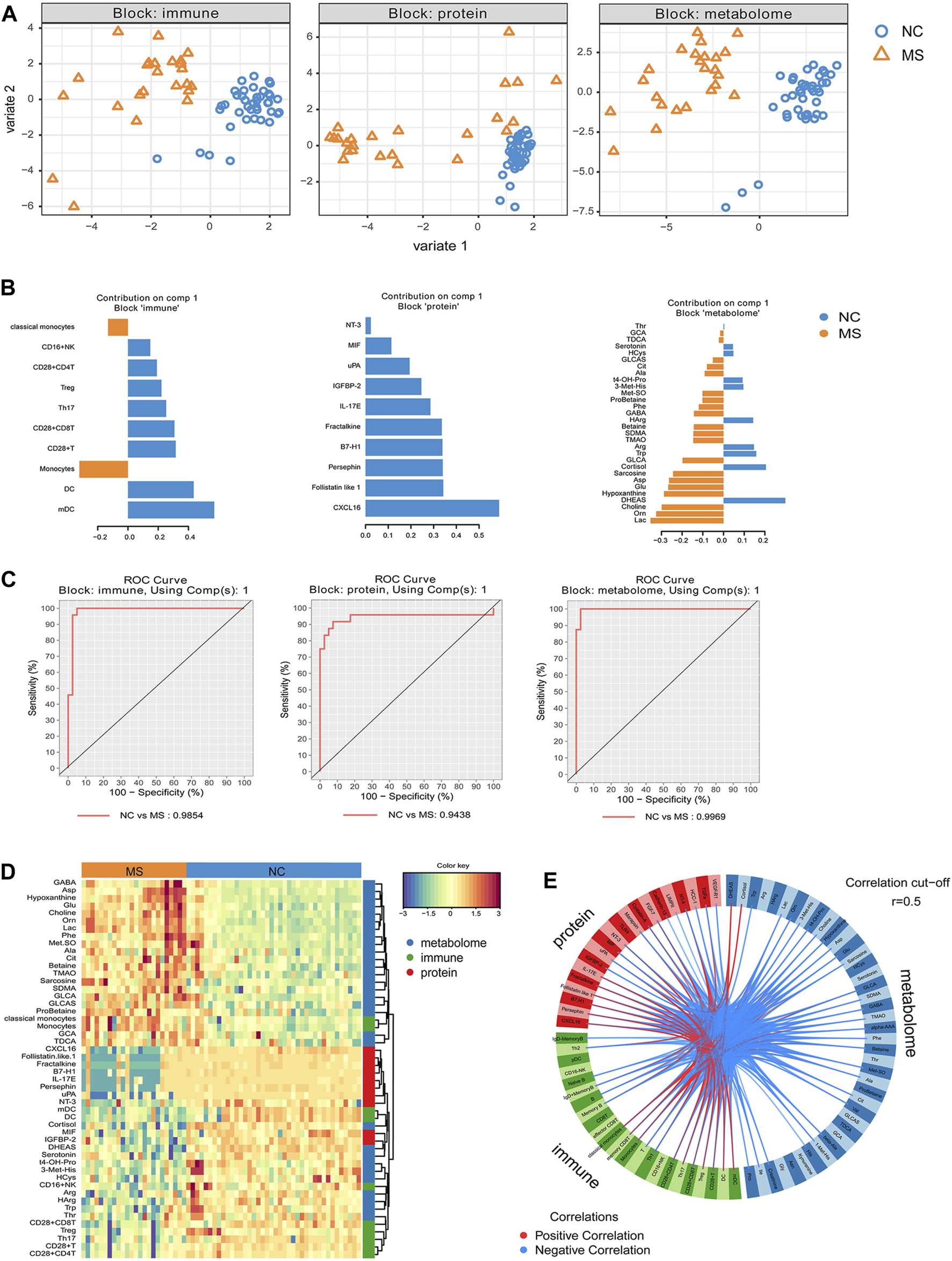
Multi-omics profiling reveals peripheral blood biomarkers of multiple sclerosis: implications for diagnosis and stratification
Qinming Zhou, 12 more and Sheng Chen
Multi-omics profiling reveals peripheral blood biomarkers of multiple sclerosis: implications for diagnosis and stratification
Background: Multiple sclerosis (MS), a chronic autoimmune disorder marked by demyelination in the central nervous system, is exceptionally uncommon in China, and remains poorly understood in terms of its peripheral blood manifestations.We conducted a cohort study comprising 39 MS patients and 40 normal controls (NC). High-dimensional mass cytometry, protein arrays, and targeted metabolomics were utilized to profile immune subsets, proteins, and metabolites in blood. Differences in multi-omics signatures were scrutinized across varying MS subtypes.Results: Immune profiling demonstrated an elevation in various B cell subsets and monocytes, alongside a reduction in dendritic cells among MS patients. Proteomic data revealed a downregulation in neurotrophic and tissue repair proteins. Metabolomic assessment showed a noted decrease in antiinflammatory molecules and sphingolipids. Integrated analysis identified distinct molecular patterns distinguishing MS from controls. Additionally, multi-omics differences among different MS subtypes were uncovered. Notably, hippuric acid levels was consistently lower in MS subgroups with greater disease severity.This study represents the pioneeringfirst exploration of multi-omics in Chinese MS patients, presenting a comprehensive view of the peripheral blood changes in MS. Our study underscores the robust capability of multi-omics assessments in identifying peripheral blood biomarkers that delineate the varied clinical presentation, and facilitates future development of biomarkers and targeted therapeutic interventions in MS.

5,609 views

12 citations

ORIGINAL RESEARCH
14 June 2024
Characterizing defective lipid metabolism in the lateral septum of mice treated with olanzapine: implications for its side effects
Lixuan Huang, 6 more and Jianhua Chen

3,221 views

3 citations

Dl-3-n-butylphthalide attenuates cerebral ischemia/reperfusion injury in mice through AMPK-mediated mitochondrial fusion
ORIGINAL RESEARCH
22 February 2024
Dl-3-n-butylphthalide attenuates cerebral ischemia/reperfusion injury in mice through AMPK-mediated mitochondrial fusion
Ting Zhu, 4 more and Qi Wan
NBP is a compound isolated from celery seeds, which was approved by the National Medical Products Administration in 2002 for clinical treatment of ischemic stroke. However, in brain ischemia/reperfusion (I/R) injury, the related research on mitochondrial dynamics and its mechanism of action of NBP still need to be further studied. The aim of this study was to assess NBP on cerebral pathology in ischemic stroke in vivo, with a specific focus on the molecular mechanisms of how NBP promotes mitochondrial fusion. Male C57BL/6 mice were utilized in this study and were subjected to middle cerebral artery occlusion/reperfusion (MCAO/R).Pre-ischemia, NBP was administered through intraperitoneal (i.p.) injection for 7 days.2 Our findings demonstrated that NBP effectively reduced infarct volume, improved neurological dysfunction, enhanced cerebral blood flow, and promoted mitochondrial fusion in mice subjected to MCAO/R. More importantly, the pro-fusion effects of NBP were found to be linked to the activation of AMPK/Mfn1 pathway, and with the activation of neurological function, which was partially eliminated by inhibitors of AMPK. Our results revealed that NBP is a novel mitochondrial fusion promoter in protecting against ischemic stroke through the AMPK-mediated Mfn1. These findings contribute to the understanding of novel mechanisms involved in the protection of neurological function following NBP treatment for ischemic stroke.

4,813 views

27 citations

ORIGINAL RESEARCH
21 March 2024
Alpha 2-adrenoceptor participates in anti-hyperalgesia by regulating metabolic demand
Ke Zhang, 8 more and Le Ma

4,343 views

9 citations