As core components driving advancements in wearable electronics, Internet of Things (IoT) sensors, and high-frequency communication systems, nano/micro devices have attracted growing attention due to their miniaturized size, low power consumption, and high integration capabilities [1,2]. However, the nonlinear vibration behavior and associated instability issues of these devices-exacerbated by electromechanical coupled field effects [3], quantum effects [4], surface forces [5], and structural complexity at the nano/micro scale-pose significant challenges to their performance stability, reliability, and service life [6,7].Nonlinear vibration in nano/micro devices manifests in various forms: pull-in instability in electrostatically actuated microelectromechanical systems (MEMS), multistable oscillations in fractional-order resonators, and interface disturbance in microfluidic structures. These phenomena directly affect critical device functions, including signal detection accuracy, energy conversion efficiency, and dynamic response speed.The study of nonlinear vibration and instability in nano/micro devices is an interdisciplinary field that integrates solid mechanics, materials science, applied mathematics, and electrical engineering. It requires the combination of experimental testing, theoretical modeling, and numerical simulation to clarify intrinsic mechanisms and develop targeted control strategies.Entitled "Nonlinear Vibration and Instability in Nano/Micro Devices: Unveiling Mechanisms, Pioneering Controls, and Shaping Multiscale Frontiers," this Research Topic aims to collect highquality research addressing key challenges in the field. By synthesizing studies on mechanism exploration, method innovation, and application optimization, it provides a comprehensive platform for academic exchange, promotes the development of fundamental theories, and guides the engineering application of nano/micro devices in complex service environments. A total of 19 articles are included in this Research Topic, covering cutting-edge directions from device-specific vibration control to cross-scale theoretical modeling.
A thorough understanding of intrinsic mechanisms is the foundation for resolving nonlinear vibration and instability issues. Several articles in this Research Topic focus on revealing the physical and mathematical principles underlying these phenomena.Ya-Jie Li et al. (https://doi.org/10.3389/fphy.2025.1567842) investigated the stochastic bifurcation phenomenon and multistable behaviors of a fractional Rayleigh-Duffing oscillator under recycling noise. They established a fractional-order dynamic model that accounts for the memory effect of nano/micro materials, and found that recycling noise-mimicking the random disturbance in practical device operation-induces significant changes in the oscillator's phase trajectory and stability region. Validated by experimental data, their numerical simulations demonstrated that the fractional order and noise intensity jointly regulate the occurrence of stochastic bifurcation. This study not only provides a new perspective for explaining the unpredictable vibration responses of nano-scale resonators but also fills the gap in understanding the influence of non-Gaussian noise on fractional nonlinear systems, laying a theoretical basis for evaluating the reliability of noise-sensitive nano devices.Another groundbreaking work by Ling et al. (https://doi.org/10.3389/fphy.2025.1579671) focused on the dynamic analysis of fractal nonlinear oscillators with coordinate-dependent mass. Fractal structures are widely used in nano/micro devices to enhance surface properties and structural efficiency, but they introduce non-uniform mass distribution that complicates vibration characteristics. The researchers proposed a fractal derivative-based dynamic equation [8] to describe the motion of oscillators with coordinate-dependent mass, revealing that the fractal dimension of the structure directly affects the natural frequency and damping ratio. Through parametric analysis, they identified critical fractal parameters that trigger instability, providing a quantitative criterion for the structural design of fractalbased nano/micro devices (e.g., microfluidic chips and fractal antennas).
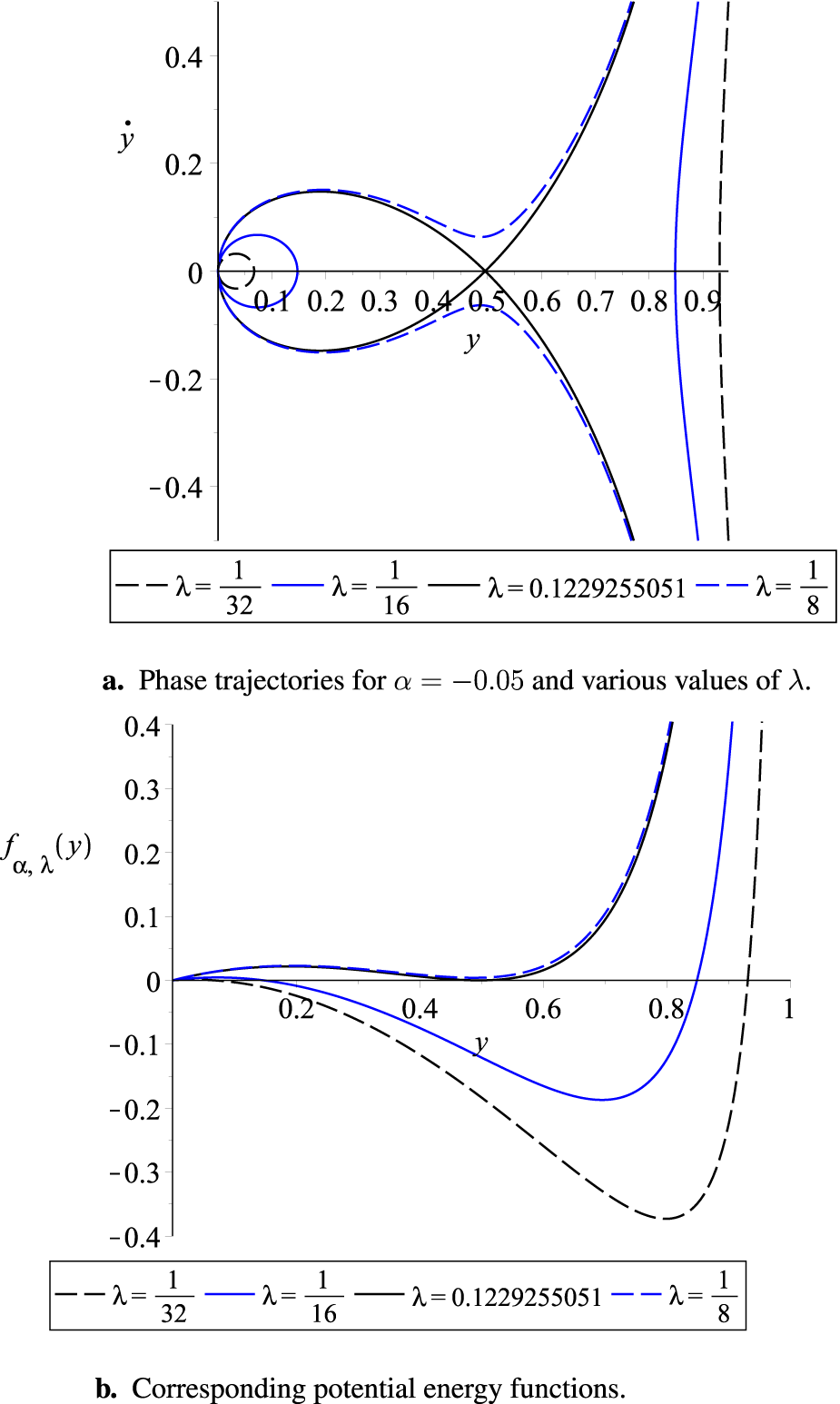
Developing effective control strategies is crucial for mitigating nonlinear vibration and instability, thereby improving device performance. Articles in this direction focus on innovative control algorithms, structural optimization, and material modification.Lei Zhao et al. (doi: 10.3389/fphy.2025.1638299) addressed the dynamic pull-in instability-a major challenge in magnetically actuated MEMS (magMEMS) for wearable sensors-by optimizing the dynamic pull-in threshold and periodic trajectories. magMEMS are widely used in motion monitoring and health sensing, but they often suffer from pull-in failure due to the coupling of magnetic force and structural elasticity under dynamic excitation. The researchers proposed a model predictive control (MPC) algorithm that adjusts the input magnetic field in real time based on the device's real-time displacement feedback. By constructing a phase portrait of the system's dynamic response, they optimized the periodic trajectory to avoid the pull-in region, increasing the device's stable operating range by over 30% compared to traditional open-loop control. This work provides a practical solution for enhancing the stability of magMEMS in dynamic service environments and promotes their application in high-precision wearable devices.Niu and Feng (https://doi.org/10.3389/fphy.2024.1532630) reviewed ancient mathematical methodsincluding ancient Chinese algorithms [9] and old Babylonian algorithms [10]-for MEMS applications, and Shao and Cui (https://doi.org/10.3389/fphy.2025.1521849) proposed a new pull-in criterion.El-Dib et al. (https://doi.org/10.3389/fphy.2025.1634769) tackled the interfacial stability control of magnetohydrodynamic (MHD) Bingham fluids in micro-porous MEMS structures via fractal analysis. Micro-porous MEMS are used in drug delivery and micro-cooling systems, but they often experience fluid-induced vibration due to the unstable interfacial flow of Bingham fluids (e.g., blood and polymer solutions). The researchers applied fractal geometry to characterize the surface morphology of porous structures, establishing a correlation between fractal dimension and interfacial shear stress. By adjusting the fractal parameters of the porous medium, they reduced the interfacial disturbance amplitude by 45%, significantly improving flow stability and reducing vibration-induced noise in MEMS-based drug delivery pumps. This method integrates fractal theory with fluid mechanics, offering a novel approach for controlling fluid-structure interaction in micro devices.
Applying nonlinear vibration research to diverse nano/micro devices is a key focus of this Research Topic, with articles covering energy harvesting, high-frequency communication, and biological sensing.Shirbani et al. (https://doi.org/10.3389/fphy.2025.1642670) contributed to microscale energy harvesting by developing a surrogate model for predicting the performance of bimorph microscale piezoelectric energy harvesters under base vibration and thermal effects. Piezoelectric energy harvesters convert ambient vibration into electrical energy for powering IoT devices, but they are highly sensitive to temperature variations and base excitation frequency. The researchers constructed a surrogate model based on Gaussian process regression, integrating experimental data from thermal chambers and vibration test benches. This model enables rapid prediction of the harvester's output power with a relative error of less than 5%, outperforming traditional finite element models in computational efficiency (reducing calculation time by over 80%). It provides a practical tool for the rapid design and optimization of piezoelectric energy harvesters for harsh environments (e.g., industrial machinery and aerospace applications). Das et al. (https://doi.org/10.3389/fphy.2025.1561573) focused on optimizing the performance of Npolar AlGaN/GaN high electron mobility transistors (HEMTs)-critical components for highfrequency communication-by investigating the impact of the GaN cap layer on direct current (DC) and radio frequency (RF) performance. The GaN cap layer affects the two-dimensional electron gas (2DEG) density at the AlGaN/GaN interface, which plays a key role in determining the transistor's nonlinear vibration and noise characteristics. Through material characterization (X-ray diffraction and atomic force microscopy) and electrical testing (current-voltage and S-parameter measurements), the researchers found that a 5 nm-thick GaN cap layer maximizes the 2DEG density while minimizing the RF noise figure. This optimization reduces the transistor's nonlinear vibration-induced signal distortion by 25%, improving the communication quality of high-frequency MEMS-based transceivers. The study provides a material-level solution for enhancing the performance of GaN-based micro devices and promotes their application in 5G/6G communication systems.Cheng et al. (https://doi.org/10.3389/fphy.2024.1526258) proposed an effective numerical method for fractional models, which offers advantages over existing methods in the open literature [11,12] [13]-is also valid for fractal-fractional nonlinear oscillators.
In conclusion, the 19 articles collected in this Research Topic collectively advance our understanding of nonlinear vibration and instability in nano/micro devices. From unveiling the mechanisms of stochastic bifurcation and fractal-induced vibration to pioneering control strategies such as model predictive control and fractal-based interface regulation, these studies address critical challenges at the intersection of theory and application. Their findings not only enrich the fundamental theories of nano/micro scale nonlinear dynamics but also provide practical guidance for the design, optimization, and reliability improvement of next-generation nano/micro devices. Looking ahead, future research in this field should focus on three key directions: developing multiscale models that connect atomic-level quantum effects to macro-scale structural vibration, to address the "scale gap" in current theoretical frameworks; integrating machine learning and real-time sensing to develop adaptive control systems that can dynamically adjust to complex and changing operating environments; and exploring the synergy between nonlinear vibration control and other device functions (e.g., energy harvesting and signal processing) to realize high-performance, multifunctional nano/micro systems [14]. We invite readers to delve into the detailed studies presented in this Research Topic, as they offer valuable insights and tools for advancing nonlinear vibration research and its application in nano/micro devices. By fostering academic exchange and interdisciplinary collaboration, we aim to shape the future frontiers of this dynamic field and contribute to the development of innovative technologies that address global challenges in electronics, healthcare, and energy.