
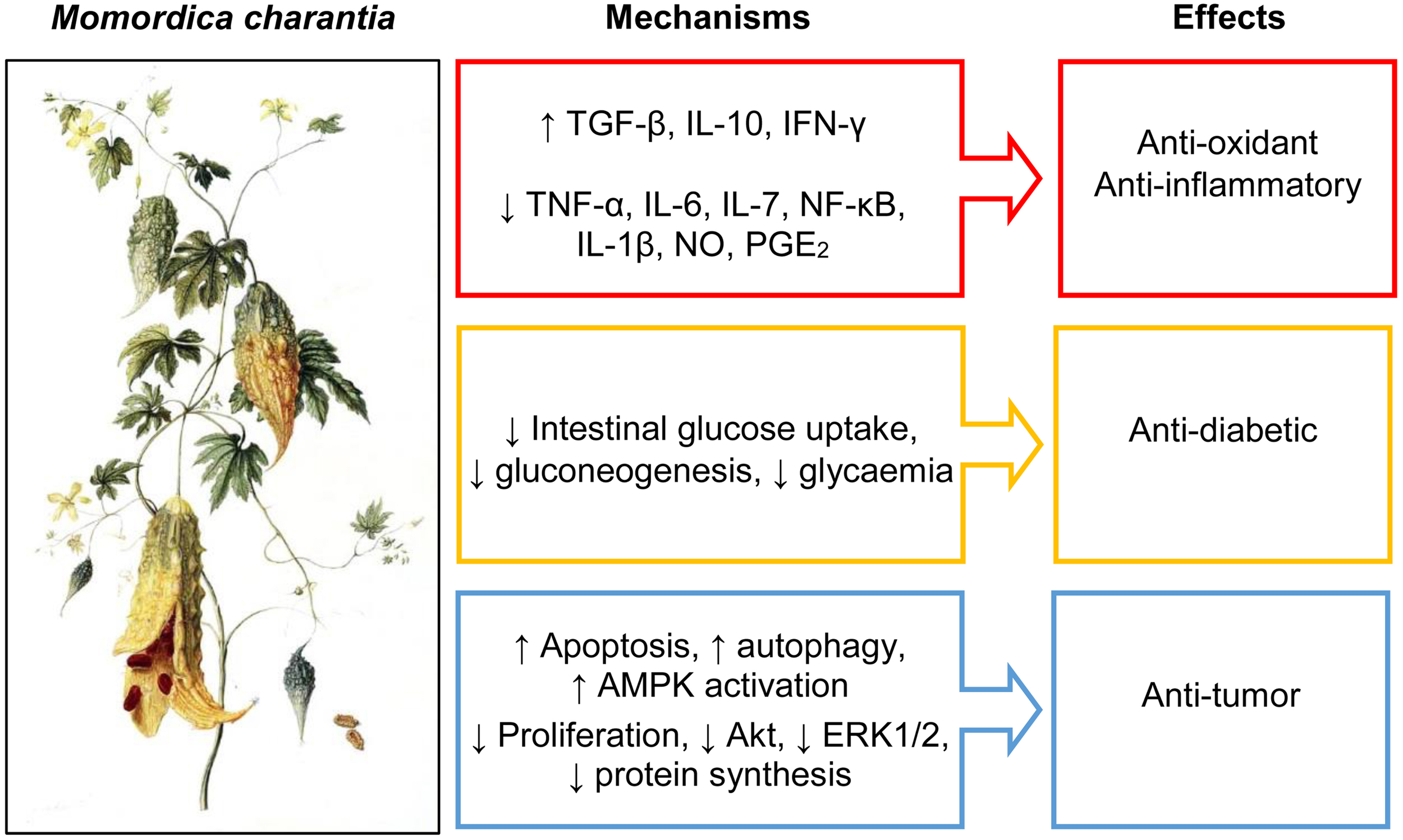
It has been suggested that some plant-derived phytochemicals from food or medicinal herbs could be therapeutically effective agents in the prevention and/or management of cancer and noncommunicable diseases associated with oxidative stress and inflammation.In this issue, the anti-inflammatory effect has been investigated by Balkrishna et al., Cui et al. and Ibrahim et al. Balkrishna et al. reported anti-inflammatory and anti-psoriatic effects of a sea buckthorn oil (SBKT) derived from the fruit pulp of Hippophae rhamnoides in the carrageenanstimulated rat paw edema model and in the 12-O tetradecanoyl phorbol 13-acetate (TPA) stimulated psoriasis-like lesion mice model, respectively. Cui et al. observed an attenuation of the lipopolysaccharide (LPS)-induced duodenum histopathology changes in the mice treated with Gardenia jasminoides decoction. On the other hand, Ibrahim et al. investigated the nephroprotective efficacy of the two pure compounds benzyl isothiocyanate (BITC) and resveratrol (RES), as well as their combination against cisplatin-induced acute renal injury in mice. The treatment with BITC and RES combination had the higher nephroprotective effects compared to both BITC and RES alone. In these studies, in addition to the reduction of inflammatory cytokines (interleukin (IL)-1, IL-6, IL-8 and/or tumor necrosis factor-α), Authors observed also inhibitions of the nuclear factor-kappa B (NF-κB) (Balkrishna et al., Cui et al.) and improvement of the total antioxidant capacity (Cui et al.), superoxide dismutase (SOD) (Cui et al., Ibrahim et al.), catalase (CAT) (Ibrahim et al.) and glutathione peroxidase (GSH-Px) (Cui et al., Ibrahim et al.).Patti et al. reported the antioxidant activity of Mentha longifolia L. crude extract in vitro and the antiproliferative effects on 2 adrenocortical tumor cell models. On the other hand, Bortolotti et al. pointed out that most existing studies on Momordica charantia (commonly called bitter melon) bioactive compounds were performed only on cell lines and in animal models and that clinical studies are needed to establish its efficacy and safety in patients. Besides, both in vitro and in vivo studies demonstrated that bitter melon may also elicit toxic or adverse effects under different conditions and few papers discuss the anti-inflammatory and anti-cancer properties. Moreover, in a This is a provisional file, not the final typeset article systematic review, Medic et al. concluded that despite anthocyanins-enriched diets proved to be effective in experimental murine models of colorectal cancer, no effect in human studies were observed. A suggestive hypothesis for the different effect in murine models and human could be the relationship among nutraceuticals and microbiota (Vamanu). From that, personalized health care for chronic noncommunicable diseases that impact quality of life should consider gut microbiota in addition to genetic and epigenetic factors, health status, polypharmacy and moods (Sciarra et al.).The authors declare that the research was conducted in the absence of any commercial or financial relationships that could be construed as a potential conflict of interest.All authors listed, have made substantial, direct and intellectual contribution to the work, and approved it for publication.Manuscript contribution to the field *
15 Authors
- FP
Felicia Patti
Endocrinology Unit, Department of Medicine (DIMED), University of Padova, Italy
- AP
Alessandro Palmioli
BioOrgNMR Lab, Department of Biotechnology and Biosciences, Università degli Studi di Milano Bicocca, Italy
- SV
Sara Vitalini
Department of Agricultural and Environmental Sciences, Milan State University, Italy
- LB
Loris Bertazza
Endocrinology Unit, Department of Medicine (DIMED), University of Padova, Italy
- MR
Marco Redaelli
AIROB, Associazione Italiana per la Ricerca Oncologica di Base, Italy
- MZ
Maira Zorzan
Endocrinology Unit, Department of Medicine (DIMED), University of Padova, Italy
- BR
Beatrice Rubin
Endocrinology Unit, Department of Medicine (DIMED), University of Padova, Italy
- CM
Caterina Mian
Endocrinology Unit, Department of Medicine (DIMED), University of Padova, Italy
- CB
Cristina Bertolini
AIROB, Associazione Italiana per la Ricerca Oncologica di Base, Italy
- MI
Maurizio Iacobone
Minimally Invasive Endocrine Surgery Unit, Department of Surgery, Oncology and Gastroenterology (DISCOG), University of Padova, Italy
- DA
Decio Armanini
Endocrinology Unit, Department of Medicine (DIMED), University of Padova, Italy
- SB
Susi Barollo
Endocrinology Unit, Department of Medicine (DIMED), University of Padova, Italy
- CA
Cristina Airoldi
BioOrgNMR Lab, Department of Biotechnology and Biosciences, Università degli Studi di Milano Bicocca, Italy
- MI
Marcello Iriti
Department of Agricultural and Environmental Sciences, Milan State University, Italy
- RP
Raffaele Pezzani
Endocrinology Unit, Department of Medicine (DIMED), University of Padova, Italy
8,654 views
28 citations
8 Authors
- AB
Acharya Balkrishna
Drug Discovery and Development Division, Patanjali Research Institute, India
- SS
Sachin Shridhar Sakat
Drug Discovery and Development Division, Patanjali Research Institute, India
- KJ
Kheemraj Joshi
Drug Discovery and Development Division, Patanjali Research Institute, India
- KJ
Kamal Joshi
Drug Discovery and Development Division, Patanjali Research Institute, India
- VS
Vinay Sharma
Drug Discovery and Development Division, Patanjali Research Institute, India
- RR
Ravikant Ranjan
Drug Discovery and Development Division, Patanjali Research Institute, India
- KB
Kunal Bhattacharya
Drug Discovery and Development Division, Patanjali Research Institute, India
- AV
Anurag Varshney
Drug Discovery and Development Division, Patanjali Research Institute, India
12,954 views
51 citations
9 Authors
- TS
Tommaso Sciarra
Joint Veteran Center, Scientific Department, Army Medical Center, Italy
- MC
Mario Ciccotti
Joint Veteran Center, Scientific Department, Army Medical Center, Italy
- PA
Paola Aiello
Department of Physiology and Pharmacology “V. Erspamer,” La Sapienza University of Rome, Italy
- PM
Paola Minosi
Department of Physiology and Pharmacology “V. Erspamer,” La Sapienza University of Rome, Italy
- DM
Diego Munzi
Joint Veteran Center, Scientific Department, Army Medical Center, Italy
- CB
Cosimo Buccolieri
Joint Veteran Center, Scientific Department, Army Medical Center, Italy
- IP
Ilaria Peluso
Research Centre for Food and Nutrition, Council for Agricultural Research and Economics (CREA-AN), Italy
- MP
Maura Palmery
Department of Physiology and Pharmacology “V. Erspamer,” La Sapienza University of Rome, Italy
- FL
Florigio Lista
Scientific Department, Army Medical Center, Italy
5,482 views
11 citations
3 Authors
- MB
Massimo Bortolotti
Department of Experimental, Diagnostic and Specialty Medicine-DIMES, Alma Mater Studiorum, University of Bologna, Italy
- DM
Daniele Mercatelli
Department of Experimental, Diagnostic and Specialty Medicine-DIMES, Alma Mater Studiorum, University of Bologna, Italy
- LP
Letizia Polito
Department of Experimental, Diagnostic and Specialty Medicine-DIMES, Alma Mater Studiorum, University of Bologna, Italy
3 Authors
- NM
Nevenka Medic
Department of Life Sciences, University of Trieste, Italy
- FT
Federica Tramer
Department of Life Sciences, University of Trieste, Italy
- SP
Sabina Passamonti
Department of Life Sciences, University of Trieste, Italy
9,540 views
30 citations
6,073 views
37 citations
5 Authors
- YC
Yizhe Cui
College of Animal Science and Veterinary Medicine, Heilongjiang Bayi Agricultural University, China
- QW
Qiuju Wang
College of Animal Science and Veterinary Medicine, Heilongjiang Bayi Agricultural University, China
- MW
Mengzhu Wang
College of Animal Science and Veterinary Medicine, Heilongjiang Bayi Agricultural University, China
- JJ
Junfeng Jia
College of Animal Science and Veterinary Medicine, Heilongjiang Bayi Agricultural University, China
- RW
Rui Wu
College of Animal Science and Veterinary Medicine, Heilongjiang Bayi Agricultural University, China
4,043 views
23 citations
4 Authors
- AI
Abdelazim Ibrahim
Department of Pathology, College of Veterinary Medicine, King Faisal University, Saudi Arabia
- FA
Fahad A. Al-Hizab
Department of Pathology, College of Veterinary Medicine, King Faisal University, Saudi Arabia
- AI
Abdelrahman Ibrahim Abushouk
Faculty of Medicine, Ain Shams University, Egypt
- MM
Mohamed M. Abdel-Daim
Department of Pharmacology, Faculty of Veterinary Medicine, Suez Canal University, Egypt
6,364 views
62 citations