Radiofrequency Ablation (RFA) as an Alternative to Conventional Treatment

92kviews
Editorial27 April 2022
Editorial: Radiofrequency Ablation as an Alternative to Conventional Treatment
Loredana Pagano, Cosimo Duranteand Ralph Patrick Tufano

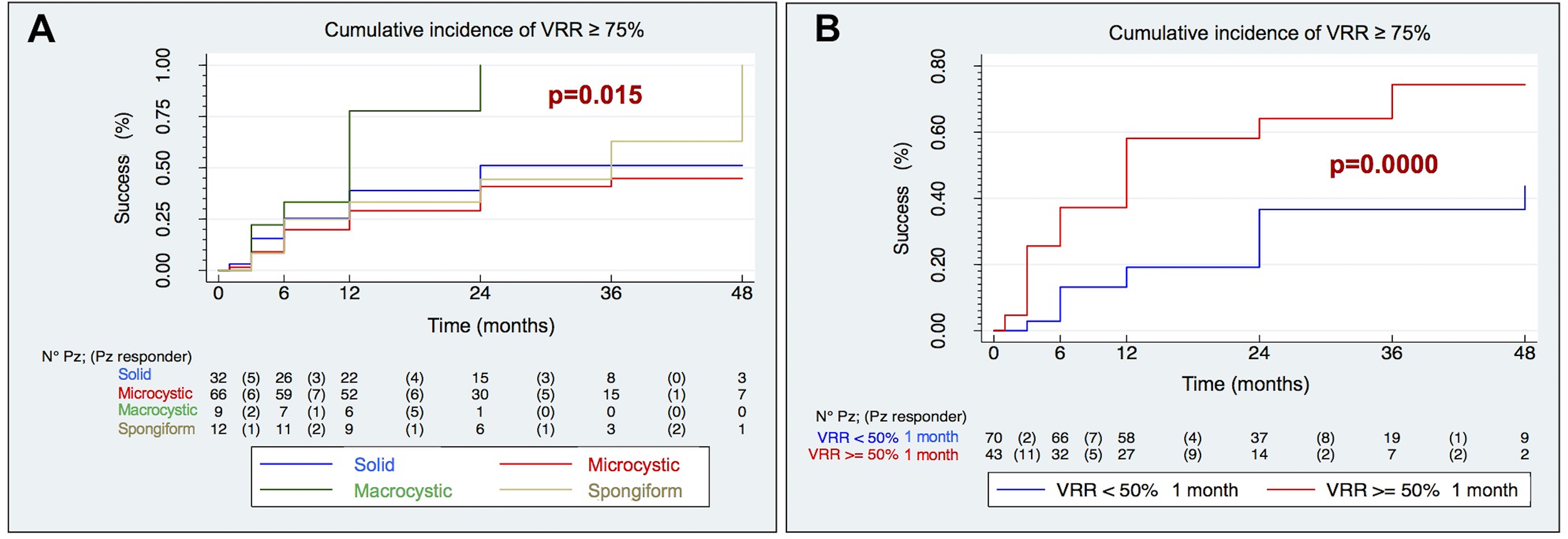
In a systematic review on 17 retrospective studies, Monpeyssen et al. (1) provided evidence for the effectiveness of RFA in reducing nodular volume and compressive and cosmetic symptoms in benign thyroid nodules, without causing thyroid dysfunction or life-threatening complications. Indeed, RFA is a percutaneous treatment that results in thermal tissue necrosis and ultimately fibrosis within the target nodule. As a result of this process, the nodules shrink with a 12-month volume reduction rate ranging from 67 to 75% for those lesions undergoing a single procedure. Thermal ablation, however, is an operator-dependent technique and should be performed in centers with RFA specific expertise. Two single center, retrospective studies (2,3) found that efficacy should always be evaluated at specific time points (1, 3, 6 and 12 months), with the one-year follow-up visit being generally considered optimal for assessing final outcome. In these cohorts of patients, there was a good association between initial ablation ratio and volume reduction ratio (VRR) 1 and 5 years after the procedure. Proper selection of the patients appears to be a key step with the nodule size (<25ml) and the echotexture (i.e., macrocystic pattern) being the parameters that positively predict the outcome of the treatment. Moreover, two reviews (4,5) demonstrated that RFA can be successfully used to treat autonomously functioning thyroid nodules displaying signs or symptoms of compression to adjacent structures, hyperthyroidism, and in pretoxic nodules. Such an approach represents a valuable alternative to therapies that may complicate preexisting chronic disorders in elderly patients, or that are controversial in young women, like radioactive iodine therapy. Even in these cases, patient selection is essential to optimize treatment efficacy in terms of volume reduction and thyroid function normalization.Indications for RFA in treating small primary differentiated thyroid cancers is a hot topic now. Benefits on health-related quality of life (HRQL) have been reported in a large cohort of patients with nonaggressive thyroid malignancies not amenable to surgery due to the presence of co-morbidities (6). Mauri et al ( 7) reported promising data in properly selected, very low risk thyroid cancer patients, especially in PMC, T1 N0, in whom RFA turned out to be a safe alternative to either surgery or active surveillance. RFA could contribute to reduce the treatment burden of surgery and/or the psychological burden of active surveillance for these patients.The purpose of discussing these issues in the Research Topic of Frontiers in Endocrinology session is to highlight the current and possible future utility of RFA as an alternative therapeutic approach in treating benign and malignant thyroid diseases.

1,852 views

2 citations

The Efficacy and Safety of Radiofrequency Ablation for Bilateral Papillary Thyroid Microcarcinoma
ORIGINAL RESEARCH
11 June 2021
The Efficacy and Safety of Radiofrequency Ablation for Bilateral Papillary Thyroid Microcarcinoma
Lin Yan, 4 more and Yukun Luo

4,392 views

32 citations

ORIGINAL RESEARCH
10 June 2021
Radiofrequency Thermoablation On Ex Vivo Animal Tissues: Changes on Isolated Swine Thyroids
Paola Pregel, 7 more and Frine Eleonora Scaglione

2,811 views

4 citations

Long-Term Results of Ultrasound-Guided Radiofrequency Ablation of Benign Thyroid Nodules: State of the Art and Future Perspectives—A Systematic Review
SYSTEMATIC REVIEW
26 May 2021

10,517 views

48 citations

Predictor Analysis in Radiofrequency Ablation of Benign Thyroid Nodules: A Single Center Experience
ORIGINAL RESEARCH
17 May 2021
Predictor Analysis in Radiofrequency Ablation of Benign Thyroid Nodules: A Single Center Experience
Alessandro Bisceglia, 9 more and Roberto Garberoglio

5,206 views

35 citations

ORIGINAL RESEARCH
18 May 2021
Radiofrequency Ablation for Cervical Metastatic Lymph Nodes in Children and Adolescents With Papillary Thyroid Carcinoma: A Preliminary Study
Lin Yan, 2 more and Yukun Luo

3,818 views

16 citations

ORIGINAL RESEARCH
11 February 2021
The Ablation of Thyroid Nodule’s Afferent Arteries Before Radiofrequency Ablation: Preliminary Data
Chiara Offi, 7 more and Stefano Spiezia

4,445 views

24 citations

ORIGINAL RESEARCH
1 February 2021
Initial Ablation Ratio Predicts Volume Reduction and Retreatment After 5 Years From Radiofrequency Ablation of Benign Thyroid Nodules
Stella Bernardi, 10 more and Bruno Fabris

4,969 views

38 citations

Image-Guided Thermal Ablation as an Alternative to Surgery for Papillary Thyroid Microcarcinoma: Preliminary Results of an Italian Experience
ORIGINAL RESEARCH
8 January 2021
Image-Guided Thermal Ablation as an Alternative to Surgery for Papillary Thyroid Microcarcinoma: Preliminary Results of an Italian Experience
Giovanni Mauri, 9 more and Gioacchino Giugliano
Purpose: to report the results of our preliminary experience in treating patients with papillary thyroid microcarcinoma (PTMC) with image-guided thermal ablation, in particular estimating the feasibility, safety and short-term efficacy Materials and methods: from 2018 patients with cytologically proven PTMC <10 mm were discussed in a multidisciplinary team and evaluated for feasibility of image-guided thermal ablation. In case of technical feasibility, the three possible alternatives (i.e., image-guided thermal ablation, surgery, and active surveillance) were discussed with patients. Patients who agreed to be treated with image guided thermal ablation underwent radiofrequency (RFA) or laser ablation under local anesthesia and conscious sedation. Treatment feasibility, technical success, technique efficacy, change in thyroid function tests, side effects, minor and major complications, patients satisfaction and pain/discomfort perception during and after treatment and disease recurrence during follow-up were recorded. Results: a total of 13 patients were evaluated, and 11/13 (84.6%) patients (9 female, 2 male, mean age 49.3 ± 8.7 years) resulted suitable for image-guided thermal ablation. All 11 patients agreed to be treated with image-guided thermal ablation. 3/11 (27.3%) were treated with laser ablation and 8/11 (72.7%) with RFA. All procedure were completed as preoperatively planned (technical success 100%). Technique efficacy was achieved in all 11/11 (100%) cases. Ablated volume significantly reduced from 0,87±0,67 ml at first follow-up to 0,17±0,36 at last follow-up (p = 0.003). No change in thyroid function tests occurred. No minor or major complications occurred. All patients graded 10 the satisfaction for the treatment, and mean pain after the procedure was reported as 1.4±1.7, and mean pain after the procedure as 1.2±1.1 At a median follow-up of 10.2 months (range 1.5 – 12 months) no local recurrence or distant metastases were found. Conclusions: image guided thermal ablations appear to be feasible and safe in the treatment of PTMC. These techniques hold the potential to offer patients a minimally invasive curative alternative to surgical resection or active surveillance. These techniques appear to be largely preferred by patients.

5,826 views

55 citations

REVIEW
30 October 2020
Novel Approaches for Treating Autonomously Functioning Thyroid Nodules
Pia Pace-Asciak, 2 more and Ralph P. Tufano
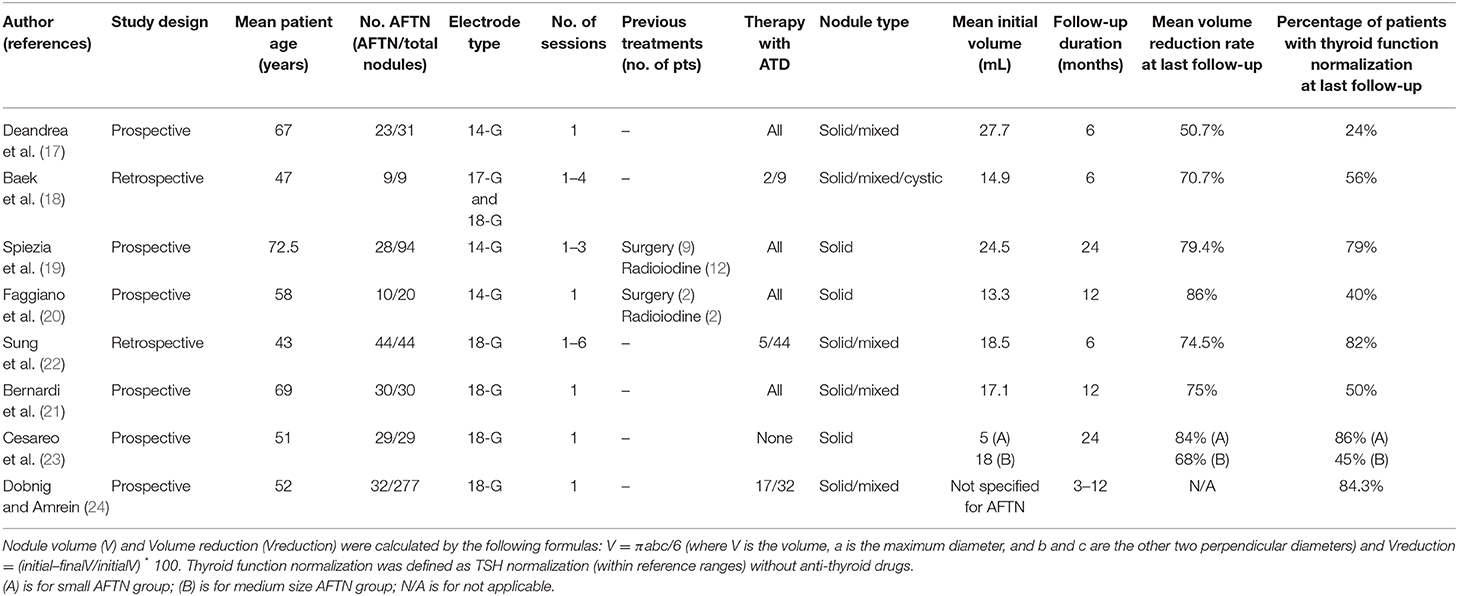
Benign thyroid nodules are exceedingly common in the adult population. Only a small percentage of nodules are toxic or autonomously functioning thyroid nodules (AFTN). The options clinicians have for treating the symptoms of hyperthyroidism include anti-thyroidal medications, radioactive iodine or surgery. Depending on the patient population treated, these options may not be suitable or have inherent risks that are undesirable to the patient. On the other hand, untreated hyperthyroidism can lead to osteoporosis, atrial fibrillation, emotional lability and neurological consequences. Thus, we present a review of two novel safe and effective approaches for treating AFTN; one surgical (transoral endoscopic thyroid surgery) and one nonsurgical (radiofrequency ablation), as a means for expanding our treatment armamentarium.

11,765 views

19 citations

Radiofrequency Ablation on Autonomously Functioning Thyroid Nodules: A Critical Appraisal and Review of the Literature
MINI REVIEW
22 May 2020
Radiofrequency Ablation on Autonomously Functioning Thyroid Nodules: A Critical Appraisal and Review of the Literature
Roberto Cesareo, 6 more and Stella Bernardi

12,291 views

58 citations

ORIGINAL RESEARCH
7 October 2020
A Novel Strategy for Single-Session Ultrasound-Guided Radiofrequency Ablation of Large Benign Thyroid Nodules: A Pilot Cohort Study
Zhicheng Yao, 5 more and Jie Ren

3,796 views

13 citations

Objective: Papillary thyroid microcarcinoma (PTMC) has a good prognosis and a longterm survival, the health-related quality of life (HRQoL) is vital for PTMC survivors during their entire survivorship. Ultrasound (US)-guided radiofrequency ablation (RFA) has been introduced as an alternative to surgery for the patients with low-risk PTMC with high efficacy and safety. However, the assessment of QoL of patients with PTMC has not been specially reported. The aim of this study was to compare HRQoL between PTMC patients underwent RFA and surgery. Methods: From October 2019 to December 2019, 88 PTMC patients were enrolled in our study, including 54 in RFA group and 34 in surgery group, retrospectively. Three questionnaires including the 36-item short form health survey (SF-36), thyroid cancerspecific quality of life (THYCA-QOL), and Fear of Progression Questionnaire-Short Form (FoP-Q-SF) were obtained and analyzed in each patient. The scores were compared after adjusting for age, sex, medical expense and follow-up time. Results: According to the SF-36, the score of role limitation due to physical problems and emotional problems(RP, RE) as well as Physical Component Summary (PCS) showed a significant negative linear association between the RFA group and surgery group: RP(coefficient p<0.001,.064], p = 0.004), and PCS (coef: -8.312 [CI -13.694 to -2.930], p=0.003). The THYCA-QOL also showed statistically significant difference between the two groups with the domain for the problem of scar (coef: 10.246 [CI 1.330 to 19.162], p = 0.025 according to the multivariate analysis), suggesting a higher level of complaint in the surgery group than in the RFA group. There was no significant difference in fear of progression scores between the two groups. Conclusions: In patients with PTMC, US-guided RFA offers advantage over surgery in terms of HRQoL, which supports the role of RFA as an alternative strategy to surgery.

5,763 views

77 citations