Acute Promyelocytic Leukemia - Towards a Chemotherapy-Free Approach to Cure in All Patients

69kviews
Editorial20 January 2022
Editorial: Acute Promyelocytic Leukemia — Towards A Chemotherapy-Free Approach to Cure in All Patients
Harinder Gill, Yok-Lam Kwongand Farhad Ravandi

Acute promyelocytic leukemia (APL) is a subtype of acute myeloid leukemia (AML) characterized by t(15;17)(q24;21) and the fusion gene PML-RARA. With optimal supportive care and frontline use of all-trans retinoic acid (ATRA) and chemotherapy, first complete remission (CR1) rates of more than 90% and long-term survival of more 80% can be achieved. Regimens that include As2O3, ATRA and chemotherapy result in a CR rare of 90-100% and OS between 86-97% (1-3). Frontline treatment of APL has evolved rapidly. An emerging theme is the incorporation of As2O3 early in the treatment algorithm, starting from induction to consolidation.

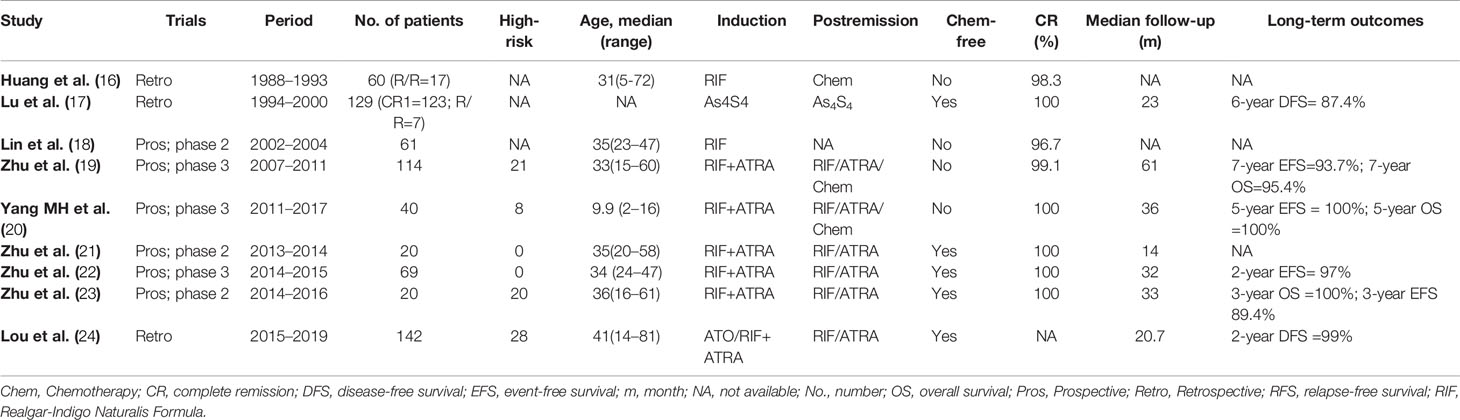
Various forms of arsenic were used in China for over 5000 years. Arsenic first appeared in Western Medicine in the eighteenth century. In hematology, oral arsenic was first reported in the treatment of chronic myeloid leukemia from the 1860s to 1920s in Germany and Boston City (4). This treatment was phased out following World War II with the development of alkylating chemotherapy and radiotherapy. Intravenous pure As2O3 solution was first used in Harbin, China in 1973. Its mechanism of action, pharmacokinetics and clinical efficacy was extensively published in 1996. In this research topic collection, Kumana et al. gave a historical account on the development of pure oral arsenic trioxide that was invented and patented in Hong Kong. With memories of the Fowler’s solution, an oral As2O3 formulation or the “modern” liquor arsenicalis was revived in 1998 in Hong Kong. In Hong Kong, China, an oral preparation of As2O3 (oral-As2O3) was developed, and was shown to be efficacious for APL in first relapse (R1), inducing second complete remission (CR2) in more than 90% of patients (5). Further, in an effort to prevent relapses, oral-As2O3 was used during induction and maintenance of CR1 (6, 7). This strategy resulted in favorable overall-survival (OS) and leukemia-free-survival (LFS). This 1mg/ml oral-As2O3 solution has a bioavailability comparable with that of i.v. As2O3 (8). Oral arsenic trioxide (Arsenol ®) from Hong Kong was also the first oral preparation of pure arsenic trioxide produced under the Good Manufacturing Practice (GMP) standards. On the other hand, Realgar-Indigo naturalis formula (RIF) was developed in the 1980s entirely based on traditional Chinese Medicine (TCM) concepts and comprises realgar, Indigo naturalis, Salvia miltiiorrhiza and Radix pseudostellariae (9). Tetraarsenic tetrasulphide (As4S4), indirubin and tanshinone IIA are the active ingredients of RIF with in-vitro synergism (9). In this research topic, Zhu et al. and Lou et al. described the all oral, chemotherapy-free model in the frontline management of APL highlighting the applications of RIF and summarized the clinical data and excellent outcome of patients treated with RIF-based induction. Zhu also highlighted a major obstacle to cure in APL, that is, early deaths. In addition, multi-centre clinical trials in patients treated with ATRA, arsenic trioxide and anthracyclines reported a relatively low incidence of early deaths of 3-10% (1, 2). Xu et al. discuss the evolution of various therapeutic approaches from hospital-based induction and consolidation to home-based oral As2O3-based therapy especially during consolidation and maintenance. Other oral formulations of As2O3 are also being investigated with the hope of eventually developing an all oral, effective regimen in standard-risk APL(10).

With regard to the therapeutic application of intravenous arsenic trioxide, Russel et al. summarize the United Kingdom’s NCRI AML17 experience using the attenuated arsenic trioxide regimen in newly diagnosed APL. The treatment of “high-risk” APL remains a topic of contention as As2O3 is not yet approved for this indication. An important exploratory study by the MD Anderson Cancer Center using ATRA-As2O3 with or without gemtuzumab ozogamacin (GO) suggested that an essentially chemotherapy-free regimen might be feasible for the upfront treatment of APL (11). The NCRI AML17 trial built on these findings to investigate the de-intensification of treatment by randomizing patients irrespective of their risk status between As2O3-ATRA and the ATRA-idarubicin (AIDA) regimen. The AML17 trial included a total of 57 high -isk patients and their overall survival at 4 years was not significantly different from standard risk patients, being 95% in standard-risk compared with 87% in high-risk patients. Of the 28 high-risk patients in the As2O3 arm of AML17 who received the planned induction of ATRA, As2O3 and GO, the 4-year survival was 89% (12).

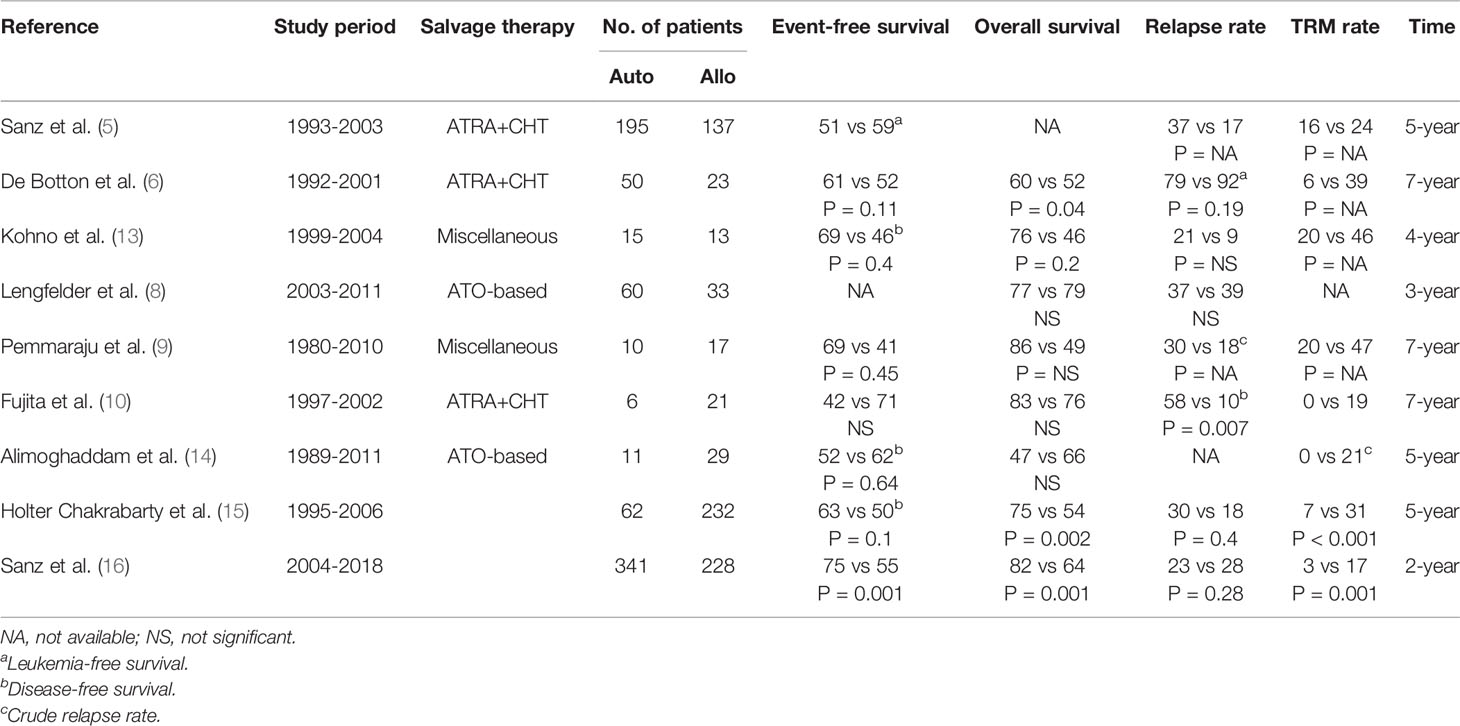
Last, but not least, Sanz et al. reappraised the role of hematopoietic stem cell transplantation (HSCT) in the current era of arsenic trioxide. As2O3-based regimens are currently regarded as the first option for relapsed APL. The selection of the most appropriate post-remission treatment option for patients in second CR (CR2), including the use of HSCT, depends on several variables, such as pre-transplant molecular status, duration of first remission, age, and donor availability. Despite modest evidence from retrospective studies, autologous HSCT has been the preferred option for consolidation in patients achieving molecularly negative CR2. The suitability of HSCT as compared with other non-HSCT alternatives has recently engendered much interest, thereby necessitating prospective controlled studies to define the role of HSCT in APL.

With the above backdrop, this special research topic provides an overview on the biology of APL and highlights perspectives on the past, present, and future treatment approaches in APL. This topic plays an important role in addressing the development of As2O3 –based therapy in improving the outcome of APL, from once the most fatal to currently the most curable leukemia.

2,884 views

2 citations

The Combination of Gefitinib With ATRA and ATO Induces Myeloid Differentiation in Acute Promyelocytic Leukemia Resistant Cells
ORIGINAL RESEARCH
28 September 2021
The Combination of Gefitinib With ATRA and ATO Induces Myeloid Differentiation in Acute Promyelocytic Leukemia Resistant Cells
Luciana Yamamoto de Almeida, 21 more and Eduardo M. Rego
In approximately 15% of patients with acute myeloid leukemia (AML), total and phosphorylated EGFR proteins have been reported to be increased compared to healthy CD34+ samples. However, it is unclear if this subset of patients would benefit from EGFR signaling pharmacological inhibition. Pre-clinical studies on AML cells provided evidence on the pro-differentiation benefits of EGFR inhibitors when combined with ATRA or ATO in vitro. Despite the success of ATRA and ATO in the treatment of patients with acute promyelocytic leukemia (APL), therapy-associated resistance is observed in 5-10% of the cases, pointing to a clear need for new therapeutic strategies for those patients. In this context, the functional role of EGFR tyrosine-kinase inhibitors has never been evaluated in APL. Here, we investigated the EGFR pathway in primary samples along with functional in vitro and in vivo studies using several APL models. We observed that total and phosphorylated EGFR (Tyr992) was expressed in 28% and 19% of blast cells from APL patients, respectively, but not in healthy CD34+ samples. Interestingly, the expression of the EGF was lower in APL plasma samples than in healthy controls. The EGFR ligand AREG was detected in 29% of APL patients at diagnosis, but not in control samples. In vitro, treatment with the EGFR inhibitor gefitinib (ZD1839) reduced cell proliferation and survival of NB4 (ATRA-sensitive) and NB4-R2 (ATRA-resistant) cells. Moreover, the combination of gefitinib with ATRA and ATO promoted myeloid cell differentiation in ATRA- and ATO-resistant APL cells. In vivo, the combination of gefitinib and ATRA prolonged survival compared to gefitinib- or vehicle-treated leukemic mice in a syngeneic transplantation model, while the gain in survival did not reach statistical difference compared to treatment with ATRA alone. Our results suggest that gefitinib is a potential adjuvant agent that can mitigate ATRA and ATO resistance in APL cells. Therefore, our data indicate that repurposing FDA-approved tyrosine-kinase inhibitors could provide new perspectives into combination therapy to overcome drug resistance in APL patients.

4,793 views

15 citations

ORIGINAL RESEARCH
16 July 2021
Efficacy and Tolerability of First Line Arsenic Trioxide in Combination With All-Trans Retinoic Acid in Patients With Acute Promyelocytic Leukemia: Real Life Experience
Francesco Autore, 8 more and Simona Sica
Acute promyelocytic leukemia is a variant of acute myeloid leukemia characterized by t(15;17) and PML/RAR alfa. The discovery of the molecular pathogenesis has led to the first targeted therapy for acute leukemia: all-trans retinoic acid (ATRA). It is usually associated to anthracycline-based chemotherapy obtaining high response rates, but some potential long-term sequelae including therapy-related malignancies are described. The introduction of arsenic trioxide (ATO) tries to obviate such complications and trials pursued a strategy for the incorporation of ATO into initial therapy with an emphasis on minimizing or even abrogating the use of chemotherapy in selected patients. ATRA plus ATO without chemotherapy was the first attempt to treat low and intermediate-risk patients. Our monocentric experience aims to describe a cohort of patients with newly diagnosed APL effectively treated with ATO plus ATRA underlying its efficacy together with the high grade of tolerability of this association. From January 2009 we diagnosed 23 APL patients who were treated with ATO plus ATRA regimen: 14 males and 9 females patients with a median age of 45 years (range 18-72), for the majority intermediate risk (15 patients, 65%). The treatment was well tolerated and all patients obtained molecular remission after a median time of 3 months (range 1-6 months). All patients proceeded to consolidation phase as outpatients, they remained in molecular response at a median time of 44 months (range 15-127) except for 1 patient and all but one patient are alive and in response at a median follow-up of 48 months (range 9-141) and no late effects have been registered so far. ATO plus ATRA regimen shows a series of advantages in comparison to chemotherapy and it also allowed to treat patients in which chemotherapy could not be the first choice because of the age and the physical status or it could even not be applicable. The association of ATO to ATRA is the first experiment of chemo-free regimen to treat acute leukemia and APL has been modified from a highly fatal disease to a highly curable one even without chemotherapy.

2,836 views

13 citations

ORIGINAL RESEARCH
25 November 2020
Hypertriglyceridemia in Newly Diagnosed Acute Promyelocytic Leukemia
Jianai Sun, 14 more and Hong-Hu Zhu
Hypertriglyceridemia in Newly Diagnosed Acute Promyelocytic Leukemia
The primary aim of the present retrospective study was to investigate lipid profiles and kinetics in acute promyelocytic leukemia (APL) patients. We analysed 402 newly diagnosed APL patients and 201 non-APL patients with acute myeloid leukemia (as control). Incidence of hypertriglyceridemia in APL patients and non-APL patients was 55.82% and 28.4% (p = 0.0003). The initial levels of triglycerides, total cholesterol, high-density lipoprotein cholesterol and low-density lipoprotein cholesterol were higher in APL patients than in control (all p < 0.0001). In APL patients triglyceride levels were significantly increased during induction treatment with all-trans retinoic acid and arsenic. Multivariable analysis showed that age, being overweight (body mass index ≥25) and APL were independent risk factors for hypertriglyceridemia in all patients before treatment. High triglyceride levels were not significantly associated with disease-free survival or overall survival in the APL patients. In summary, in the current study triglyceride levels were significantly elevated in APL patients before treatment, and they increased during induction treatment, but there were no significant corresponding effects on survival.

6,454 views

18 citations

MINI REVIEW
4 August 2020
Resurrection of Oral Arsenic Trioxide for Treating Acute Promyelocytic Leukaemia: A Historical Account From Bedside to Bench to Bedside
Cyrus R. Kumana, 2 more and Harinder Gill

6,225 views

24 citations

The treatment of acute promyelocytic leukaemia (APL) has evolved dramatically over the past several decades, making the disease a highly curable form of acute leukaemia. The discoveries of all-trans retinoic acid (ATRA) and arsenic trioxide (ATO) were landmark events, leading to historic revolutions in the treatment of APL. One major change was from chemotherapy-based to chemotherapy-free treatment regimens, and the combination of ATRA plus ATO without chemotherapy has been recommended as the standard therapy for non-high-risk APL. The other major change was from the intravenous administration of medicine in the hospital to a largely home-based oral approach, which is a more cost-effective and convenient treatment model. In this review, we focus on the evolution of therapeutic approaches for APL, as well as the challenges that remain with the current approaches.

4,573 views

11 citations