Perinatal Mental Health and Well-being in Fathers

Cover image for Research Topic "Perinatal Mental Health and Well-being in Fathers"
147kviews
Editorial21 March 2022
Editorial: Perinatal Mental Health and Well-Being in Fathers

The major purpose and potential contribution of this Research Topic is to share conceptual, scientific and practical essays that can inform health care systems and policies about the best practices in the field. The proposals included in this special issue reflect the diversity of research aims among studies of fathers' perinatal mental health, including the development and validation of assessment measures for a range of issues including involvement with the infant (Webb et al., 2021;Pinto, Nunes-Costa & Figueiredo, 2021), the study of the impact of parental relationship satisfaction on infant development (Nicolaus et al., 2021) and associated processes, such as paternal bonding (Bieleninik et al., 2021;Schaber et al., 2021) and paternal postpartum mental health (Macdonald et al., 2021) In sum, despite the important steps that have been taken in the last two decades in the study and intervention in the perinatal mental health of parents, there is still a long way to go. And at this level, fathers are undoubtedly one of the main actors to consider!

2,272 views

2 citations

Interventions for Perinatal Depression and Anxiety in Fathers: A Mini-Review
Up to 10% of fathers experience perinatal depression, often accompanied by anxiety, with a detrimental impact on the emotional and behavioural development of infants. Yet, few evidence-based interventions specifically for paternal perinatal depression or anxiety exist, and few depressed or anxious fathers engage with support. This mini-review aims to build on the evidence base set by other recent systematic reviews by synthesising more recently available studies on interventions for paternal perinatal depression and anxiety. Secondarily, we also aimed to identify useful information on key implementation strategies, if any, that increase the engagement of men. We drew upon 3 major previous systematic reviews and performed an updated database search limited to trials, feasibility studies or pilot studies of interventions published between 2015-20 that reported on fathers’ perinatal mental health. We included psychological, educational, psychosocial, paternal, couple-focused, or group therapies that reported on either paternal depression, anxiety or both. Eleven studies satisfied search criteria (5 of which were not included in previous reviews). The majority were randomised controlled trials. Most interventions incorporated counselling, therapy or psychoeducation and took an indirect approach to perinatal mental health through couple-focussed education. No studies reported a presence of diagnosed depression or anxiety at baseline, although five studies reported a positive effect on symptoms. No studies targeted the explicit treatment of clinically depressed or anxious men; the most substantial gap in the evidence base. There is a need to deliver perinatal interventions specifically designed for men and evaluate them in populations with clinical levels of symptomatology.

12,463 views

25 citations

15,709 views

12 citations

4,557 views

7 citations

ORIGINAL RESEARCH
6 August 2021
The Impact of Parental Relationship Satisfaction on Infant Development: Results From the Population-Based Cohort Study DREAM
Caroline Nicolaus, 2 more and Susan Garthus-Niegel

18,568 views

21 citations

Paternal Leave and Father-Infant Bonding: Findings From the Population-Based Cohort Study DREAM
Background: Father-infant bonding is important for child development. Yet, in contrast to mother-infant bonding, little is known about factors that might facilitate father-infant bonding. With new generations of fathers being more involved in childcare, this study aims to examine the impact of paternal leave duration on father-infant bonding, and whether this relation is mediated by the amount of time fathers actively spend on childcare. Methods: Data of n = 637 fathers were derived from the German population-based cohort study “Dresden Study on Parenting, Work, and Mental Health” (DREAM). Mediation analyses were conducted. Duration of paternal leave (predictor), weekly hours spent on childcare (mediator), and father-infant bonding (outcome) were measured at 14 months postpartum. The potential confounders current status of paternal leave, part-time work during paternal leave, duration of solo paternal leave, age, education, and partnership satisfaction were included in a second mediation analysis. Results: Without considering confounders, duration of paternal leave positively predicted father-infant bonding through weekly hours spent on childcare. When adding confounders to the model, this indirect path did not stay significant. Moreover, in the adjusted model and on the direct path duration of paternal leave negatively predicted father-infant bonding. Additionally, partnership satisfaction positively predicted father-infant bonding. Some study variables were significantly associated with the mediator. Longer duration of paternal leave, currently being on paternal leave, younger age, and lower educational level predicted more weekly hours spent on childcare. Conclusions: Duration of paternal leave not being a stable predictor for father-infant bonding suggests that fathers, who do not have the opportunity to take long periods of paternal leave, can still form strong bonds with their infants. Other factors, for example partnership satisfaction, which might represent fathers’ underlying capacity to bond, might be more crucial for father-infant bonding. At the same time, results should not be interpreted in a way that father involvement (e.g., paternal leave/time spent) does not matter for children’s development. The finding that longer duration of paternal leave increases weekly hours spent on childcare supports the idea that facilitating father involvement can be achieved by paternal leave incentives such as non-transferable father months.

24,436 views

44 citations

ORIGINAL RESEARCH
15 July 2021
Examining the Effectiveness of the Fathers and Babies Intervention: A Pilot Study
S. Darius Tandon, 2 more and Craig F. Garfield

10,001 views

15 citations

ORIGINAL RESEARCH
28 May 2021
Parent and Peer Attachments in Adolescence and Paternal Postpartum Mental Health: Findings From the ATP Generation 3 Study
Jacqui A. Macdonald, 13 more and Craig A. Olsson

9,437 views

21 citations

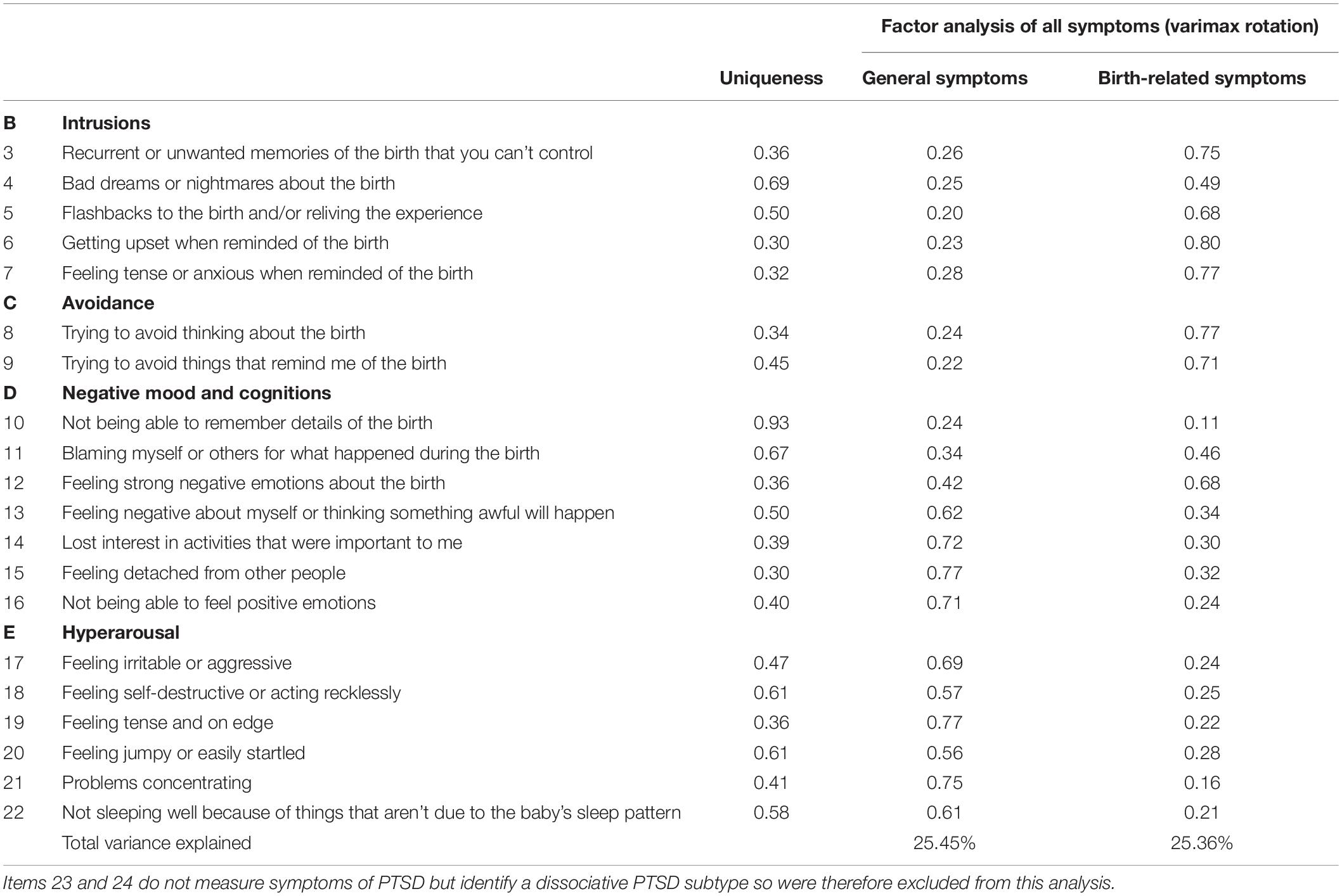
Research suggests that some fathers and birth partners can experience post-traumatic stress disorder (PTSD) after witnessing a traumatic birth. Birth-related PTSD may impact on many aspects of fathers’ and birth partners’ life, including relationship breakdown, self-blame and reducing plans for future children. Despite the potential impact on birth partners’ lives there is currently no measure of birth-related PTSD validated for use with birth partners. The current study therefore adapted the City Birth Trauma Scale for use with birth partners. The City Birth Trauma Scale (Partner version) is a 29-item questionnaire developed to measure birth-related PTSD according to DSM-5 criteria: stressor criteria (A), symptoms of re-experiencing (B), avoidance (C), negative cognitions and mood (D), and hyperarousal (E), as well as duration of symptoms (F), significant distress or impairment (E), and exclusion criteria or other causes (H). A sample of 301 fathers/birth partners was recruited online and completed measures of birth-related PTSD, bonding, and demographic details. Results showed the City Birth Trauma Scale (Partner version) had good reliability (α = 0.94) and psychometric and construct validity. The fathers/birth partners version has the same two-factor structure as the original scale: (1) general symptoms and (2) birth-related symptoms, which accounted for 51% of the variance. PTSD symptoms were associated with preterm birth and maternal and infant complications. Overall, the City Birth Trauma Scale (Partner version) provides a promising measure of PTSD following childbirth that can be used in research and clinical practice.

14,413 views

27 citations