conceptualizations of the field are provided by Baranyi andCsapo (2010, 2012). The essence is as described at the outset -attention to technologies that enhance human cognitive capabilities. An example is in electronic calculators: humans do not need them in order to perform arithmetic computations; however, they enable a greater volume and accuracy of computation to an extent that humans have come to depend upon them. One may think of calculators as an example of successful cognitive infocommunications technology. reviewed the state of progress in the field at an earlier stage in its development, and it can be seen that the essential focus has remained constant, although the technologies and problems addressed vary. At the time of writing this introduction (December 2022), using "coginfocom" as a search term within IEEExplore returns 1,057 results, within GoogleScholar, about 5,030 results. We mention these facts in order to give an indication of the scale of this scientific community. Esposito (2019, 2020) have analyzed the nature of successful cognitive infocommunication technologies, arguing that any such technology is one that solves problems faced by humans in private spheres (such as in thought) and public spheres (such as in interaction). With this schema, they present "technologies" such as human language and clothing as well-entrenched advances that have become assimilated into the concept of humanity, such assimilation constituting evidence of their success. Language is perhaps even more useful for thinking than for communication, but it is certainly adapted to problems in both spheres; clothing provides individual protection against varying climate conditions (in the private sphere), but also provides a means to signal membership in groups (in the public sphere). This philosophical analysis helps to understand that new technologies, seemingly developed for their own sake, are frequently explored by researchers in this field. Part of the exploration is about the technology in itself, but this inherently addresses the problems that such technologies solve. Part of the exploration is about the manner in which people interact with and potentially embrace the technology, and thus user evaluations are sometimes invoked.As an example additional to language as an abstract technology that has been assimilated into the collective concept of humanity, "mathability" may also be noted: consider, for example, the conceptual
Sample et al.advance created by adding the notion of "zero" to integer arithmetic. Accordingly, mathematics as a technology and technologies for supporting mathematical reasoning provide a robust thread of research within cognitive infocommunications (Baranyi and Gilányi, 2013;Török et al., 2013;Szi and Csapo, 2014;Chmielewska et al., 2016). Money is a comparable technology, and the advent of cryptocurrencies reveals that it is a category of technology still undergoing innovation; it is therefore no surprise that economics is a contributing discipline in cognitive infocommunications (Matarazzo et al., 2016;Esposito et al., 2017;Vogel et al., 2018). The works in this volume are, without exception, attuned to the question of enhancing human cognitive capabilities. They vary in their approach.
As indicated, some of the research themes in cognitive infocommunications include human embodiment, knowledge representation, learning, speech interaction, navigation, frameworks for virtual interaction. We describe the papers presented in this special issue in relation to our view of those papers and themes.
Buscemi et al. ( 2021) study human posture, and the role of fascia, the tissue that surrounds muscles, bones and organs in the human body. A test involving the application of mechanical pressure to a standing human accompanied by a change in sensory input, in particular, closure of eyes, is revealing of specific tissue tensions -stiffness or loss of elasticity in fascia tissue. This, in turn, may provide insight into therapies.A protocol for further study is offered. We see as the main idea here of relevance is a conceptually simple technology that may provide information to an individual or medical professionals about physical imbalances experienced by an individual, thereby enabling remedy.Others who have contributed to cognitive infocommunications have also been investigating correlating features sensed from human body postures into diagnostics of motion (Granata et al., 2013), health and wellbeing, (Macik, 2018;Mykhailova et al., 2018;Steiner and Kertesz, 2012) and ability (Toma et al., 2012). Sakamoto et al. (2021) address the manner in which words involve sound-symbolism cross-linguistically, but with different categories in each language. They focus on Japanese words and their encoding of personality traits using sound symbols, and through sourcing multiple independent judgements of personality traits associated with symbols, offer a means of concise personality classification labelling, reliable in the sense of associations with personality traits are shared. This work supports the explicit representation of knowledge implicit in the underlying sound symbolism about human personality traits. Kuniyasu et al. (2021) examine the formation of concepts through robot analysis of multi-modal stimuliimages and words. They provide a new latent Dirichlet allocation model that supports unsupervised learning of relevant feature individuation (as opposed to prior specification of or pre-training feature extraction) and cross-modal inference from words to images. The paper provides the background and details of the model, highlighting its successes and areas where it may be improved. Additional stimulus modalities are identifed as a priority in future work. We see this research as contributing a perspective on the co-temporality of object perception and labelling of those objects by cognitive agents. Römer et al. (2022) provide a theory of environment-situated interaction among agents expressed using formal language theory and lambda calculus, adopting minimalist grammars and utterance-meaning transducers. Agent lexicons are learned through interaction, and a reinforcement learning regime supports this. A closed-world simulation is provided to illustrate the details of the approach. We view this work as an analysis of an extant cognitive infocommunications technology (natural language, in this case) and the dynamics of its use.
Knowledge representation is central to cognition, and it follows that that representation systems, knowledge acquisition and reasoning processes are studied by many within this multi-discipline. To mention a few examples, we draw attention to the needs of representing spatial information (Karimipour and Niroo, 2013), computer system design (Shakhnov et al., 2013), business processes (Szmodics, 2015), medical decision making (Minutolo et al., 2014), knowledge acquisition (Cao et al., 2013), knowledge provenence tracking (Mittal et al., 2018), and, of course, cognitively informed representation systems (Dhuieb et al., 2013;Savić et al., 2017).
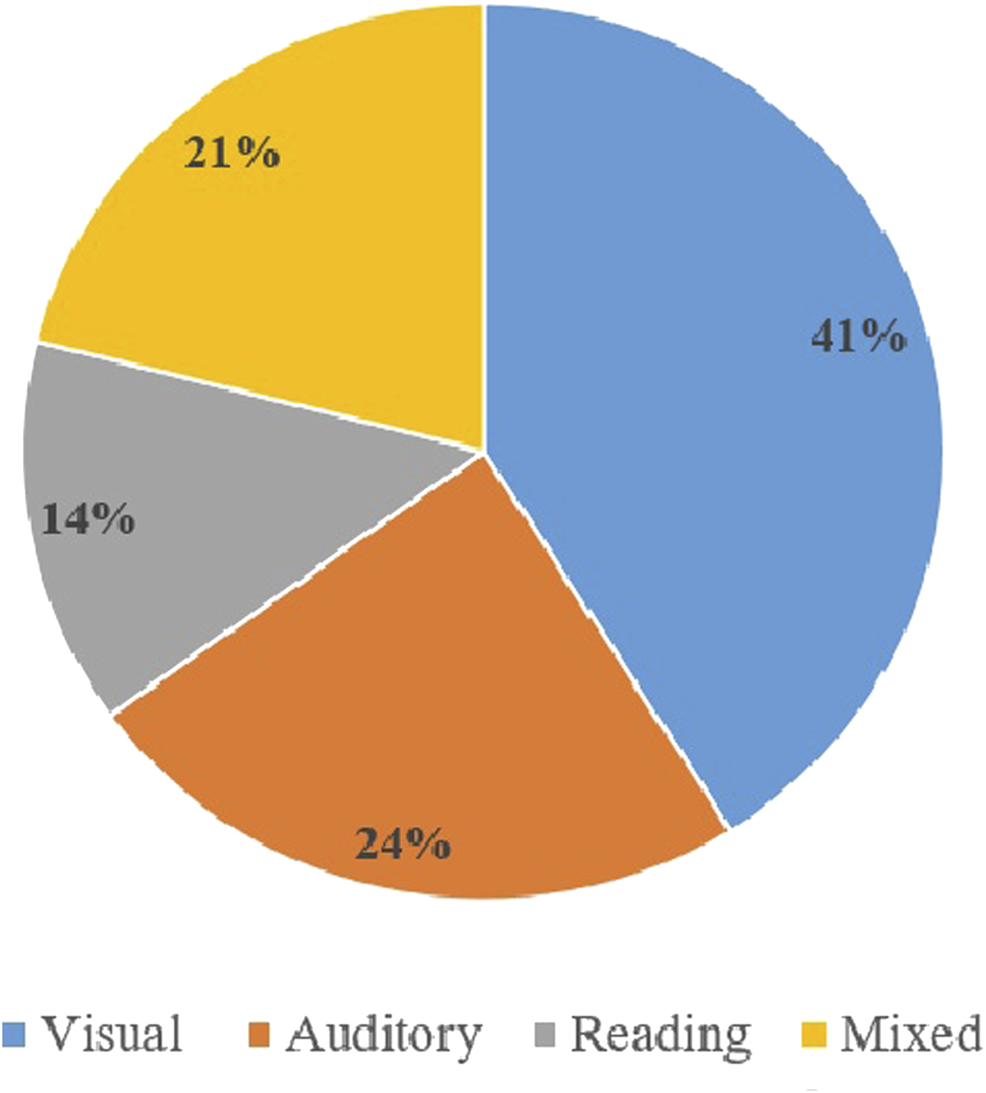
The paper by schraefel et al. ( 2021) addresses user evaluation of heuristics for maintaining health and wellbeing through a paradigm of systematic self-experimentation. They seek to establish a technology for interaction that facilitates users in developing an active base of knowledge, skills and practice in health and wellbeing maintenance that ultimately makes the technology inessential. In this context, three studies are presented. The first examined within a small group (n=12) whether the self-experimentation paradigm could be well-received and lead to behavioural change that persists beyond the experiment (it did). The second study involved an application in support of the self-experimentation paradigm, and achieved the desired effects. The third study presented an experiment that compared standard care and the experimental paradigm, finding positive impacts from its support for engagement and emphasis on self-awareness and reflection.Horváth (2021) studied human learning in a 3D virtual reality environment, attending to systematic differences in learner styles. Investigations revealed the importance of tuning task specifications to learnerstyles. An affordance of the virtual reality environment in supporting non-intrusive direction was identified as particularly effective.We have characterized the form of learning instantiated by acquisition of knowledge within computer systems as a problem of knowledge representation. However, human learning is also relevant. Wilcock and Yamamoto (2015) address the use of robots in hman language learning, and this is representative of work that assesses the integration of technology in human learning processes (Horváth, 2016;Sik-Lanyi et al., 2017;Biró et al., 2017). Researchers in the area also study learning processes in the abstract (Gogh and Kovari, 2018). More detailed positioning of human learning supported by technology within cognitive infocommunications is reviewed by Kovari (2018); Kovari et al. (2020).
Navarretta (2021) analyzes qualities of speech (pauses and and stress) in relation to the antecedents of third person genderless singular pronouns (e.g. "it" in English or "det" in Danish), as recorded in a Danish language map-task corpus and Danish corpus of first encounters between people. Contrasts between abstract and individual referents as candidate antecedents are noted. Stress on the pronouns favours abstract antecedents; unstressed pronouns favour individual antecedents. Silent and filled pauses prior to the pronoun are more common with abstract referents than individual referents; this is interpreted as a signal of the relative difficulty of the concept denoted.
As noted above, it has been argued that language is an early cognitive infocommunications technology.Speech is a modality for expression of language, and coginfocom researchers dwell on very many aspects of speech -speech recognition, speaker recognition, speech synthesis, speech as an information source for clinical diagnosis, speech in relation to other co-linguistic signals, such as gesture, and so on (Esposito and Esposito, 2011;Meena et al., 2012;Szaszák and Beke, 2012;Vicsi et al., 2012;Kiss et al., 2013;Marinozzi and Zanuy, 2014;Siegert et al., 2015;Hunyadi et al., 2016;Navarretta, 2016;Kovács et al., 2017;Navarretta, 2017;Beke, 2018;de Velasco Vázquez et al., 2019;Esposito et al., 2020).
Ito et al. ( 2021) provide and validate a method for constructing maps of error in positioning, such as is relevant to guided navigation. They analyze error sources (e.g. features of global positioning satellites or obstructions by buildings or natural landscape features) and provide a means of estimating the extent and location of error. The methods are validated. The notion of an error map developed is a powerful quantification of uncertainty. It is easy to imagine its adoption within autonomous navigation (e.g. yielding control back to a human driver within probable high-error regions), as well as in the guided navigation currently used by drivers and pedestrians: it would be helpful to a pedestrian following a dot on a map in an unknown city to know that the pedestrian is on the cusp of a high-error region.Representations of spatial knowledge afforded by maps and supports for navigation in real and virtual environments are a concern of many within coginfocom (Török et al., 2017;Török, 2018, 2019;Jämsä et al., 2014;Karimipour et al., 2015;Furuyama and Niitsuma, 2013;Fixova et al., 2014;Sudár and Csapó, 2019;Berki, 2019Berki, , 2020b).
Setti and Csapo (2021) reason that 3D virtual reality environments deter user embrace through lacking 2D controls that are familiar from other technology settings. They describe their work in enhancing a popular 3D virtual reality environment (MaxWhere) with 2D user controls that may be available in the 3D space for users to manipulate that space. This entails conceptualizing a inventory of 2D operations small enough to avert excess choice, but large enough to be effective, and providing instantiations of the operations. User testing reveals the approach to require of users an acceptable amount of time and control over the environment. It can be foreseen that this approach will increase uptake of this and other 3D virtual reality environments.Horváth (2021), whose work outlined above, also addressed advantageous features of 3D virtual reality environments. Many other researchers also study virtual reality from a cognitive infocommunications perspective -more than 150 such works have been published in the annual conference series. Approaches typically include developing, evaluating and improving VR experiences (Lóska, 2012;Persa et al., 2014;Köles et al., 2014;Lógó et al., 2014;Lanyi et al., 2015;Berki, 2018a,b;Tolgay et al., 2019;Ishii et al., 2020;Berki, 2020a;Esposito et al., 2021) and scrutiny of the value of VR in a range of applications (Qvist et al., 2016;Nascivera et al., 2018;Vér, 2018;Budai and Kuczmann, 2019;Markopoulos et al., 2019;Csapó et al., 2020;Berki, 2020b)
These works touch on areas of focus that are current within cognitive infocommunications: human embodiment, knowledge representation, learning, speech interaction, autonomous navigation, frameworks for interaction. As noted in the last section, the papers included here sometimes address matters at the Frontiers intersection of a number of these areas. For example, Römer et al. (2022) present work that explores knowledge representation, learning and interaction. The work of Horváth ( 2021) is at the intersection of learning and virtual reality environments that support interaction. The investigation by Navarretta (2021) of the information value of pauses and stress on certain pronouns is relevant to both speech interaction and human knowledge representation of the contrast between reference to abstract concepts and individuals.The contribution of Setti and Csapo (2021) has a focus on virtual reality applications, but also optimisation of representation of knowledge in providing a means of specifying interactions within such an application.While Ito et al. (2021) are focused on the problem of navigation, the representation of loci of uncertainty transcends the navigation application domain. The approach to emergent knowledge representation used by Kuniyasu et al. (2021) impinges on learning, and with wide applicability. The work of schraefel et al.(2021) proposes the Experiment in a Box protocol of short self-experiments to help participants carry out and reflect upon guided experiences with fundamental health and wellbeing practices -the approach is designed to help participants connect, or "insource" these knowledge, skills and practices with how they feel; similarly, Buscemi et al. (2021) focus on embodiment, but also towards identifying paths to improved health and wellbeing. The results reported by Sakamoto et al. (2021) are in the context of representing personality traits, but thereby draw attention to a dimension of lexical choice in human linguistic interaction that merits deeper scrutiny.
The works included in this volume grew out of presentations at the 2020 conference on cognitive infocommunications -given the speed of some technology, this is already some time ago. Nonetheless, the themes that we have highlighted are relatively timeless. While these works present advances, none presents the final word.Given a focus on technologies that may enhance human cognitive capabilities, we think that an open problem in the field is in establishing limits. Time and again in disciplines that are supported by mathematical reasoning, profoundly important developments have taken the form of establishing limits, such as the limits to learnability of context free languages on the basis of positive examples alone (Gold, 1967) (explicitly important to Römer et al. (2022)), or the limits of computability. It remains an open question whether human cognitive capabilities are infinitely amenable to enhancement, or whether there are limits overall or in the domain of individual categories of cognition: it will advance the field to establish formal proof, either way.We anticipate ongoing analysis of how humans respond, individually and in interaction, to the technologies they face and potentially adopt, just as we anticipate continuing exploration of new technologies that address problems that humans face individually and collectively.We think that among these new technologies will be a focus on privacy preservation while (perhaps seemingly paradoxically) enabling greater free constructive expression.
As indicated above, we do not see efforts in advancing cognitive infocommunications to have concluded.We hope this paper to add to the field by establishing how recent works have advanced the field and by articulating what we deem to be the most important open questions.Frontiers 6