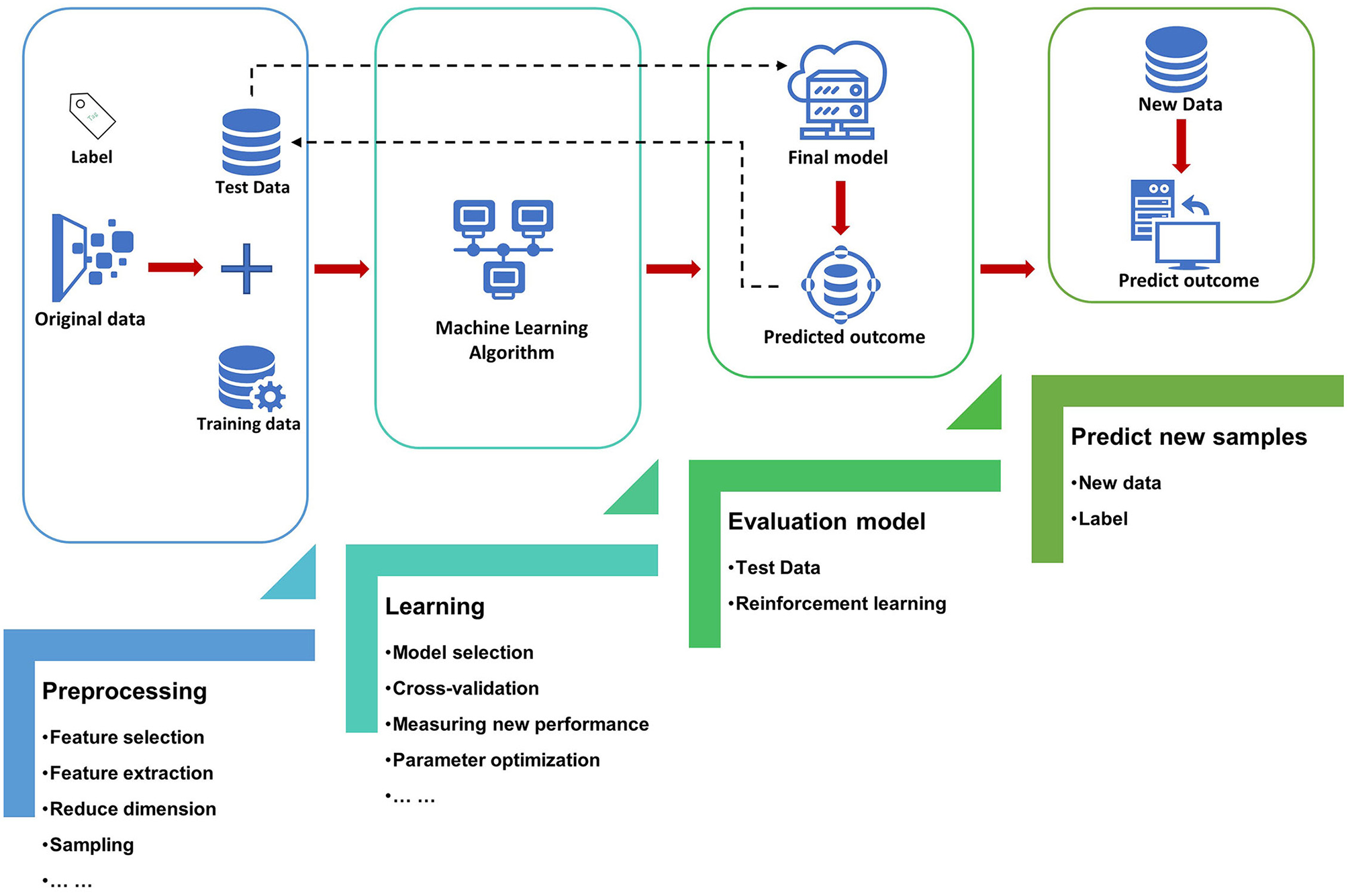
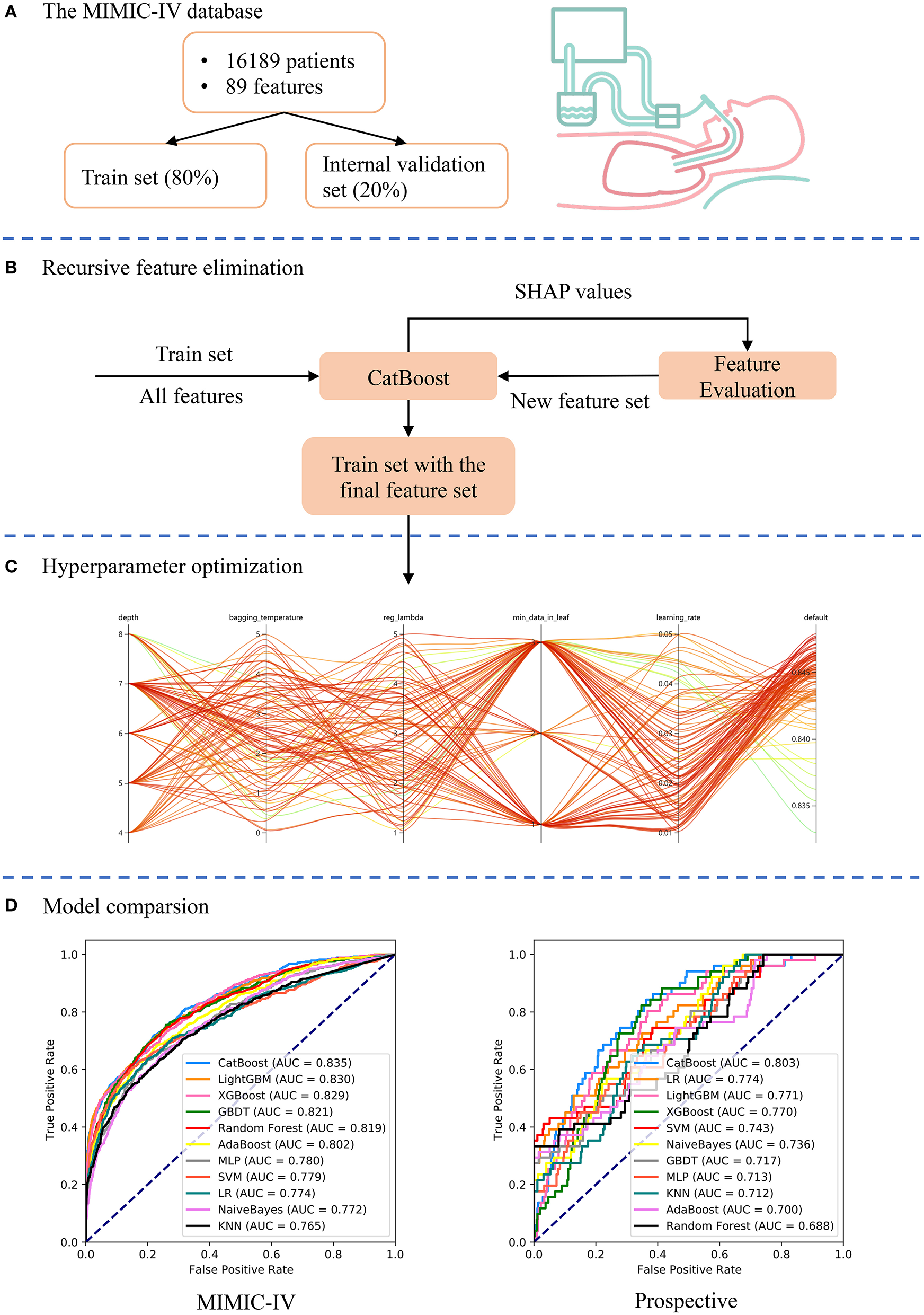
Analytics based on artificial intelligence (AI) has greatly advanced a variety of scientific research fields such as natural language processing, imaging classification and signal processing (1). Clinical research is also revolutionized by the development of artificial intelligence (2), and conventional research paradigm is being supplemented by the new technology. Conventional treatment strategy based on evidence-based medicine typically exploits the average treatment effect in a population to dictate medical decision making(3). However, it is well known that a patient population is usually heterogeneous that one size does not fit all. In other words, although a treatment strategy is reported to be beneficial for the overall population, it might be harmful for a subgroup of patients. Thus, the idea of individualized treatment is proposed to address the problem of differential treatment effects in a heterogeneous population. Patients in emergency and critical care setting are usually heterogenous and the clinical condition changes rapidly (4,5), which highlights the importance of early risk stratification and individualized treatment.Artificial intelligence can be applied in three aspects in the emergency and critical care setting. These three aspects have been well captured in this research topic entitled "Clinical Application of Artificial Intelligence in Emergency and Critical Care Medicine, Volume I", which has been successfully launched in Frontiers in Medicine. First, several studies developed prediction models for risk stratification in the critical care setting. Different clinical risks are defined in a variety of study populations such as mortality prediction in surgical ICU patients, risk of blood transfusion in liver transplantation, and risk of coagulopathy in sepsis. Collectively, these studies exploited the supervised learning algorithm to train a prediction model (6). The clinical events of interest/labels must be unambiguously defined. Misclassification in the database will cause model instability or inaccuracy for the prediction in future samples (7). The second category of study is to disentangle heterogenous population into more homogenous subgroups by using unsupervised machine learning algorithms (8). The algorithms differ from the supervised learning methods in that they do not require the samples being labeled in advance. Instead, they exploit the features to classify samples into separatable subgroups/subtypes. The subgroups of patients can have prognostic and predictive enrichment. Prognostic enrichment indicates different subgroups have different risk of clinical outcome events, whereas the predictive enrichment indicates that different subgroups can have different responses to a particular intervention. In this collection of articles, Zhang S and colleagues explored the subphenotyes of acute respiratory distress syndrome and found that Rosuvastatin has differential treatment effect across these subphenotypes. Chen H and colleagues developed a novel clinical classification system for SARS-CoV-2 Pneumonia, which showed prognostic enrichment for mortality outcome. They further developed a parsimonious class membership prediction model for the ease of clinical utility. The third type of clinical scenario is to employ reinforcement learning algorithm to dictate treatment regimen in sequential manner (9,10). This methodology is not used in the current collection of articles. The key idea underlying this application is that the treatment strategy should be tailored sequentially according to the changes of patient's status. The interactions between treatment action, patient state, and reward are formalized in a dynamic process, so as to maximize the final outcome reward. Alternatively, the dynamic treatment regime (DTR) model adapts the idea of reinforcement learning to estimate a sequence of decision rules, one per stage of intervention, that dictate how to individualize treatments to patients based on evolving treatment and covariate history. DTR relaxes the model complexity and are more acceptable to the field of medical epidemiology. This model has been utilized in critical care setting to tailor fluid resuscitation in sepsis and ventilation strategy in acute respiratory failure (10,11).Since the advances in machine learning algorithms have greatly revolutionized the industry, the technology can surely influence how we treat patients in the emergency and critical care setting.However, the application of AI in clinical practice is still in its infancy and requires more research efforts. Several key aspects that hinder the utility of AI models in clinical practice include but not limit to the quality of training datasets, institutional idiosyncrasy, and model overfitting (12). That is why some models show good performance in the training dataset but perform poorly in new samples. The model might learn something specific to an institution/hospital, but not the underlying true pathophysiological processes. The second issue relates to the model interpretability. Although AI models can improve prediction accuracy in some situations, a notorious drawback of these models are their black box nature prohibiting easy interpretation of the predicted outcome (13,14). Physicians are less likely to adopt a recommendation made by the machine while the underlying pathophysiology is unknown or uninterpretable. Due to the importance and the potential impact of artificial intelligence on the emergency and critical care setting, we launch a second volume of the research topic. We welcome more studies to address the above-mentioned problems in applying ML in clinical practice. Successful settlement of these issues will hopefully transform more research models into real clinical practice.


11 Authors
- QZ
Qin-Yu Zhao
College of Engineering and Computer Science, Australian National University, Australia
- HW
Huan Wang
Department of Critical Care Medicine, Zhongshan Hospital, Fudan University, China
- JL
Jing-Chao Luo
Department of Critical Care Medicine, Zhongshan Hospital, Fudan University, China
- ML
Ming-Hao Luo
Shanghai Medical College, Fudan University, China
- LL
Le-Ping Liu
Department of Blood Transfusion, The Third Xiangya Hospital of Central South University, China
- SY
Shen-Ji Yu
Department of Critical Care Medicine, Zhongshan Hospital, Fudan University, China
- KL
Kai Liu
Department of Critical Care Medicine, Zhongshan Hospital, Fudan University, China
- YZ
Yi-Jie Zhang
Department of Critical Care Medicine, Zhongshan Hospital, Fudan University, China
- PS
Peng Sun
Artificial Intelligence Institute, Shanghai Jiao Tong University, China
- GT
Guo-Wei Tu
Department of Critical Care Medicine, Zhongshan Hospital, Fudan University, China
- ZL
Zhe Luo
Department of Critical Care Medicine, Zhongshan Hospital, Fudan University, China