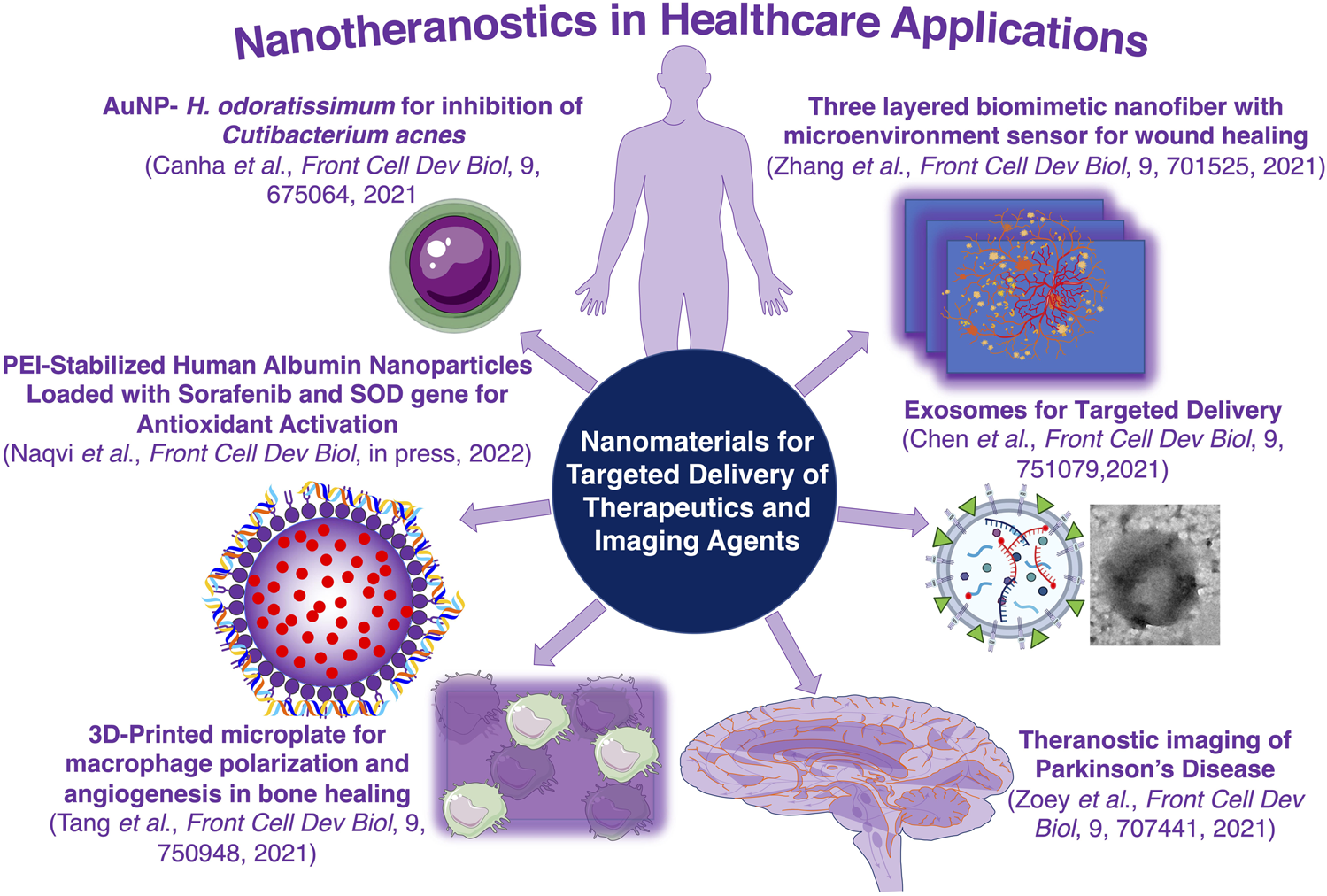
Parkinson's disease (PD) is a common age-related neurodegenerative disorder. A progressive growth of patients with PD is increasing in several developed countries and putting a tremendous healthcare burden. The aggregation of α-synuclein in the brain is the main cause for the neuronal dysfunction in this disease. There are no successful therapies available, and there are deliveryand toxicity-associated problems that limit the curative application of existing drugs. The blood brain barrier also postulates another major challenge in delivering effective doses of drugs for treating this disease. Nanotechnology, overcoming many of these barriers, has been explored in many drug delivery applications. Recently, various theranostic agents have been developed for monitoring delivered drugs for their biodistribution and functional effect by imaging. In this regard, a review manuscript by Zoey et al., provided information on the use of various nanomaterials for theranostic applications in early diagnosis and theranostic agents targeting α-synuclein for improving cognitive functions in patients with PD. They addressed the mechanism of disease development, list of diagnostics, therapeutics, and imaging strategies available for targeting PD using both preclinical and clinical imaging modalities. This review also briefly discussed the BBB related issues in therapeutic deliveries, and how antibody conjugated nanoparticles (SPION) can improve delivery across BBB.Exosomes are cell-secreted nanovesicles (generally with a size of 30-150 nm) loaded with cellular cargos as a natural communication system between cells, located at the distant parts of the body. Based on the biogenesis and the loaded cellular cargos, these exosomes are highly variable, and which determine their biological properties. Recently, exosomes and extracellular vesicles of various sizes have been extensively evaluated for distinguishing their biological function in various disease conditions and for application of these particles as drug delivery agents. A wide variety of mechanical extrusion processes, electroporation, sonication, etc., are currently being adopted for loading therapeutic drugs and imaging agents to the vesicles for biological applications. Exosomes, based on the cell type from which they are isolated, bear different biological properties, starting from anticancer to immunomodulatory. Carrier exosomes hold promise as advanced platforms for targeted drug/gene delivery, owing to their unique properties, such as innate stability, low immunogenicity, and excellent tissue/cell penetration capacity. However, their practical applications can be limited due to an insufficient targeting ability or low efficacy in some cases. The review manuscript by Chen et al., extensively discussed the story around exosomes starting from their biogenesis, loaded cargos, biological functions, method of drug loading, and applications in various diseases. Overall, this special issue provides a consolidated knowledge on the theranostic value of various nanomaterials and the associated technologies in healthcare applications. gold nanoparticles for biomedicine, Chem. Soc. Rev., 2012,41, 2740-2779