Inflammatory immune disease: Molecular Mechanisms, Translational Approaches and Therapeutics

1mviews
Network Pharmacology and Molecular Docking Analysis on Molecular Mechanism of Qingzi Zhitong Decoction in the Treatment of Ulcerative Colitis
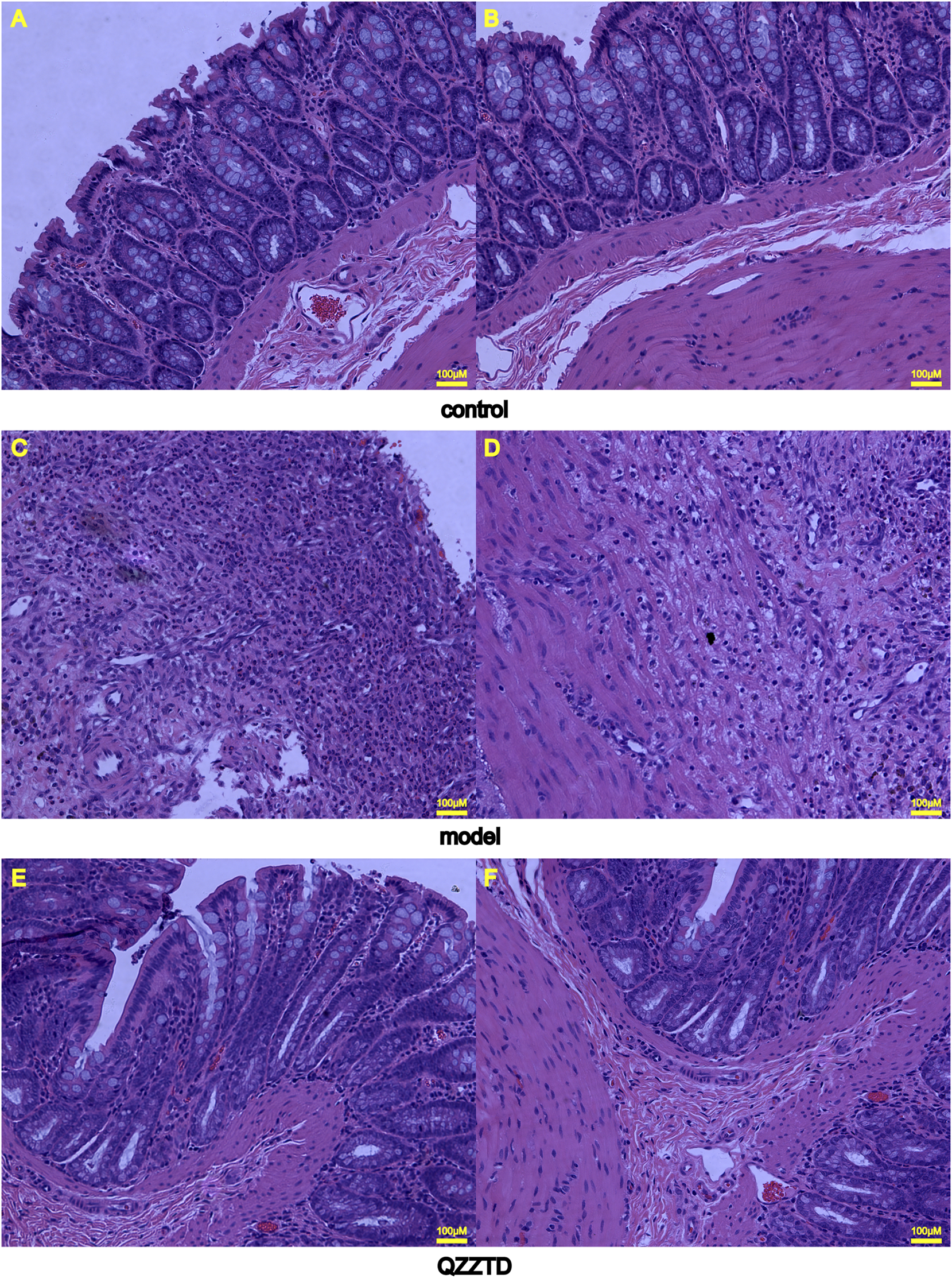
Ulcerative colitis (UC) is a disease with complex pathological mechanisms. We explored the potential molecular mechanisms behind the therapeutic functions of Qingzi Zhitong Decoction (QZZTD) in the treatment of UC by network pharmacology and molecular docking. QZZTD is a formula of Chinese traditional medicine consisted of 10 herbs. The potential active ingredients of QZZTD and their target genes were obtained from the Traditional Chinese Medicine Systems Pharmacology Database and Analysis Platform database, and UC-related target genes were obtained from the GeenCards and OMIM databases. A total of 138 co-identified target genes were obtained by plotting the intersection target Venn diagram, and then the STRING database and Cytoscape software were used to establish protein-protein interaction networks and herb-ingredient-target networks. Four key active compounds and nine key proteins were identified. Then Gene Ontology and Kyoto Encyclopedia of Genes and Genomes enrichment analyses showed that the biological functions of potential target genes were associated with DNA transcription, signaling receptor and ligand activity, cytokine activity, cellular autophagy, and antioxidant pathways, with related pathways involving Phosphatidylinositol 3-kinase (PI3K)-Akt signaling pathway, the advanced glycosylation end product (AGE)-RAGE signaling pathway, tumor necrosis factor (TNF) signaling pathway, and IL-17 signaling pathway. Moreover, the binding activities of key target genes and essential active compounds of Chinese herbal medicines in QZZTD were further validated by molecular docking. This demonstrated that quercetin, luteolin, hyndarin, and beta-sitosterol had good binding to eight key proteins, and Akt1 was the target protein with the best binding activity, suggesting that Akt1 could be the essential mediator responsible for signaling transduction after QZZTD administration. The rat experiment verified that QZZTD inhibited PI3K-AKt pathway activation, reduced inflammation in UC. In conclusion, our study suggested four potential key active components, such as quercetin, were identified in QZZTD, which could interact with Akt1 and modulate the activation of the PI3K-Akt pathway. The other three pathways may also be involved in the signaling transduction induced by QZZTD in the treatment of UC.

9,298 views

28 citations

ORIGINAL RESEARCH
17 March 2022
Emodin Protects Against Lipopolysaccharide-Induced Acute Lung Injury via the JNK/Nur77/c-Jun Signaling Pathway
Pei Xie, 11 more and Lin-Zhong Yu

7,236 views

31 citations

ORIGINAL RESEARCH
16 November 2021
The Identification of the Biomarkers of Sheng-Ji Hua-Yu Formula Treated Diabetic Wound Healing Using Modular Pharmacology
Jing-Si Jiang, 13 more and Le Kuai

5,911 views

10 citations

ORIGINAL RESEARCH
25 October 2021
Clinical Characteristics and Inflammatory Immune Responses in COVID-19 Patients With Hypertension: A Retrospective Study
Chaoran Wu, 6 more and Changhui Wang

2,702 views

5 citations

Sphingosine kinase 1(SphK1) a key enzyme that catalyzes the conversion of sphingosine (Sph) to sphingosine 1-phosphate (S1P), so as to maintain the dynamic balance of sphingolipid-rheostat in cells and participate in cell growth and death, proliferation and migration, vasoconstriction and remodeling, inflammation and metabolism. The normal expression of SphK1 maintains the balance of physiological and pathological states, which is reflected in the regulation of inflammatory factor secretion, immune response in traditional immune cells and non-traditional immune cells, and complex signal transduction. However, abnormal SphK1 expression and activity are found in various inflammatory and immune related-diseases, such as hypertension, atherosclerosis, Alzheimer's disease, inflammatory bowel disease and rheumatoid arthritis. In view of the therapeutic potential of regulating SphK1 and its signal, the current research is aimed at SphK1 inhibitors, such as SphK1 selective inhibitors and dual SphK1/2 inhibitor, and other compounds with inhibitory potency. This review explores the regulatory role of over-expressed SphK1 in inflammatory and immune related-diseases, and investigate the latest progress of SphK1 inhibitors and the improvement of disease or pathological state.

13,252 views

66 citations

ORIGINAL RESEARCH
14 October 2021
Dihydrotanshinone I Specifically Inhibits NLRP3 Inflammasome Activation and Protects Against Septic Shock In Vivo
Ziying Wei, 17 more and Junling Cao

4,724 views

28 citations

4,910 views

24 citations

ORIGINAL RESEARCH
11 October 2021
Tnfaip6 Secreted by Bone Marrow–Derived Mesenchymal Stem Cells Attenuates TNBS-Induced Colitis by Modulating Follicular Helper T Cells and Follicular Regulatory T Cells Balance in Mice
Guangli Gu, 9 more and Xiaoping Lv

4,648 views

24 citations

REVIEW
5 October 2021
The Role of IL-36 in the Pathophysiological Processes of Autoimmune Diseases
Wen-jian Chen, 6 more and Hai-wen Li

7,293 views

27 citations

Advances About Immunoinflammatory Pathogenesis and Treatment in Diabetic Peripheral Neuropathy
REVIEW
4 October 2021
Advances About Immunoinflammatory Pathogenesis and Treatment in Diabetic Peripheral Neuropathy
Tianyu Xue, 5 more and Min Yu
Most diabetic patients develop diabetes peripheral neuropathy (DPN). DPN is related to the increase of inflammatory cells in peripheral nerves, abnormal cytokine expression, oxidative stress, ischemia and pro-inflammatory changes in bone marrow. We reviewed the immunological mechanism of DPN, and summarized the research progress of DPN drug therapy in recent years.

10,177 views

73 citations

REVIEW
29 September 2021
Mechanistic Insight into PPARγ and Tregs in Atherosclerotic Immune Inflammation
Zhao Gao, 10 more and Bo Nie

7,376 views

47 citations

REVIEW
23 September 2021
Research Progress About Glioma Stem Cells in the Immune Microenvironment of Glioma
Xiangyu Li, 5 more and Xun Wang

5,987 views

21 citations