pharmacological activities. The metabolites provide a great resource to develop new potential drugs.The pathological mechanisms of bone and cartilage diseases, such as osteoporosis and osteoarthritis, are orchestrated by dysregulated signaling pathways, which disrupt the homeostasis by the induction of catabolic factors as well as down regulation of anabolic factors. A large number of studies reveal that many signaling pathways, such as NF-κB pathway, MAPK pathway, TLR pathway, Wnt/β-catenin, TGF-β, and Notch pathways, have been involved in regulating the development of bone and cartilage diseases, and the key factors in these pathways might be potential targets for new drugs development.Thus, understanding the underlying molecular mechanisms offers an avenue for researchers to explore the potential interaction between secondary metabolites and bone and cartilage diseases. The research topic entitled "Bone and Cartilage Diseases -The Role and Potential of Natural Products" included 10 original research, 5 review and 1 clinical trial.
Osteoporosis is a common metabolic bone disease, including bone loss due to postmenopausal, senile, and secondary osteoporosis. Although there are many therapeutic drugs available for osteoporosis treatment including bisphosphonates, calcitonin, and parathyroid hormone, the long-term use of these drugs may produce inherent side effects. It is imperative to search for alternative natural compounds (Wang et al., 2017).
Bone is one of the organs with regenerative ability. Fracture repair usually restores a damaged bone to its pre-injury state. However, approximately 10% of fractures do not heal properly (Einhorn and Gerstenfeld, 2015). It is important to develop drugs for fracture healing. Ginsenoside compound K improved fracture repair in rat open femoral fracture model (Ding et al.). Mechanically, Ginsenoside compound K promoted osteogenic differentiation of bone marrow mesenchymal stem cells through activating Wnt/β-catenin signaling pathway. In addition, Ginsenoside compound K increased the tube formation capacity of human umbilical vein endothelial cells (HUVECs) and angiogenesis during fracture healing.
Osteonecrosis of femoral head (ONFH), a progressive hip joint disorder, is associated with impaired blood supply to the femoral head. The pathogenesis mechanism of ONFH is not fully elucidated (Rezus et al., 2021). Peng et al. found that serum amyloid A (SAA), an acute phase lipophilic protein, increased significantly in the serum of ONFH patients. SAA inhibited osteogenic differentiation and promoted the adipogenic differentiation of MSCs. In vivo results showed that SAA reduced new bone formation. Thus, SAA is a vital protein in the physiological process of ONFH and may be a potential therapeutic target. Huo Xue Tong Luo (HXTL) capsule is composed of seven herbs, including Cajan
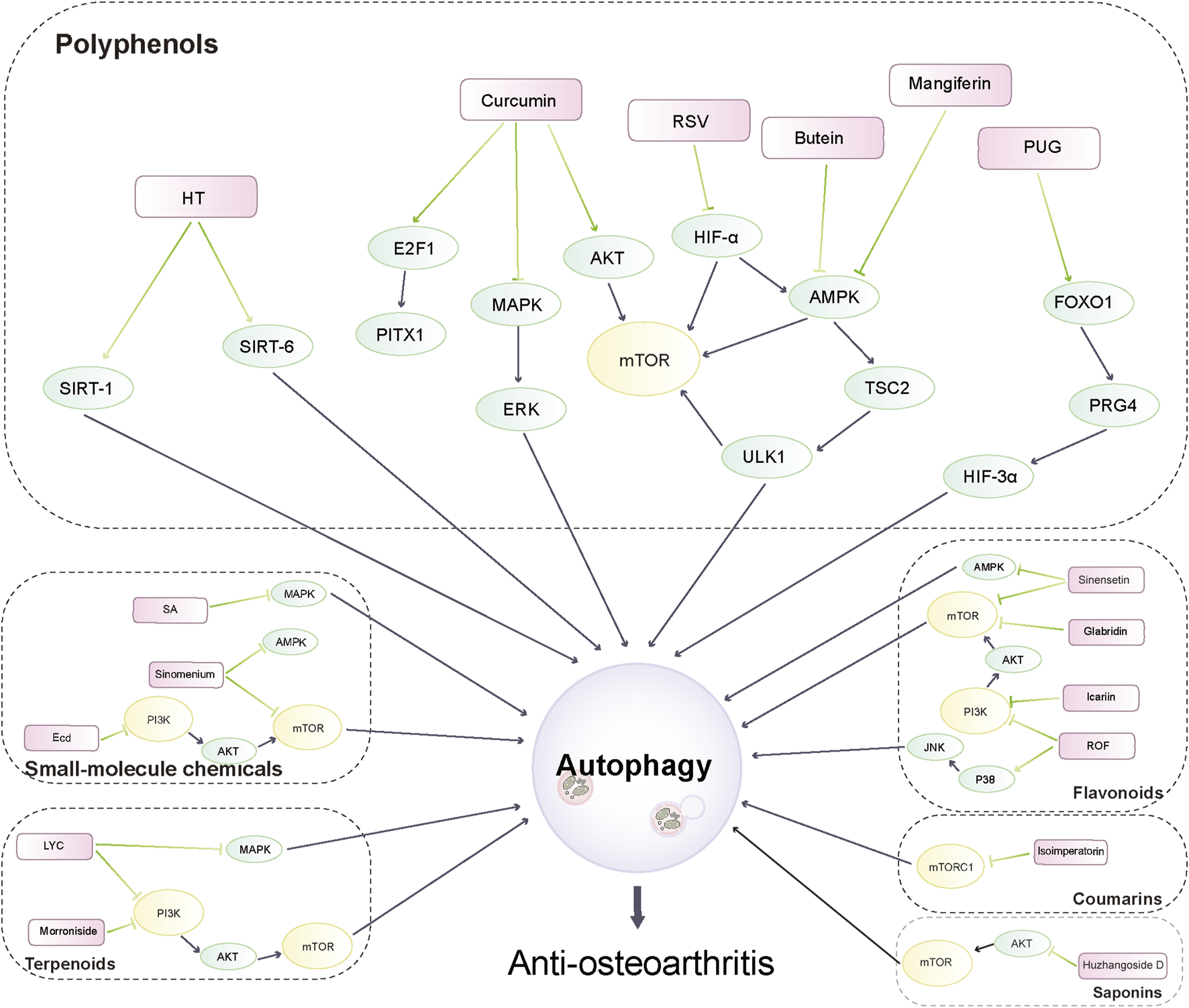
Osteoarthritis (OA) is a progressive arthrosis disease characterized by subchondral bone damage, synovitis, and articular cartilage degradation. More than 10% of people under the age of 60 worldwide suffers from OA (Runhaar et al., 2015). In this research topic, three reviews and two original studies focused on OA. Phytochemicals for OA treatment were reviewed by Tian et al, who demonstrated that many phytochemicals exhibited therapeutic effects against OA by mediating relevant autophagy-related (Rahmati et al., 2017). Zheng et al. showed that xanthohumol is a naturally occurring prenylflavonoid derived from hops and beer and inhibited the mechanical stimulation-induced ECM degradation by mediating the GAS5/miR-27a signaling pathway in OA chondrocytes.
Rheumatoid arthritis (RA) is an autoimmune disease characterized by joint inflammation, followed by cartilage destruction and bone erosion (Jang et al., 2022). The study by Chen et al. demonstrated that kefir peptides alleviated collagen-induced arthritis in the mouse models by inhibiting dendritic cells maturation and inflammatory cytokine release. The kefir peptides may be potential for the clinical use in RA patients.
In conclusion, the research topic comprising a collection of 16 articles presents the roles of many natural products for treatment of bone and cartilage diseases. The natural products have shown great prospects for the development of new drugs, which may become new and/or alternative treatment for bone and cartilage diseases.
DX finished the drafting of the editorial. LW and QC provided critical comments and revisions.