Background: Currently, percutaneous coronary intervention (PCI) and coronary artery bypass grafting (CABG) are commonly used in the treatment of coronary atherosclerotic heart disease. But the optimal timing for coronary artery bypass grafting after acute myocardial infarction (AMI) is still controversial. The purpose of this article was to evaluate the optimal timing for CABG in AMI). Methods: We searched the PubMed, Embase and Cochrane library databases for documents that met the requirements. The primary outcome was the in-hospital mortality. The secondary outcomes were perioperative MI incidence and cerebrovascular accident incidence. Results: The search strategy produced 1,742 studies, of which 19 studies (including data from 113,984 participants) were included in our analysis. The OR of in-hospital mortality between early 24 h CABG and late 24 h CABG group was 2.65 (95%CI: 1.96 to 3.58; P<0.00001). In both STEMI and undefined STEMI/NSTEMI subgroup, the mortality in the early 24 h CABG group (OR: 2.62; 95% CI: 1.58 to 4.35; P=0.0002. vs. OR: 3.88; 95%CI: 2.69 to 5.60; P<0.00001) was significantly higher than the late 24 h CABG group. However, the mortality of early 24 h CABG group (OR: 1.24; 95%CI: 0.83 to 1.85; P=0.29) was not significantly different from that of late 24 h CABG group in NSTEMI group. The OR of in-hospital mortality between early 48 h CABG and late 48 h CABG group was 1.91 (95%CI: 1.11 to 3.29; P=0.02). In the undefined STEMI/NSTEMI subgroup, the mortality in the early 48 h CABG group (OR: 2.84; 95%CI: 1.31 to 6.14; P<0.00001) was higher than the late 48 h CABG group. The OR of perioperative MI and cerebrovascular accident between early CABG and late CABG group were 1.38 (95%CI: 0.41 to 4.72; P=0.60) and 1.31 (95%CI: 0.72 to 2.39; P=0.38), respectively. Conclusions: The risk of early CABG could be higher in STEMI patients, and CABG should be delayed until 24 h later as far as possible. However, the timing of CABG does not affect mortality in NSTEMI patients. There was no statistical difference in perioperative MI and cerebrovascular accident between early and late CABG.
12,976 views

14 citations

CLINICAL TRIAL
15 March 2022
1-Year Outcomes of a Multicenter Randomized Controlled Trial of the Ankura II Thoracic Endoprosthesis for the Endovascular Treatment of Stanford Type B Aortic Dissections
Chang Shu, 18 more and Feng Gu

3,521 views

3 citations

2,619 views

6 citations

ORIGINAL RESEARCH
23 February 2022
Comparison of Single Axillary vs. Dual Arterial Cannulation for Acute Type a Aortic Dissection: A Propensity Score Matching Analysis
Yi Chang, 8 more and Yi Shi

2,787 views

8 citations

ORIGINAL RESEARCH
18 February 2022
Blood Urea Nitrogen-to-Albumin Ratio in Predicting Long-Term Mortality in Patients Following Coronary Artery Bypass Grafting: An Analysis of the MIMIC-III Database
Diming Zhao, 8 more and Xiaochun Ma

4,765 views

16 citations

ORIGINAL RESEARCH
17 January 2022
Clinical and Surgical Evaluations of Reoperation After Mechanical Mitral Valve Replacement Due to Different Etiologies
Jiehui Li, 5 more and Qibin Yu

2,530 views

6 citations

REVIEW
5 January 2022
Benefits and Pitfalls of the Perceval Sutureless Bioprosthesis
Aleksander Dokollari, 6 more and Massimo Bonacchi

13,212 views

32 citations

ORIGINAL RESEARCH
17 December 2021
One-Stop Hybrid Coronary Revascularization Versus Off-Pump Coronary Artery Bypass Grafting in Patients With Multivessel Coronary Artery Disease
Dongjie Li, 8 more and Pixiong Su

3,431 views

12 citations

ORIGINAL RESEARCH
23 December 2021
Incidence, Risk Factors and Outcomes of Postoperative Headache After Stanford Type a Acute Aortic Dissection Surgery
Dashuai Wang, 12 more and Anchen Zhang

4,163 views

7 citations

ORIGINAL RESEARCH
10 January 2022
Lysophosphatidic Acid May Be a Novel Biomarker for Early Acute Aortic Dissection
Xiaogao Pan, 9 more and Xiangping Chai

3,002 views

8 citations

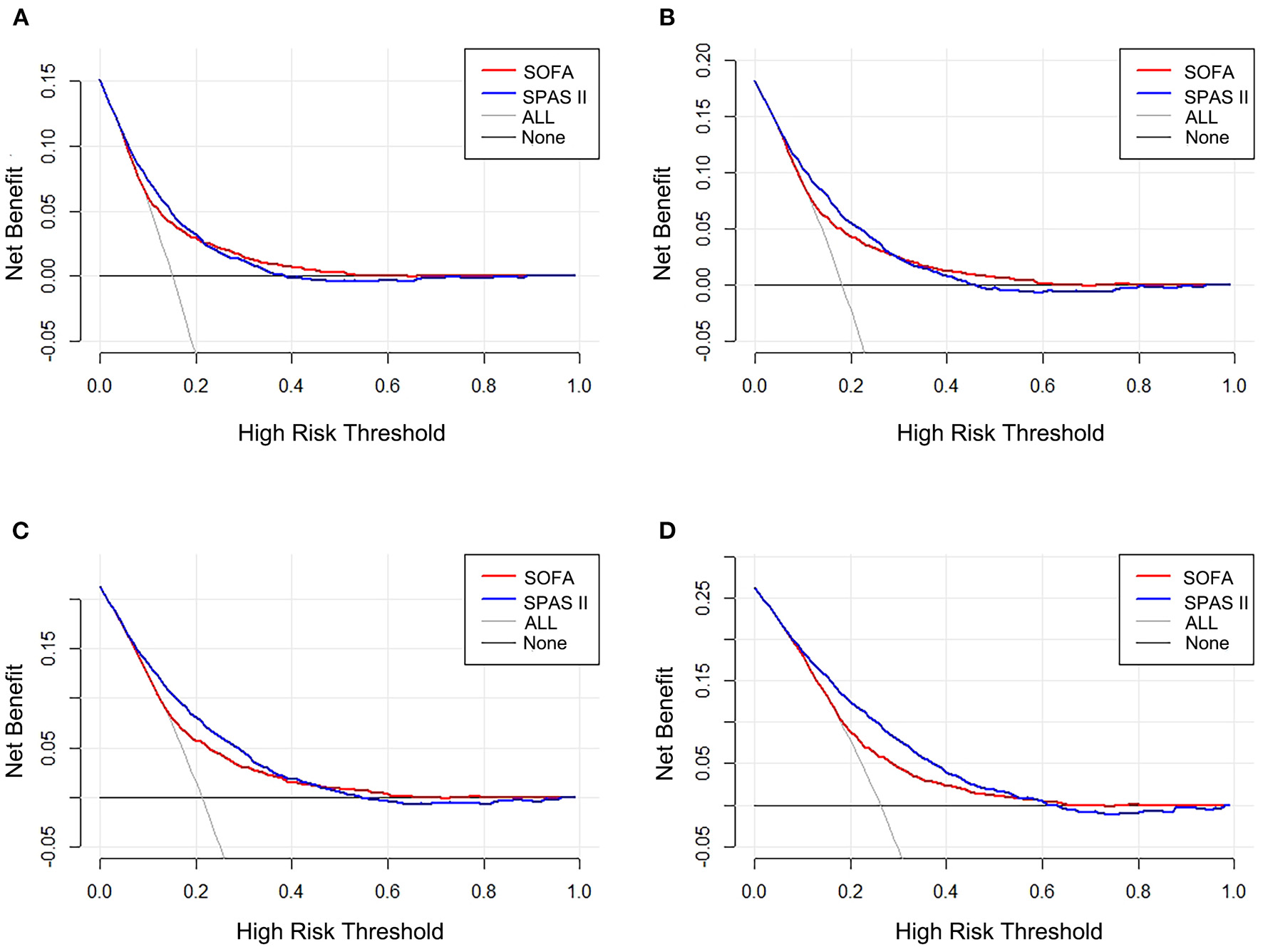
Background: The aim of study is to assess the performance of sequential organ failure assessment score (SOFA) and simplified acute physiology score (SAPS II) on outcomes of patients with cardiac surgery and identify the cut-off values to provide reference for early intervention. Methods: All data were extracted from MIMIC-III (Medical Information Mart for Intensive Care-III) database. Cut-off values were calculated by receiver operating characteristic curve and Youden indexes. Patients were grouped respectively according to the cut-off values of SOFA and SAPS II. Non-adjust model and adjust model were established to evaluate prediction of risk. Comparison of clinical efficacy between two scoring systems was conducted by decision curve analysis (DCA). The primary outcomes of this study were in-hospital mortality, 28-day mortality, 90-day mortality and one-year mortality after cardiac surgery. The secondary outcomes included length of hospital stay and intensive care unit (ICU) stay, the incidence of acute kidney injury (AKI) within 7 days after ICU admission. Results: A total of 6122 patients were collected and divided into H-SOFA group (SOFA≥7) and L-SOFA group (SOFA<7) or H-SAPS II group (SAPS II ≥43) and L-SAPS II group (SAPS II <43). In-hospital mortality, 28-day mortality, 90-day mortality and one-year mortality were higher, the length of hospital and ICU stay were longer in H-SOFA group than L-SOFA group (p<0.05), while the incidence of AKI was not significantly different. In-hospital mortality, 28-day mortality, 90-day mortality, one-year mortality and the incidence of AKI were all significantly higher in H-SAPS II group than L-SAPS II group (p<0.05). Hospital stay, ICU stay were longer in H-SAPS II group than L-SAPS II group (p<0.05). According to DCA, SAPS II scoring system had more net benefits on prognosing long term mortality compared with SOFA scoring system. Conclusion: Exceeding the cut-off values of SOFA and SAPS II score could lead to increased mortality and extended length of ICU and hospital stay. The SAPS II scoring system had a better discriminative performance of 90-day mortality and one-year mortality in post-cardiac surgery patients than SOFA scoring system. Emphasizing the critical value of scoring system is of significance for timely treatment.

4,105 views

21 citations

ORIGINAL RESEARCH
1 December 2021
ΔPCO2 and ΔPCO2/C(a−cv)O2 Are Not Predictive of Organ Dysfunction After Cardiopulmonary Bypass
Sheng Zhang, 9 more and Rong-Hai Lin

3,047 views

12 citations

Incidence- and In-hospital Mortality-Related Risk Factors of Acute Kidney Injury Requiring Continuous Renal Replacement Therapy in Patients Undergoing Surgery for Acute Type a Aortic Dissection
ORIGINAL RESEARCH
23 November 2021
Incidence- and In-hospital Mortality-Related Risk Factors of Acute Kidney Injury Requiring Continuous Renal Replacement Therapy in Patients Undergoing Surgery for Acute Type a Aortic Dissection
Xuelian Chen, 8 more and Lichuan Yang
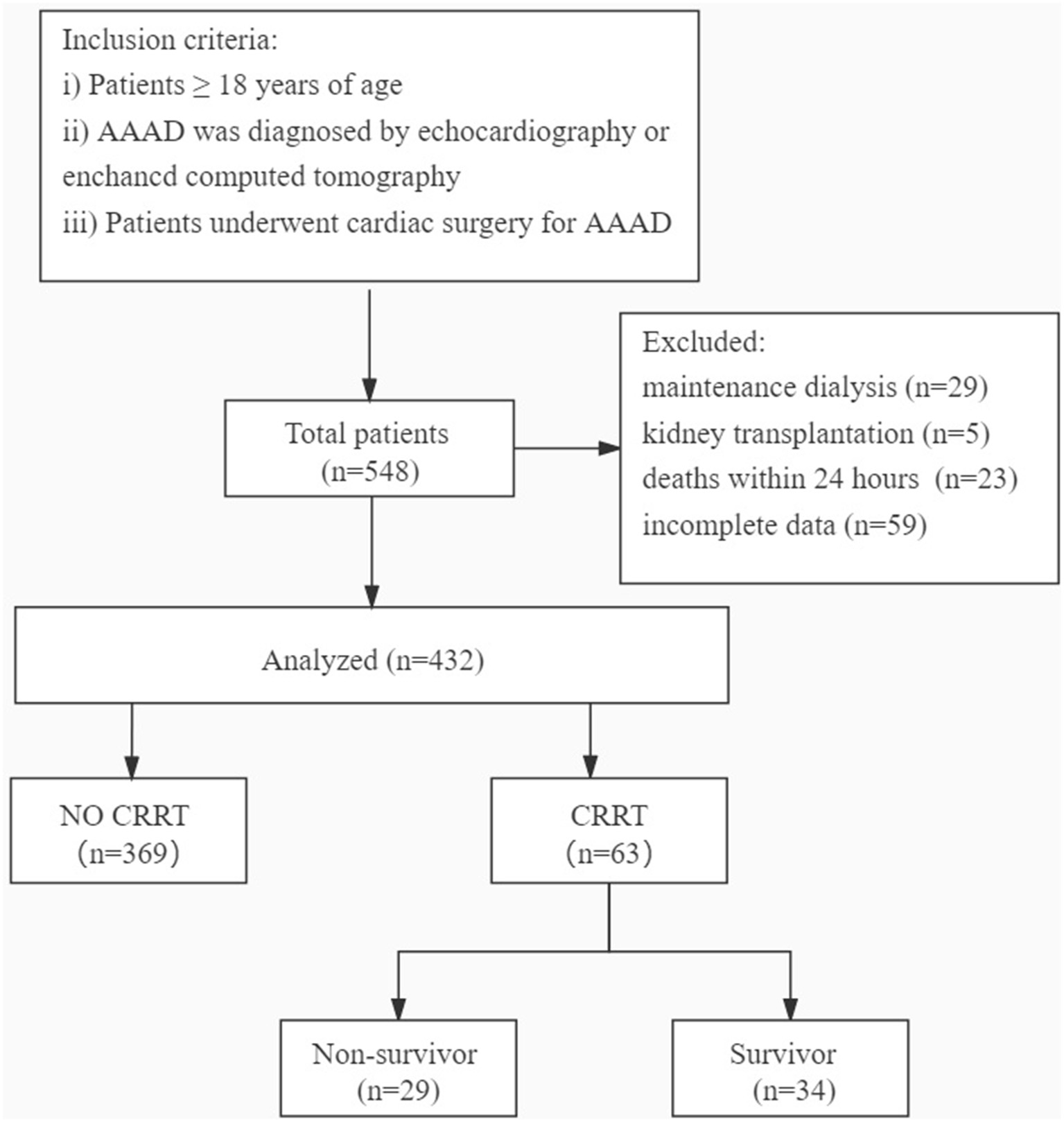
Background: Few studies on risk factors for postoperative CRRT in a homogeneous population of patients with AAAD. This retrospective analysis aimed to investigate risk factors for CRRT and in-hospital mortality in patients undergoing AAAD surgery and to discuss perioperative comorbidities and short-term outcomes. Methods: The study collected electronic medical records and laboratory data from 432 patients undergoing surgery for acute type A aortic dissection between March 2009 and June 2021. All patients were divided into CRRT and non-CRRT groups; those in the CRRT group were divided into survivor and non-survivor groups. Univariate and multivariate analysis were used to identify independent risk factors for CRRT and in-hospital mortality. Results: The proportion of requiring CRRT and in-hospital mortality in CRRT patients, were 14.6% and 46.0%, respectively. Baseline serum creatinine (odds ratio (OR), 1.006), cystatin C (OR, 1.438), lung infection (OR, 2.292,), second thoracotomy (OR, 5.185), diabetes Mellitus (OR, 6.868), AKI stage 2-3 (OR, 22.901) were the independent risk factors for receiving CRRT. In-hospital mortality in the CRRT group (46%) was 4.6 times higher than in the non-CRRT group (10%). In the non-survivor (n=29) and survivor (n=34) groups, New York Heart Association (NYHA) class III-IV (OR, 10.272, P=0.019), lactic acidosis (OR, 10.224, P=0.019) were the independent risk factors for in-hospital mortality in patients receiving CRRT. Conclusion: There was a high rate for requiring CRRT and high in-hospital mortality after AAAD surgery. Clinicians should improve patient prognosis and reduce mortality through better preoperative preparation and management of complications. Further randomised controlled studies are urgently needed to establish the risk factors for CRRT and in-hospital mortality.

3,607 views

21 citations

Introduction: Diabetes Mellitus is a well-defined risk factor for cardiovascular and peripheral vascular disease, as the abnormal metabolic state increases the risk for atherosclerosis, occlusive arterial disease and vascular dysfunction. It has been reported across the literature of the potential association between diabetes mellitus and aortic aneurysm, with the former having protective effects on the development of the latter. Methods: A thorough literature search was performed through electronic databases, to provide a comprehensive review of the study’s reporting on the association of diabetes mellitus and aortic aneurysm, discussing the mechanisms that have been reported; furthemore, we reviewed the reports of the impact of oral hypoglycameic agents on aortic aneurysms. Results: Various proposed mechanisms are involved in this protective process including endothelial dysfunction, chronic hyperglycaemia and insulin resistance. The evidence suggests an inverse association between diabetes mellitus and abdominal aortic aneurysms. The increase in advanced glycation end products, increased arterial stiffness and vascular remodelling seen in diabetes, was found to have a profound impact on aneurysm development, its slow progression and lower rupture rate in these individuals. This review has also highlighted the role of oral hypoglycaemic agents having a protective effect against AA disease. Conclusion: A decrease in development, progression and mortality from aortic aneurysms and a lower rate of aortic dissection have been observed in those with diabetes. This review has provided a comprehensive insight on the effect of diabetes and its physiological processes, and elements of its con-committant treatment, having a protective role against these aortic diseases.

8,855 views

39 citations

Application of Homograft Valved Conduit in Cardiac Surgery
Valved conduits often correct the blood flow of congenital heart disease by connecting the right ventricle to the pulmonary artery (RV-PA). The homograft valved conduit was invented in the 1960s, but its wide application is limited due to the lack of effective sterilization and preservation methods. Modern cryopreservation prolongs the preservation time of homograft valved conduit, which makes it become the most important treatment at present, and is widely used in Ross and other operations. However, homograft valved conduit has limited biocompatibility and durability and lacks any additional growth capacity. Therefore, decellularized valved conduit has been proposed as an effective improved method, which can reduce immune response and calcification, and has potential growth ability. In addition, as a possible substitute, commercial xenograft valved conduit has certain advantages in clinical application, and tissue engineering artificial valved conduit needs to be further studied.

12,890 views

24 citations

ORIGINAL RESEARCH
18 October 2021
Application of a Novel Common-Iliac-Artery Skirt Technology (CST) in Treating Challenge Aorto-Iliac or Isolated Iliac Artery Aneurysms
Lunchang Wang, 12 more and Likun Sun

4,239 views

3 citations