2D Nanoarchitectures for Sensing/Biosensing Applications

65kviews
2D Nanoarchitectures for Sensing/Biosensing Applications
Editorial06 September 2022
2D Nanoarchitectures for Sensing/Biosensing Applications

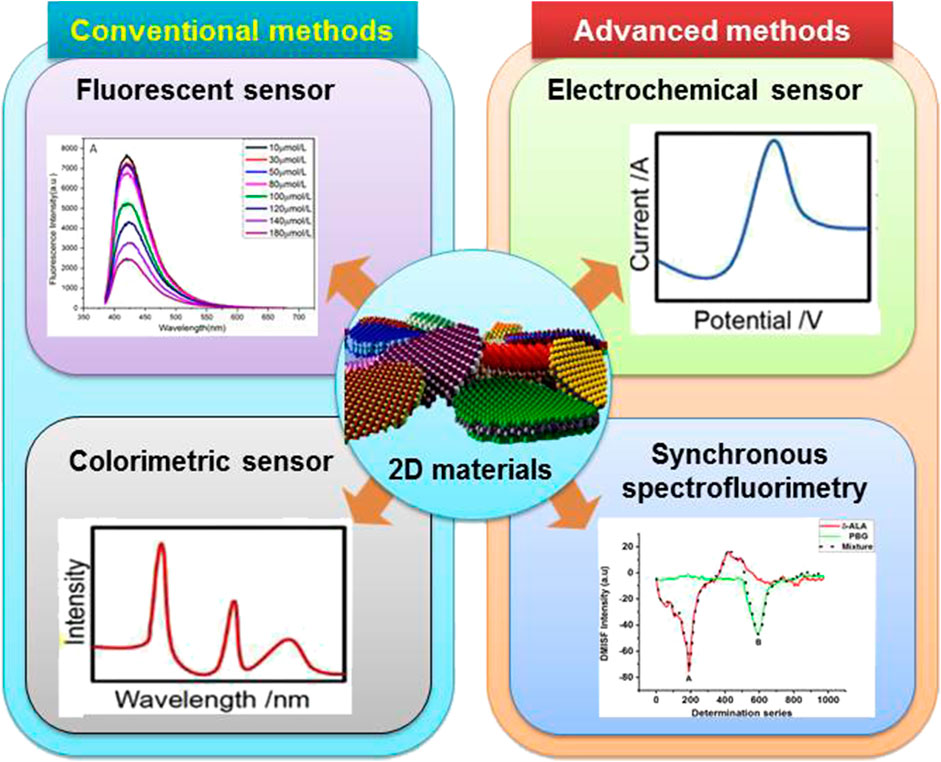
In analytical chemistry, sensing and biosensing are one of the important research areas to carry out the analysis of various target analytes (Hermawan et al., 2021). The growth of number of analytes that can be detected using different approaches and a rather large number of sensing platforms that produce analytically beneficial outcomes are accountable for that firm stance (Asif et al., 2018). Sensing and biosensing techniques are becoming highly sensitive, specific, more complex and multitasking (Zhang et al., 2020). Among various nanomaterials, 2D nanostructures possess encouraging application potential in in-vitro detection of small biological molecules, neurotransmitters and proteins as biomarkers which in turn propose different clear-cut ways to screen, monitor and diagnose various disorders and lethal cancer diseases due to their rapid response, economical and rather easy synthesis (Iftikhar et al., 2021). Besides, these 2D nanomaterials are liable to further make the sensing platforms more sensitive, selective, and stable (Aziz et al., 2019). Moreover, 2D nanoarchitectures endow the sensors with improved sensing abilities for real-time detection of gases, pollutants and small biomolecules with emerging types of nanostructures and advancements in nanotechnology, further making them appropriate to execute in-vitro and in-vivo diagnosis (Dral and Johan, 2018). In addition, future requirements of point-of-care testing devices are the evolution of sensing systems with good portability, flexibility, non-invasiveness (Asamoah et al., 2021), low-cost, and implantability, which would enable the decrease of time and frequency of sampling (Xu et al., 2019). Analytical signals sent wirelessly to processing medical centers have been successfully tried. The ready-touse reusable sensors are rather far behind the scientific development owing to the complexity of these sensors (Asif et al., 2021). It is a really broad field of research so the articles published in this Research Topic cannot represent all exciting features of development of sensing podiums. In this Research Topic, total of eleven articles including ten original research articles, and one review article have been published contributed by the expert researchers in the field.To date, plethora of efforts has been devoted to improve the efficiency and biocompatibility of sensors. In this regard, Wang et al. successfully fabricated a composite material through polymerization of indole-5-carboxylic acid into poly-5-carboxyindole nanostructures (PI-5-CA) which further hybridized with carboxylated single wall carbon nanotubes (C-SWCNTs). The electrode modified with PI-5-CA/C-SWCNTs was used as an electrochemical immunosensor to detect E. coli O157:H7 demonstrating wide linear concentration range of 2.98×10 1 to 2.98×10 7 CFU/ml and limit of detection (LOD) of 2.5 CFU/ml. Interestingly, the constructed sensor was also applied to detect bacteria from water specimens with decent accuracy. Due to change in color induced by simple and quick, colorimetric assays are considered more rapid and easy-touse operations (Asif et al., 2020). The development of fast and highly sensitive colorimetric The electrochemical sensor based on Cu-ZnO nanorods exhibited good reproducibility, stability, and selectivity with linear range up to 11 mM and LOD of 0.16 μM. In summary, this Research Topic highlights the development of nanomaterials, their structural-activity-performance correlation and revolution in sensing platforms, performances of sensors and their diverse applications.

1,854 views

1 citations

In order to synthesize sensitive electrochemical sensors for hydrogen peroxide sensing by using zinc oxide nanorods grown on Fluorine-doped tin oxide electrode by facial hydrothermal method. It was important to keeping the surface morphology of material (nanorods structure), due to its large surface area and detection ability. The work presents here a non-enzymatic H2O2 sensor using vertically grown zinc oxide nanorods on electrode (FTO) surfaces deposited with Cu nano-particles. Scanning electron microscopy (SEM), X-ray photoelectron spectroscopy (XPS), Energy Dispersive X-Ray (EDX), X-ray diffraction (XRD), and electrochemical methods were used to characterized copper zinc oxide nanorods. In addition to high surface area, the hexagonal Cu-ZnO nanorods exhibited enhanced electrochemical features of H2O2 oxidation. Nanorods made from Cu-ZnO exhibit highly efficient sensitivity of 3415 μAmM−1cm−2 low detection limits (LODs) of 0.16 μM and extremely wide linear ranges (up to 11 mM). Additionally, copper zinc oxide nanorods demonstrated decent reproducibility, repeatability, stability, and selectivity after being used for H2O2 sensing in water samples. Cu nanoparticles decorated on ZnO nanorods demonstrate excellent potentials for hydrogen peroxide detection, providing a new way for preparation of hydrogen peroxide detecting devices.

4,181 views

25 citations

ORIGINAL RESEARCH
12 May 2022
Gas Sensing Mechanism and Adsorption Properties of C2H4 and CO Molecules on the Ag3–HfSe2 Monolayer: A First-Principle Study
Lufen Jia, 4 more and Qu Zhou

3,425 views

27 citations

Advanced Metal–Organic Frameworks-Based Catalysts in Electrochemical Sensors
REVIEW
31 March 2022
Advanced Metal–Organic Frameworks-Based Catalysts in Electrochemical Sensors
Yana Chen, 11 more and Huan Yang
Developing efficient catalysts is vital for the application of electrochemical sensors. Metal-organic frameworks (MOFs), with high porosity, large specific surface area, good conductivity and biocompatibility, have been widely used in catalysis, adsorption, separation and energy storage applications. In this invited review, the recent advances of a novel MOF-based catalysts in electrochemical sensors are summarized. Based on the structure-activity-performance relationship of MOF-based catalysts, their mechanism as electrochemical sensor, including metal cations, ligands synthetic and structure, are introduced. Then, the MOF-based composites are successively divided into metal-based, carbon-based, and other MOF-based composites. Furthermore, their application in environmental monitoring, food safety control and clinical diagnosis are discussed. The perspective and challenges for advanced MOF-based composites are proposed at the end of this contribution.

8,769 views

50 citations

ORIGINAL RESEARCH
10 February 2022
Boosting the Electrochemical Performance of PI-5-CA/C-SWCNT Nanohybrid for Sensitive Detection of E. coli O157:H7 From the Real Sample
Huan Wang, 6 more and Shenqi Wang

3,131 views

9 citations

ORIGINAL RESEARCH
24 December 2021
A Simple Colorimetric Assay for Sensitive Cu2+ Detection Based on the Glutathione-Mediated Etching of MnO2 Nanosheets
Shurong Tang, 6 more and Yi-Wei Wang

6,438 views

9 citations

ORIGINAL RESEARCH
23 November 2021
A Convenient and Label-Free Colorimetric Detection for L-Histidine Based on Inhibition of Oxidation of 3,3′,5,5′-Tetramethylbenzidine-H2O2 System Triggered by Copper Ions
Zhikun Zhang, 4 more and Qingju Liu

4,572 views

8 citations