Emotion science is associated with a broad spectrum of methods and applications (deGelder, 2017). The aim of this special topic was to bring together some of the innovative approaches and applications of our current understanding in the field. This collection reflects the interdisciplinary reach of this area of research in psychology.At the forefront of methods and applications is the use of cognitive reappraisal and its effect on emotion processing. Shigematsu and Kobayashi; "Relationship Between Emotion Regulation Strategies and Total Conviction in Promoting Behavior Change" address the context in which cognitive reappraisal is presented and how it might effect emotion regulation. They utilised a cold pressor task which was presented in the context of "total conviction" encouraging cognitive reappraisal of the task to a positive outcome, i.e. that the task would lead to an improvement in health. Whilst they did not find conviction to be a significant predictor of reappraisal it was non the less a novel approach to addressing the role of re-evaluation in cognitive appraisal.Similarly cognitive reappraisal plays an important role in reducing possible harm from negative emotions. As one of basic human emotions, sadness is characterized by an evolutionary response to loss or when a goal is not achieved. Persistent sadness has the potential to develop into a psychiatric disorder, which makes the regulation of sadness instrumental in avoiding such a negative outcome. Yan et al. found that down-regulation reappraisal significantly reduced subjective feelings of sadness, but expressive suppression did not. Moreover, they used event-related potentials to reveal that reappraisal (300 -1500 ms after image onset) and expressive suppression (300-600 ms) significantly weakened the late positive potential (LPP) induced by sadness. This suggests down-regulation reappraisal is a more effective strategy in regulating sadness relative to expressive suppression.The assessment of emotion processing in the context of "culture free" brief psychiatric tools is addressed by Ali et al. Based on the tripartite model of psychopathology, the Depression, Anxiety, and Stress Scale-8 (DASS-8) described by their contribution showed excellent psychometric properties, invariant at the configural and metric levels across all countries included in its development. They demonstrated the DASS-8 can be successfully used as an initial screen for depression and anxiety disorders in English-speaking and African cultures. In Sum, this collection of manuscripts represents the highly interdisciplinary nature of the current state of methods and applications in emotion science.
Editorial14 November 2022
Editorial: Methods and applications in emotion science
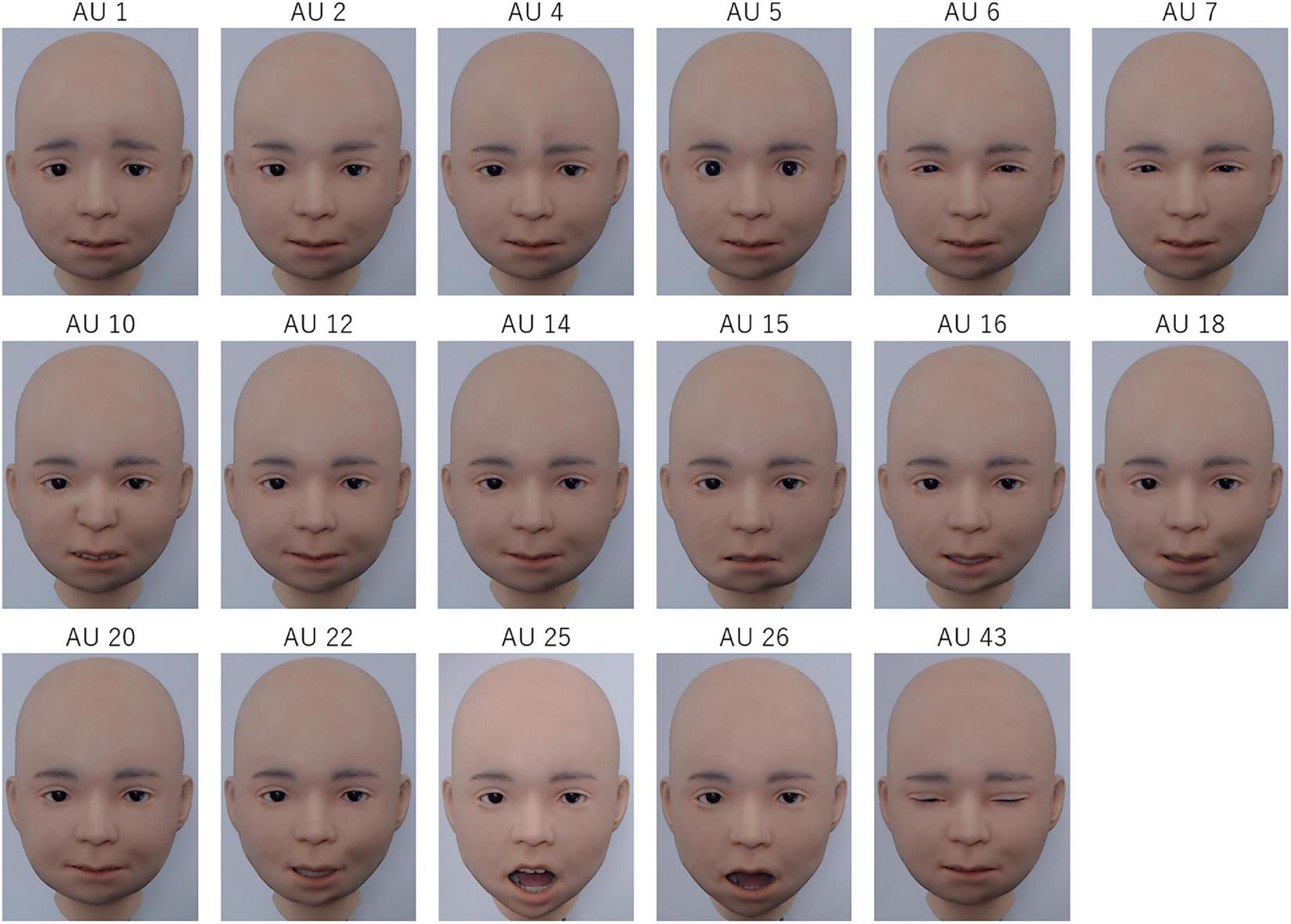
Android robots capable of emotional interactions with humans have considerable potential for application to research. While several studies developed androids that can exhibit human-like emotional facial expressions, few have empirically validated androids’ facial expressions. To investigate this issue, we developed an android head called Nikola based on human psychology and conducted three studies to test the validity of its facial expressions. In Study 1, Nikola produced single facial actions, which were evaluated in accordance with the Facial Action Coding System. The results showed that 17 action units were appropriately produced. In Study 2, Nikola produced the prototypical facial expressions for six basic emotions (anger, disgust, fear, happiness, sadness, and surprise), and naïve participants labeled photographs of the expressions. The recognition accuracy of all emotions was higher than chance level. In Study 3, Nikola produced dynamic facial expressions for six basic emotions at four different speeds, and naïve participants evaluated the naturalness of the speed of each expression. The effect of speed differed across emotions, as in previous studies of human expressions. These data validate the spatial and temporal patterns of Nikola’s emotional facial expressions, and suggest that it may be useful for future psychological studies and real-life applications.