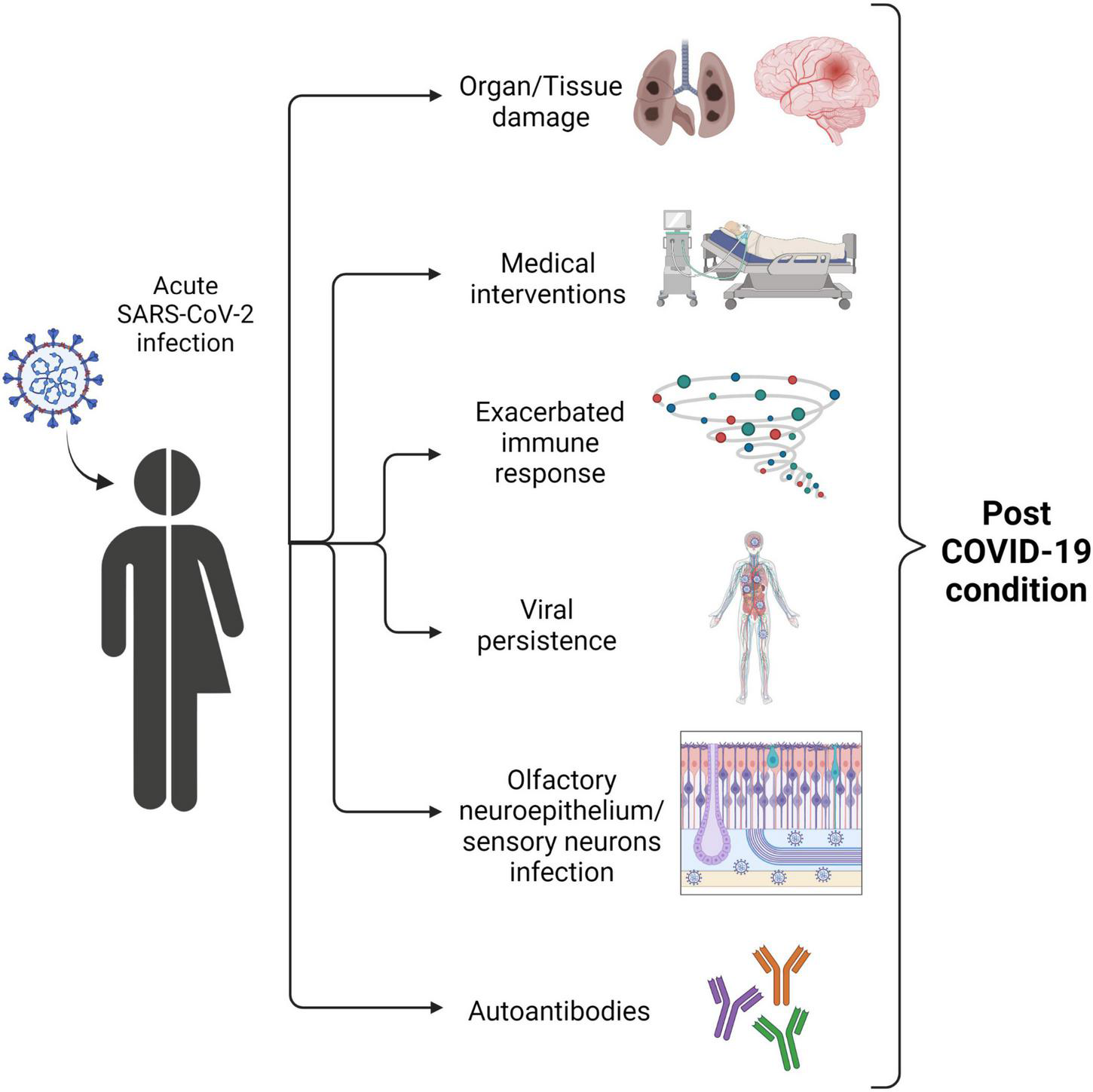
These extremisms frequently led scientists to compare diseases' severity, in an unuseful attempt to show which disease is more severe and therefore more important for pediatric health.In the media, this approach was not based on solid evidence but rather aimed at supporting a predefined position. A very common comparison was between respiratory syncytial virus (RSV), influenza and COVID-19, trying each extreme side of the discussion to highlight the higher hospitalizations during RSV seasons, or the more cardiovascular involvement during COVID-19. This approach is unrespectful toward all those families that have lost children for each of these conditions, or have disabled children from these viruses. A personalised riskapproach is still far from routine practice and, unfortunately, every single pathogen has the potential to cause severe illness in the single person.At the same time, although considered less or not "touched" by the new virus, children had to pay the indirect price imposed by the new disease, and possibly also by some wrong initial decisions, on the adult population. Risk of nosocomial transmission and public fear of inhospital contagion led to i) delayed access to care in many cases reduction of elective surgeries (4); ii) restrictions to parent visits in hospital, sometimes even in the PICU where children -the patients -and their families are at the highest need of being together (5). As with other decisions, children have been sacrificed for adults.Extremizations in this discussion has had negative consequences:-Undermining the clinical burden of disease can create wrong expectations from families, or lower the scientific interests and funds for the development of drugs or other needed researches/interventions focused on children -Exaggerating the clinical burden of COVID-19 in children creates unjustified fears which can lead to extreme unneeded actions that, in turn, can negatively affect children and families wellbeing.-Example of a ponderate approach: honest discussion on the real burden of children affected by severe consequences of Covid, being them either previously healthy or affected by other conditions, leads to balanced decisions about social measures to implement, balanced risk in schools and guidelines in case of contacts, avoiding unnecessary closures and isolation of children, solitude in hospitals and delays in care.Long Covid entered later within the discussion. While it was evident soon that a large subgroup of adults were not fully recovering after the infection, this topic has been, and still is, much more debated in children. Observational studies from cohorts of children with COVID-19 without control groups, or studies including unperfect control groups (based on single negative PCR tests, or not fully sensitive serological studies), mostly based on phone calls or self-filled surveys, led to the establishment of a heated debate (6). On one side, a position led to the wrong message that everything happening after COVID-19 was due to the infection itself; on the other, scientists tried to undermine the problem minimising it as a psychologization of the condition, mainly due to the mental health impact of the restrictions rather than organic events.The debate is still raging, although scientific advances are providing the rationale for the development of unexplained persisting symptoms in children and the observations of this problem in most of the globe suggest that, at least for some families, pediatric Long Covid is a real problem.Negative consequences from extremizations in this discussion:-Reducing the problem to the idea that Long Covid is not a complication of the infection but a psychological problem: this leads to less research and funds in the field (slowing advances in terms of pathophysiology, diagnostics and treatments), and public inaccurate risk perception of the overall burden of SARS-CoV-2 infection in children.This also makes the involved families feel abandoned by the healthcare systems .-On the other side of extremism, exaggerating Long Covid can create inappropriate fear (which in turn can amplify the need for excessive restrictions), wrong diagnoses or late recognition of other treatable conditions, ultimately negatively affecting children.-Example of a ponderate approach: when a family receives information about benefit/risk ratio of vaccinations and other non-pharmacological interventions, it is important that the family is aware of all the possible complications of SARS-CoV-2 infection, from acute disease to post-covid complications, including MIS-C and Long Covid. Although the scientific community does not know yet the real incidence of Long Covid, there is agreement that at least a sub-group of children will develop it. Given the large number of undetected pediatric cases, it is possible that a low percentage of infected children will develop Long Covid, and luckily the pediatric disease seems less severe than the adult one. In any case, it is important that healthcare professionals take seriously any child complaining long term clinical problems after Covid-19, rule out all possible alternative diagnoses with available knowledge and refer families to specialized centers. It is important for the family to receive care and that their children's conditions are not minimised.One of the early responses to the sudden medical crisis was generalised lockdown, including school closures. This was initially justified by the massive number of sick adults filling the hospitals, the still initially unknown impact of Covid-19 in children and the possible role of children in viral transmission. However, while adult activities have been restored, in most of the world school attendance is still impaired on April 2022. Again, opposite positions were raised. On one hand, the negative impact of school closures is evident: millions of children missed school and most never came back, mainly in LMICs; children missed healthy school meals which, for fragile families, may represent the only chance; abuses or neglect for children living in difficult social environment raised; increase in mental health crisis; special needs children isolated at home for months if not years (7). On the other hand, active groups highlighted a non-negligible risk for in-school transmission leading to acute Covid-19 or Long Covid (8). The distance between the positions led to a half-decision of difficult policies for inpresence lessons that still disrupted school attendance for months in the best scenario, or unfeasible policies for LMICs. Millions of children and adolescents have been considered for two entire years as cases, contacts, numbers, "positives or negatives", and lost their right to be what they are supposed to be, that is, learners, or simply, children.Linked to this topic, there is the "mask debate". For some, masks limited visual interaction and negatively affected neurocognitive development, while having a limited impact on covid transmissions (9). For others, masks are the main solution and children of any age should be masked (8), even in the paradox that adults are not mandated to wear a mask and 2-years old children do.
-School are safe, there is no need to improve current school status, and therefore missing a chance to improve weak organisations or historical pre-covid problems -On the other side of extremism, schools are seen as drivers of infection, leading to positions asking for either a perfect solution or online learning, ultimately disrupting the whole school experience for years.-Example of a ponderate approach: Schools represent a pivotal moment for children's growth in terms of social, cultural and physical relationships. The negative impact of indiscriminate school closures has been more evident than ever, while a key role of schools in significantly fueling the pandemic has never been proved. Therefore, school closure should only be considered in case of dramatic global or local scenarios, and anyway in a context of generalised lockdowns, particularly during outbreaks that have a more significant impact on adults than on children. Importantly, school closures should only be employed for short periods and personalized programs for special needs children or those from very fragile social contexts should be implemented. At the same time, it is important to also recognize that a close environment lived by several children may still be a scenario at risk for transmission of airborne infections, and this pandemic should be taken as an opportunity to improve prevention of airborne infections, as society has historically done with waterborne or foodborne infections. There is evidence that air cleaners may have a role in this regard and such direction should be seriously taken into account (10). About masking, there is no strong evidence in favour or not, and therefore families should be informed about risks and benefits and should be given the opportunity for using them or not, according to their perception of the risk, community transmission and child compliance.Last, pediatric vaccinations led to strong discussions among, again, two different and distant factions: in favour or against Covid-19 vaccinations. Those against vaccination highlighted a non-irrelevant risk of myocarditis in young males and relatively less benefits in terms of prevention of complications as compared with adults, since the risk of severe disease in children is much lower. However, this approach does not take into account all the possible outcomes of infection, and the possibility that families can translate doubts toward Covid-19 vaccinations through the routine pediatric vaccinations (11). On the other side, the provaccination group undermined adverse events and exaggerated benefits, for example in terms of reduction of transmission which would have led also to better school attendance.Negative consequences from extremizations in this discussion:-Some countries only allowed on a late phase the vaccination in children aged 5-11 children without giving access to vaccines to families willing to vaccinate. This generates distance between the public and national health systems. Highlighting only negative effects of the vaccination and undermining all the short and long-term outcomes of the infection does not give the public the opportunity of a proper choice, and can reduce the overall favourable opinion of the general population towards all vaccinations.-Exaggeration of benefits from vaccination increases the distances between the factions and impair the trust toward science from those initially sceptical. Also, this can create false certainties and securities in vaccinated people.-Example of a ponderate approach: It is necessary to properly explain all the possible outcomes of SARS-CoV-2 infection in children, highlight risks from vaccinations and what to realistically expect from them, for example: i) target goals of vaccination by realistic steps according to the main objectives of that particular period (eg deaths and hospitalisation in the first phases); and ii) proper information of the public about possible needs of adaptation of their use as knowledge about new vaccines improve (in terms of safety, doses, goals, technological implementation). This will allow families an informed choice with less risk of repercussion or criticism during rapidly changing scenarios.We hope Institutions, including scientific and societal ones, will develop a multilevel process for a critical analysis of these two years of the pandemic and develop appropriate plans for a balanced response to the next pandemic, taking into accounts the specific needs of children.