59kviews
Separate units for incarcerated people who committed sexual offenses: luxury or necessity?
ORIGINAL RESEARCH
25 May 2023
Separate units for incarcerated people who committed sexual offenses: luxury or necessity?
Elise Wuyts, 6 more and Kris Goethals
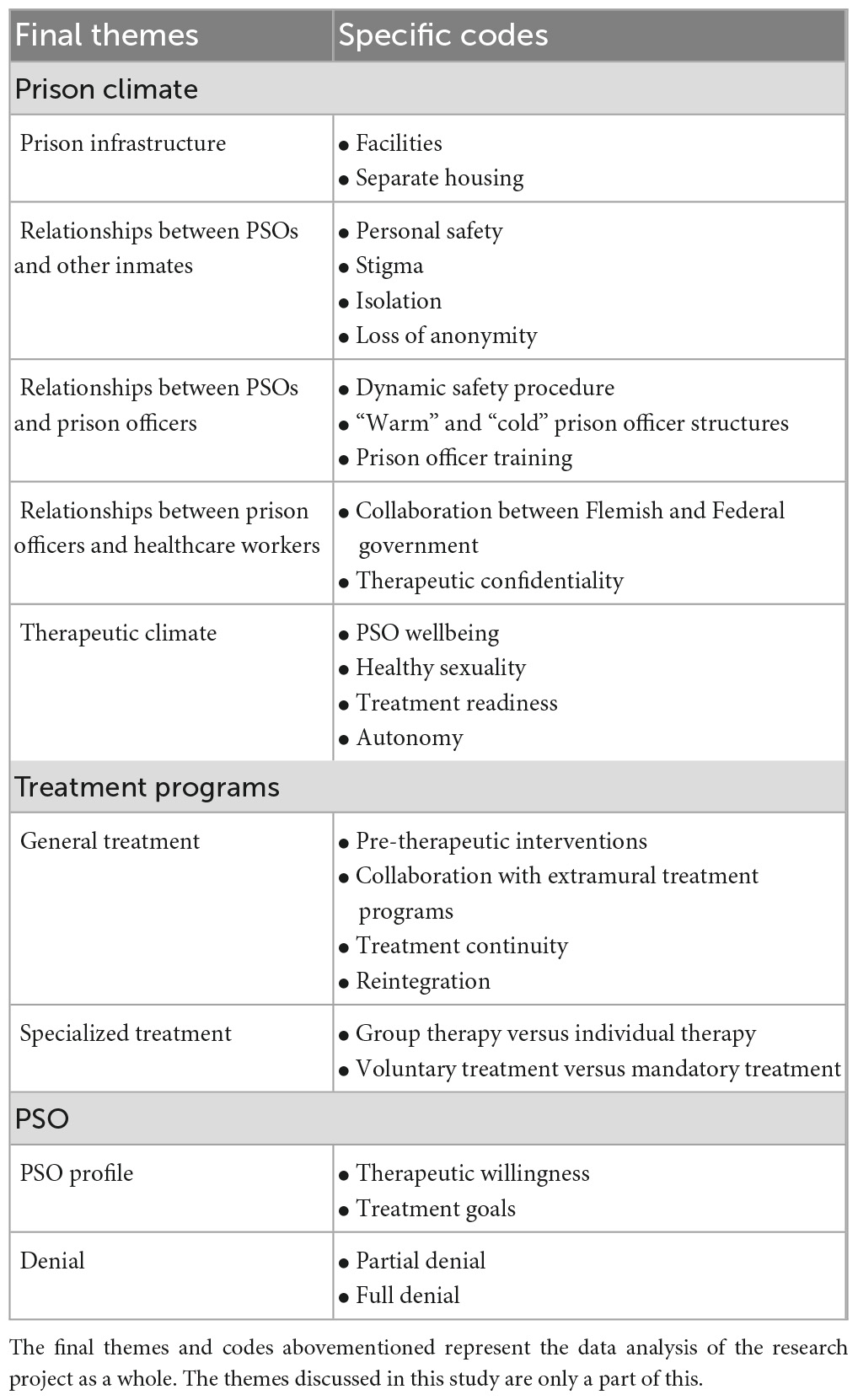
Introduction The policy on treatment of people who commit sexual offenses (PSOs) varies greatly across countries, creating different treatment environments. This study was conducted in Flanders (i.e., the Dutch-speaking part of Belgium) where PSOs receive their treatment in the community. Before this transfer takes place, many PSOs spend time inside prison together with other offenders. This raises the question to what extent PSOs are safe in prison and whether this period would benefit from an integrated therapeutic program. This qualitative research study focuses on the possibility of separate housing for PSOs by examining the current experiences of incarcerated PSOs and contextualizing those with the professional experience of national and international experts in the field. Methods Between April 1, 2021 and March 31, 2022, 22 semi-structured interviews and six focus groups took place. Participants were comprised of nine imprisoned PSOs, seven international experts on prison-based PSO treatment, six prison officer supervisors, two prison management delegates, 21 healthcare workers (both inside and outside prison), six prison policy coordinators and 10 psychosocial service staff members. Results Nearly all interviewed PSOs reported suffering at the hands of fellow inmates or prison staff because of the nature of their offenses, varying from exclusion and bullying to physical violence. These experiences were corroborated by the Flemish professionals. Consistent with scientific research, the international experts all reported working with incarcerated PSOs who reside in living units separate from other offenders and the therapeutic benefits to this approach. Despite this growing evidence, the Flemish professionals remained reluctant to implement separate living units for PSOs in prisons because of the perceived risk of increased cognitive distortions and further isolation of this already stigmatized group. Conclusion The Belgian prison system is not currently organized to create separate living units for PSOs, which has important ramifications for the safety and therapeutic opportunities of these vulnerable prisoners. International experts emphasize a clear benefit for introducing separate living units where a therapeutic environment can be created. Although this would have significant organizational and policy-oriented implications, it would be useful to explore whether these practices could be implemented in Belgian prisons as well.

14,470 views

11 citations

The sexuality and sexual experiences of forensic mental health patients: An integrative review of the literature
Introduction Sexuality is an integral aspect of the human experience that defines an individual. Robust research, substantiated by the World Health Organisation, demonstrates that healthy sexuality improves mental health and quality of life. Despite this level of global advocacy and clinical evidence, sexuality and sexual health as determinants of health have been largely overlooked in the mental healthcare of patients being treated under the requirements of a forensic order (forensic patients). In this review, the authors have evaluated the literature related to the sexual development, sexual health, sexual knowledge and risks, sexual experiences, sexual behaviour and sexual desires of forensic patients to inform policy and clinical practice. Furthermore, the review explored how forensic patients’ sexual healthcare needs are managed within a forensic mental healthcare framework. The paper concludes with recommendations for service providers to ensure that sexual health and sexuality are components of mental health policy frameworks and clinical care. Methods An integrative review was utilised to summarise empirical and theoretical literature to provide a greater comprehensive understanding of the sexuality and sexual experiences of forensic patients. This included identifying original qualitative, quantitative, or mixed-method research, case reports, case series and published doctoral thesis pertaining to the research topic. Results Twenty-one articles were selected for review. We grouped the review findings into three main themes: 1) Forensic patient themes, 2) Forensic mental health staff themes and 3) Forensic mental health organisation themes. The review demonstrated scant information on the sexual healthcare needs of forensic patients or how health services manage these needs while the patient is in a hospital or reintegrating into the community. Conclusion There is a dearth of evidence-based, individualised or group approaches which clinicians can utilise to assist forensic patients to achieve a healthy sexual life and it is recommended that such services be developed. Before that however, it is essential to have a clear understanding of the sexual healthcare needs of forensic patients to identify areas where this vulnerable population can be supported in achieving optimal sexual health. Urgent changes to clinical assessment are required to incorporate sexual healthcare as a component of routine mental healthcare.

9,182 views

8 citations

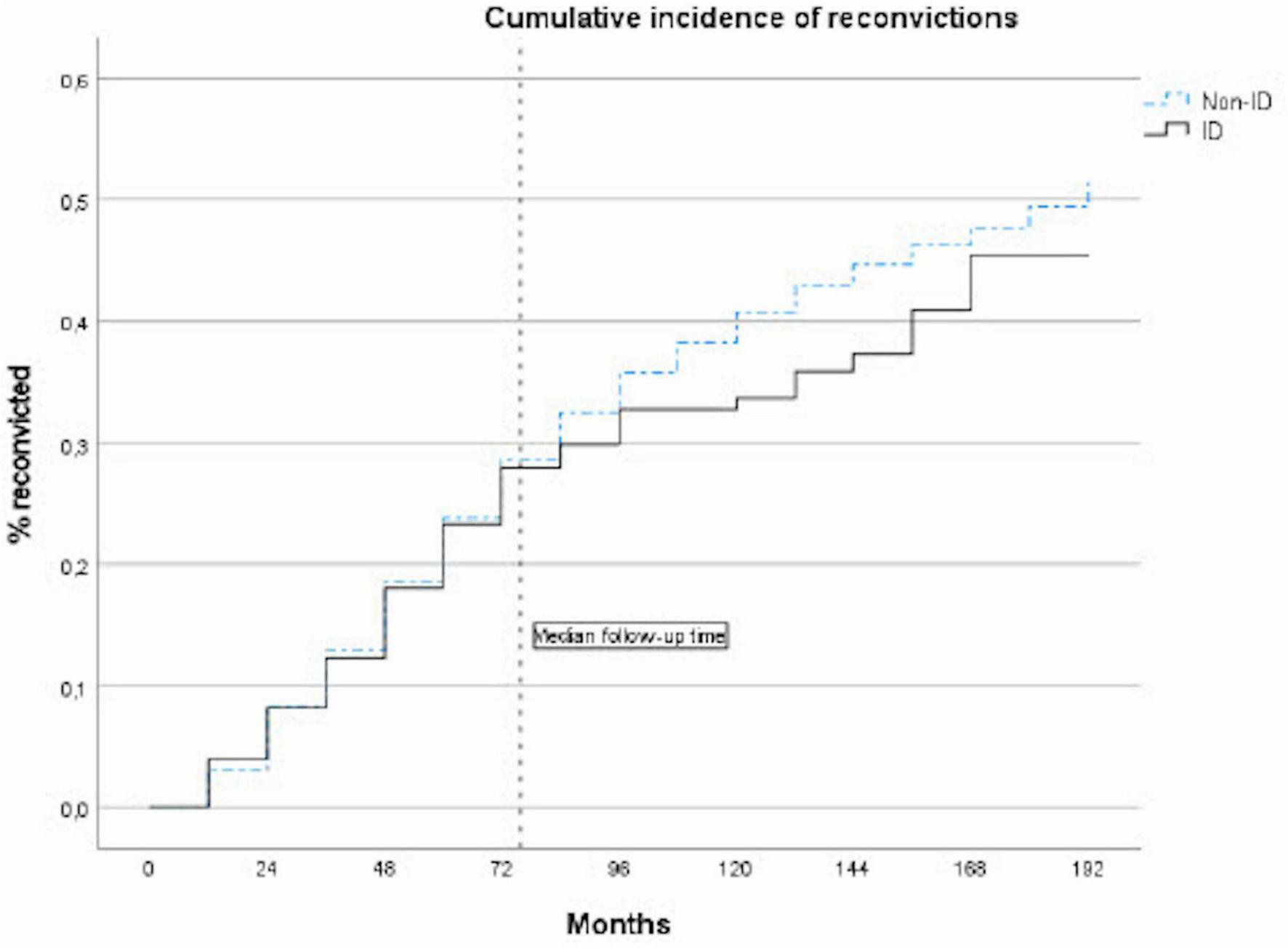
Background Offenders with intellectual disability (ID) constitute a distinct subgroup of offenders with mental disorders. Regarding criminal recidivism, it is unclear whether or not offenders with ID in forensic psychiatric settings differ from offenders without ID. Factors associated with criminal recidivism among offenders with ID have been scarcely investigated. Aims To investigate the association between ID and criminal recidivism among offenders sentenced to forensic psychiatric care and to explore the impact of clinical, sociodemographic and offense variables. Methods    We conducted a retrospective cohort study based on Swedish nationwide registers. A total of 3365 individuals being sentenced to forensic psychiatric care in Sweden in 1997-2013 were followed from the forensic psychiatric assessment until first reconviction, death, emigration, or December 31, 2013, whichever occurred first. Cox regression models compared rates of recidivism in individuals with and without ID. Impact of clinical, sociodemographic and offense variables on risk of criminal recidivism was presented as hazard ratios (HRs) with 95% confidence intervals (CIs). Results   Out of 3365 offenders sentenced to forensic psychiatric care, 259 (7.7%) were diagnosed with ID. During follow-up (0-17 years, median 6 years), one third (n=1099) of the study population relapsed into criminality, giving a recidivism rate of 50.5 per 1000 person-years. We observed an association between ID and a decreased risk of recidivism (HR 0.8, 95% CI 0.6-1.0, p=0.063), although this reached statistical significance only for the subgroup of male offenders (HR 0.8, 95% CI 0.6-1.0, p=0.040) and not females (HR 1.0, 95% CI 0.6-1.8). ID offenders with concurrent ADHD tended to have a higher rate of recidivism (73.9 per 1000 person-years, HR 1.2, 95% CI 0.6-2.4) than ID offenders without ADHD (42.5 per 1000 person-years, HR 0.8, 95% CI 0.6-1.1). Amongst ID offenders, concurrent autism spectrum disorder, young age or male sex were not associated with recidivism, while previous criminal convictions were strongly associated with recidivism. Conclusion    A diagnosis of ID was associated with a lower risk of criminal recidivism among male offenders sentenced to forensic psychiatric care. The association between ADHD and recidivism among ID offenders highlights eligible focus areas in the management of offenders with ID.

6,880 views

8 citations

Practices and Policies Around Wellness: Insights From the Internet Crimes Against Children Task Force Network
ORIGINAL RESEARCH
20 June 2022
Practices and Policies Around Wellness: Insights From the Internet Crimes Against Children Task Force Network
Kimberly J. Mitchell, 2 more and David Finkelhor
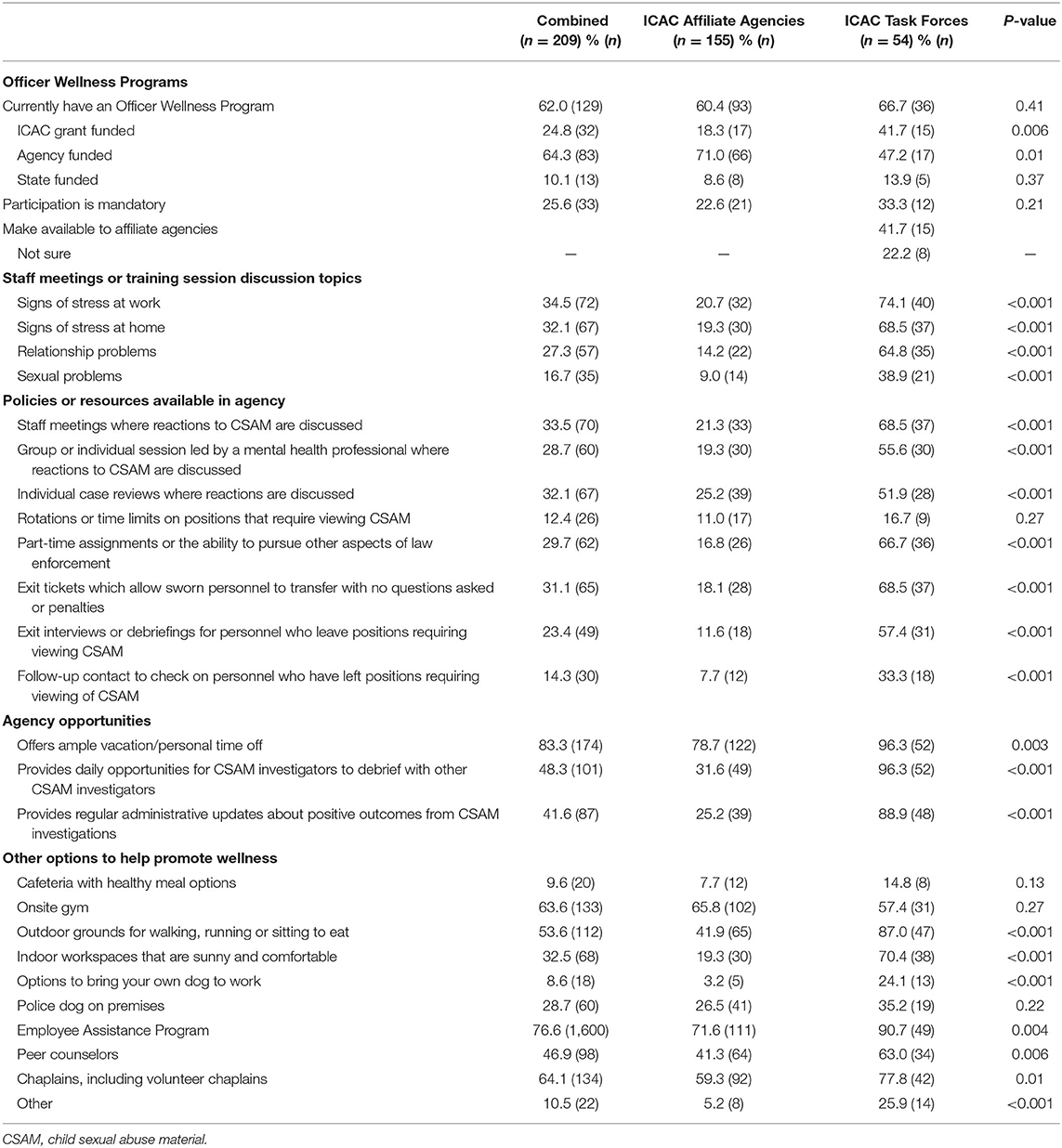
This article aims to understand what practices and training Internet Crimes Against Children (ICAC) Task Forces and affiliated agencies are currently using to help mitigate distress and promote wellbeing among investigators of child sexual abuse material (CSAM). Data were collected via telephone interviews with Commanders of 54 ICAC Task Forces as well as an online survey of 155 investigators at ICAC-affiliated agencies. Sixty-two percent of respondents said their agency had an Officer Wellness Program. Findings highlighted considerable gaps in protective practices with 46.1% of respondents mentioning the need for more wellness resources in their agency for personnel who have viewed CSAM as a high priority. Stigma created by help-seeking was the most widely acknowledged barrier discussed in relation to police wellness. A large and salient problem was the persistent lack of wellness practices in the affiliated agencies in comparison to the Task Forces themselves. Exposure to CSAM can be a source of stress for personnel and the results indicate concern about the problem and a diffusion of proactive initiatives, but barriers and inconsistent adoption remain.

8,927 views

23 citations