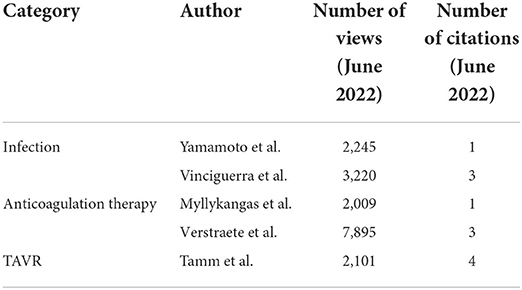
Despite the large use of antibiotics in industrialized world, the rheumatic heart valve disease caused by Streptococci remains the main cause in mid-and low-income countries. In the contribution by Yamamoto H. and his colleagues a case report describing miniature erupting volcano-shaped mitral valve aneurysm secondary to Streptococcus Agalactiae ST1656 endocarditis is discussed. Mitral valve aneurysm is a rare life-threatening condition causing aneurysmal rupture and systemic embolization and commonly associated with infective endocarditis and involvement of aortic valve. In this report a diabetic patient with ruptured mitral valve aneurysm presented serious complications requiring early surgical intervention instructed by transesophageal echocardiography. The patient underwent mitral valve replacement with a prosthetic valve. Aortic valve was not involved. Overall, this case report underscores the importance of early treatment of mitral valve aneurysm as potential consequence of infectious endocarditis in elderly patients with comorbidities, and raises awareness for early diagnosis of this disease. On the other hand, a case report by Vinciguerra M. et al, suggests that another group of Streptococci -Streptococcus Alactolyticus is an uncommon pathogen in mitral valve disease. This pathogen affecting distant organs is extremely rare and has been described causing infective endocarditis in mitral valve only in two other cases. Strong association of Streptococcus Alactolyticus with infection in gastrointestinal disease facilitated by surgery could allow the translocation of the pathogen toward the target organs comprising of collagen-rich tissue such as heart valves. This case emphasizes the importance of appropriate imaging techniques and early diagnosis in the assessment of the disease progression to optimize the treatment of infective endocarditis.Calcific aortic valve stenosis is a major and growing health burden in developed world, and valve intervention is the only effective treatment. Currently, approximately 300,000 artificial valves are implanted every year, and it is estimated that this number will increase further. Artificial valves require antithrombotic treatment with warfarin or low-dose aspirin to prevent thromboembolism. The peak incidence to thromboembolic complications occurs withing 3 months postoperatively likely due to the lack of formation of new endothelium on the surface of the newly implanted materials. However, anticoagulation therapy often continues longer to prevent stroke and other thromboembolic complications. In this article Myllykangas M.E. et al. examined the continuation of oral anticoagulation treatment and its effect on long-term prognosis after aortic valve replacement (AVR). The study used nation-wide register data obtained in 2010-2016 from 4079 AVR patients. The association between warfarin and the nonvitamin K antagonist oral anticoagulant use and death, stoke and major bleeding has been examined. Oral anticoagulant use after AVR surgeries was associated with increased risk of stroke and decreased risk of death. There were no association between anticoagulant use and bleeding risk. The validation of these findings in randomized controlled trials has been recommended.The following article by Verstraete A et al. emphasizes that decision-making regarding anticoagulation therapy for prosthetic heart valves is challenging due to contradictory recommendations in current guidelines and opposing expert opinions. The article compares the 2017 ESC/EACTS and 2020 ACC/AHA guidelines on management of heart valve disease. The authors established a consensus on antithrombotic therapy after valve interventions based on 800 cases of surgical and transcatheter heart valve replacement (TAVR), which serves as a practical guidance for decision-making in daily clinical practice at University Hospital Leuven, Belgium. The article is also provided a list of Unsolved Questions and Starting Points for Research. As such, this article is offering standard guidelines and delivers clear recommendations for antithrombotic treatment after surgical or transcatheter heart valve interventions from 2021 onwards, which will be updated once new data become available.TAVR has evolved into a standard treatment for patients with severe aortic valve stenosis. Paravalvular regurgitation, however, has been associated with a worth survival. The team from University Mainz, Germany led by Tamm A.R. investigated performance and outcome of the latest generation balloon-expandable SAPIEN 3 Ultra prothesis (S3U) compared to established SAPIEN 3 device (S3) in a real-world cohort. The study has focused on paravalvular regurgitation as an adverse prognostic indicator for survival after TAVR. Three hundred fortythree patients with severe aortic valve stenosis received either S3U or S3 devices. The authors find that the novel S3U protheses significantly minimized paravalvular regurgitation indicating an improved prothesis design. In addition, more superior performance was reported concerning post-dilation rate, radiation time and the amount of contrast as well as relief of symptoms at 30 days. Future studies will offer a prognostic significance.Overall, these articles identified several critical areas of clinical and surgical research interests, including the importance of early diagnosis of mitral valve disease in patients with infectious endocarditis, the inconsistency in management of anticoagulation therapy after surgical valve replacement and TAVR, and the necessity of innovative approaches to improve novel devices to treat heart valve disease.