Internet of Medical Things and Computational Intelligence in Healthcare 4.0

Cover image for Research Topic "Internet of Medical Things and Computational Intelligence in Healthcare 4.0"
100kviews
Editorial21 February 2024
Editorial: Internet of Medical Things and computational intelligence in healthcare 4.0

The Internet of Medical Things (IoMT) has seen substantial growth, with an increasing number of connected healthcare devices. According to a report by Grand View Research, the global IoMT market size was valued at over USD 44 billion in 2020 and is expected to exhibit a compound annual growth rate (CAGR) of around 19.2% from 2021 to 2028. This underscores the rapid adoption of IoMT technologies in healthcare systems worldwide. Additionally, a study by Allied Market Research highlighted that the computational intelligence market in healthcare is also on the rise. Mishra et al. developed a novel technique for detecting COVID-19 using phoneme analysis and audio signal smearing. They proposed a classification system based on phoneme grouping and achieved 97.22% accuracy for specific phoneme grouping using machine learning classifiers. This technique shows promise for quick and effective early-stage disease detection, with potential for application in other speech-related diseases.Chicco and Jurman stress the importance of validating supervised machine learning results in biomedical informatics. The challenge is to achieve reliable results in the face of over-optimistic findings. Past guidelines have been too complex, especially for beginners. In response, Walsh et al. (2021) proposed ABC tips to simplify validation. The tips are meant to provide an effective tool for practitioners of all levels to enhance the reliability of scientific results in biomedical sciences.The market for IoT healthcare is projected to grow at a CAGR of 21.2% from 2024 to 2030, with a value of USD 44.21 billion expected in 2023. This growth is driven by several factors, including the use of wearables and smartphones for patient monitoring, an increased adoption of remote patient monitoring during the COVID-19 pandemic, and investments in digital health infrastructure. The prevalence of chronic conditions and investments in digital healthcare technologies have also led to a significant rise in telemedicine adoption. IoT technology is expanding in healthcare due to several reasons, including advancements in smartphone technology, improved data security measures, and the growing accessibility of wearable sensors and connected health monitors. This demand is further fuelled by emerging economies such as India, China, Indonesia, Bangladesh, and some African and Latin American countries, which are contributing to this growth through improvements in network infrastructure and growing network coverage. Physicians are also increasingly using mobile devices, creating further demand for IoT solutions in healthcare.

1,590 views

5 citations

ORIGINAL RESEARCH
31 October 2022
Application of convex hull analysis for the evaluation of data heterogeneity between patient populations of different origin and implications of hospital bias in downstream machine-learning-based data processing: A comparison of 4 critical-care patient datasets
Konstantin Sharafutdinov, 8 more and Andreas Schuppert

5,299 views

12 citations

REVIEW
8 July 2022
Blockchain for Electronic Vaccine Certificates: More Cons Than Pros?
Raphaëlle Toubiana, 4 more and Santiago Romero-Brufau

6,447 views

8 citations

SYSTEMATIC REVIEW
29 June 2022
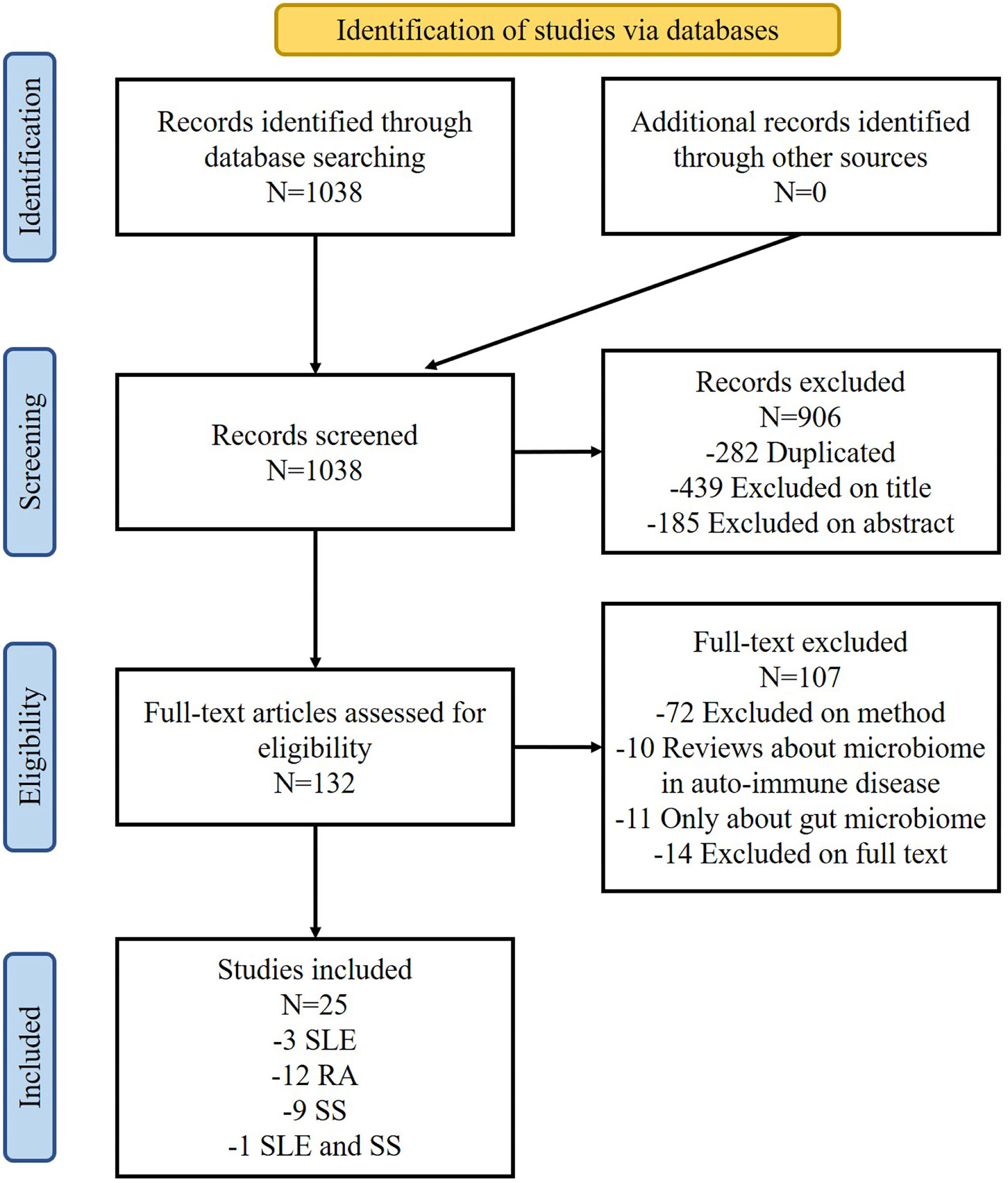
The Oral Microbiome and Its Role in Systemic Autoimmune Diseases: A Systematic Review of Big Data Analysis
Lu Gao, 4 more and Xiaoyan Chen
The Oral Microbiome and Its Role in Systemic Autoimmune Diseases: A Systematic Review of Big Data Analysis
Introduction: Despite decades of research, systemic autoimmune diseases (SADs) continue to be a major global health concern and the aetiology of these diseases is still not clear. To date, with the development of high-throughput techniques, increasing evidence indicated a key role of oral microbiome in the pathogenesis of SADs and the alterations of oral microbiome may contribute to the disease emergence or evolution. This review is to present the latest knowledge on the relationship between the oral microbiome and SADs, focusing on the multi-omics data generated from a large set of samples. Methodology: By searching the PubMed and Embase databases, studies that investigated the oral microbiome of SADs, including systemic lupus erythematosus (SLE), rheumatoid arthritis (RA), and Sjogren’s syndrome (SS), were systematically reviewed according to the PRISMA guidelines. Results: One thousand and thirty-eight studies were found, and 25 studies were included: three referred to SLE, 12 referred to RA, nine referred to SS, and one to both SLE and SS. The 16S rRNA sequencing was the most frequent technique used. HOMD was the most common database align to and QIIME was the most popular pipeline for downstream analysis. Alterations of bacterial composition and population have been found in the oral samples of SAD patients, compared with the healthy controls. Results regarding candidate pathogens were not always in accordance but Selenomonas and Veillonella were found significantly increased in the three SADs and Streptococcus was significantly decreased in the SADs compared with controls. Conclusion: Large amount of sequencing data was collected from SAD patients and controls in this systematic review. Oral microbial dysbiosis had been identified in these SADs, although the dysbiosis features were different among studies. There was a lack of standardized study methodology for each study, from the inclusion criteria, sample type, sequencing platform, referred database, to downstream analysis pipeline and cutoff. Besides the genomics, transcriptomics, proteomics and metabolomics technology should be used to investigate the oral microbiome of SADs patients and also the at-risk individuals of disease development, which may provide us with a better understanding of the aetiology of SADs and promote the development of the novel therapies.

6,826 views

29 citations

BurnoutEnsemble: Augmented Intelligence to Detect Indications for Burnout in Clinical Psychology
ORIGINAL RESEARCH
5 April 2022
BurnoutEnsemble: Augmented Intelligence to Detect Indications for Burnout in Clinical Psychology
Ghofrane Merhbene, 2 more and Mascha Kurpicz-Briki

10,992 views

27 citations

Prognostic Factors of Survival in Pancreatic Cancer Metastasis to Liver at Different Ages of Diagnosis: A SEER Population-Based Cohort Study
ORIGINAL RESEARCH
27 September 2021
Prognostic Factors of Survival in Pancreatic Cancer Metastasis to Liver at Different Ages of Diagnosis: A SEER Population-Based Cohort Study
Meiqi Liu, 1 more and Sheng Li
Background Liver is a common metastatic organ for most malignancies, especially the pancreas. However, evidence for prognostic factors of pancreatic cancer metastasis to the liver at different ages is lacking. Thus, we aimed to evaluate the predictors of patients with pancreatic cancer metastasis to liver grouped by age of diagnosis. Methods We chose the patients diagnosed between 2004 and 2015 from the SEER database. The primary lesions of metastatic liver cancer between sexes were compared using the Pearson’s chi-square test for categorical variables. The overall survival (OS) and cancer-specific survival (CSS) were the endpoint of the study. The prognostic factors were analyzed with the Kaplan-Meier method and log-rank test, and Cox proportional-hazards regression model. Results The main primary sites of metastatic liver cancer for our patients are lung and brunchu, sigmoid colon, pancreas, which in males are lung and bronchu, sigmoid colon and pancreas, while breast, lung and bronchu, sigmoid colon in females. Furthermore, we explored the prognostic factors of pancreatic cancer metastasis to liver grouped by age at diagnosis. Tumor grade, histology and treatment are valid prognostic factors in all age groups. Additionally, gender and AJCC N stage in age<52 years old, while race and AJCC N stage in age>69 years old were predictors. Surgery alone was the optimal treatment in group age>69 years old, whereas surgery combined with chemotherapy was the best option in the other groups. Conclusion Our study evaluated the predictors of patients with pancreatic cancer metastasis to liver at various ages of diagnosis.

41,585 views

12 citations

ORIGINAL RESEARCH
14 January 2021
Identifying Clinical and Genomic Features Associated With Chronic Kidney Disease
M. Megan Moreno, 8 more and Munevver Mine Subasi

4,499 views

1 citations