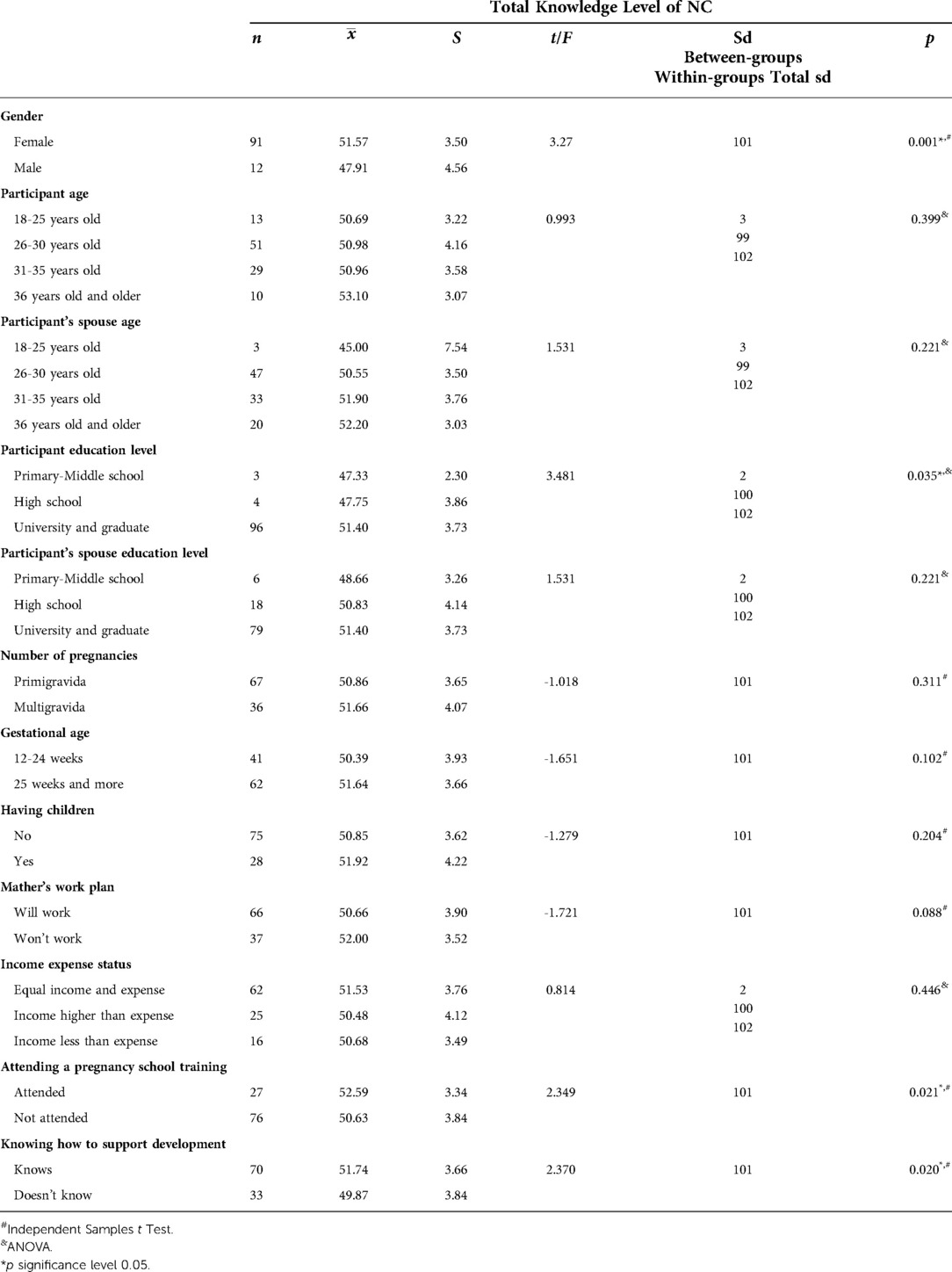
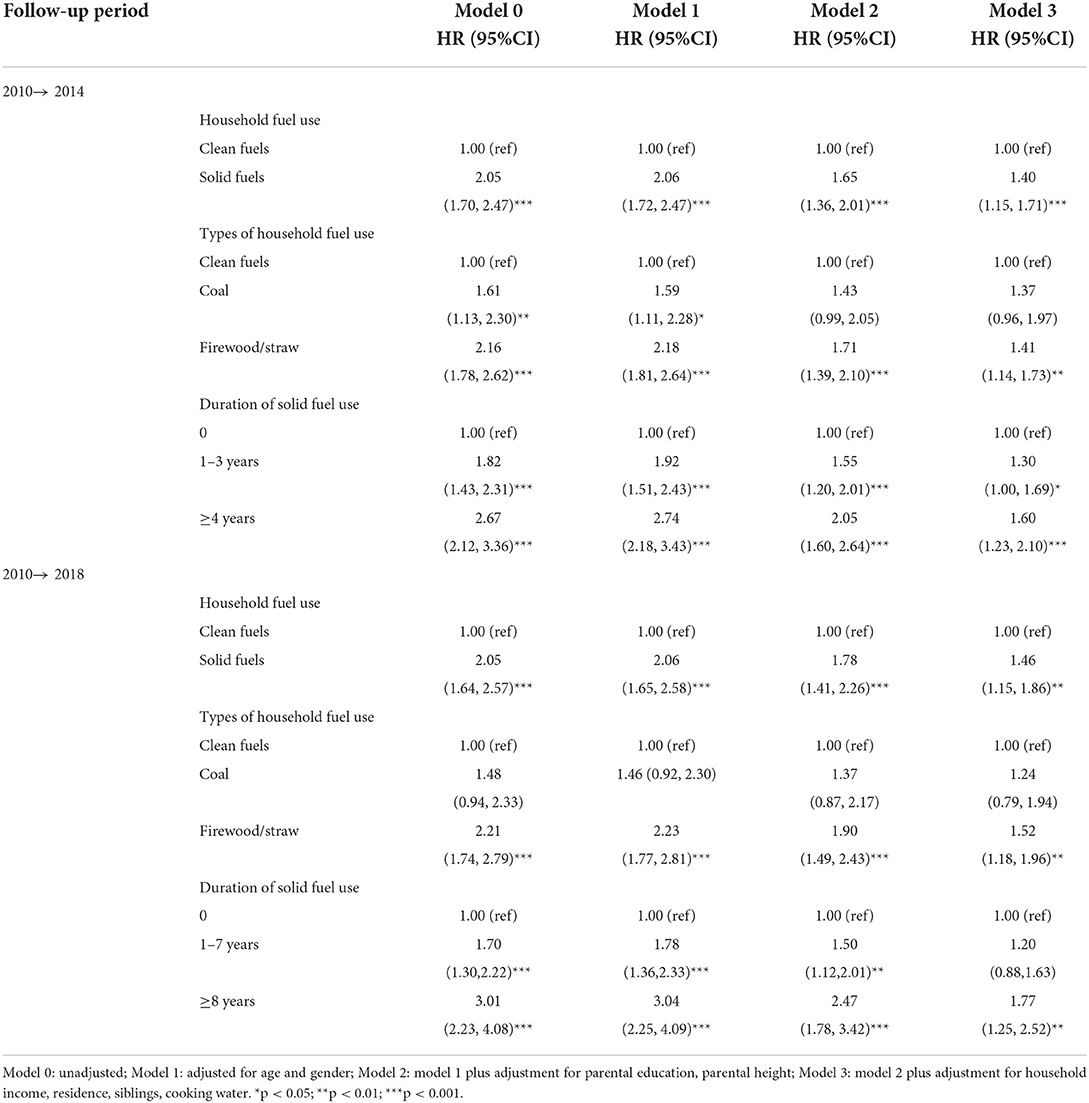
In this special issue, several Chinese studies examined exposure to environmental chemical pollutants in early life and on children's physical and cognitive development. Exposure to air pollution, especially indoor air pollution, has been found to be associated with an increased risk of childhood stunting (4). Yao et al. provided further observational evidence using the longitudinal data from the Chinese Family Panel Study between 2010-2018. Children living in households with solid fuel use had a higher risk of stunting over an 8-year follow-up. The risk was increased with types of solid fuel (firewood/strew) and prolonged exposure, while it was significantly decreased in children from households that had switched from solid fuels to clean fuels. The authors postulated that solid fuel use was a mediator of the relationship between poor socioeconomic factors (i.e., household income and parental education level) and childhood stunning. Based on a nationwide retrospective cohort study of 149,005 preschoolers in China, Wu et al. reported that about a quarter of children (23.9%) were exposed to second-hand smoking (SHS). In addition, the prevalence of suspected developmental coordination disorder was significantly higher in the prenatal SHS-exposed group. Chlorpyrifos is an organophosphate insecticide. Products containing chlorpyrifos are used for pest control in agriculture for animal feed and food crops. In rural areas, children can be exposed to chlorpyrifos containing pesticides by eating contaminated food, breathing in, or getting them on the skin or in the eyes. In a cross-sectional study, Zhou et al. found higher levels of Chlorpyrifos exposure (determined by urinary chlorpyrifos levels) were associated with a higher risk of developing Attention-deficit/hyperactivity disorder in 1-6 years old Children from a rural area in Southwest China.Early-life parental environment and nurturing care are essential to children's immediate health and lay the foundation of their lifelong health (5). Several papers focused on the importance of maternal health and wellbeing and parent's needs during pregnancy and postnatal. In a large Mother-Child Pairs Cohort study with 3,603 mother-child pairs, Shi et al. found children whose mothers were exposed to higher levels of psychological stress during pregnancy were more likely to exhibit poor neurodevelopment in infancy. However, sufficient responsive care in infancy diminished the relationships between stress in mothers during pregnancy and the neurodevelopment of children at 12 months of age. The most important factors for raising healthy children are knowledge and resources that parents and caregivers have to provide appropriate nurturing and care to children in early life. Cimen et al. demonstrated knowledge gaps among expectant parents in a lower-middle income country and their need for information such as children's essential development milestones and developmental risk indicators to monitor their growth and development. The paper also identified that fathers need to be involved in nurturing care to improve the family nurturing environment.The studies in this special issue highlight that more high-quality research is needed to explore the relationships between environmental factors and child health and development. In the meantime, interventions such as parental education to address indoor pollution from solid fuel and second-hand smoking and access to clean fuels for low-income households should be implemented. Development of policies and programs supporting parents and caregivers to provide good care, adequate nutrition, and protection of children from any threats and harm, including environmental factors, so that they can reach their full genetic potential should also be the priority of governments.


6 Authors
- YS
Yuyang Shi
School of Public Health, Fudan University, China
- YZ
Yudi Zhang
School of Public Health, Fudan University, China
- QW
Qian Wei
School of Public Health, Fudan University, China
- XM
Xuemei Ma
School of Public Health, Fudan University, China
- YZ
Yunhui Zhang
School of Public Health, Fudan University, China
- HS
Huijing Shi
School of Public Health, Fudan University, China

5 Authors
- MY
Min Yao
Research Center for Economy of Upper Reaches of the Yangtze River, Chongqing Technology and Business University, China
- LL
Lingou Li
Department of Endocrinology, The First People's Hospital of Chong Qing Liang Jiang New Area, China
- MY
Mei Yang
Department of Endocrinology, The First People's Hospital of Chong Qing Liang Jiang New Area, China
- YW
Yuanyuan Wu
Health Management Center, The Second Affiliated Hospital of Chongqing Medical University, Chongqing Medical University, China
- FC
Feifei Cheng
Health Management Center, The Second Affiliated Hospital of Chongqing Medical University, Chongqing Medical University, China
9 Authors
- WZ
Wenjuan Zhou
Third Xiangya Hospital, Central South University, China
- YD
Yuanying Deng
Third Xiangya Hospital, Central South University, China
- CZ
Chen Zhang
Third Xiangya Hospital, Central South University, China
- HD
Hongmei Dai
Third Xiangya Hospital, Central South University, China
- LG
Lan Guan
Central South University, China
- XL
Xiangwen Luo
China
- WH
Wei He
Third Xiangya Hospital, Central South University, China
- JT
Jing Tian
Third Xiangya Hospital, Central South University, China
- LZ
Lingling Zhao
Third Xiangya Hospital, Central South University, China
3,942 views
11 citations
7 Authors
- SZ
Shanshan Zhang
Department of Maternal, Child & Adolescent Health, School of Public Health, Anhui Medical University, Key Laboratory of Population Health Across Life Cycle (Anhui Medical University), Ministry of Education of the People's Republic of China, NHC Key Laboratory of Study on Abnormal gametes and Reproductive Tract, Anhui Provincial Key Laboratory of Population Health and Aristogenics, China
- JZ
Jixing Zhou
Department of Maternal, Child & Adolescent Health, School of Public Health, Anhui Medical University, Key Laboratory of Population Health Across Life Cycle (Anhui Medical University), Ministry of Education of the People's Republic of China, NHC Key Laboratory of Study on Abnormal gametes and Reproductive Tract, Anhui Provincial Key Laboratory of Population Health and Aristogenics, China
- MY
Mengting Yang
Department of Maternal, Child & Adolescent Health, School of Public Health, Anhui Medical University, Key Laboratory of Population Health Across Life Cycle (Anhui Medical University), Ministry of Education of the People's Republic of China, NHC Key Laboratory of Study on Abnormal gametes and Reproductive Tract, Anhui Provincial Key Laboratory of Population Health and Aristogenics, China
- FZ
Fu Zhang
Department of Maternal, Child & Adolescent Health, School of Public Health, Anhui Medical University, Key Laboratory of Population Health Across Life Cycle (Anhui Medical University), Ministry of Education of the People's Republic of China, NHC Key Laboratory of Study on Abnormal gametes and Reproductive Tract, Anhui Provincial Key Laboratory of Population Health and Aristogenics, China
- XT
Xingyong Tao
Department of Maternal, Child & Adolescent Health, School of Public Health, Anhui Medical University, Key Laboratory of Population Health Across Life Cycle (Anhui Medical University), Ministry of Education of the People's Republic of China, NHC Key Laboratory of Study on Abnormal gametes and Reproductive Tract, Anhui Provincial Key Laboratory of Population Health and Aristogenics, China
- FT
Fangbiao Tao
Department of Maternal, Child & Adolescent Health, School of Public Health, Anhui Medical University, Key Laboratory of Population Health Across Life Cycle (Anhui Medical University), Ministry of Education of the People's Republic of China, NHC Key Laboratory of Study on Abnormal gametes and Reproductive Tract, Anhui Provincial Key Laboratory of Population Health and Aristogenics, China
- KH
Kun Huang
Department of Maternal, Child & Adolescent Health, School of Public Health, Anhui Medical University, Key Laboratory of Population Health Across Life Cycle (Anhui Medical University), Ministry of Education of the People's Republic of China, NHC Key Laboratory of Study on Abnormal gametes and Reproductive Tract, Anhui Provincial Key Laboratory of Population Health and Aristogenics, China
2,926 views
6 citations

11 Authors
- LZ
Lijin Zhou
Department of Orthopedic Surgery, Beijing Chao-Yang Hospital, China
- HY
Honghao Yang
Department of Orthopedic Surgery, Beijing Chao-Yang Hospital, China
- YH
Yong Hai
Department of Orthopedic Surgery, Beijing Chao-Yang Hospital, China
- JJ
Junrui Joanthan Hai
Princeton International School of Mathematics and Science, United States
- YC
Yunzhong Cheng
Department of Orthopedic Surgery, Beijing Chao-Yang Hospital, China
- PY
Peng Yin
Department of Orthopedic Surgery, Beijing Chao-Yang Hospital, China
- JY
Jincai Yang
Department of Orthopedic Surgery, Beijing Chao-Yang Hospital, China
- YZ
Yangpu Zhang
Department of Orthopedic Surgery, Beijing Chao-Yang Hospital, China
- YW
Yunsheng Wang
Department of Orthopedic Surgery, Beijing Chao-Yang Hospital, China
- YZ
Yiqi Zhang
Department of Orthopedic Surgery, Beijing Chao-Yang Hospital, China
- BH
Bo Han
Department of Orthopedic Surgery, Beijing Chao-Yang Hospital, China