Editorial23 January 2024
Editorial: Antimicrobial resistance in zoonotic bacteria

Editorial: Antimicrobial Resistance in Zoonotic Bacteria

Guyue Cheng1, Liang-xing Fang2, Jie Feng3, Xunde Li4, Zuowei Wu5

1 College of Animal Sciences & Technology / College of Veterinary Medicine, Huazhong Agricultural University, Wuhan, Hubei, China

2 College of Veterinary Medicine, South China Agricultural University, Guangzhou, Guangdong, China

3 School of Basic Medical Sciences, Lanzhou University, Lanzhou, Gansu, China

4 School of Veterinary Medicine, University of California Davis, Davis, CA, United States

5 College of Veterinary Medicine, Iowa State University, Ames, IA, United States

Antimicrobial resistance (AMR) is a global issue caused by excessive use of antimicrobial agents in clinical, agricultural, and veterinary settings. This has led to the emergence of resistant microorganisms, threatening public health and food safety. The situation is complicated by a variety of mechanisms in resistance gene transfer and emerging evolution in the genetic makeup of resistant bacteria. Monitoring AMR in wild, companion and farm animals can help combat AMR and limit the spread of antimicrobial resistance genes (ARGs). While several studies have focused on common foodborne pathogens like Salmonella and Campylobacter, attention must also be given to the role of other zoonotic pathogens in spreading AMR. Effective intervention strategies must be developed to reduce the transmission of ARGs to foodborne and other pathogenic microorganisms.

An understanding of the genetic variation and the transmission mechanisms of important ARGs helps control the propagation of AMR. Moraxella spp. cause various diseases in humans and animals and are resistant to many antibiotics, including quinolone, ampicillin, tetracycline, penicillin, and, most importantly, colistin. Che et al. discovered two novel variants of colistin resistance mcr-1 genes, mcr-1.35 and mcr-1.36, present in Moraxella spp. from infected pigs in China. Using a functional cloning assay, they also showed that these genes could transfer resistance from Moraxella to Escherichia coli DH5α and JM109. In addition to the existence of the mcr-1 gene, Karim et al. detected the colistin-resistance mcr-5 gene in Enterobacteriaceae from chicken meat and poultry samples in Malaysia. The mcr-1 was prevalent in E. coli from litter and cloacal swab samples, while Salmonella spp. from chicken meat was positive for the mcr-5. However, Klebsiella pneumoniae isolates were found negative for any mcr genes, suggesting further studies on mcr-5 and its plasmids. The drug-resistance gene cfr(C) is known to confer resistance to several critically essential antimicrobials, like streptogramin A, lincosamide, and pleuromutilin, by inducing A2503 methylation in bacterial 23S rRNA. An et al. focused on elucidating the intricate cross-resistance mechanisms of cfr(C) in Campylobacter coli isolates of swine origin and from the nine cfr(C)-positive strains, they identified three novel single nucleotide polymorphism (SNP) sites (674C > A, 19delA, and 890 T > C) for this gene. Five cassettes were present on the chromosome of these six SNP sites, and the remaining one was found on a plasmid-like element. The resistance cluster for aminoglycoside-streptothricin resistance cluster "aphA3-sat4-aadE" was associated with three of the six cfr(C) SNP variants, while one gene cassette having pcp gene (GC-1, GC-4, and GC-5) formed a novel circular intermediate "pcp-hp-cfr(C)-aphA3".

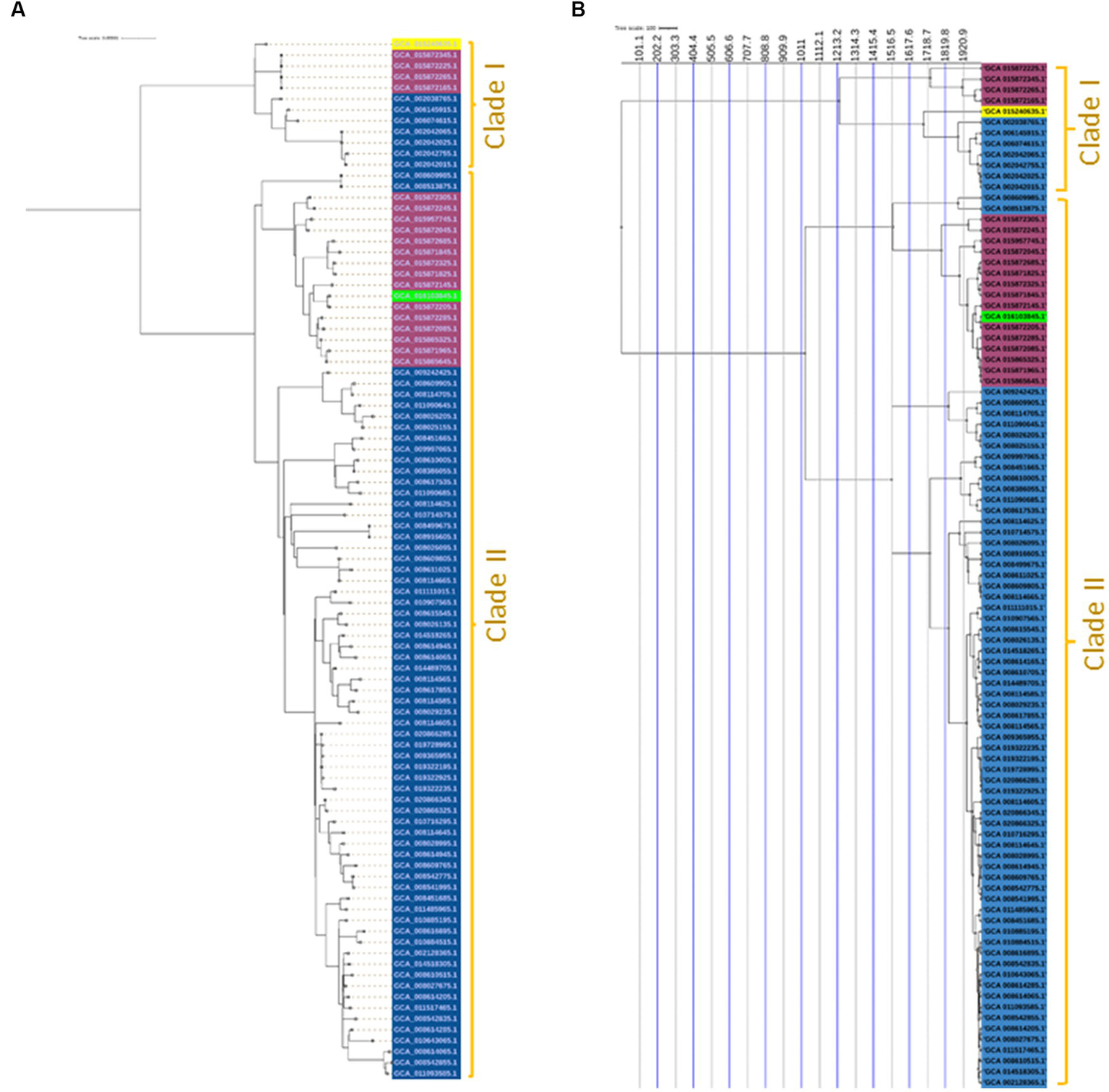
Cross-species transfer of AMR in zoonotic pathogens may cause severe public health risks. Guan et al. studied Wohlfahrtiimonas chitiniclastica and isolated a novel strain (BM-Y) harboring a blaVEB–1-gene-carrying plasmid for the first time from a deceased zebra in China. The authors reported that the dissemination of blaVEB–1 harboring plasmid could enhance resistance, resulting in infections that are difficult to treat. After genomic sequencing, they found three novel insertion sequences (IS), namely ISWoch1, ISWoch2, and ISWoch3, among which ISWoch1 carried the transcription site of blaVEB–1 and proved to be an essential promoter for this gene. Card et al. focused on the prevalence of multidrug-resistant (MDR) and clinically significant non-typhoidal Salmonella in cloacal samples from migratory birds in Bangladesh. They identified six different serovars of Salmonella and an overall prevalence of 13.5%. All strains (MDR) were among these six serovars except the S. Perth and S. Weltevreden. The authors found that the resistance phenotype was strongly correlated with resistance genes that mainly resided on the Salmonella Genomic Islands. Ciprofloxacin-resistant Salmonella was associated with mutations in gyrB and parC genes present on chromosomes, and the S. Kentucky belonged to ST198, which is present in both animals and humans, hence a severe public health risk. Abdelhamid et al. unveiled the genetic similarities between eggs and poultry-associated Salmonella enterica serovar Enteritidis (SE) and indicated that eggs-related SE strains could potentially cause human infections. Comparative genomic analysis of 1,002 SE genomes revealed that SE strains from eggs and poultry have similar genetic lineage but differ from beef-associated SE strains. The aac(6')-Iaa and mdsAB genes were found to be responsible for prevalent drug resistance, and genetic analyses showed a comparable or similar number of virulence factors in both humans and eggs-associated SE strains.

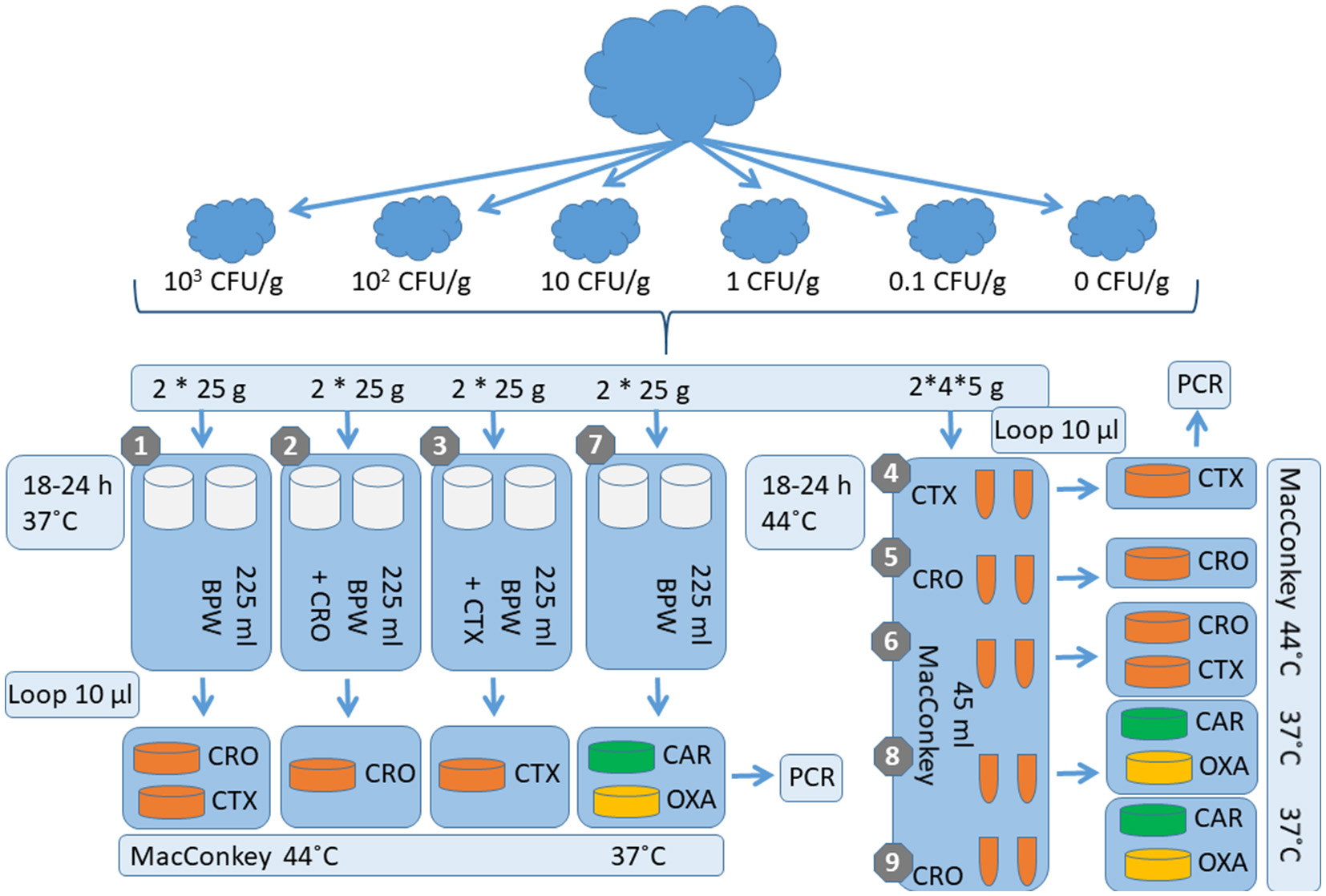
Zhang et al. suggested the reasonable use of antibiotics according to the drug-resistance genes in clinical settings for patient safety and antibiotic efficacy. They reported that most carbapenem-resistant Pseudomonas aeruginosa (CRPA) isolates originated from intensive care unit (ICU) wards and sputum samples. The serious concern was the high-level coexistence of various resistance genes (cephalosporin enzyme, aminoglycoside-modifying enzyme, extended-spectrum β-lactamase, and genes involved in biofilms, membrane channel proteins, I integrons, and efflux systems) and hypervirulence associated genes (exoS, exoU, exoY, and exoT) in CRPA. The European Union Reference Laboratory for Antimicrobial Resistance (EURL-AR) recommended two reliable methods to separate E. coli that produce AmpC, ESBL, and CP enzymes. Hendriksen et al. tested multiple surveillance protocols and found that the Buffered Peptone Water pre-enrichment method was the best, showing the highest sensitivity and specificity for testing minced meat and caecal content samples. Moreover, they described two protocols for isolating and monitoring ESBL- and AmpC-producing E. coli and carbapenemase-producing E. coli from meat and caecal samples.

Using diet as an intervention to combat AMR has attracted the attention of scientists due to the role of various diets and antibiotics in modulating the composition and diversity of gut and fecal microbiomes. Jinno et al. demonstrated an increase in the relative abundance of beneficial bacteria like Bifidobacteriaceae and Lactobacillaceae in the intestines of enterotoxigenic E. coli-infected weaned pigs after supplementation of Bacillus subtilis in their diet. Their results also showed that the intestinal microbiome is greatly influenced by diet and other factors, including stress, bacterial infection, and the age of pigs. Similarly, the indispensable role of alkaline arginine in combating the drug-resistant Salmonella was studied by Zhu et al. Arginine was found to be an effective adjuvant for aminoglycosides due to its bactericidal effects through increased proton motive force (PMF) and drug uptake by the bacterial cells. During their in-vitro study, Yang et al. showed that L-leucine can be used as a potential fluoroquinolone adjuvant for fighting clinically resistant Salmonella spp. by enhancing the bactericidal effect of sarafloxacin, a unique fluoroquinolone used in veterinary practice. The underpinning mechanisms involved reprogramming resistant bacteria, enhancing metabolism, and increasing ATP, NADH, and reactive oxygen species (ROS) levels inside cells, ultimately promoting antibiotic efficacy.

We need more research on how AMR develops and spreads at the molecular level to understand the mechanisms of AMR and control AMR in zoonotic bacteria from farm and wild animals. We also need enhanced monitoring and improved strategies to fight against AMR and protect public health. This Research Topic presented papers that showed important information and new directions for AMR research.
2,948 views

1 citations

Egg-associated Salmonella enterica serovar Enteritidis: comparative genomics unveils phylogenetic links, virulence potential, and antimicrobial resistance traits
Salmonella enterica serovar Enteritidis (SE) remains a frequent cause of foodborne illnesses associated with consumption of contaminated hen eggs. Such food-pathogen association has been demonstrated epidemiologically but the molecular basis for this association has not been explored. Comparative genomic analysis was implemented to decipher the phylogenomic characteristics, antimicrobial resistance, and virulence potential of eggs-associated SE. Analyzing 1,004 genomes belonging to 841 sequence types of food-isolated SE strains suggests a high genomic similarity within the eggs-related lineage, which was phylogenetically close to SE strains isolated from poultry but was different from those isolated from beef. Core genome- and single nucleotide polymorphism (SNP)-based phylogeny of 74 SE strains of egg origin showcased two distinct sublineages. Time-scaled phylogeny supported the possibility of a common ancestor of eggs-related SE lineages. Additionally, genome mining revealed frequent antibiotic resistance, due to the presence of aac(6')-Iaa and mdsAB encoded on the genomes of eggs-associated SE strains. For virulence genes profiling, 103 to 113 virulence determinants were identified in the eggs-associated SE, which were comparable to 112 determinants found in human-associated SE, emphasizing the capacity of egg-associated strains to infect humans and cause disease. Findings of this study proved the genomic similarity of egg-associated SE strains, and these were closely related to poultry strains. The eggs-associated strains also harbor virulence genes equivalent to those found in human-associated SE strains. The analysis provided critical insights into the genetic structure, phylogenomics, and dynamics of virulence and antibiotic resistance of Salmonella Enteritidis circulating in eggs and emphasizing the necessity of implementing anti-Salmonella intervention strategies, starting at the production stage of the poultry supply chain.

5,167 views

12 citations

Evaluation and analysis of multidrug resistance- and hypervirulence-associated genes in carbapenem-resistant Pseudomonas aeruginosa strains among children in an area of China for five consecutive years
ORIGINAL RESEARCH
12 October 2023
Evaluation and analysis of multidrug resistance- and hypervirulence-associated genes in carbapenem-resistant Pseudomonas aeruginosa strains among children in an area of China for five consecutive years
Xin Zhang, 4 more and Yang Li

3,495 views

16 citations

ORIGINAL RESEARCH
2 November 2023
A Wohlfahrtiimonas chitiniclastica with a novel type of blaVEB–1-carrying plasmid isolated from a zebra in China
Jiayao Guan, 9 more and Xuejun Guo

2,620 views

7 citations

METHODS
9 August 2023
Evaluation and validation of laboratory procedures for the surveillance of ESBL-, AmpC-, and carbapenemase-producing Escherichia coli from fresh meat and caecal samples
Rene S. Hendriksen, 9 more and Henrik Hasman
Evaluation and validation of laboratory procedures for the surveillance of ESBL-, AmpC-, and carbapenemase-producing Escherichia coli from fresh meat and caecal samples
Extended-spectrum β-lactamase-(ESBL) and AmpC-β-lactamase-producing Enterobacterales are widely distributed and emerging in both human and animal reservoirs around the world. A growing concern has emerged in Europe following the appearance of also carbapenemaseproducing Escherichia coli (E. coli) in the primary production of food animals.In 2013, the European Commission (EC) issued the Implementing Decision on the monitorin g and reporting of antimicrobial resistance in zoonotic and commensal bacteria. The European Union Reference Laboratory for Antimicrobial Resistance (EURL-AR) was tasked to provide two laboratory protocols for samples derived from meat and caecal content, respectively for the isolation of ESBL-and AmpC producing E. coli (part 1) and carbapenemase-producing E. coli (part 2). Here, we describe the current protocols including the preparatory work for the development.Up to nine laboratory procedures were tested using minced meat as matrix from beef, pork and chicken as well as six procedures for caecal content of the cattle, pigs and chicken. Variables included sample volume, pre-enrichment volume, pre-enrichment broth with and without antimicrobial supplementation, and incubation time/temperature. The procedures were evaluated against up to nine E. coli strains harbouring different AMR genes belonging to the three β-lactamase groups.The laboratory procedures tested revealed that the most sensitive and specific methodologies were based on a Buffered Peptone Water pre-enrichment of 225 ml to 25g or 9 ml to 1g for minced meat and caecal content, respectively, incubated at 37ºC over-night followed by inoculation onto MacConkey agar supplemented with 1 mg/L cefotaxime for the detection of ESBL-and AmpC-producing E. coli and Chrom ID SMART (Chrom ID CARBA and OXA) for carbapenemase-producing E. coli and incubated over-night at 37ºC and 44ºC, respectively.

4,484 views

14 citations

The advent of antimicrobials-resistant (AMR), including colistin-resistant bacteria, poses a significant challenge to animal and human health, food safety, socio-economic growth, and the global environment. This study aimed to ascertain the colistin resistance prevalence and molecular mechanisms of colistin resistance in Enterobacteriaceae. The colistin resistance was determined using broth microdilution assay, PCR; and Sanger sequencing of mcr genes responsible for colistin resistance in Enterobacteriaceae (n=627), including Escherichia. coli (436), Salmonella spp. (n=140), and Klebsiella pneumoniae (n=51), obtained from chicken and chicken meats. Out of 627 Enterobacteriaceae, 8.6% of isolates exhibited colistin resistance phenotypically. Among these colistin resistant isolates, 9.3% (n=37) were isolated from chicken meat, 7.2% (n=11) from the cloacal swab of chicken and 7.9% (n=6) from the litter samples. Overall, 12.96% of colistin-resistant isolates were positive with mcr genes, in which mcr-1 and mcr-5 genes were determined in 11.11% and 1.85% of colistin-resistant isolates, respectively. The mcr-1 was detected in E. coli isolates, and mcr-5 was detected in Salmonella spp. isolate. The E. coli isolates obtained from chicken meats, cloacal swabs and litter samples were found positive for mcr-1, and Salmonella spp. originated from the chicken meat sample was observed with mcr-5, whereas no mcr genes were observed in K. pneumoniae strains isolated from any of the collected samples. The other colistin resistance genes, including mcr-2, mcr-3, mcr-4, mcr-6, mcr-7, mcr-8, mcr-9, and mcr-10 were not detected in the studied samples. The mcr-1 and mcr-5 genes were sequenced and found to be 100% identical l compared to the respective mcr-1 and mcr-5 gene sequences available in the NCBI database. This is the first report of colistin resistance mcr-5 gene in Malaysia which could portend the emergence of mcr-5 harboring bacterial strains for infection and threaten the use of colistin as a last-line antibiotic. Further studies are needed to characterize the mr-5 harbouring bacteria for the determination of plasmid associated with mcr-5 gene.

4,605 views

19 citations

ORIGINAL RESEARCH
16 May 2023
Characterization of two novel colistin resistance gene mcr-1 variants originated from Moraxella spp.
Yongliang Che, 6 more and Lunjiang Zhou

3,762 views

14 citations

ORIGINAL RESEARCH
15 May 2023
Multidrug-resistant non-typhoidal Salmonella of public health significance recovered from migratory birds in Bangladesh
Roderick M. Card, 9 more and Mohammed Abdus Samad
Non-typhoidal Salmonella provides an exemplar for the One Health approach as it encompasses public and animal health, food safety, and environmental considerations. The contribution of environmental aspects is currently less well defined. The purpose of this study was to determine the carriage occurrence of non-typhoidal Salmonella in migratory birds in Bangladesh and assess the potential significance to public and animal health. Cloacal swabs (N=453) were collected in years 2018-2020 from Tanguar and Hakaluki Haors, important wetland ecosystems in North-eastern Bangladesh. The prevalence of Salmonella was 13.5% (61 positive swabs). Classical serotyping identified six serovars: Salmonella enterica subsp enterica serovars Perth, Kentucky, Albany, Infantis, Weltevreden, and Brancaster. Resistance towards 14 antimicrobials was assessed by broth microdilution minimum inhibitory concentration determination and the antimicrobial resistance (AMR) genotype established by whole genome sequencing. S. Perth and S. Weltevreden isolates were susceptible and harboured no acquired AMR genes. Isolates from the remaining serovars were multidrug resistant, commonly possessing resistance to tetracycline, ampicillin, chloramphenicol, sulfamethoxazole, trimethoprim, and ciprofloxacin. Salmonella resistant to ciprofloxacin meet WHO criteria for priority pathogens. There was excellent concordance between resistance phenotype and the presence of corresponding AMR genes, many of which reside on Salmonella Genomic Islands. High-level ciprofloxacin resistance correlated with the presence of mutations in the chromosomal gyrB and/or parC genes. The S. Kentucky isolates were ST198, a widely distributed multidrug-resistant lineage reported in humans and animals, and constituting an ongoing risk to public health worldwide. We have demonstrated that multidrug resistant non-typhoidal Salmonella of public health significance can be recovered from migratory birds. A potential for risk can manifest through direct interaction, transmission to food-producing livestock on farms, and dissemination via the long range migratory movements of birds. Risks can be mitigated by measures including continued surveillance and implementation of good farm biosecurity practices.
Multidrug-resistant non-typhoidal Salmonella of public health significance recovered from migratory birds in Bangladesh

6,354 views

30 citations

The overuse of antibiotics has made public health and safety face a serious crisis. It is urgent to develop new clinical treatment methods to combat drug-resistant bacteria to alleviate the health crisis. The efficiency of antibiotics is closely related to the metabolic state of bacteria. However, studies on fluoroquinolone-resistant Salmonella are relatively rare. In this study, non-targeted metabonomics was used to analyze the metabolic difference between sarafloxacin-sensitive Salmonella typhimurium(SAR-S) and sarafloxacin-resistence Salmonella typhimurium(SAR-R), and found that the central carbon metabolism was weakened due to drug resistance. We also confirmed that exogenous L-leucine increased the killing effect of sarafloxacin on SAR-R and other clinically resistant Salmonella serotypes. Exogenous L-leucine stimulated the metabolic state of bacteria, especially the TCA cycle, which increased the working efficiency of the electron transfer chain and increased the intracellular NADH, ATP concentration , and reactive oxygen species level. Furthermore, we used Quantitative Real time PCR to confirm the changes in various metabolic characteristics. Our results suggest that when the metabolism of drug-resistant bacteria is reprogrammed, the bactericidal effect of antibiotics improves. This study further enhances research in the anti-drug resistance field at the metabolic level and provides theoretical support for solving the current problem of sarafloxacin drug resistance, a unique fluoroquinolone drug for animals. To sum up, our research results showed that exogenous L-leucine promotes the bactericidal effect of antibiotics through metabolic modification of drug-resistant bacteria, which has the potential as a new adjuvant of antibiotics.

4,084 views

32 citations

Our previous research reported that supplementation of Bacillus subtilis DSM 25841 promoted growth and disease resistance of weaned pigs under enterotoxigenic Escherichia coli (ETEC) challenge and its efficacy is comparable to carbadox. This follow-up study aimed to characterize the effects of ETEC infection, supplementing Bacillus subtilis DSM 25841 or carbadox on intestinal microbiota of pigs. Forty-eight weaned pigs (6.17 ± 0.36 kg BW) were randomly allotted to one of four treatments: negative control (NC), positive control (PC), antibiotics (AGP, 50 mg/kg of carbadox), and direct fed microbials (DFM, 2.56 × 10⁹ CFU/kg of Bacillus subtilis). The experiment lasted 28 days with 7 days before and 21 days after first E. coli inoculation (d 0). Pigs in the PC, AGP, and DFM groups were orally inoculated with F18 ETEC for 3 consecutive days with 1010 CFU per dose per day. Fecal samples were collected on d -7, d 0, and d 7 and 21 post inoculation, digesta samples were collected from jejunum, ileum, and distal colon on d 21 post inoculation to perform 16S rRNA sequencing. Sampling days and locations influenced (P < 0.05) Chao1 index and beta-diversity. Age increased (P < 0.05) the relative abundance of Firmicutes but decreased (P < 0.05) the relative abundance of Bacteroidetes in feces. ETEC infection increased (P < 0.05) the relative abundance of Proteobacteria in feces on d 7 post inoculation. AGP reduced (P < 0.05) relative abundance of Firmicutes and Lactobacillaceae in feces compared with PC and DFM. AGP reduced (P < 0.05) relative abundance of Bifidobacteriaceae in jejunum and ileum, while DFM reduced (P < 0.05) relative abundance of Actinomycetaceae in jejunum and Lachnospiraceae in ileum, compared with PC. Pigs fed with DFM had greater (P < 0.05) relative abundance of Ruminococcaceae, Veillonellaceae, Bifidobacteriaceae in jejunum, Lactobacillaceae in ileum and colon, and Bifidobacteriaceae in colon than pigs in AGP. Current results indicate that carbadox or Bacillus subtilis had stronger influences on microbial diversity and composition in ileum than other intestinal segments and feces. Supplementation of Bacillus subtilis could increase or maintain the relative abundance of beneficial bacteria in ileum compared with carbadox.

4,146 views

16 citations