The relationship between emotional regulation and human flourishing has emerged as a vital area of interdisciplinary inquiry, bridging philosophy, psychology, and education (Gross, 1999(Gross, , 2015;;Thompson, 1994;Tamir, 2016;Kristjánsson, 2018Kristjánsson, , 2019;;Mercado, 2020a;Mercado & Valenzuela, 2020b). Historically, emotions have often been perceived as obstacles to reason and social harmony, a viewpoint that has shaped much of Western thought (Scheler, 1973;Arnold, 1960;Goldie, 2000). However, contemporary research reveals that emotions are deeply intertwined with cognition and morality, playing a crucial role in shaping our perceptions, memories, and moral judgments (Steinbock, 2014;De Monticelli, 2018). Far from being mere disruptors, emotions guide human behavior in ways that enable effective responses to life's circumstances (Fredrickson, 2018;Navarini, 2023). Emotions serve a variety of functions such as facilitating communication, guiding decision-making, and promoting social bonding (Keltner & Haidt, 2001;Tyng et al., 2017;Šimić et al., 2021). For instance, anger heightens sensitivity to injustice, prompting actions that seek to restore fairness (Ekman, 1999), while emotions such as love and sympathy underpin the complex social bonds that define human relationships (Arnold, 1960). This collection of articles builds upon these insights, exploring the mechanisms and strategies that allow individuals to navigate their emotional landscapes in ways that promote flourishing. By integrating perspectives from psychology, philosophy, and beyond, the contributions delve into the cognitive, affective, and ethical dimensions of emotion regulation, positioning it as a cornerstone of well-being (Fowers et al., 2021(Fowers et al., , 2024)). Through this lens, the research examines how individuals regulate emotions not only to feel better but also to align their responses with meaningful life goals and societal values (Panno, 2013;Mercado, 2021).One recurring theme across these studies is the call for a broader understanding of emotional experiences and/or the construct of flourishing. The work of De Jesús and Cornu challenges conventional constructs like emotional intelligence, advocating instead for the concept of "affectivity," which captures the full spectrum of all affective experiences and not only the emotional ones. This perspective invites researchers to rethink the scope of emotional regulation, suggesting the term "affective regulation", which emphasizes its integrative potential in shaping individual realities.Similarly, Martínez and colleagues conduct the complex task of a systematic review of emotion regulation models, juxtaposing contemporary frameworks with classical philosophical insights. Their valuable analysis highlights a critical gap in existing approaches: the lack of integration between hedonic goals, which prioritize pleasure, and eudaimonic aspirations, which focus on growth and meaning. Revisiting the insights of Aristotle, Descartes and Darwin, the authors underscore the need for models that balance these dimensions, fostering a deeper understanding of flourishing as a multidimensional construct.The interplay between motivation and emotional regulation is examined by Curren and Park through the lens of Self-Determination Theory. Their work critiques the limitations of goal-directed models, advocating for an approach that aligns emotional regulation with self-determination and eudaimonic functioning. This perspective not only broadens the scope of emotion regulation research but also underscores its relevance to human flourishing.The theoretical implications of emotional regulation extend to practical applications in the work of Ruiz, Bernal and Echavarría. Drawing on Magda Arnold's concept of the "self-ideal," they propose a framework that links emotional regulation with constructive life goals, and thus, motivation, providing a pathway for individuals to align their emotional responses with their aspirations. Emotional regulation can be fostered by meaningful goals, which facilitates, in turn, a flourishing life. This holistic approach encompasses all dimensions of well-being, integrating psychological and eudaimonic aspects while also providing valuable insights for interventions addressing emotion dysregulation.A different perspective on flourishing comes from Novak and Kiknadze, who critically examine the role of positive and negative emotions in defining the "good life." Their work challenges the privileging of positive emotions in many flourishing models, arguing for a more nuanced understanding that respects cultural diversity and individual differences. By advocating for balance and complexity, their analysis invites researchers to reconsider simplistic notions of well-being.Innovative approaches to emotion regulation are also evident in the therapeutic domain. Hauke, Lohr and Shafir integrate embodiment into Cognitive Behavioral Therapy, emphasizing the bidirectional relationship between body and psyche. By incorporating physical sensations and movements, their approach enhances emotional meaning-making, offering new pathways for therapeutic interventions. This embodied perspective highlights the potential of emotion regulation techniques to address prelinguistic and hard-to-access emotional experiences.The complexities of emotion dysregulation, particularly during adolescence, are explored by Cristofanelli and her team. Their study examines how social immaturity, self-representation issues, and thought process challenges contribute to emotional dysregulation. By shedding light on these dynamics, the research provides critical insights for developing targeted interventions that support emotional health during this pivotal stage of development.The protective role of purpose in life-a key component of eudaimonic well-being-is explored by Barcaccia and colleagues, who link it to reduced depressive symptoms and enhanced resilience in adolescents. Their findings emphasize that purpose in life may foster emotional regulation as part of identity formation, highlighting its critical role in navigating the challenges of adolescence.Other contributions highlight the influence of external factors on emotional regulation. Ríos, Rosales, Hernández and Lorenzo review the benefits of contact with nature, emphasizing its potential to reduce stress and enhance emotional well-being. Sansone extends this discussion by focusing on the role of mindful parenting and secure attachment in fostering emotional health. Her work underscores the relational and embodied nature of emotional regulation, situating it within the broader context of societal and community support.The complexities of emotional regulation in the context of trauma are explored by Rojas and colleagues. Their interdisciplinary study examines post-traumatic stress disorder (PTSD) symptomatology, traditionally viewed as a form of emotional dysregulation. Drawing on Thomistic anthropology, they explore the adaptive potential of PTSD symptoms as mechanisms of regulation. While the authors ultimately conclude that PTSD symptomatology aligns more closely with dysregulation, their nuanced approach highlights the interplay between voluntary and involuntary emotional processes, offering a foundation for rethinking therapeutic interventions.Similarly, De Vincenzo and his team investigate emotional regulation in the context of chronic pain. Their study of patients with autoimmune inflammatory rheumatic diseases emphasizes the role of cognitive reappraisal and experiential avoidance in maintaining well-being despite pain. By demonstrating how psychological flexibility can mitigate the impact of pain on emotional well-being, the authors provide a roadmap for integrating emotional regulation into pain management strategies, paving the way for innovative clinical applications.Philosophical dialogues further enrich this collection. Rojas and García explore emotional selfregulation through Thomistic anthropology, offering a nuanced perspective that integrates reason, virtue, and emotional habits. Their interdisciplinary approach bridges psychological and philosophical insights, contributing to a deeper understanding of how self-regulation shapes personality and ethical behavior.Together, these contributions reveal the multifaceted nature of emotional regulation as a contributor to flourishing. There is no flourishing without emotional (or affective) regulation, and emotional regulation does not reach its deepest meaning if it is not directed toward a flourishing, fulfilled life (Valenzuela, 2022(Valenzuela, , 2024)). This collection emphasizes the integrative potential of emotional regulation, encompassing cognitive, affective, and social dimensions. By addressing the interplay between motive, value, and action, the research presented in this journal issue advances our understanding of how emotions shape individual and collective well-being.The practical implications of this work are significant, offering actionable insights for education, therapy, and policy. From developing mindfulness-based programs to designing interventions for trauma survivors, the studies in this collection demonstrate the transformative potential of emotion regulation strategies. By embracing the complexity of emotions, researchers and practitioners can foster a more comprehensive approach to well-being, one that recognizes the cultural, developmental, and ethical dimensions of human flourishing (Fowers et al., 2024). Emotion regulation is not merely a cognitive process but a fundamental aspect of what it means to live well. By integrating perspectives from diverse disciplines, this collection paves the way for a richer understanding of how emotions influence our lives. It is our hope that these contributions inspire further exploration, deepening our appreciation of the role of emotions in fostering individual and societal flourishing.
Editorial19 March 2025
Editorial: Emotional regulation and human flourishing: theoretical and empirical perspectivesIn recent decades, there has been an increased interest in psychology to understand the emotional experience. This growing interest has led to a proliferation of terms, among which regulation, intelligence, and emotional competence stand out. Research in these areas has facilitated a better understanding of what emotion entails and how to intervene in it. However, this study highlights that these contributions are insufficient if one aims to understand and intervene in how reality affects each person. In this sense, there is an advocacy for the recovery of the term affectivity, as it addresses all affective experiences and, therefore, is broader and more integrative.
12,158 views
8 citations
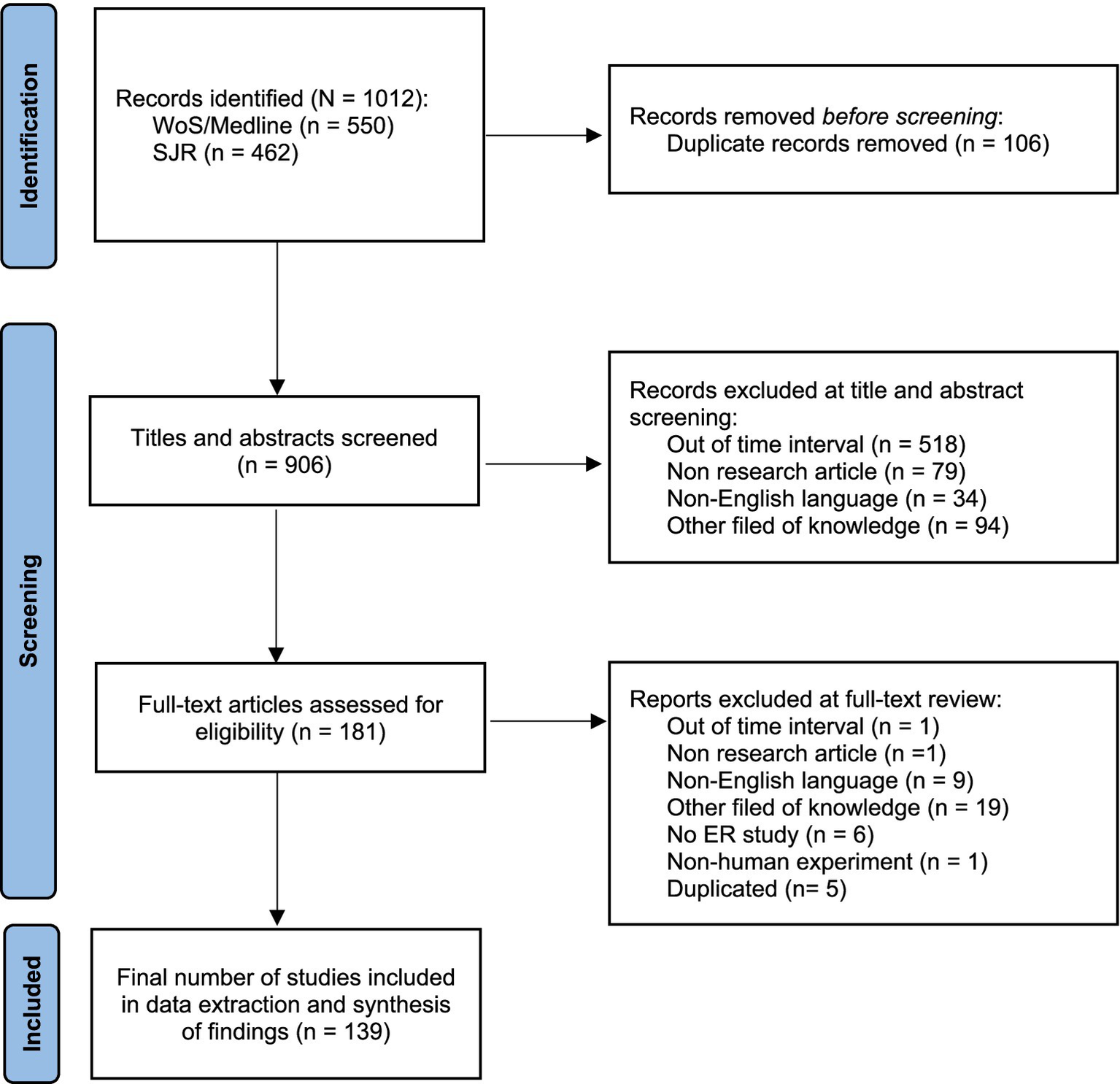
Introduction: Studies examining the role of Emotion Regulation (ER) do not consistently explain the underlying model or theory they are employing, resulting in a conflation of different strategies and goals within the ER scientific literature. This study aims to conduct a systematic review and conceptual analysis of the primary strategies and goals advocated in the ER models, theories, and frameworks. Furthermore, we explored the distinctions between the prevailing contemporary ER models and classical conceptions of emotional dynamics, such as those proposed by Aristotle, Descartes, and Darwin.: An electronic search was conducted in the Web of Science, Medline, and Scopus databases in November 2023. The key search terms used were grouped into two different topics: Emotion Regulation and Models/Theories/Frameworks. Articles were included if they reported one or more ER model in healthy individuals or emotionally disordered individuals and if they were published in a peer-reviewed journal in English in the last 5 years (from 2019 to 2023). A total of 2 reviewers independently assessed the titles, abstracts, and full texts. Models identified were summarized and classified based on the different ER strategies and goals. Results: Of the 1012 titles for initial consideration, 139 articles met the full eligibility criteria and were included for data extraction and synthesis. The review identified 10 ER models, and the most commonly used were the Process Model of Emotion Regulation (Gross, 1998) and the Difficulties in Emotion Regulation (Gratz and Roemer , 2004). There was a great deal of homogeneity among the proposed ER strategies and goals: the cognitive dimension is the core of ER strategy, and the ER goals are primarily hedonic or instrumental in nature.Discussion: Both Descartes and Darwin views were present in the ER models; however, some of the most significant contributions in Aristotelian proposal seem to be forgotten, such as the integration of the physical, operational, and growth dimensions (eudaimonic goals).Systematic review registration: This systematic review was conducted in accordance with the PRISMA guidelines and was preregistered at Prospero platform (masked for review).
CONCEPTUAL ANALYSIS
7 August 2024
Lukas Novakand Nona Kiknadze
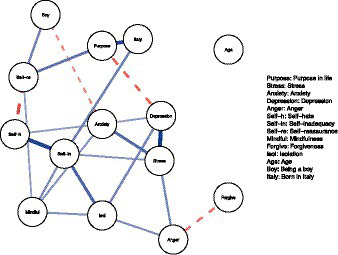
7,243 views
6 citations
REVIEW
14 August 2024
Fátima Ruiz-Fuster, 1 more and Martín F. Echavarría
3 Authors
- FR
Fátima Ruiz-Fuster
Universidad Internacional de la Rioja, Spain
- AB
Aurora Bernal-Martínez de Soria
Department of Theory and Methods in Educational and Psychological Research, Universidad de Navarra, Spain
- MF
Martín F. Echavarría
Department of Psychology, Universitat Abat Oliba CEU, CEU Universities, Spain
8,010 views
3 citations

Exposure to natural environments, such as parks, forests, and green areas, is often linked to a decrease in stress, anxiety and depression, while contributing to improved emotional well-being. These observations are supported by well-established theories, such as the Stress Reduction Theory and Attention Restoration Theory, which highlight the psychological benefits of interacting with nature. However, the relationship between exposure to nature and emotions, and in particular, with emotional regulation, is an evolving aspect of research with no clear conclusions. Emotional regulation can be deliberate in nature, where individuals voluntarily participate in modifying various aspects of their emotions, such as their type, intensity, quality or duration. Alternatively, it may be automatic, originating from sensory perception and acting without full awareness, but significantly influencing emotional experiences. In this context, the environmental self-regulation hypothesis, suggests that people consciously or unconsciously use their physical environment to regulate their emotions. To analyze the evidence of the relationship between contact with nature and emotional regulation, we conducted this review. Using the PRISMA statement as a reference, we conducted keyword searches in five databases in the period between 2013 and 2023. The databases selected were Scopus, Web of Science (WoS), PubMed, PsycINFO and ScienceDirect. In addition, a manual search was carried out of journals in the research field. Initially, from which grey literature, reviews and duplicates were removed in a first step. The resulting articles were then filtered using their titles and abstracts. Subsequently, the abstracts of the 25 selected articles were reviewed and discussed by researchers to reach a final decision based on consensus about the adequacy of each paper. Finally, nine articles were included in the systematic review. In general terms, this review suggests that research on the relationship between contact with nature and emotional regulation provides valuable insights into how natural environments can contribute to the emotional well-being and physical and mental health of the population.
This paper presents a Self-Determination Theory (SDT) perspective on the relationship between human flourishing and emotion regulation. It argues that SDT's organismic approach to motivation, development, and wellness enables it to directly address this relationship, placing emotion regulation within comprehensive conceptions of eudaimonic functioning (i.e., flourishing) and regulation (i.e., self-determination). This is in contrast to the dominant goal-directed process model of emotion regulation, which addresses only limited aspects of well-being, ignores forms of motivation that are essential to flourishing, and blurs the line between emotion regulation and other forms of regulation.
6,536 views
16 citations