REVIEW
23 January 2023
ZIKV: Epidemiology, infection mechanism and current therapeutics
Nisha Dahiya, 3 more and Neelam Sehrawat
ZIKV: Epidemiology, infection mechanism and current therapeutics
ZIKV is a flavivirus vector-borne disease that has affected 87 countries worldwide. Previously different outbreaks of ZIKV were reported around the world and declared a Public Health Emergency of International Concern. Zika virus possesses two modes of transmission i.e., either vector transmission or non-vector transmission. The ability of ZIKV to vertically transmit in its competent vectors like Aedes aegypti and Aedes albopictus helps it to cope with adverse conditions. This could be the reason for its major outbreak from time to time. As ZIKV outbreak can become a global threat worldwide so, to fight against its outbreaks there is a need for safe and effective drugs and vaccines to fight against it. In more than 80% of cases, ZIKV infection is asymptomatic and leads to complications like microcephaly in newborn and Guillain-Barré syndrome (GBS) in adults. The drugs like sofosbuvir, chloroquine, and suramine were found to be effective against ZIKV but needs further evaluation tests for their safety measures in pregnant women. Although Temoporfin can be given to pregnant women but needs to be test further for its side effects. Many vaccine types based on protein, vector, DNA, mRNA were formulated. Some like mRNA-1325, VRC-ZKADNA090-00-VP have reached phase II of clinical trials. Some new techniques should be used for formulation and testing the efficacy of vaccines. As there are no recent outbreaks of ZIKV several studies have shown continuous circulation of ZIKV in mosquito vectors and there are chances of re-emergence of ZIKV near future. So, the vaccines and drugs should be tested further and a safe, effective therapeutics techniques should be licensed to be used at the time of outbreak.

7,231 views

16 citations

Establishment of a colony of Anopheles darlingi from French Guiana for vector competence studies on malaria transmission
ORIGINAL RESEARCH
29 August 2022
Establishment of a colony of Anopheles darlingi from French Guiana for vector competence studies on malaria transmission
Nicolas Puchot, 4 more and Catherine Bourgouin

4,039 views

12 citations

ORIGINAL RESEARCH
5 July 2022
Organophosphate Insecticide Exposure Impacts Reproductive Success in Insensitive Acetylcholinesterase Anopheles gambiae Mosquitoes
Adandé A. Medjigbodo, 5 more and Luc S. Djogbénou

4,157 views

4 citations

Seasonal Dynamics and Predilection Sites of Ticks (Acari: Ixodidae) Feeding on Cows in the Western Parts of the Djurdjura, Algeria
ORIGINAL RESEARCH
20 April 2022
Seasonal Dynamics and Predilection Sites of Ticks (Acari: Ixodidae) Feeding on Cows in the Western Parts of the Djurdjura, Algeria
Amina Bedouhene, 5 more and Hocine Ziam
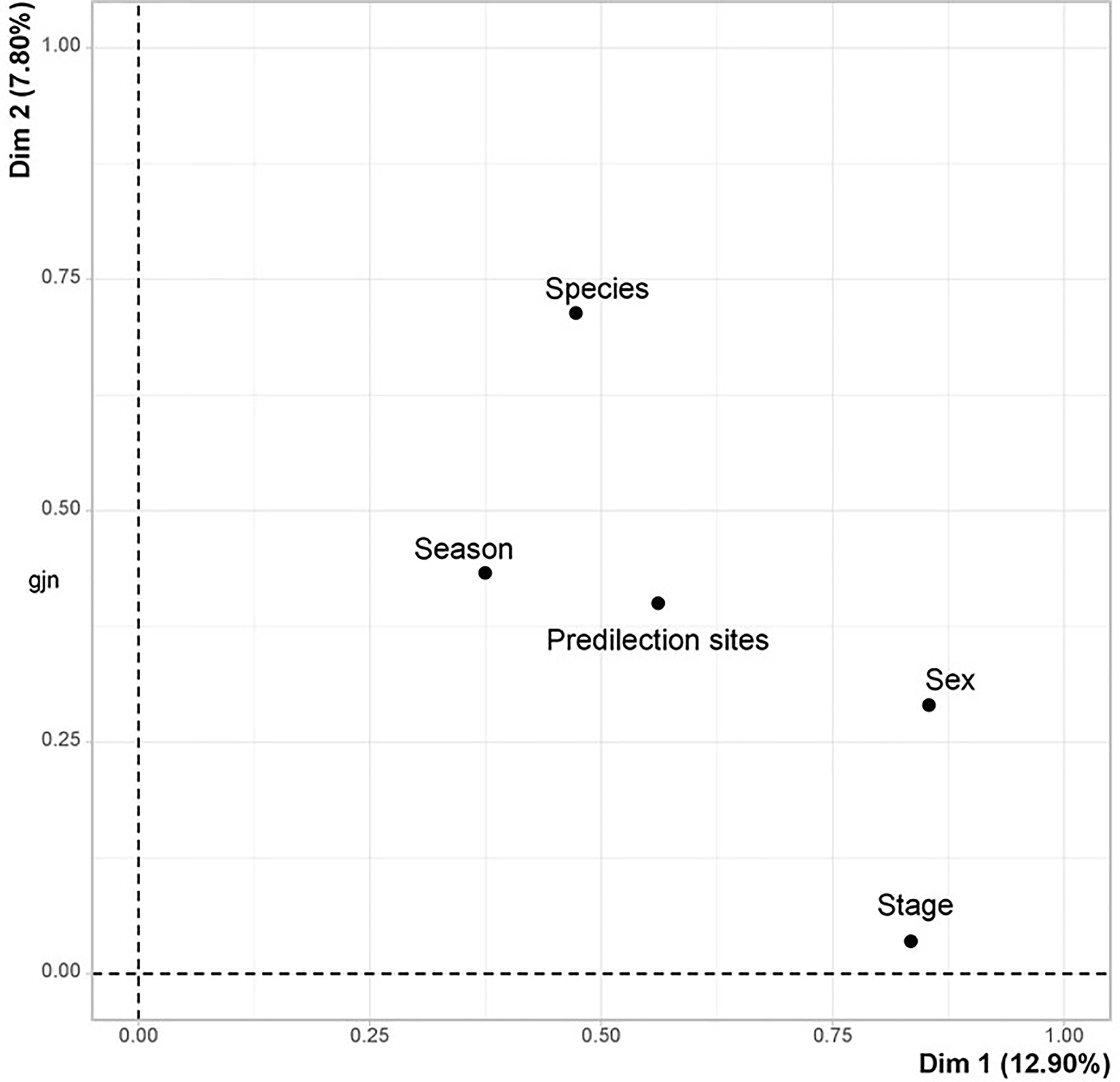
The present study aimed to determine the phenology and body distribution of ticks infesting cattle in the western region of Djurdjura (North Algeria) from November 2018 and October 2020. Nineteen cattle farms located in thirteen localities within four provinces were visited monthly for two years. Among the 289 examined cattle, 64.36±2.81% was infested by ticks. Of the 10,243 collected ticks, the most abundant tick species was Rhipicephalus bursa (31.57±0.45%), followed by R. (Boophilus) annulatus (31.26±0.45%), Hyalomma marginatum (10.67±0.30%), H. lusitanicum (7.02±0.25%), H. excavatum (5.52±%0.22), H. scupense (4.27±0.19%) and H. impeltatum (3.32±0.17%). Ticks of the Hyalomma species were present throughout the year but in a limited number during the winter. H. scupense and H. impletatum showed similar activity from March to October and peaked in April and July, respectively (P<0.001). H. lusitanicum and H. excavatum were active from April to November and both peaked in September and October. Rhipicephalus bursa was collected from April to August and R. annulatus from July to October. R. turanicus was active between April and June. Hyalomma genus had an affinity of attachment for the inguinal region (P<0.001). All parasitic stages of R. annulatus had an affinity for the necks (P<0.001). Nymphs of R. bursa prefer the neck (P<0.001), the adults attach to the perineum and inguinal region (P<0.001). R. turanicus attach to the ears (P<0.001). As far as we know, this is the first study on the phenology and body distribution of cattle ticks in the west region of Djurdjura in Algeria.

4,393 views

19 citations

ORIGINAL RESEARCH
19 May 2022
Generation of Transgenic Mosquitoes Harboring a Replication-Restricted Virus
Naoaki Shinzawa, 10 more and Hirotaka Kanuka

5,909 views

Distribution and Diversity of Sand Fly Species (Diptera: Psychodidae, Phlebotominae) in Two Geoclimatic Zones of Chad
ORIGINAL RESEARCH
12 January 2022
Distribution and Diversity of Sand Fly Species (Diptera: Psychodidae, Phlebotominae) in Two Geoclimatic Zones of Chad
Demba Kodindo Israël, 6 more and Seydou Doumbia
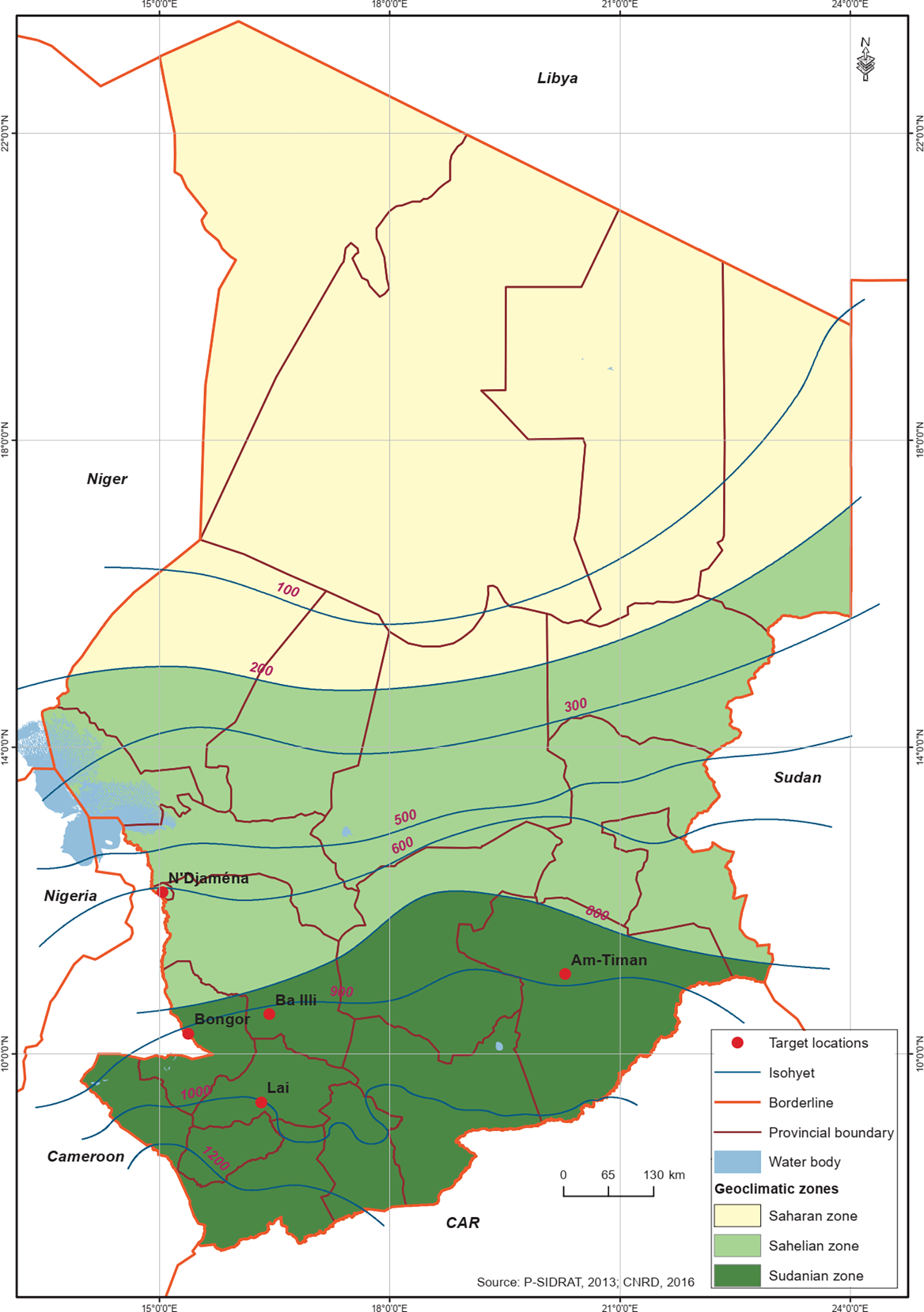
Leishmaniasis is a disease caused by parasites called Leishmania transmitted by insects called sandflies. In Chad, information on sandflies is outdated, and so this study was designed to update the sandfly fauna. Sandflies were collected in five health districts representing two geoclimatic zones using sticky traps and pyrethrum sprays in indoor and peridomestic habitats between September 2019 and December 2020. All collected sandfly specimens were identified based on species-level morphological characters. A total of 2,015 specimens belonging to 13 species of sandflies (one Phlebotomus and twelve Sergentomyia) were collected and identified. The vector of human cutaneous leishmaniasis, Phlebotomus duboscqi, represented 0.65% of all collected sandflies and was the only representative of the Phlebotomus genus to be collected predominantly inside human dwellings. Phlebotomus orientalis, the vector of visceral leishmaniasis previously collected in Chad in 1976 was not found in this study. Sergentomyia clydei, Sergentomyia schwetzi, Sergentomyia antennata and Sergentomyia africana were the most abundant species collected with 44.71%; 22.73%; 16.03% and 11.17%, respectively. Sergentomyia schwetzi and Sergentomyia dubia, the two species involved in the transmission of canine leishmaniasis, were found in five and four study sites respectively. According to our results, the sandfly fauna of the two geoclimatic zones of Chad is comprised of 13 species. Our data showed that, unlike Phlebotomus orientalis which was not found, Phlebotomus duboscqi is present in four of the five sites surveyed. Therefore, these areas are at risk and remain potential foci of cutaneous leishmaniasis. However, there is an essential need for further studies including the detection of vector species, their seasonal fluctuations and their vector competence.

5,248 views

9 citations