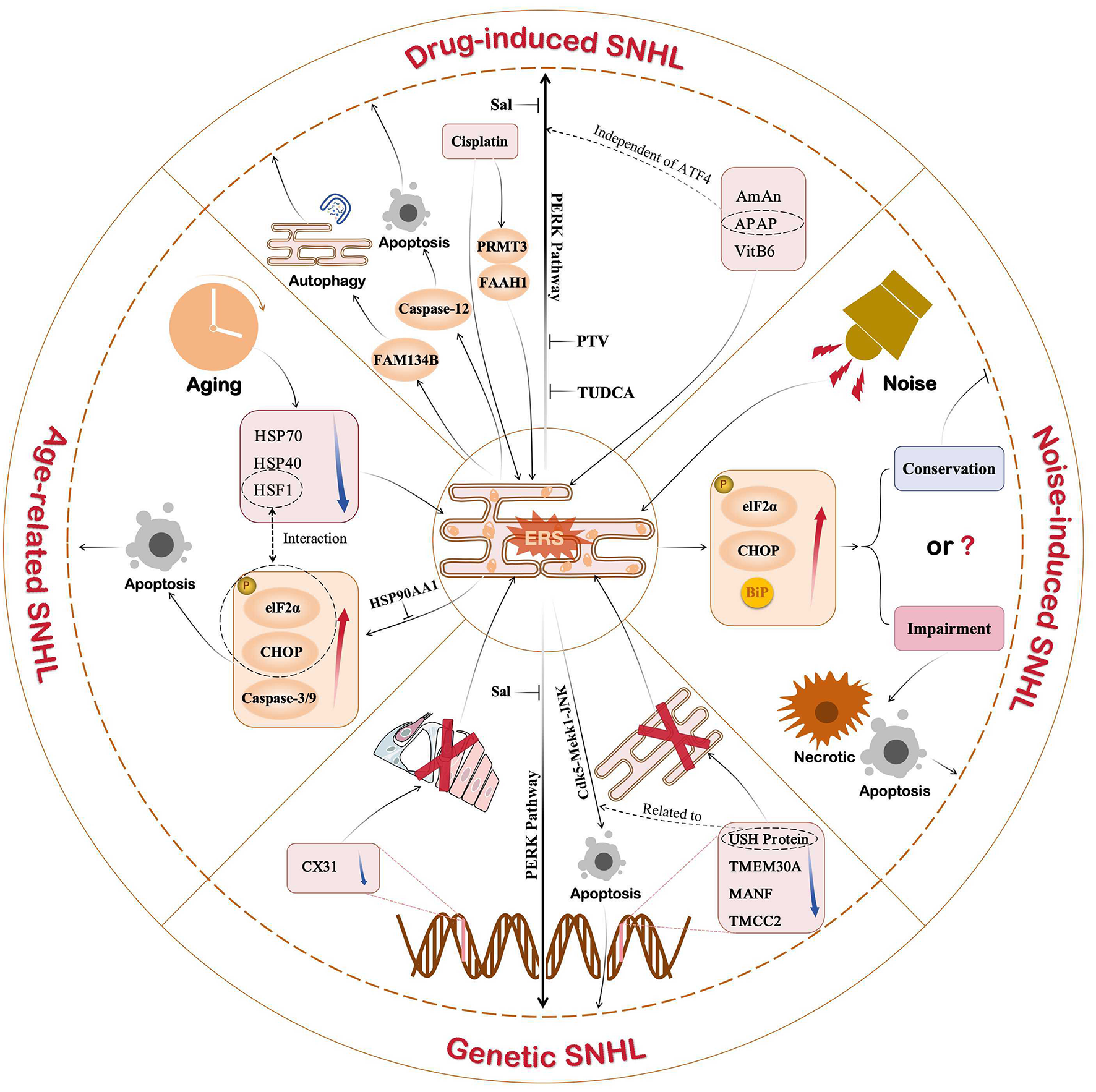
Current therapeutic options for hearing loss include hearing aids and cochlear implants, but not all patients benefit from these [6]. As a result, research is focusing on strategies to address developmental abnormalities leading to hearing loss [18,19]. In certain instances, a pharmacological intervention can be considered to restore the function and expression of a specific target protein [20]. Additionally, tissue engineering and 3D printing are transforming auricular reconstruction for patients with microtia, enhancing aesthetics and auditory function [21].The latest advancements in hearing loss research have revealed various aspects of auditory function and dysfunction. For instance, Bienussa et al. analyzed how Stat3 contributes to the development and differentiation of mouse hair cells. Their findings revealed that Stat3 knockout in outer hair cells (OHCs) led to increased distortion product otoacoustic emissions (DPOAE) levels and higher hearing thresholds. These defects were associated with increased pro-inflammatory activity, including upregulation of the NF-kB pathway and increased cytokine production. When Stat3 was knocked out in supporting cells, similar hearing defects were observed and they were linked to cytoskeletal instability. The upregulation of pro-inflammatory pathways and cytoskeletal instability in Stat3deficient mice provides new targets for therapeutic interventions. This research enhances our understanding of cochlear homeostasis, highlighting the potential of modulating Stat3 activity as a novel approach to preserving hearing function.Advancements in imaging techniques have enhanced our ability to visualize the structures and functions of the cochlea. Schulz-Hildebrandt et al. describe an advancement of optical coherence tomography (OCT).They introduced a dynamic imaging component, enabling real-time tracking of metabolic activity by monitoring ATP-dependent intracellular motion. This innovation reduces acquisition time and minimizes potential damage to the cochlear structure while allowing visualization of individual cochlear cells [22]. This technical breakthrough has far-reaching implications for both research and clinical applications. The ability to monitor ATP-dependent intracellular motion noninvasively opens new possibilities for studying cochlear pathophysiology in vivo. This technology could revolutionize our approach to diagnosing and treatment by providing unprecedented insights into cellular dynamics within the living cochlea.The role of cellular stress in hearing loss has also been a recent research focus. Li et al. explored the role of endoplasmic reticulum stress (ERS) in SNHL. The accumulation of misfolded proteins within the ER triggers the unfolded protein response (UPR), which can activate inflammatory pathways, oxidative stress responses, autophagy and cell death, eventually contributing to the development of SNHL. The review discusses potential pharmacological interventions to enhance cell survival by modulating ER stress. This work provides a cohesive framework by clarifying the intricate role of ERS and UPR in several types of hearing loss. They discuss potential pharmacological interventions targeting ERS pathways, such as Salubrinal, Pitavastatin and TUDCA, opening promising new avenues for developing therapeutic strategies that could revolutionize the treatment of SNHL.Focusing on synaptic transmission in the auditory pathway, Chen et al. investigated otoferlin, a protein crucial for synaptic function in auditory hair cells. By introducing mutations in key amino acids within the C2F domain, they demonstrated that the mutated otoferlin protein accumulated in the Golgi apparatus, failing to reach the basolateral membrane of inner hair cells. Although calcium influx was not affected, calcium-triggered exocytosis of synaptic vesicles was significantly impaired. The researchers identified a key mechanism in auditory signal transduction by showing that specific mutations in this domain of the protein otoferlin can cause severe deafness while leaving hair cell morphology unchanged. The accumulation of mutated otoferlin in the Golgi apparatus, coupled with impaired calcium-triggered exocytosis, provides a link between protein trafficking, synaptic function and hearing ability. This study therefore provides novel insights into the mechanisms of synaptic transmission within the auditory system, supporting the ongoing otoferlin gene therapy trials to restore auditory function.The development of the inner ear is a tightly orchestrated process and, as a prevalent pathomechanism leading to hearing loss, it is an area of intense study. Ito et al. explored the role of the anion exchanger pendrin (Slc26a4) in the development of the bony labyrinth and in the otoconial mineralization. Slc26a4-deficient mice exhibited incomplete partition of the cochlea, enlarged vestibular aqueduct and impaired endolymphatic fluid reabsorption, associated with larger otoconia in the utricle and a near absence in the saccule, leading to the commonly observed vestibular dysfunction. These findings underscore the essential role of specific genes in the proper formation and function of the inner ear, bridging the gap between genetic mutations and phenotypic outcomes, and paving the way for potential therapeutic interventions targeting the SLC26A4 pathway.In conclusion, recent research has markedly advanced our understanding of the molecular and cellular mechanisms that underlie hearing loss. Studies on Stat3, otoferlin and ER stress have provided valuable information on the genetic and biochemical factors influencing auditory function. In addition, innovations in cochlear imaging and investigations into inner ear development are promising to improve diagnostic and therapeutic strategies. Although significant progress has been made, further research is necessary to refine treatment approaches and develop effective interventions for preventing and managing hearing loss. Hearing disorders' complexity necessitates a multidisciplinary strategy that integrates genetics, molecular biology, physiology, optical imaging and clinical medicine to tackle this common sensory impairment. The studies presented in this research topic collectively represent significant milestones in hearing research, each contributing unique and valuable insights into the intricate mechanisms that underlie auditory function and dysfunction, while shaping future diagnosis and therapy.
9 Authors
- GL
Guanzhen Li
School of Clinical Medicine, Jining Medical University, China
- HY
Huiming Yang
Department of Otolaryngology-Head and Neck Surgery, Shandong Provincial Hospital Affiliated to Shandong First Medical University, China
- PZ
Peiyuan Zhang
School of Clinical Medicine, Jining Medical University, China
- YG
Yan Guo
School of Basic Medical Science, Jining Key Laboratory of Pharmacology, Jining Medical University, China
- LY
Lili Yuan
School of Basic Medical Science, Jining Key Laboratory of Pharmacology, Jining Medical University, China
- SX
Shujiao Xu
School of Dental Medicine, Jining Medical University, China
- YY
Yingxue Yuan
Department of Pathology, Shandong Provincial Hospital Affiliated to Shandong First Medical University, China
- HX
Huabao Xiong
Institute of Immunology and Molecular Medicine, Jining Medical University, China
- HY
Haiyan Yin
School of Basic Medical Science, Jining Key Laboratory of Pharmacology, Jining Medical University, China


5 Authors
- HC
Han Chen
Institute for Auditory Neuroscience and InnerEarLab, University Medical Center Göttingen, Germany
- QF
Qinghua Fang
Institute for Auditory Neuroscience and InnerEarLab, University Medical Center Göttingen, Germany
- FB
Fritz Benseler
Department of Molecular Neurobiology, Max Planck Institute for Multidisciplinary Sciences, Germany
- NB
Nils Brose
Collaborative Research Center 889, University of Göttingen, Germany
- TM
Tobias Moser
Institute for Auditory Neuroscience and InnerEarLab, University Medical Center Göttingen, Germany