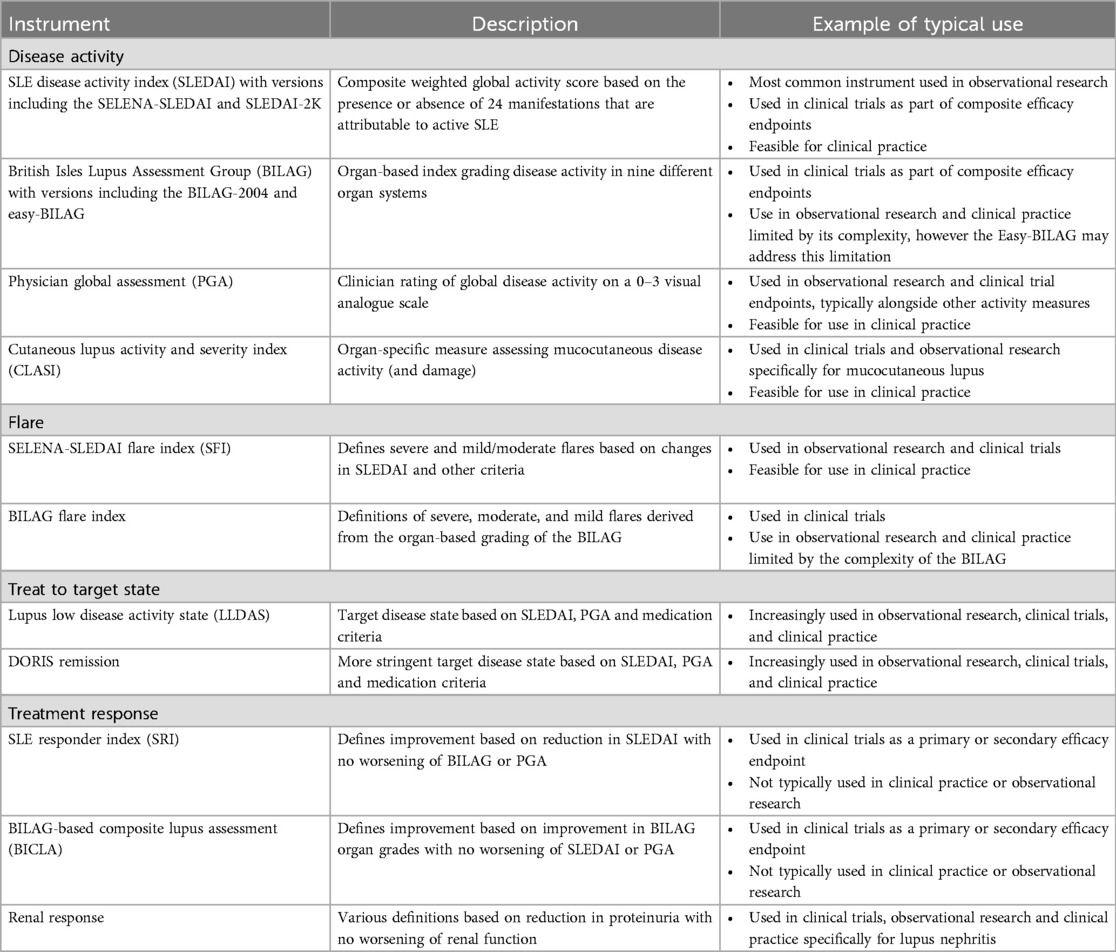
We were fortunate to find that the 5 articles within this research topic represent contributions from 4 continents -Africa, Asia, Oceania and the American subregion (Caribbean). Each article carries unique, contextualized perspectives with international relevance and enduring lessons of the global community.Dr. Dzifa Dey and Colleagues in Ghana described the Rheumatology Initiative (tRi) which was established in 2012 to overcome challenges in improving patient care such has poverty, dearth of specialists and testing facilities, and lack of knowledge. The Rheumatology Initiative aims to improve the understanding, diagnosis, and management of rheumatic conditions through educational activities, research projects, and targeted interventions. Educational programs bring knowledge to the doorstep of the community by engaging schools, churches, and workplaces. Their strong advocacy has resulted in antirheumatic drugs being added to the list of essential drugs in Ghana. A toll-free telemedicine line "Rheumchat" was set up to screen individuals with symptoms of rheumatic disease. Funds raised by tRi have been used in the most impactful ways such as for training of rheumatology specialty nurses, the setting up of an infusion room at a teaching hospital and the provision of discounted medication.Dr. Sandra Navarra from the Philippines highlighted the established programs to increase medical student exposure to rheumatology such as the Lupus Initiative of the American College of Rheumatology, while proposing additional strategies to strengthen lupus education in developing countries. One strategy outlined in her paper was to provide highly motivated medical students and internal medical residents with special interest in rheumatology with the opportunity to engage with centres of excellence or attend international meetings. Dr. Navarro also advocated for the establishment of dedicated lupus clinics and the formal training of lupus patients as instructors, otherwise called "patient partners." The Applied Rheumatology Made Simple (ARMS) educational program improved the knowledge and clinical skills of Primary Care doctors, thus increasing their capacity for patient care and facilitation of a sound networking relationship with lupus specialists.A prospective study (2013-2020) of a large multinational 13-country Asia Pacific patient population (the Asia Pacific Lupus Collaboration cohort) found that anti-malarial users had lower exposure to glucocorticoids and immunosuppressants and experienced fewer severe flares compared to non-users. However, antimalarial use was found to be suboptimal in clinical practice with some countries not meeting international treatment guidelines. In less affluent countries in Indonesia less than 50% of patients received antimalarials. These findings underscored the need to identify modifiable barriers to antimalarial use.Angela Lin and colleagues reviewed the issue of SLE disease activity assessment both in clinical practice and research. It was initially acknowledged that activity indices are important for routine treat -to -target medical interventions as well as for the formulation of appropriate clinical trial endpoints. Notwithstanding that fact, the complexity and heterogeneity of SLE makes development of reliable disease activity instruments difficult. Assessment for potentially reversible inflammatory disease manifestations is typically made in the absence of a single quantifying biomarker and requires clinical judgement for correct attribution, including exclusion of all plausible alternative disease states. The most widely used disease-activity measure is the Systemic Lupus Erythematosus Disease Activity Index (SLEDAI). One of its' limitations for use in developing countries is the inclusion of serologic markers such as antidsDNA and complements which are often inaccessible in these settings. Lin and colleagues discussed emerging disease activity measures before concluding with a statement of the enduring importance of a comprehensive medical history and physical examination support by appropriate investigations.Dr. Sharon Dowell and the Caribbean Association for Rheumatology (CAR) group reviewed SLE in the Caribbean and educational priorities for primary care physicians who are often at the helm of SLE case ascertainment and management. It began with answers to a simple yet insightful question-: "When educating general practitioners and internists, what topics in SLE education would have the greatest impact on improving clinical outcomes for Caribbean patients with SLE?". There was consensus on 15 items including early recognition of the systemic, dermatologic and musculoskeletal manifestations of SLE and early screening for kidney involvement. For SLE management, the focus was on understanding the appropriate use of Hydroxychloroquine and corticosteroids, and education on contraception and pre-pregnancy planning. The future endeavor of the CAR group is to identify and educate primary care physicians eager to be rheumatology champions.There are challenges to the growth of knowledge of SLE as most countries have compelling competing priorities, financially strained healthcare systems and workforce shortages. In this setting it is particularly important for journals to facilitate the exchange of information and ideas. This crucial role of medical journals, complemented by other strategies such as the formation of international partnerships and development of innovative educational initiatives will broaden the perspective of what is possible in addressing global inequities in SLE care.
39 Authors
- RK
Rangi Kandane-Rathnayake
Rheumatology Research Group, Centre for Inflammatory Diseases, School of Clinical Sciences, Monash University, Australia
- AH
Alberta Hoi
Rheumatology Research Group, Centre for Inflammatory Diseases, School of Clinical Sciences, Monash University, Australia
- WL
Worawit Louthrenoo
Division of Rheumatology, Department of Internal Medicine, Faculty of Medicine, Chiang Mai University Hospital, Thailand
- YC
Yi-Hsing Chen
Division of Allergy, Immunology and Rheumatology, Taichung Veterans General Hospital, Taiwan
- JC
Jiacai Cho
Rheumatology Division, National University Hospital, Singapore
- AL
Aisha Lateef
Rheumatology Division, National University Hospital, Singapore
- LH
Laniyati Hamijoyo
Division of Rheumatology, Department of Internal Medicine, Faculty of Medicine, Padjadjaran University/Hasan Sadikin General Hospital, Indonesia
- SC
Shirley Chan
Division of Rheumatology & Clinical Immunology, Department of Medicine, Queen Mary Hospital, The University of Hong Kong, Hong Kong SAR, China
- SF
Shue Fen Luo
Department of Rheumatology, Allergy and Immunology, Chang Gung Memorial Hospital, Taiwan
- YJ
Yeong-Jian Jan Wu
Department of Rheumatology, Allergy and Immunology, Chang Gung Memorial Hospital, China
- SN
Sandra Navarra
Section of Rheumatology, University of Santo Tomas Hospital, Philippines
- LZ
Leonid Zamora
Section of Rheumatology, University of Santo Tomas Hospital, Philippines
- ZL
Zhanguo Li
Department of Rheumatology and Immunology, People’s Hospital Peking University Health Science Center, China
- HY
Haihong Yao
Department of Rheumatology and Immunology, People’s Hospital Peking University Health Science Center, China
- SS
Sargunan Sockalingam
Department of Medicine, University of Malaya Medical Centre, Malaysia
- YK
Yasuhiro Katsumata
Institute of Rheumatology, Tokyo Women’s Medical University, Japan
- MH
Masayoshi Harigai
Institute of Rheumatology, Tokyo Women’s Medical University, Japan
- YH
Yanjie Hao
Rheumatology and Immunology Department, Peking University First Hospital, China
- ZZ
Zhuoli Zhang
Rheumatology and Immunology Department, Peking University First Hospital, China
- BB
BMDB Basnayake
Department of Nephrology, Teaching Hospital Kandy, Sri Lanka
- MC
Madelynn Chan
Department of Rheumatology, Allergy & Immunology, Tan Tock Seng Hospital, Singapore
- JK
Jun Kikuchi
Department of Internal Medicine, Keio University, Japan
- TT
Tsutomu Takeuchi
Department of Internal Medicine, Keio University, Japan
- SO
Shereen Oon
Department of Rheumatology, St Vincent’s Hospital, Australia
- SB
Sang-Cheol Bae
Department of Rheumatology, Hanyang University Institute for Rheumatology Research and Hanyang Institute of Bioscience and Biotechnology, Hanyang University Hospital for Rheumatic Diseases, Republic of Korea
- SO
Sean O’Neill
Rheumatology Department, Liverpool Hospital, Australia
- FG
Fiona Goldblatt
Department of Rheumatology, Flinders Medical Centre, Australia
- K(
Kristine (Pek Ling) Ng
Department of Rheumatology, North Shore Hospital, Waitemata Health New Zealand, New Zealand
- AL
Annie Law
Asia Arthritis and Rheumatology Centre, Singapore
- NT
Nicola Tugnet
Department of Rheumatology, Greenlane Clinical Centre, New Zealand
- SK
Sunil Kumar
Department of Rheumatology, Middlemore Hospital, New Zealand
- NO
Naoaki Ohkubo
The First Department of Internal Medicine, University of Occupational and Environmental Health, Japan
- ML
Michael L. Tee
Department of Paediatrics, University of the Philippines, Philippines
- CT
Cherica Tee
Department of Paediatrics, University of the Philippines, Philippines
- YT
Yoshiya Tanaka
The First Department of Internal Medicine, University of Occupational and Environmental Health, Japan
- CS
Chak S. Lau
Division of Rheumatology & Clinical Immunology, Department of Medicine, Queen Mary Hospital, The University of Hong Kong, Hong Kong SAR, China
- VG
Vera Golder
Rheumatology Research Group, Centre for Inflammatory Diseases, School of Clinical Sciences, Monash University, Australia
- MN
Mandana Nikpour
Department of Rheumatology, St Vincent’s Hospital, Australia
- EF
Eric F. Morand
Rheumatology Research Group, Centre for Inflammatory Diseases, School of Clinical Sciences, Monash University, Australia
2,827 views
3 citations
10 Authors
- JL
Jannel Lawrence
Department of Internal Medicine, University of Maryland Capital Region Medical Center, United States
- AK
Amanda King
Bay Medical Centre, Saint Lucia
- NR
Nina Ramessar
Department of Internal Medicine, Indiana University School of Medicine, United States
- DH
Danielle Henry
Department of Internal Medicine, University of Miami at Holy Cross Hospital, United States
- SD
Stacy Davis
Department of Internal Medicine, University of the West Indies, Mona Campus, Jamaica
- KD
Keisha Davis-King
Department of Internal Medicine, University of the West Indies, St. Augustine Campus
- TM
Taniesha McGhie
Department of Internal Medicine, University of the West Indies, Mona Campus, Jamaica
- AR
Anishka Rolle
Bahamas Health and Healing Medical Center, The Bahamas
- RM
Rebecca Manno
Comprehensive Orthopaedic global
- SD
Sharon Dowell
Department of Internal Medicine, NEA Baptist Memorial Hospital, United States
2,686 views
1 citations
7 Authors
- DD
Dzifa Dey
Department of Medicine and Therapeutics, Korle Bu Teaching Hospital, Ghana
- RB
Rosetta Bobade
Rheumatology Research Unit, Nunana Clinic Autoimmune Specialist Centre, Ghana
- BK
Bright Katso
Rheumatology Research Unit, Korle Bu Teaching Hospital, Ghana
- SI
Saudatu Issaka
Rheumatology Research Unit, Korle Bu Teaching Hospital, Ghana
- AC
Angela Charis
The Rheumatology Initiative (N.G.O.), Ghana
- AA
Abdul Aziz Can Tamakloe
The Rheumatology Initiative (N.G.O.), Ghana
- PN
Padiki Narh
The Rheumatology Initiative (N.G.O.), Ghana
3,394 views
4 citations
2,870 views
2 citations